Menu
Fly pattern guide
Know what’s in
your fly box.
See each fly from useful angles, learn its common names, and know when to try it.
Clear names. Similar flies stay clearly labeled.
02Photos checked. Every guide photo has a source and use record.
03Honest fishing notes. Seasonal tips are never called a live river report.
Fly collection
Find the fly you mean.
Search by fly name, another common name, or insect type.
145 reviewed patterns
 Verified photograph
Nymph · #16–22 in the reviewed Orvis recipe, #18–22 is a common practical range; match the local insect
Zebra Midge
A sparse, fast-sinking midge-pupa pattern built from a slim thread body, open wire rib, and small bead.Open field guide ↗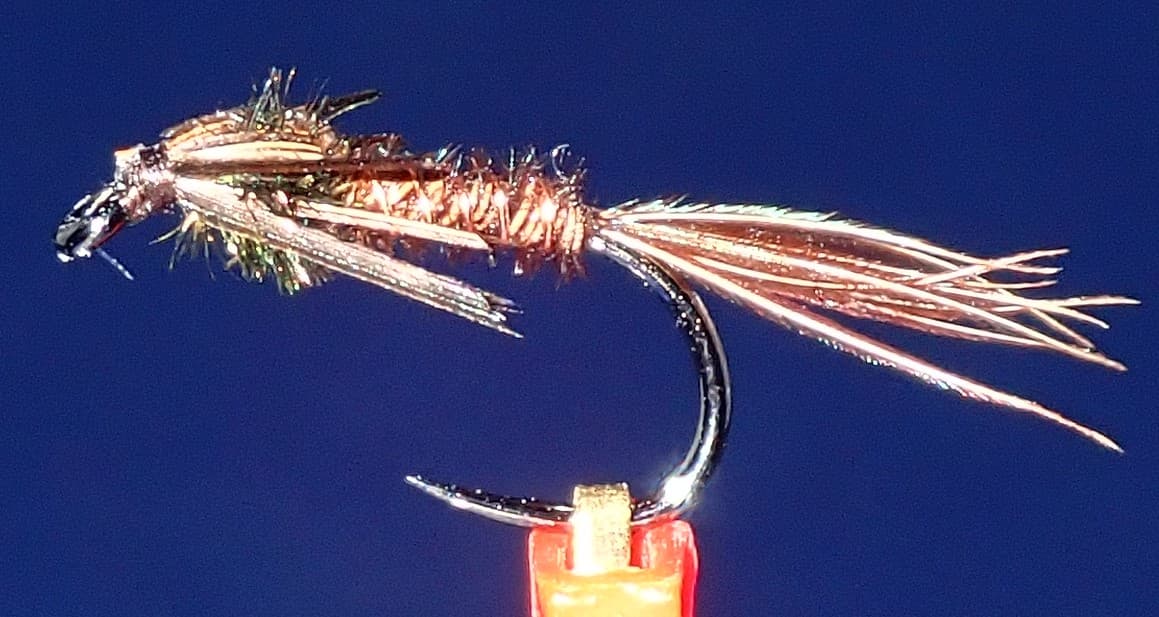 Verified photograph
Nymph · #12–20
Pheasant Tail Nymph
A compact mayfly-nymph pattern whose pheasant-tail fibers and copper rib create a slim, segmented profile.Open field guide ↗ Verified photograph
Dry · #10–18
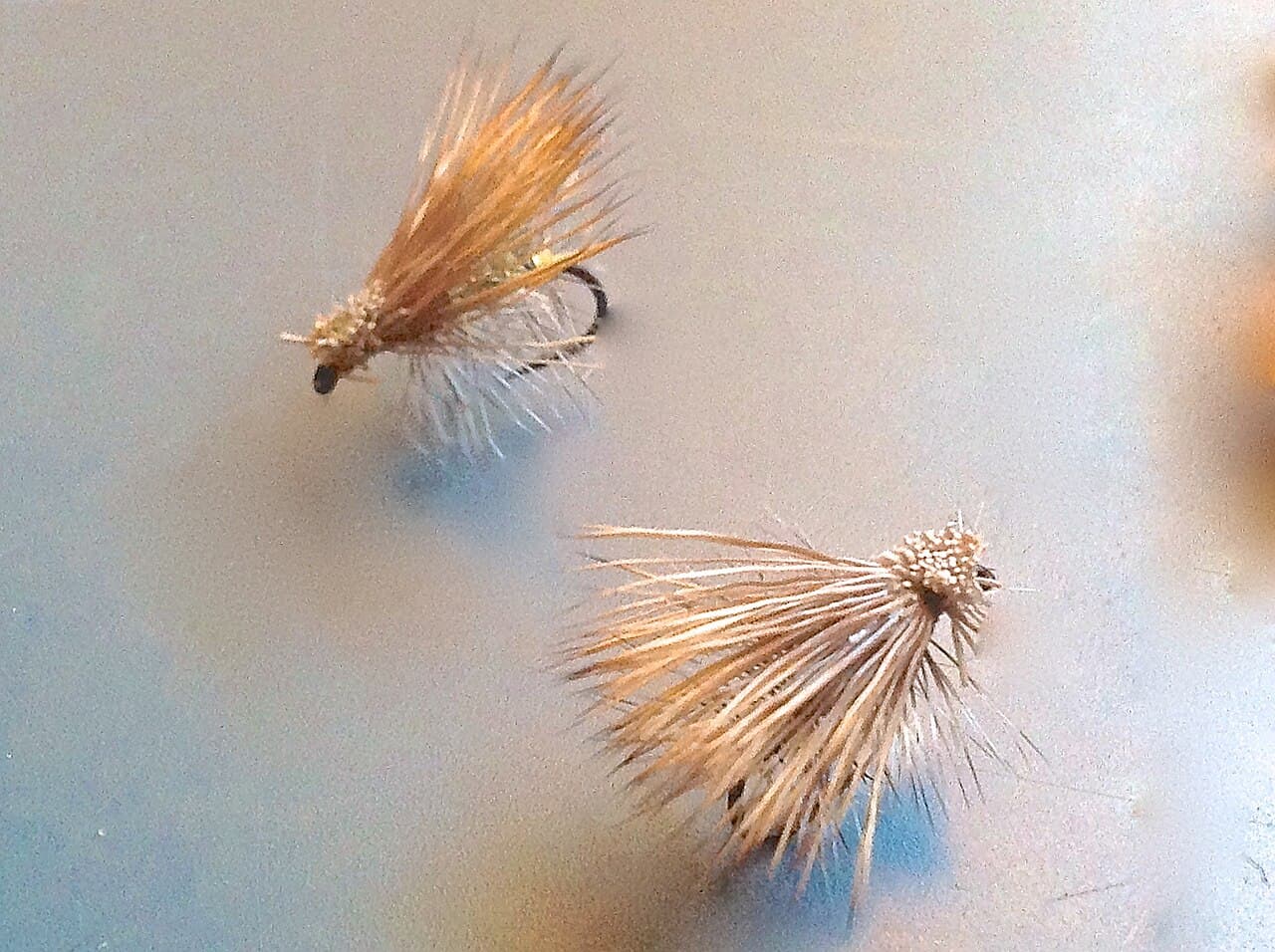
Elk Hair Caddis
A buoyant adult-caddis dry fly with a tented hair wing and palmered hackle that holds up in broken water.Open field guide ↗ Verified photograph
Dry · #12–22
Parachute Adams
A highly visible mayfly-style dry with an upright post and hackle wrapped horizontally around that post.Open field guide ↗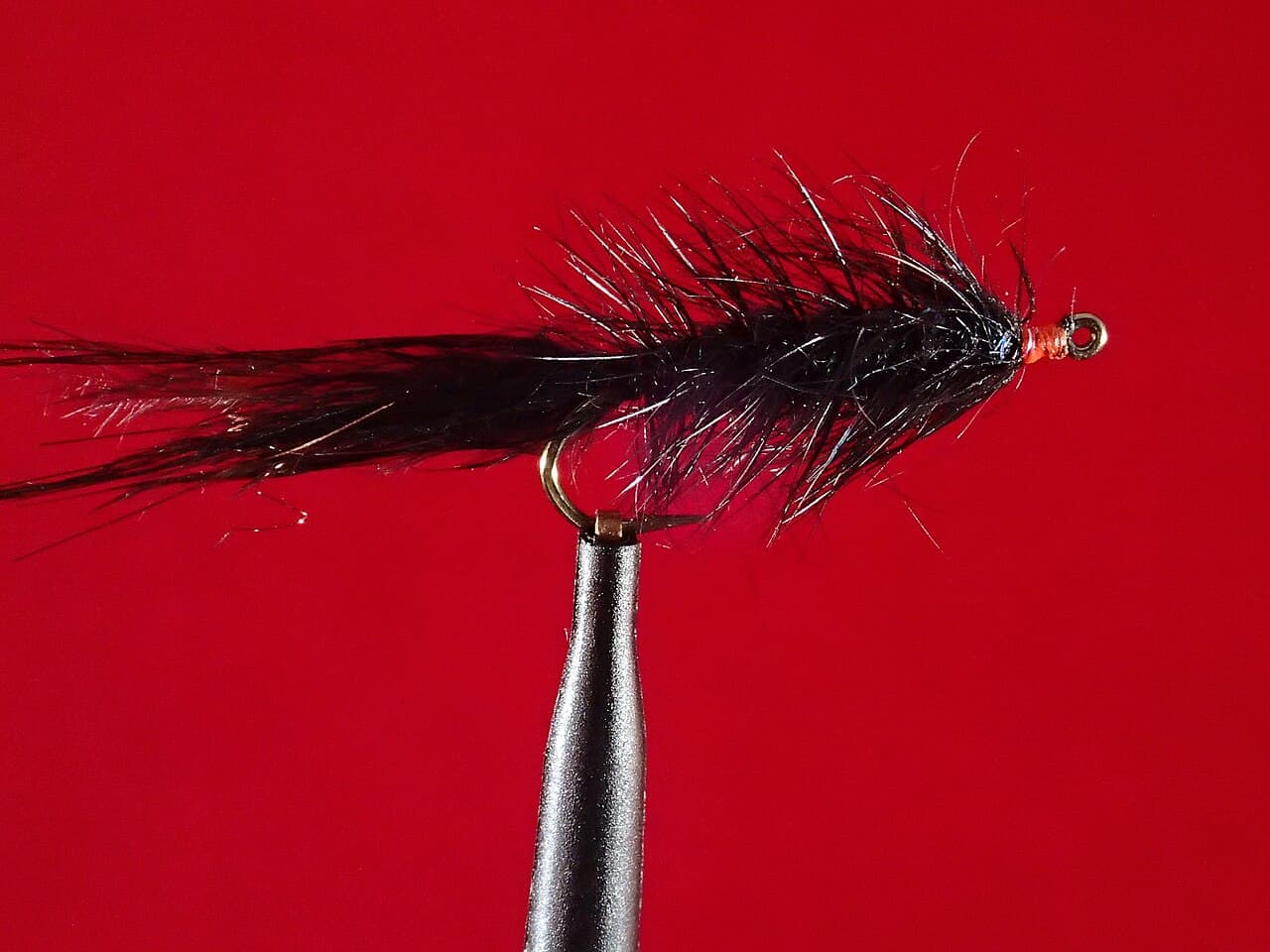 Verified photograph
Streamer · #6–12
Woolly Bugger
A mobile marabou-and-hackle streamer that can suggest several large food forms without being one exact imitation.Open field guide ↗ Verified photograph
Emerger · Match the natural; Orvis demonstrates #20, Originator instructions use 6/0 thread for #14 or larger and 8/0 for smaller hooks
RS2
Rim Chung's sparse beadless emerger or floating nymph, built with two split tails, a tightly dubbed tapered body, a compact thorax, and a clipped saddle-hackle-web wing.Open field guide ↗ Verified photograph
Nymph · Orvis: #12–20; FFI unweighted example: #10. Match local insects and water
Gold-Ribbed Hare's Ear Nymph
A source-reviewed guide to the Gold-Ribbed Hare's Ear: a rough, generalist nymph whose hare dubbing, metallic rib, tail, thorax, and wing case can suggest several immature aquatic insects without copying one species exactly.Open field guide ↗ Verified photograph
Nymph · Original Doug Prince recipe: #6–12, Orvis bead-head range: #4–18, FFI proportioned demonstration: #12
Prince Nymph
A high-contrast searching nymph built from a peacock-herl body, gold rib, forked brown biot tail, swept brown hackle, and white biot V-wing; the reviewed bead-head form adds weight and flash.Open field guide ↗ Verified photograph
Nymph · #12–18 are common starting sizes; match the insect, water, hook, and legal weight, The photographed green form's exact hook and bead size are not established by its thumbnail
Perdigon Nymph
A bead-led, resin-coated competition nymph built to reach fast or deep lanes with a small, low-drag profile.Open field guide ↗ Verified photograph
Dry · #14–24 in the reviewed Orvis tying source, #18–22 is a useful winter starting range; match the natural
Griffith's Gnat
A simple peacock-herl and grizzly-hackle midge dry that can suggest one tiny adult, a clustered surface meal, or another very small insect at the film.Open field guide ↗ Verified photograph
Emerger · #12–20 in the reviewed Fly Fishers International recipe, Orvis example range: #12–16; match the local caddis
X-Caddis
Craig Mathews's low-riding, hackleless caddis transition pattern, built with a thin trailing shuck, dubbed body, and tented deer- or elk-hair wing.Open field guide ↗ Verified photograph
Dry · #4–16
Stimulator
A buoyant hair-wing attractor and stonefly-style dry built for broken water and dry-dropper use.Open field guide ↗ Verified photograph
Terrestrial · #6–16 in Umpqua's production range, Orvis tying example: #8 on a 3X-long nymph hook
Chubby Chernobyl
A high-floating foam-and-synthetic-yarn attractor with rubber legs, built to remain visible in broken water and suspend a proportionate dropper.Open field guide ↗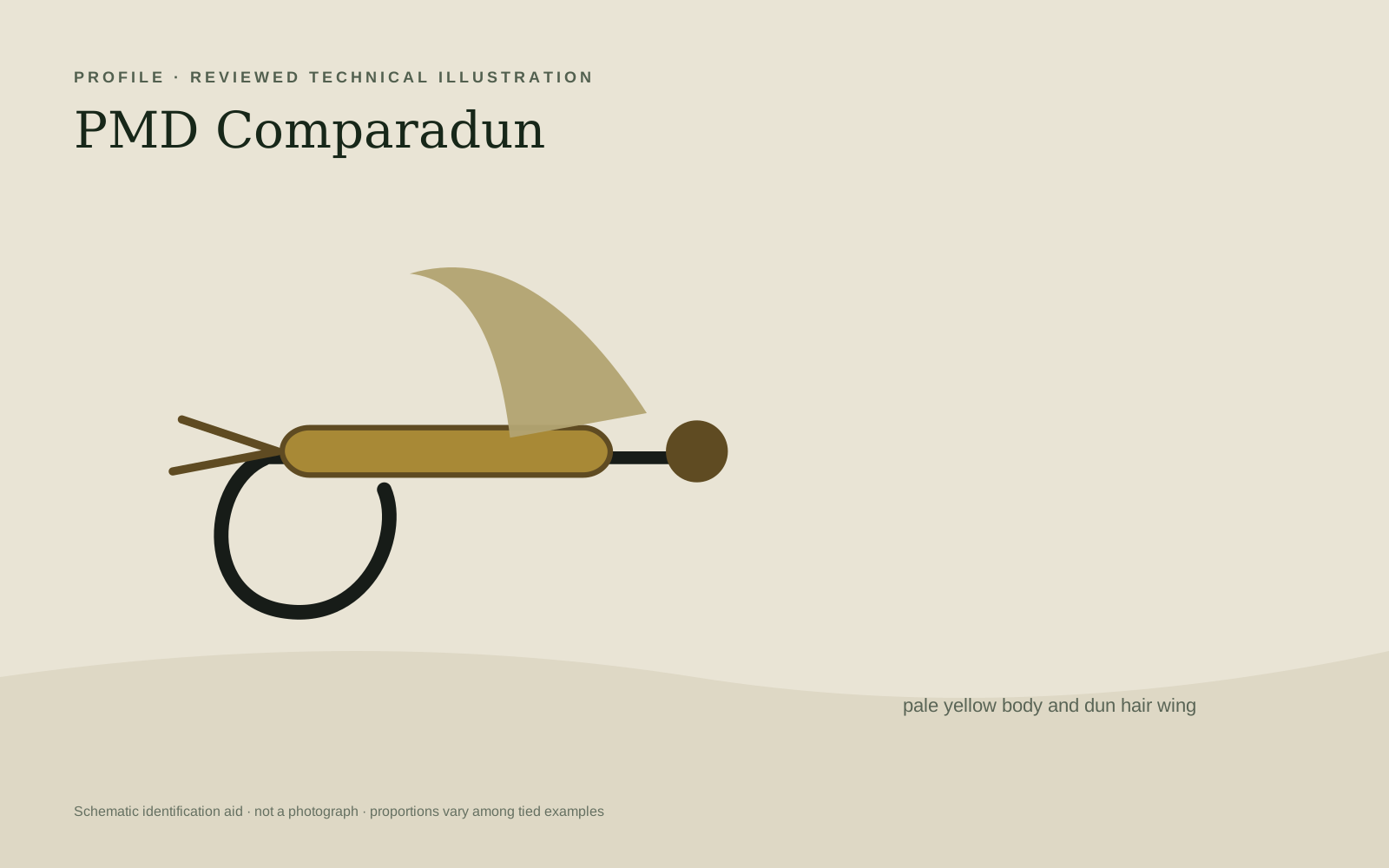 Reviewed illustration
Dry · #14–18
PMD Comparadun
A low-riding, hackleless Pale Morning Dun dry with a fan-shaped deer-hair wing.Open field guide ↗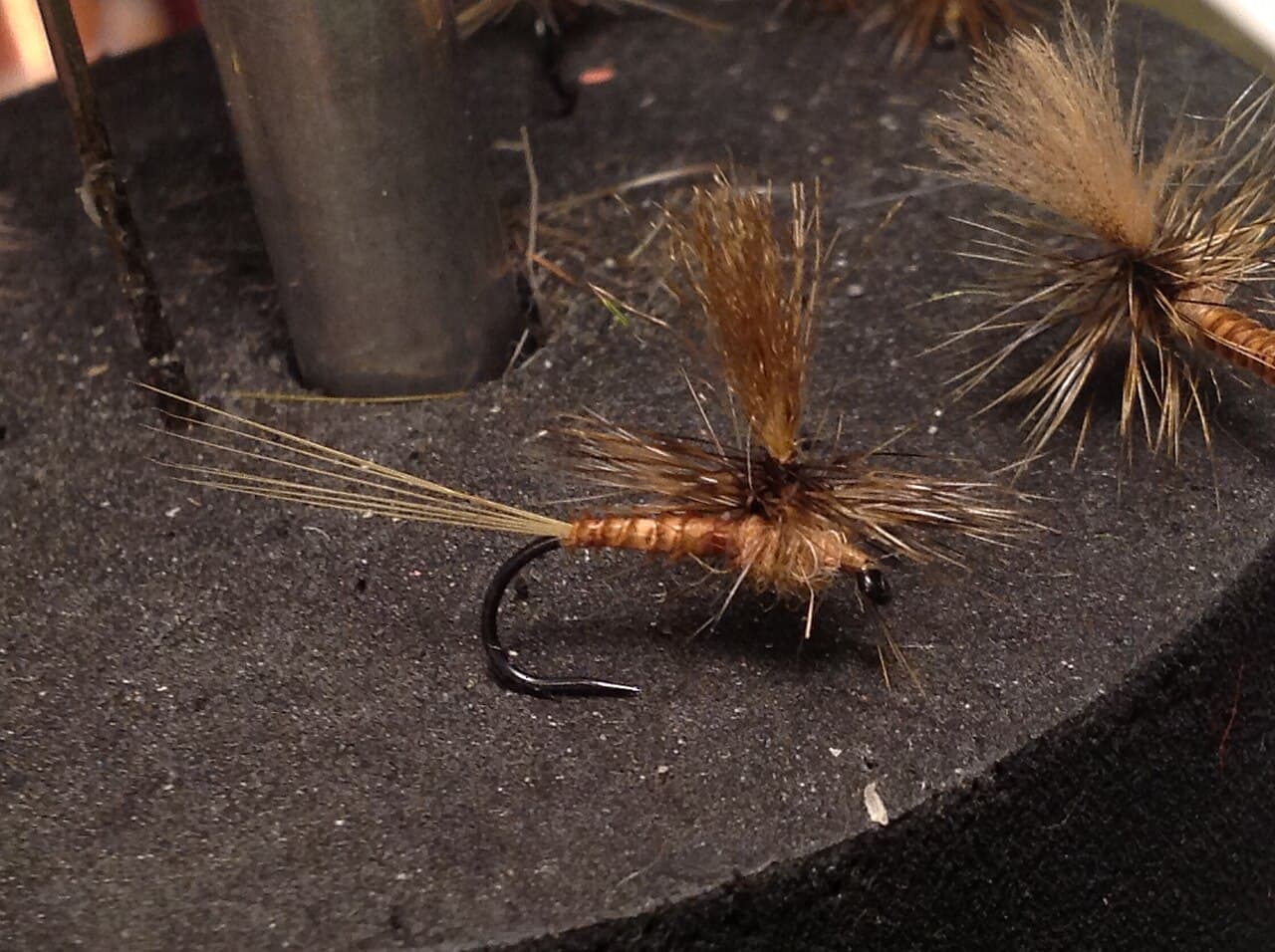 Verified photograph
Pattern family · Commonly #10–14; verify locally
March Brown Dry Flies
A family destination for dry flies used around March Brown mayfly adults—not one exact recipe.Open family guide ↗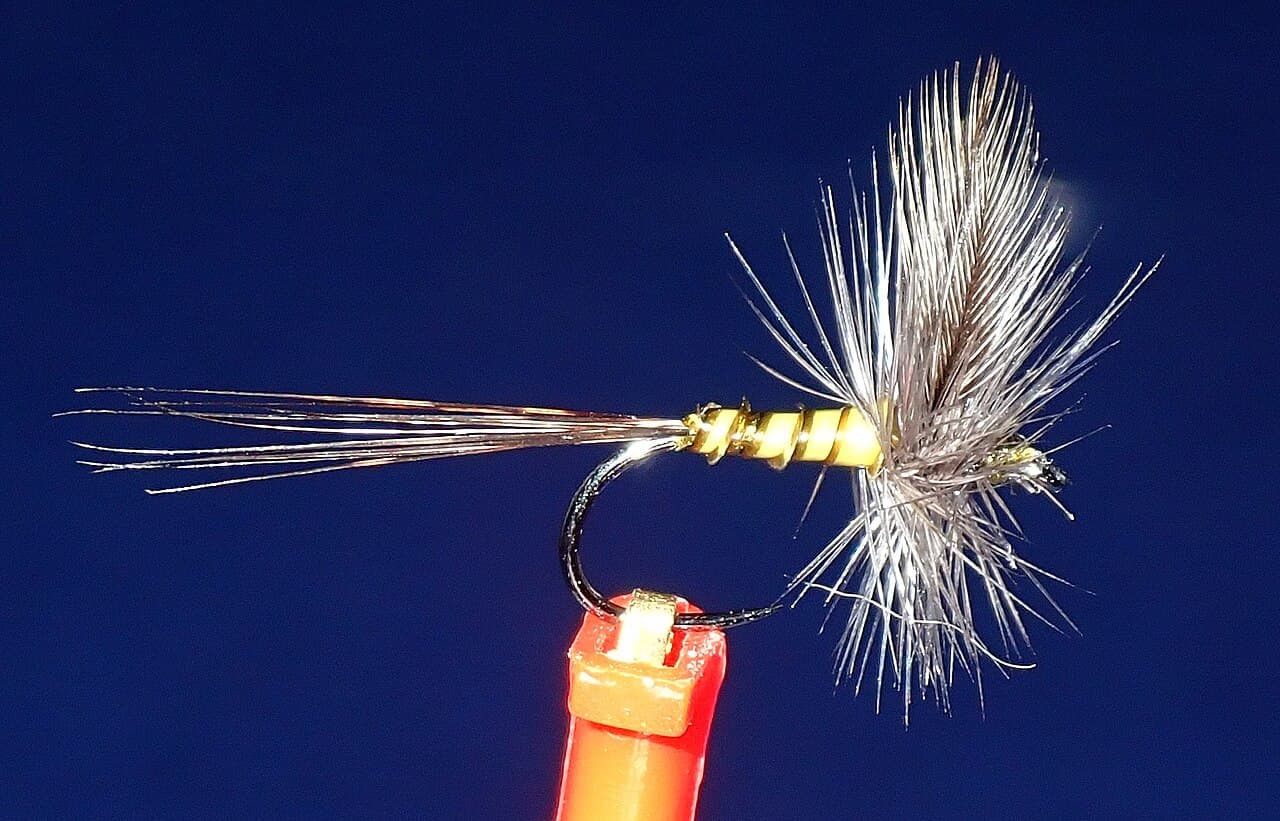 Verified photograph
Pattern family · Often #14–24; stage and river vary
Blue-Winged Olive Patterns
A stage-based family for olive-bodied mayfly nymphs, emergers, adults, cripples, and spinners.Open family guide ↗ Verified photograph
Pattern family · Varies by species; often #10–18
Caddis Pupa Patterns
A family of subsurface caddis patterns spanning pupa, ascending emerger, and soft-hackle presentations.Open family guide ↗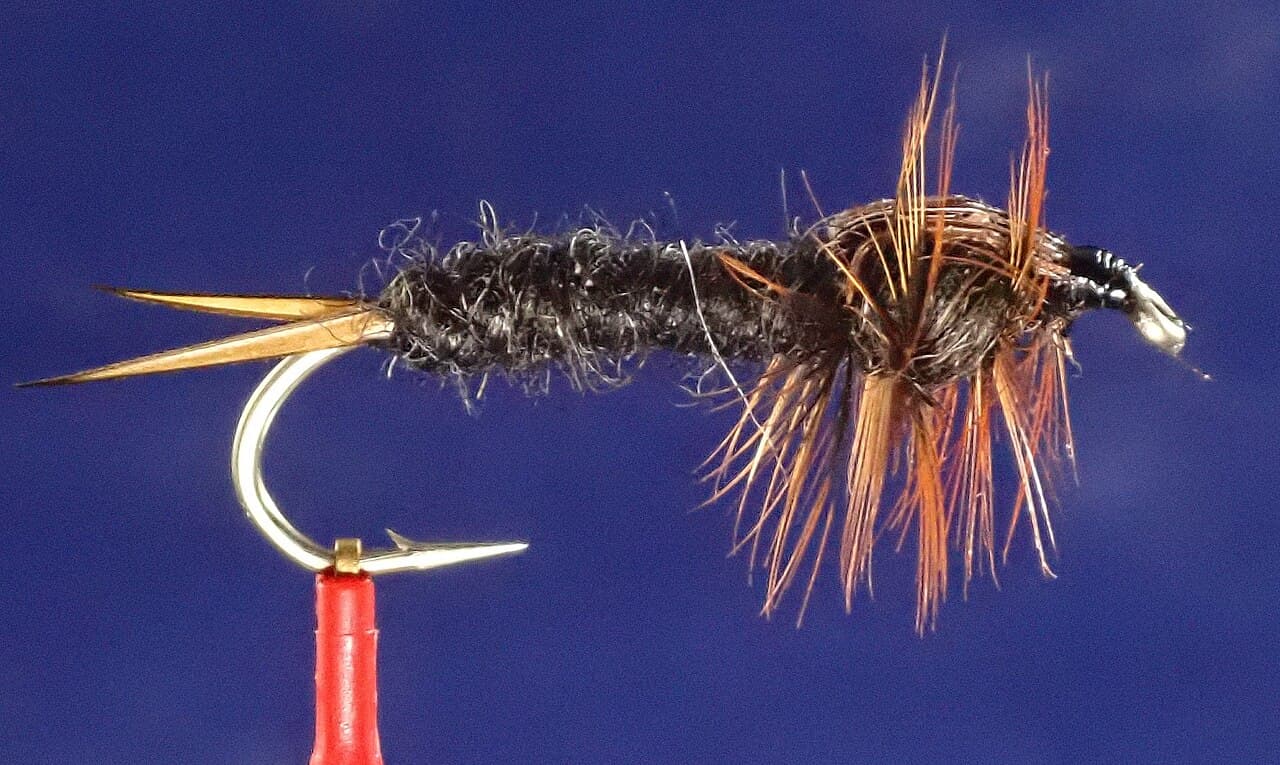 Verified photograph
Pattern family · #4–18 depending on species
Stonefly Nymph Patterns
A broad family of two-tailed, bottom-oriented stonefly nymph imitations in many sizes and weights.Open family guide ↗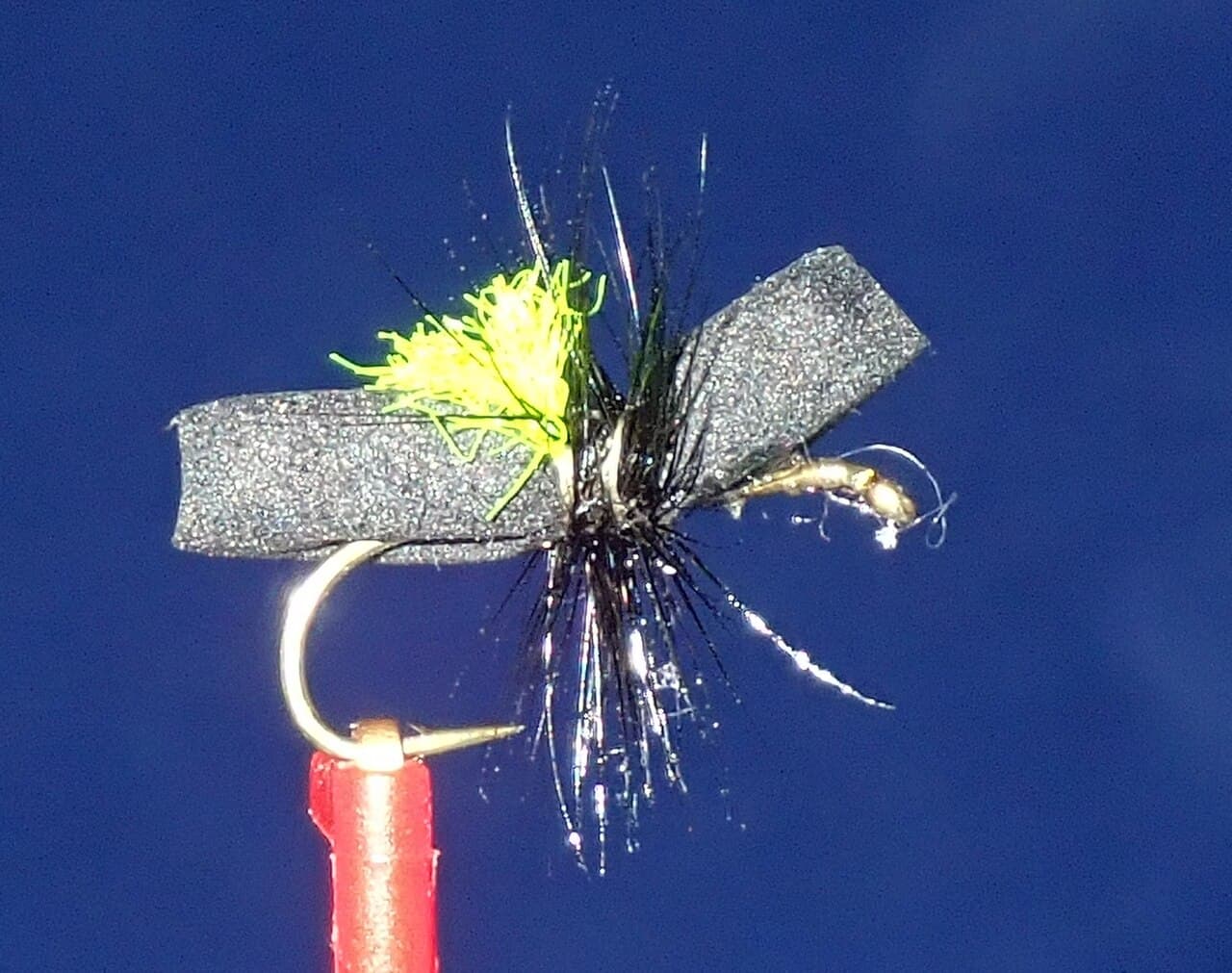 Verified photograph
Pattern family · #12–20
Ant Patterns
Dry and sunken terrestrial patterns unified by an ant's pinched waist and two-lobed body.Open family guide ↗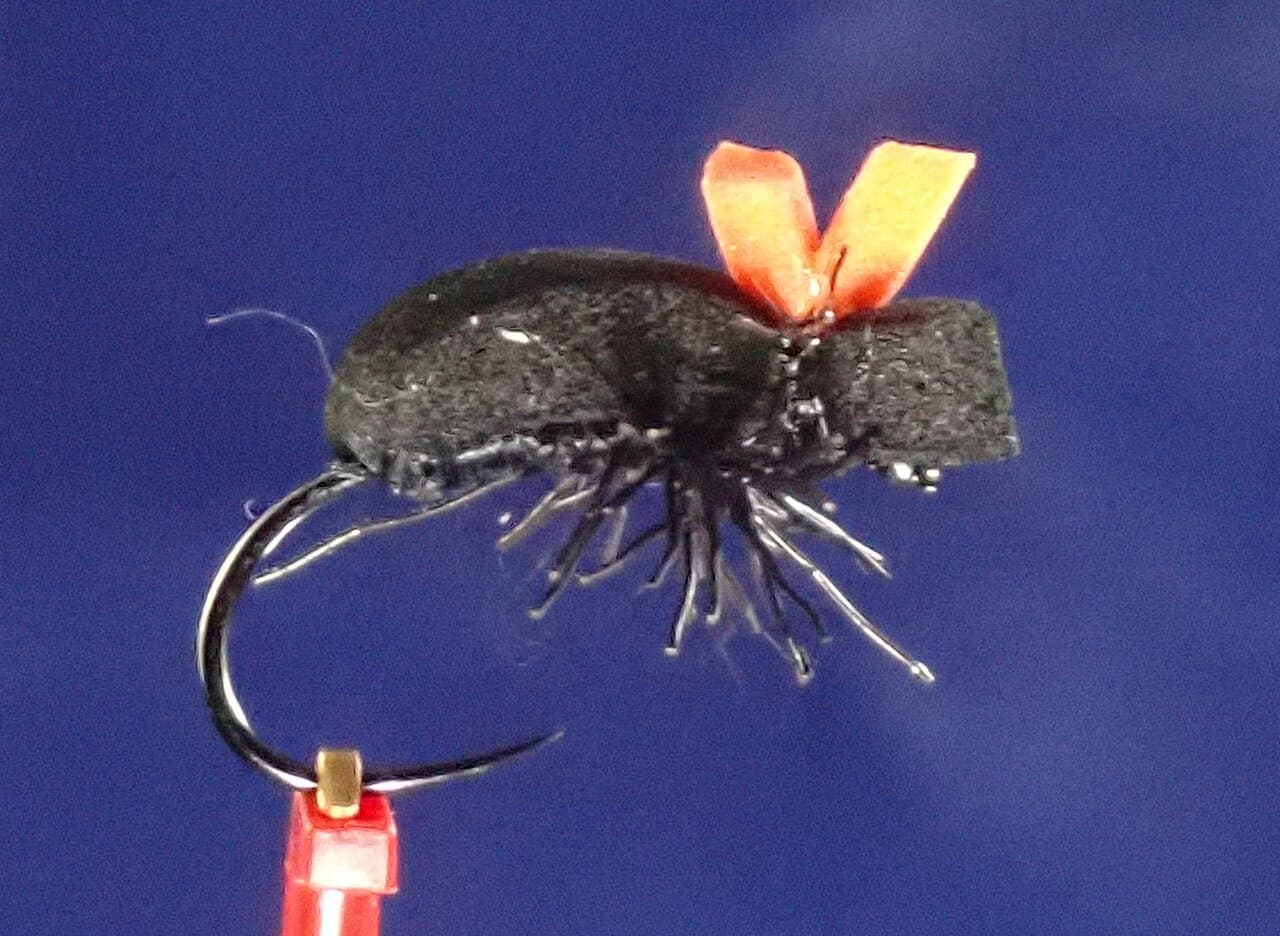 Verified photograph
Pattern family · #10–18
Beetle Patterns
Low-profile terrestrial patterns built to suggest a rounded beetle shell and short legs.Open family guide ↗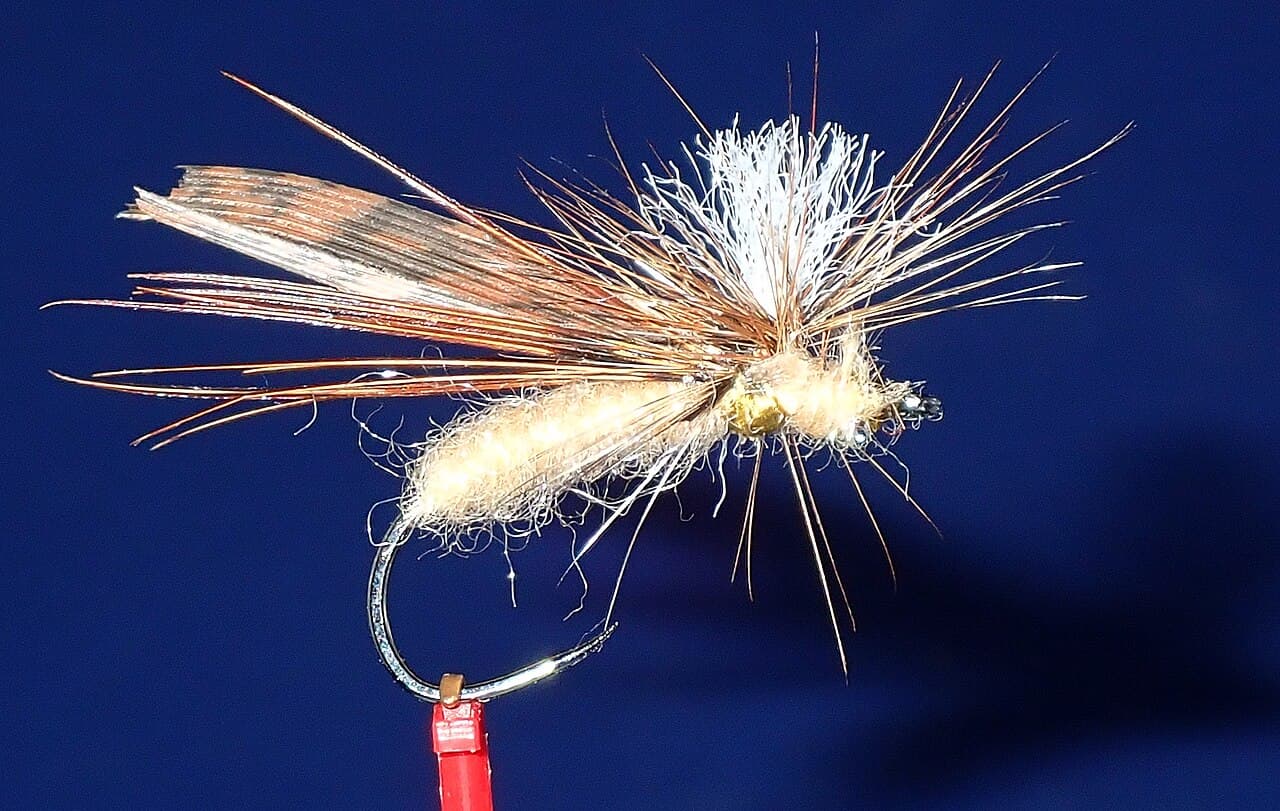 Verified photograph
Pattern family · #6–14
Grasshopper Patterns
A family of foam, hair, and low-riding dry flies used to imitate grasshoppers and other large terrestrials.Open family guide ↗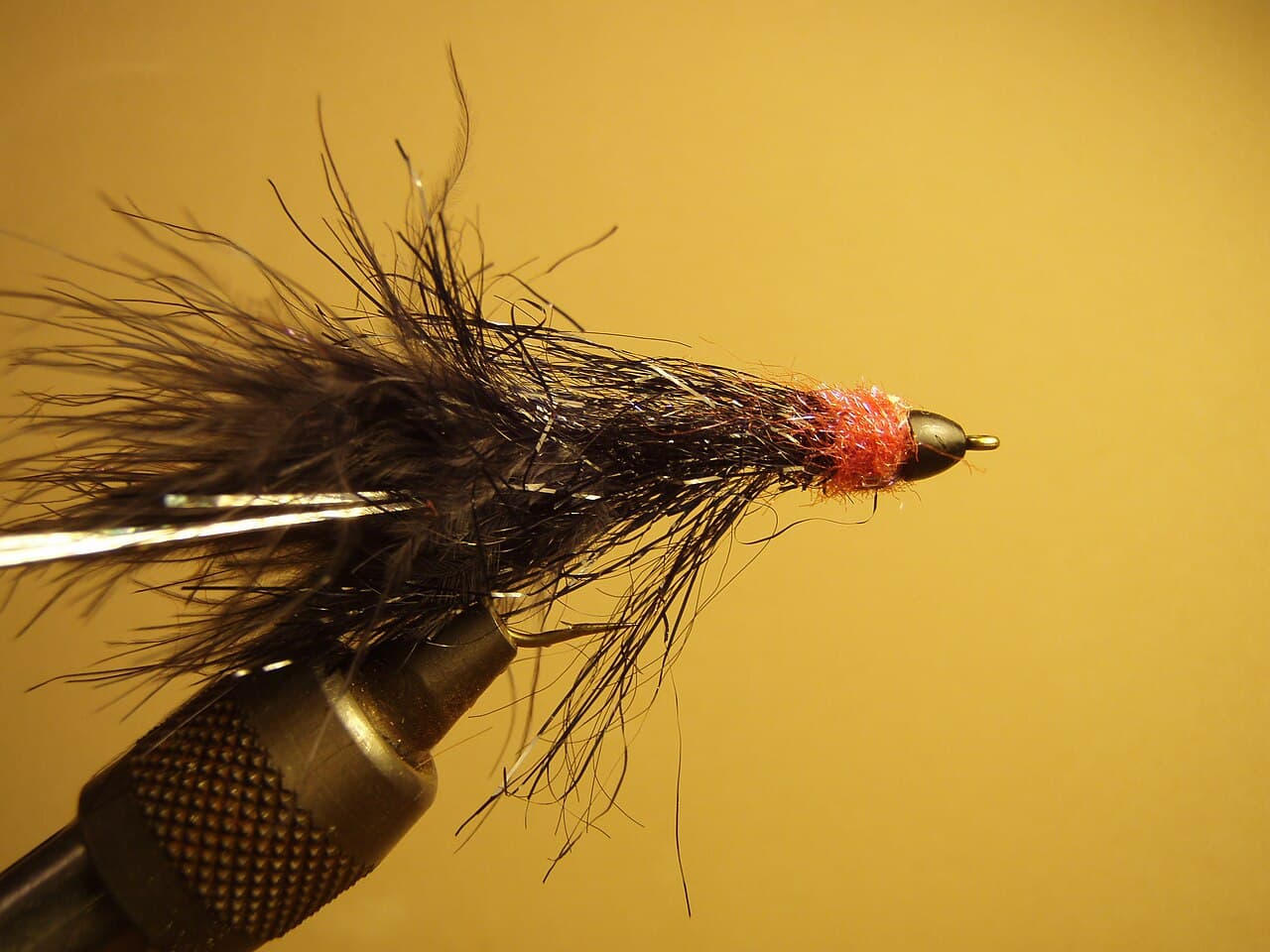 Verified photograph
Pattern family · #4–14
Leech Patterns
A mobile streamer family spanning marabou, rabbit-strip, balanced, and sparse leech profiles.Open family guide ↗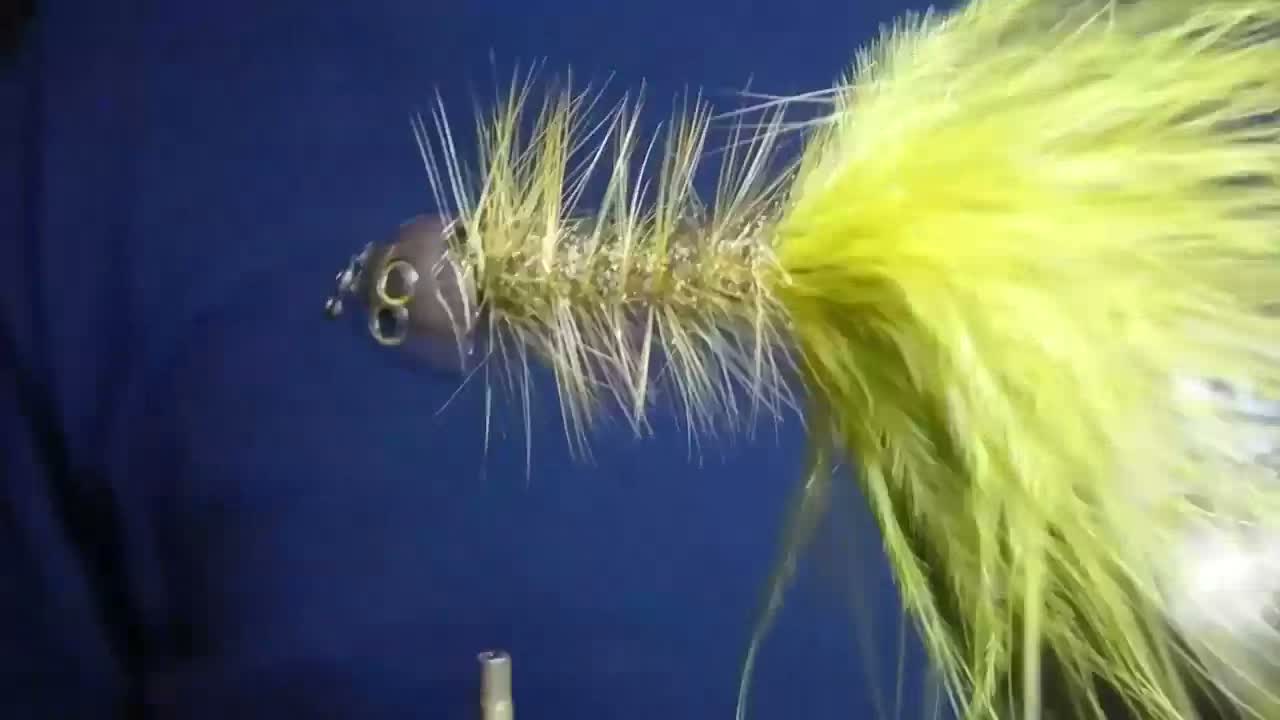 Verified photograph
Pattern family · #2–12
Sculpin Patterns
A bottom-oriented streamer family built around a broad head and tapered baitfish body.Open family guide ↗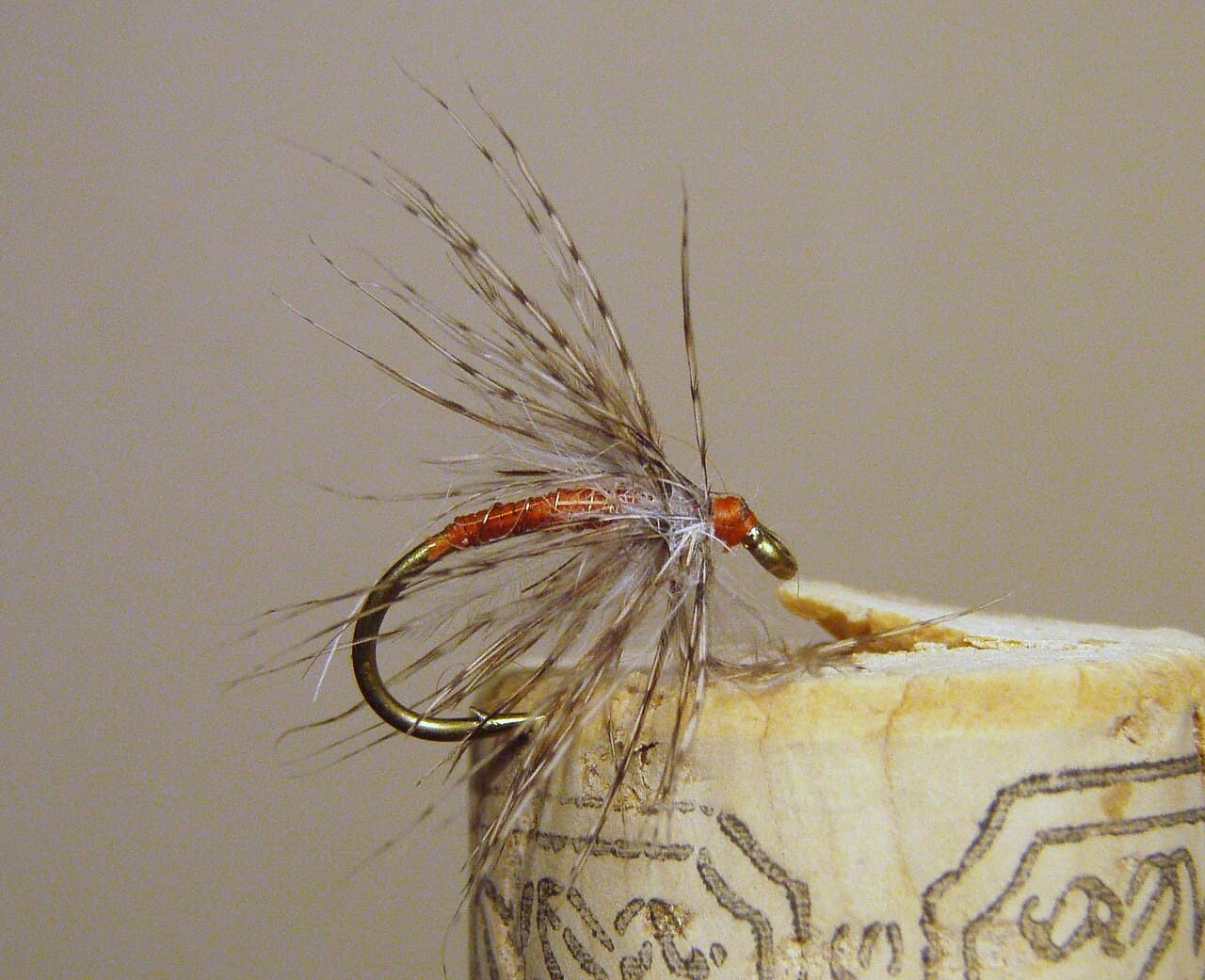 Verified photograph
Pattern family · #10–20
Soft-Hackle Wet Flies
A family of sparse wet flies whose mobile feather collar suggests legs, wings, or an emerging insect.Open family guide ↗Verified photographPattern family · Match the water, quarry, and tackle; generic river wording gives no exact size
Trout Streamer Patterns
A planning family for general trout streamer wording when an exact named pattern or forage shape is not supplied.Open family guide ↗ Verified photograph
Dry · #10–20
Adams Dry Fly
The classic upright-wing Adams: a gray-bodied dry with mixed brown-and-grizzly tail and hackle.Open field guide ↗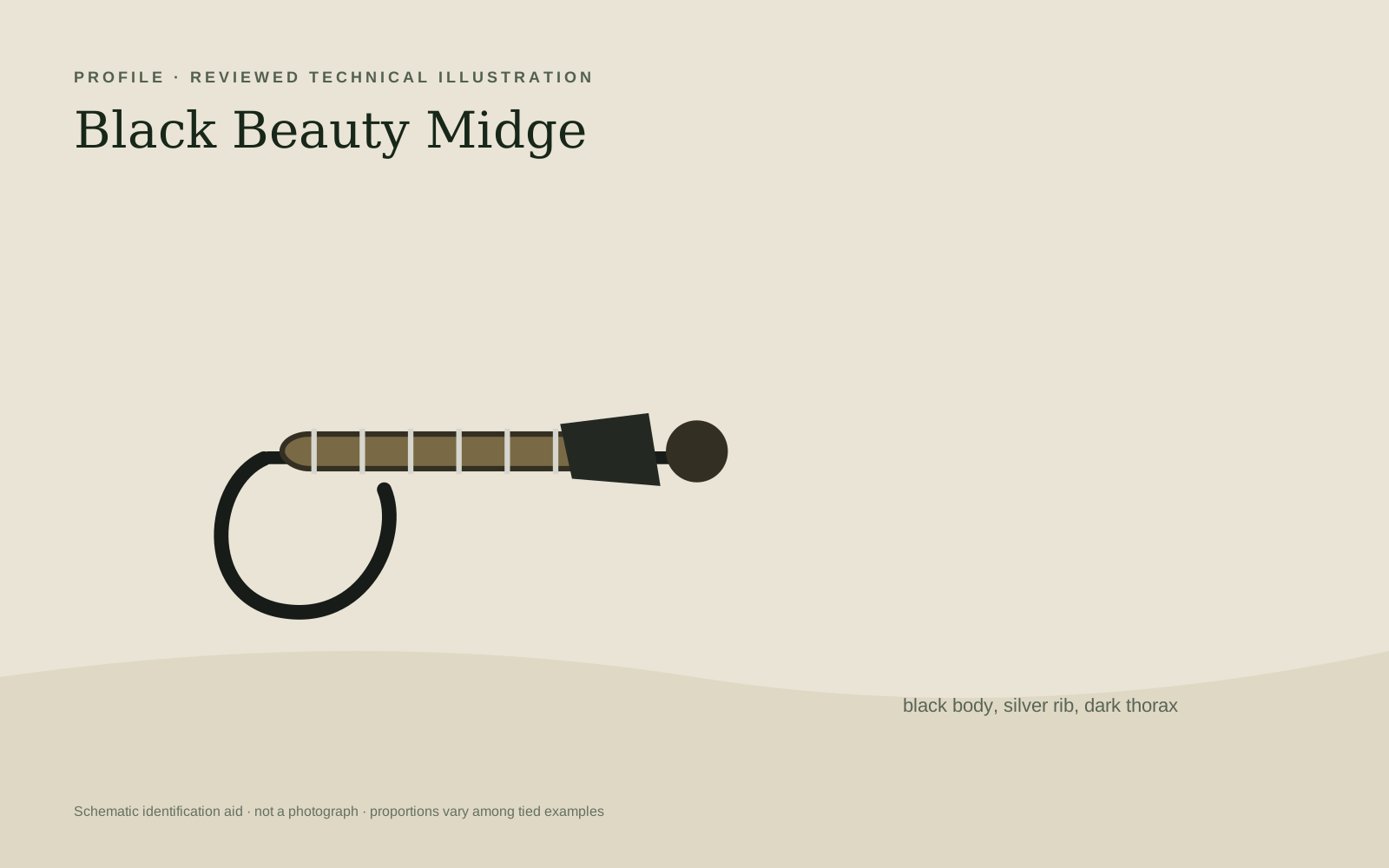 Reviewed illustration
Nymph · #18–24
Black Beauty Midge
Pat Dorsey's sparse black midge-larva or pupa imitation with a fine rib and compact thorax.Open field guide ↗ Verified photograph
Emerger · #16–24 in the reviewed Orvis standard recipe, Orvis demonstrates #20 as a versatile standard example
WD-40
Mark Engler's sparse beadless emerger: one barred-fiber bunch forms the tail and wing case around a slim thread abdomen and tiny dubbed thorax.Open field guide ↗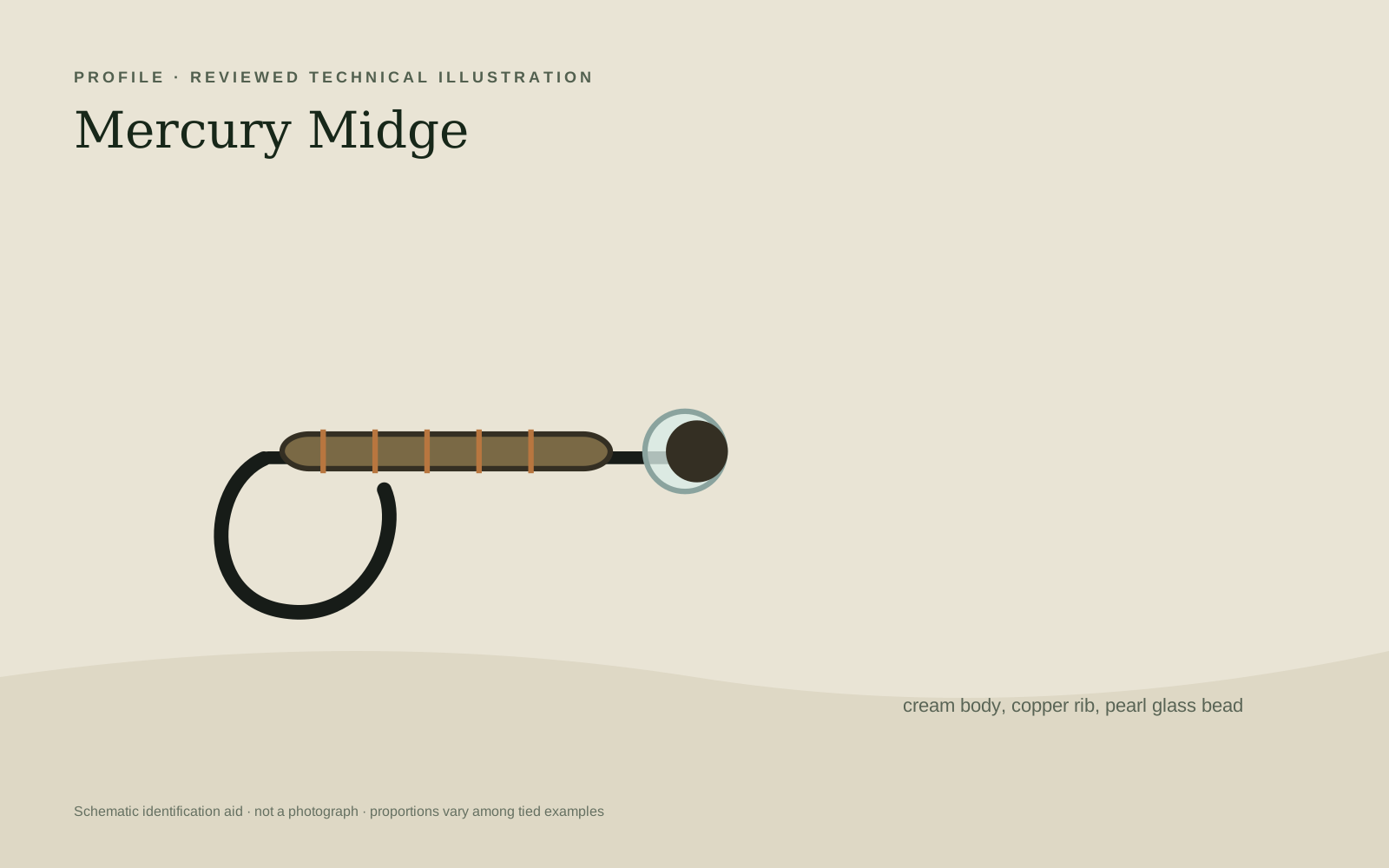 Reviewed illustration
Nymph · #18–24
Mercury Midge
Pat Dorsey's glass-bead midge pattern with a slim thread body and fine wire rib.Open field guide ↗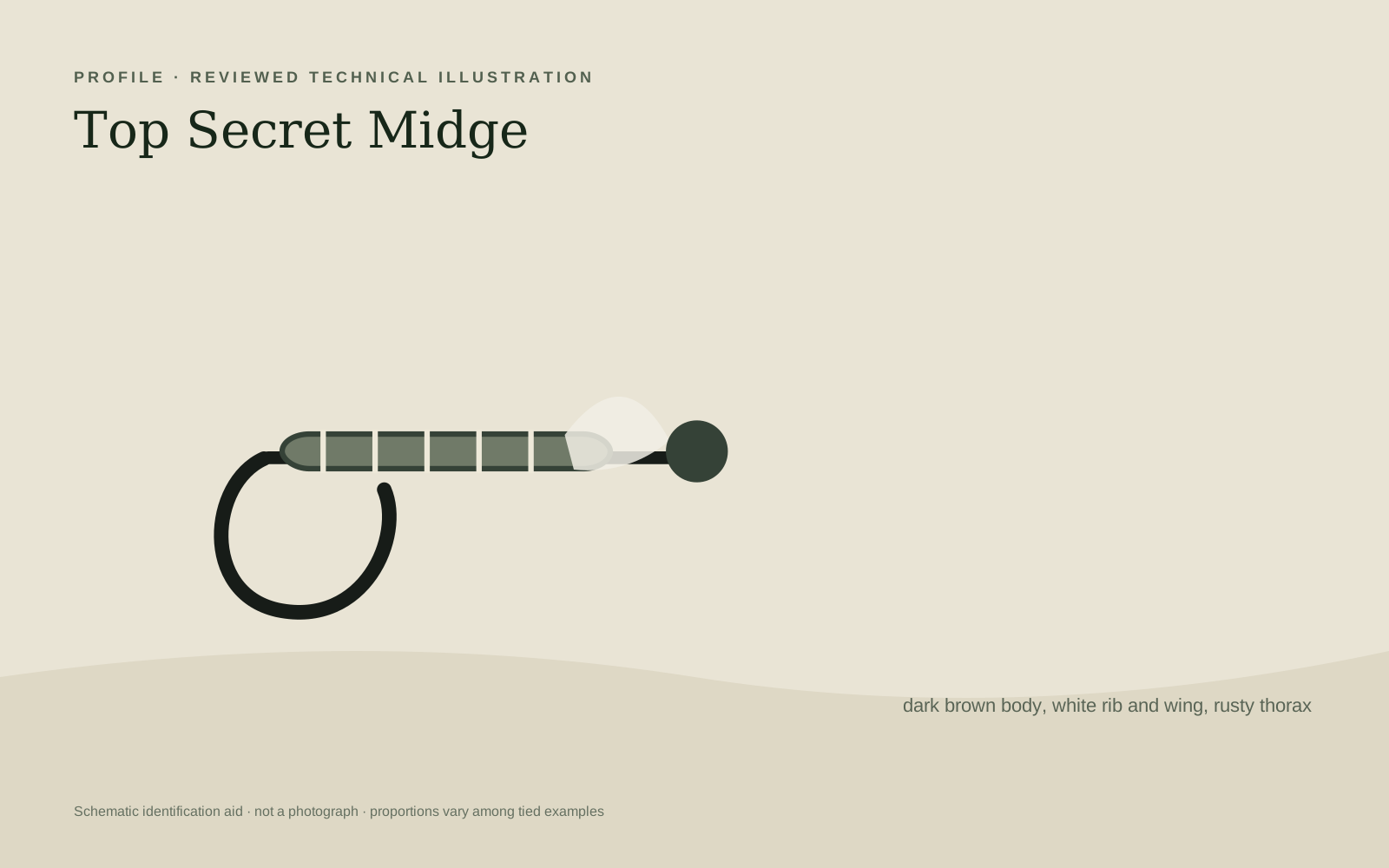 Reviewed illustration
Emerger · #20–26
Top Secret Midge
Pat Dorsey's tiny brown midge emerger with a white thread rib, sparkle-organza wing, and rusty thorax.Open field guide ↗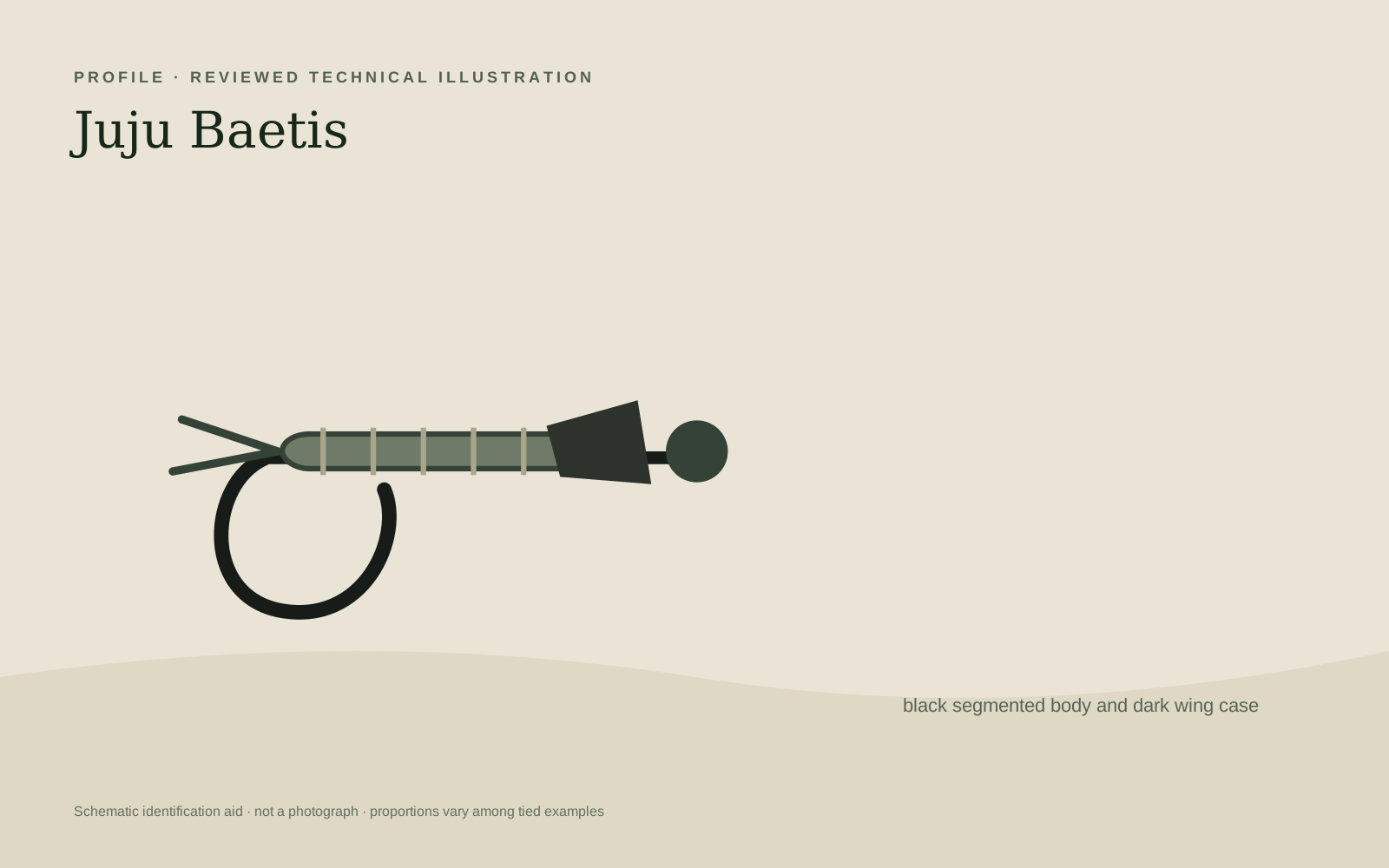 Reviewed illustration
Nymph · #16–24
Juju Baetis
Charlie Craven's slim Baetis-style nymph with a segmented synthetic body, wing case, and sparse profile.Open field guide ↗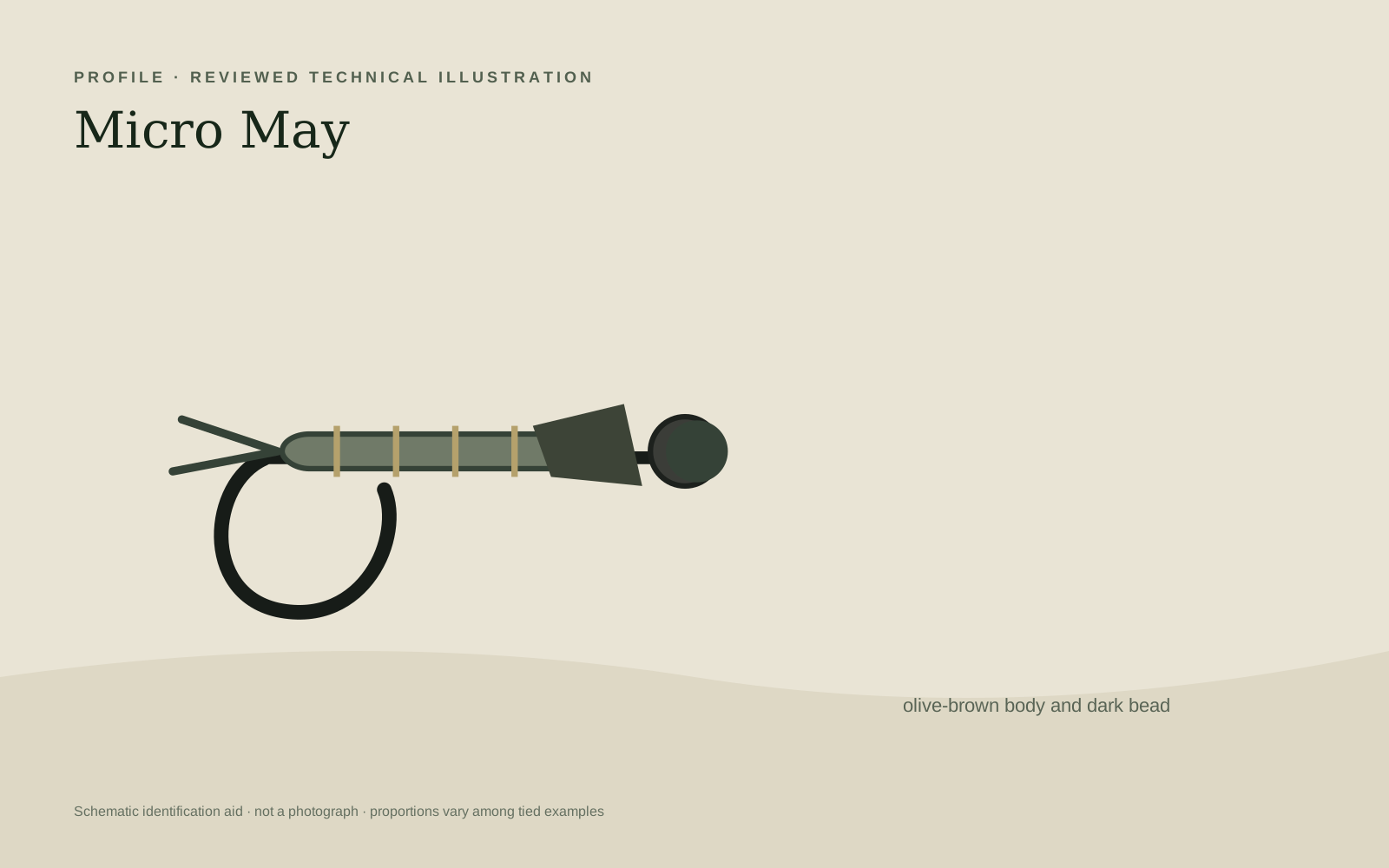 Reviewed illustration
Nymph · Small tailwater sizes; verify the local form
Micro May
A compact bead-head mayfly nymph used as a small dropper or in a multi-nymph rig.Open field guide ↗ Verified photograph
Emerger · Hendrickson reviewed recipe: #12–16, BWO reviewed recipe: #18, other species may require different sizes; match measured naturals rather than treating #12–22 as interchangeable
Sparkle Dun
Craig Mathews's hackleless, flush-floating mayfly transition dry, distinguished from a Comparadun by its trailing Zelon shuck.Open field guide ↗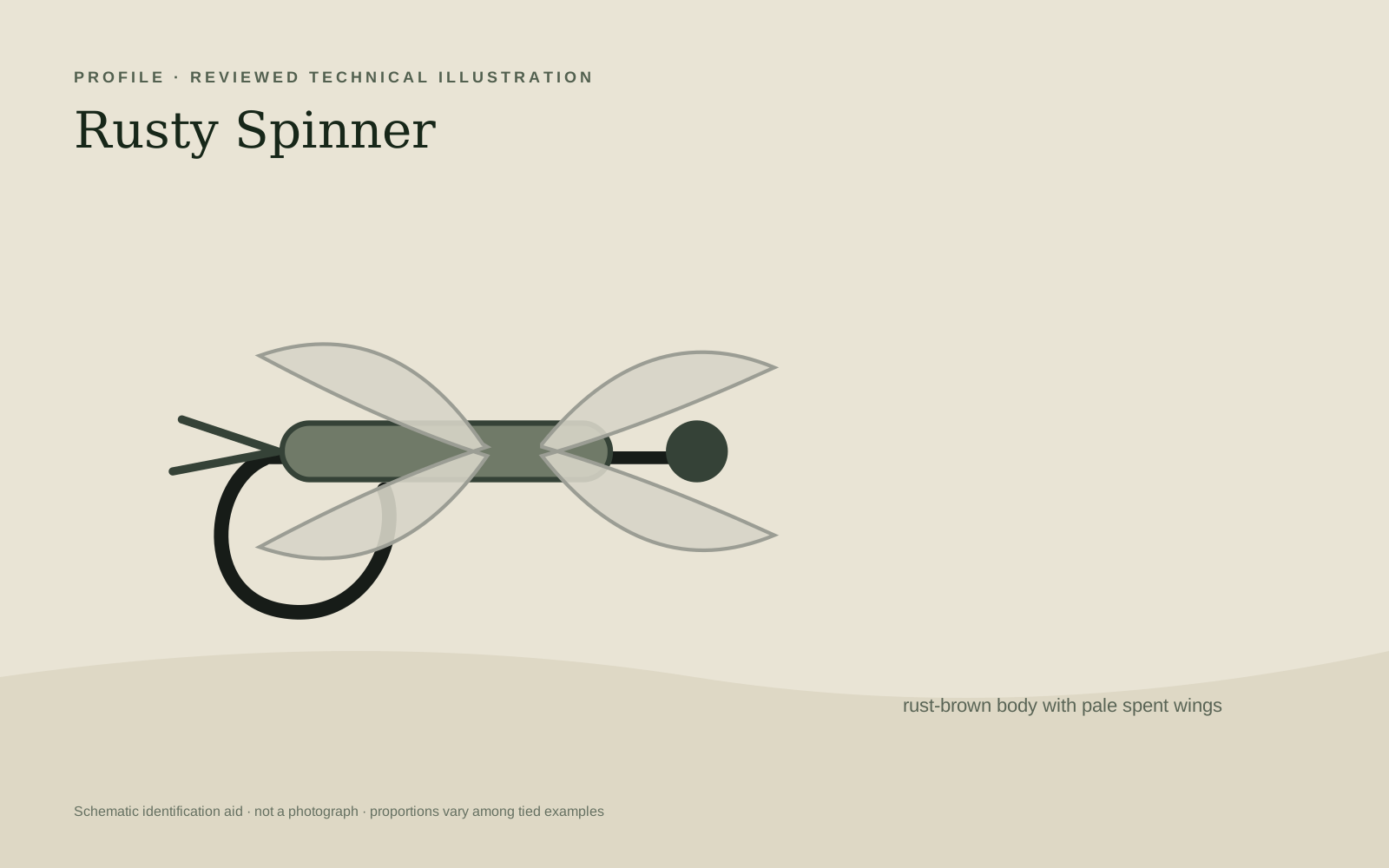 Reviewed illustration
Dry · #12–18, matched to naturals
Rusty Spinner
A spent-wing mayfly pattern with a rust-brown body, divided tails, and flat outstretched wings.Open field guide ↗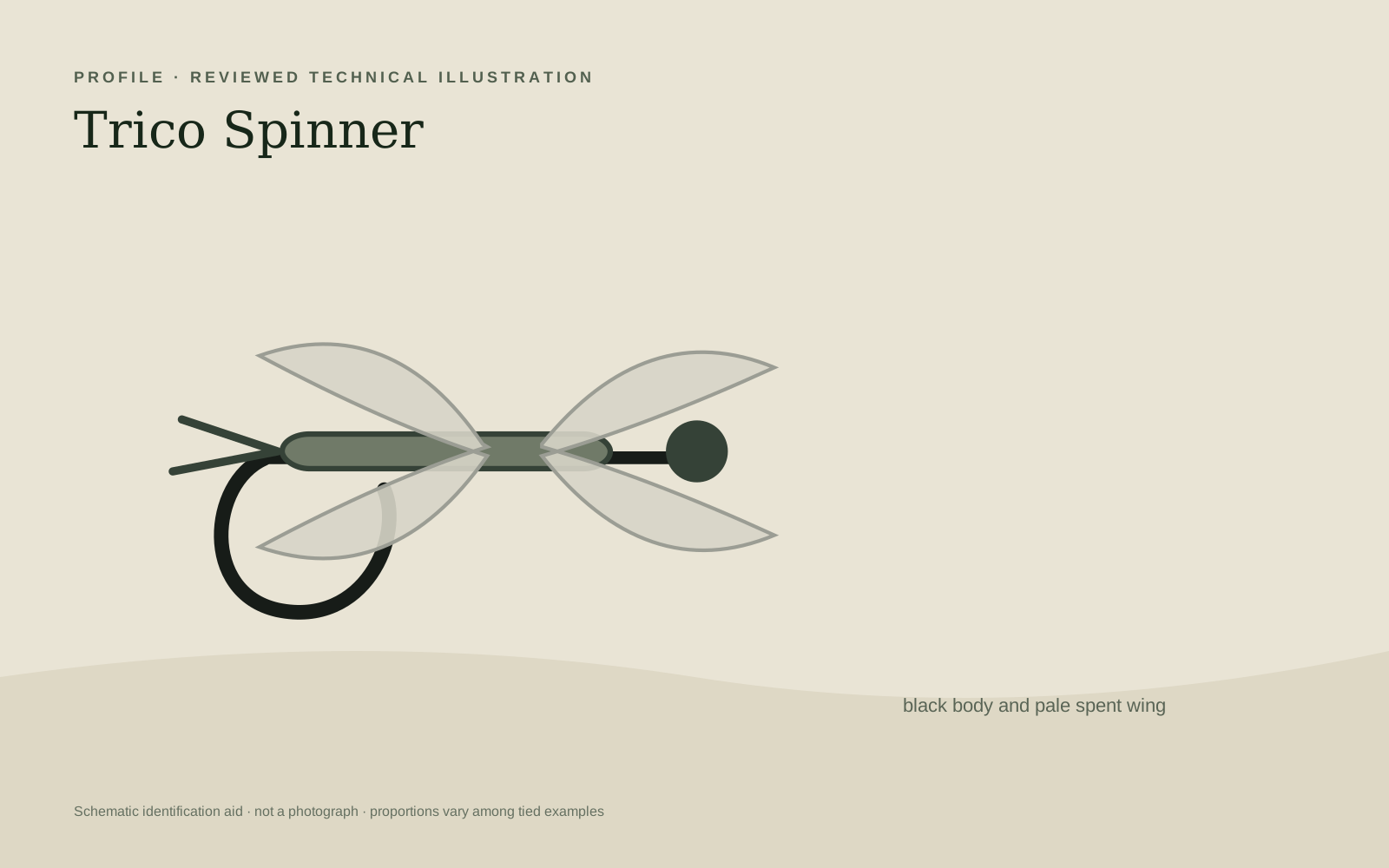 Reviewed illustration
Dry · #20–24
Trico Spinner
A very small spent-wing pattern for Trico spinner falls, with a sparse low flat profile.Open field guide ↗ Verified photograph
Dry · #10–18
Royal Wulff
A buoyant hair-wing attractor with white upright wings, peacock body sections, and a red center band.Open field guide ↗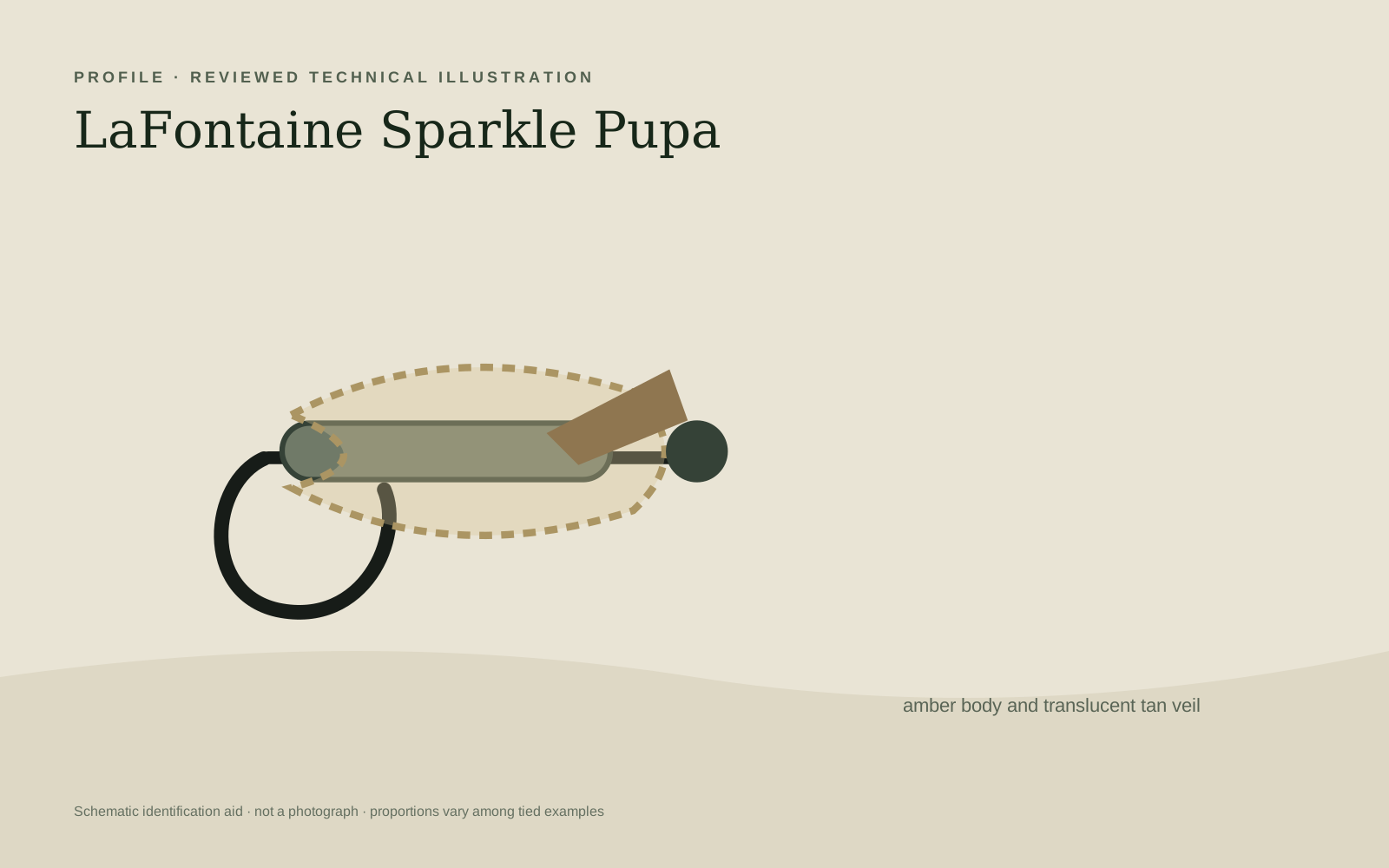 Reviewed illustration
Emerger · #12–18
LaFontaine Sparkle Pupa
Gary LaFontaine's caddis-pupa design using a translucent Antron-style veil to suggest the emergence envelope.Open field guide ↗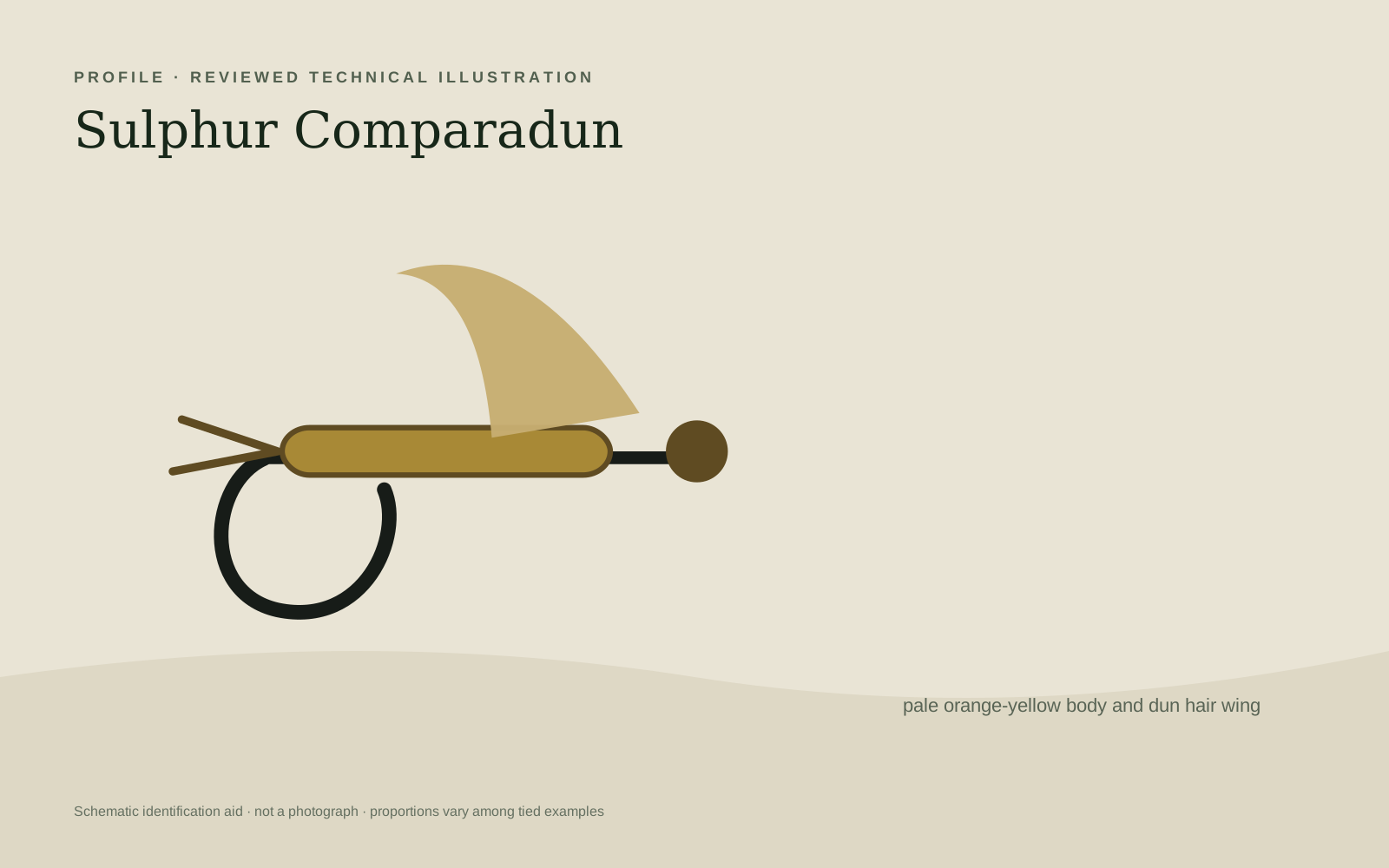 Reviewed illustration
Dry · Often #14–18; verify locally
Sulphur Comparadun
A pale orange-yellow, hackleless Comparadun tied specifically for Sulphur mayfly duns.Open field guide ↗Verified photographWet Fly · FFI and Orvis references: #12–18; match observed insects and water
Partridge and Orange
A traditional North Country-style soft hackle built from a slim orange body and sparse partridge collar, presented with two named comparison flies so users can identify it by construction instead of by collar feather alone.Open field guide ↗ Verified photograph
Nymph · #10–20 in the reviewed Orvis tying recipe, #12–22 in Umpqua's current John Barr range
Copper John
John Barr's dense attractor nymph, built around a bead, splayed biot tails, wire abdomen, peacock-style thorax, flash-backed dark wing case, and soft legs.Open field guide ↗Verified photographPattern family · Match the local insect; the family label gives no exact size
Mayfly Patterns by Stage
A stage-first guide for reports that name a mayfly but do not identify a species or exact fly.Open family guide ↗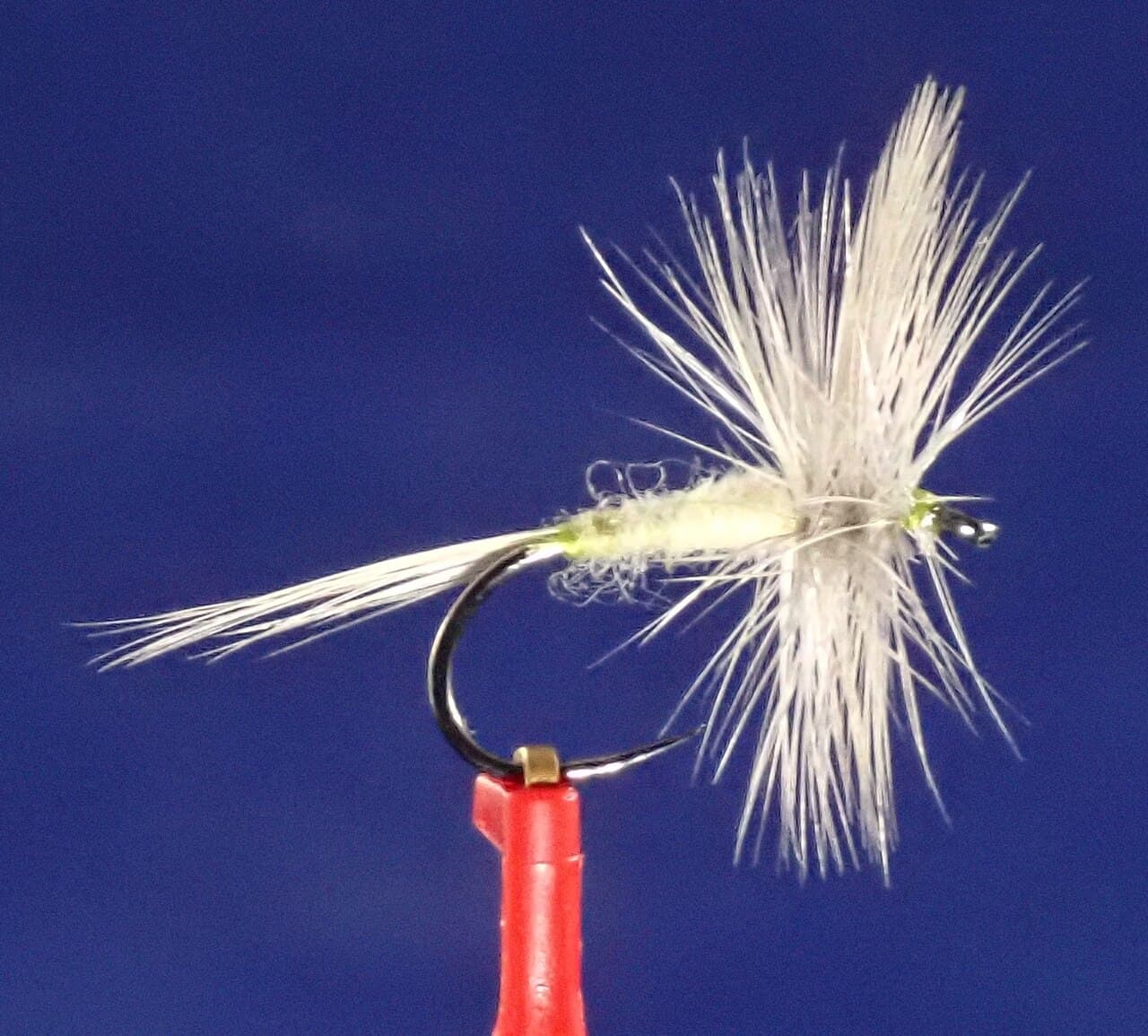 Verified photograph
Pattern family · Often #14–20; verify locally
Pale Morning Dun Patterns
A stage-based PMD family spanning nymphs, emergers, duns, cripples, soft hackles, and spinners.Open family guide ↗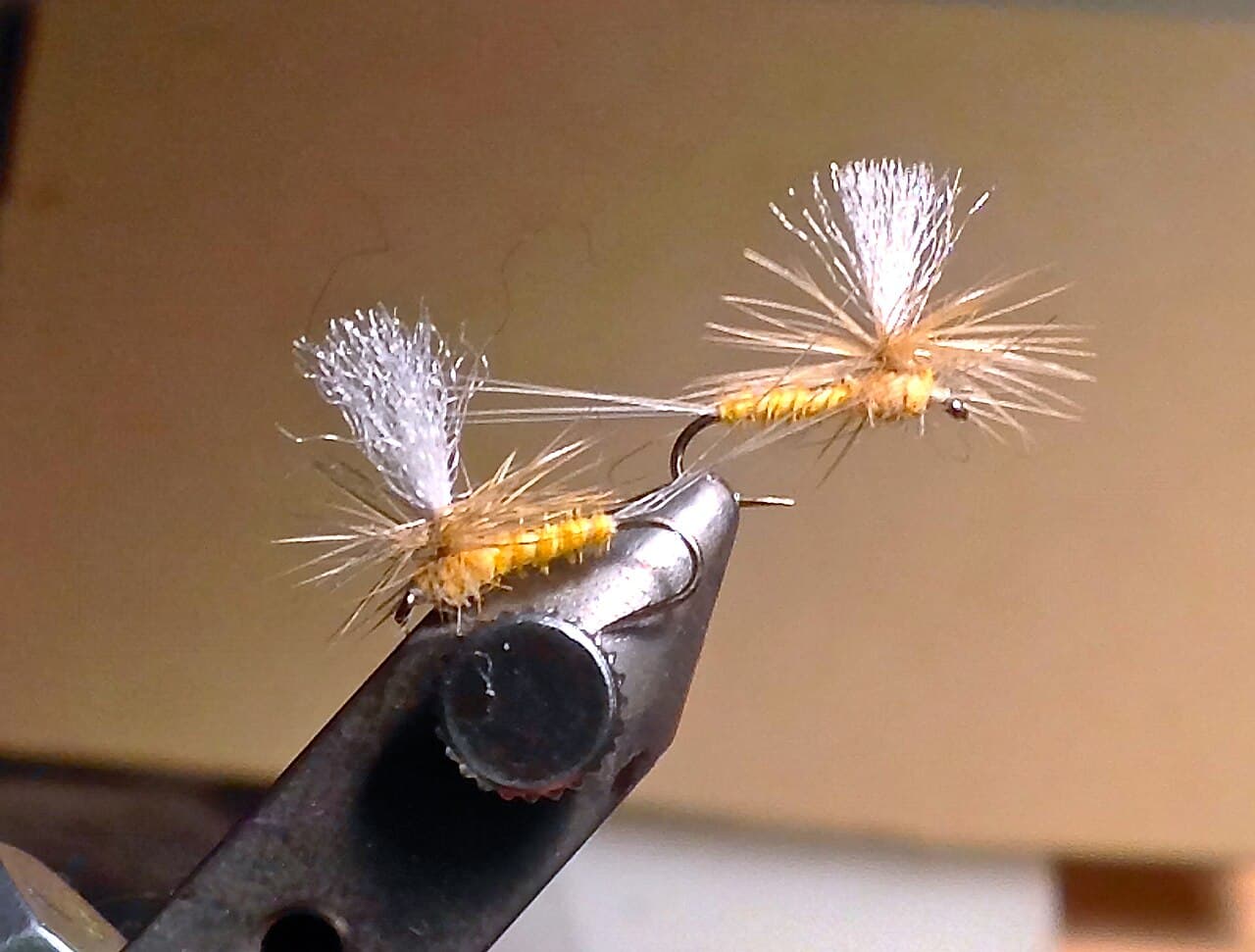 Verified photograph
Pattern family · Often #14–18; verify locally
Sulphur Mayfly Patterns
A pale-mayfly stage family for Sulphur nymphs, emergers, duns, cripples, soft hackles, and spinners.Open family guide ↗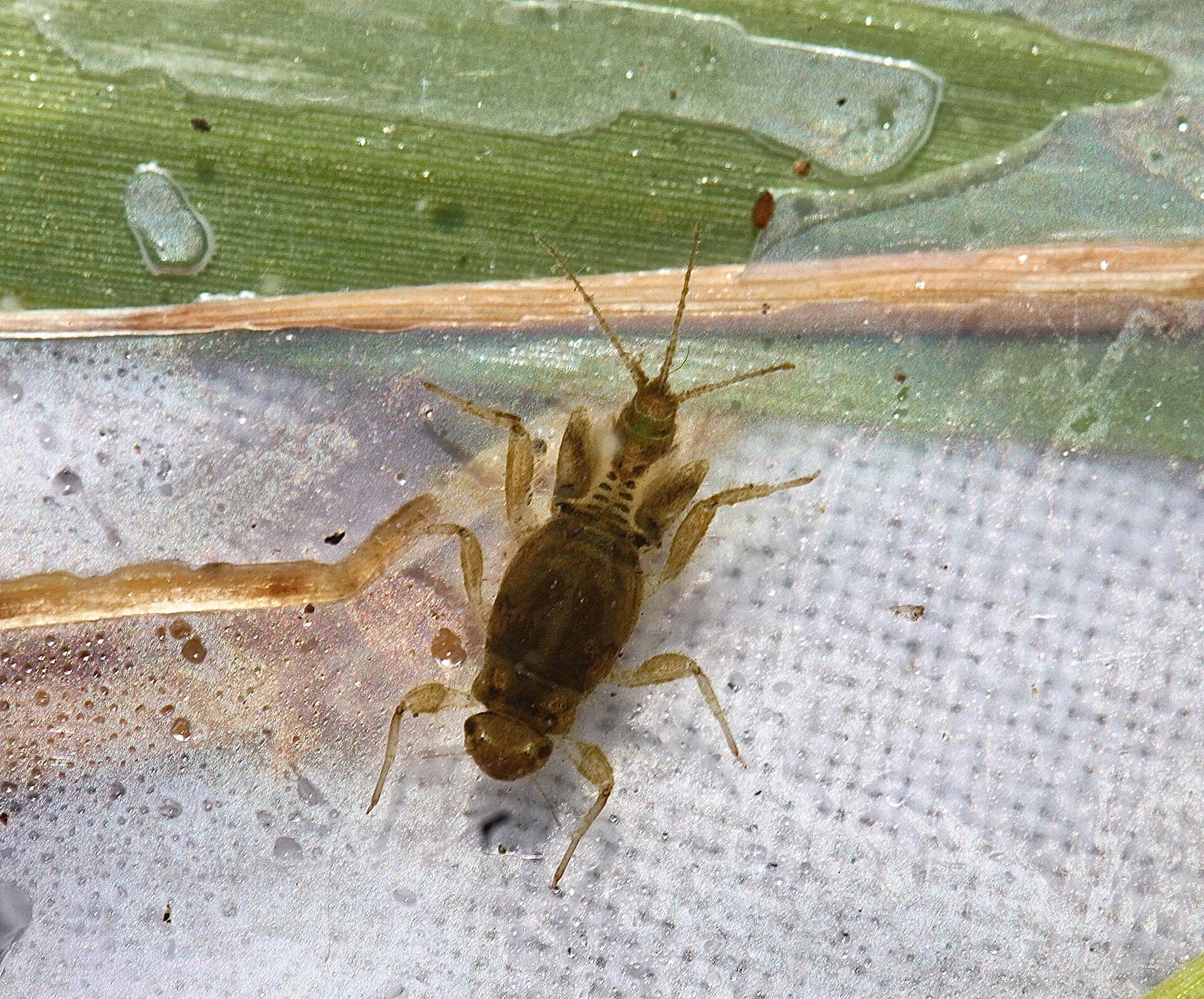 Verified photograph
Pattern family · Often #20–24
Trico Patterns
A tiny-mayfly family covering Trico nymphs, emergers, duns, clusters, and spent spinners.Open family guide ↗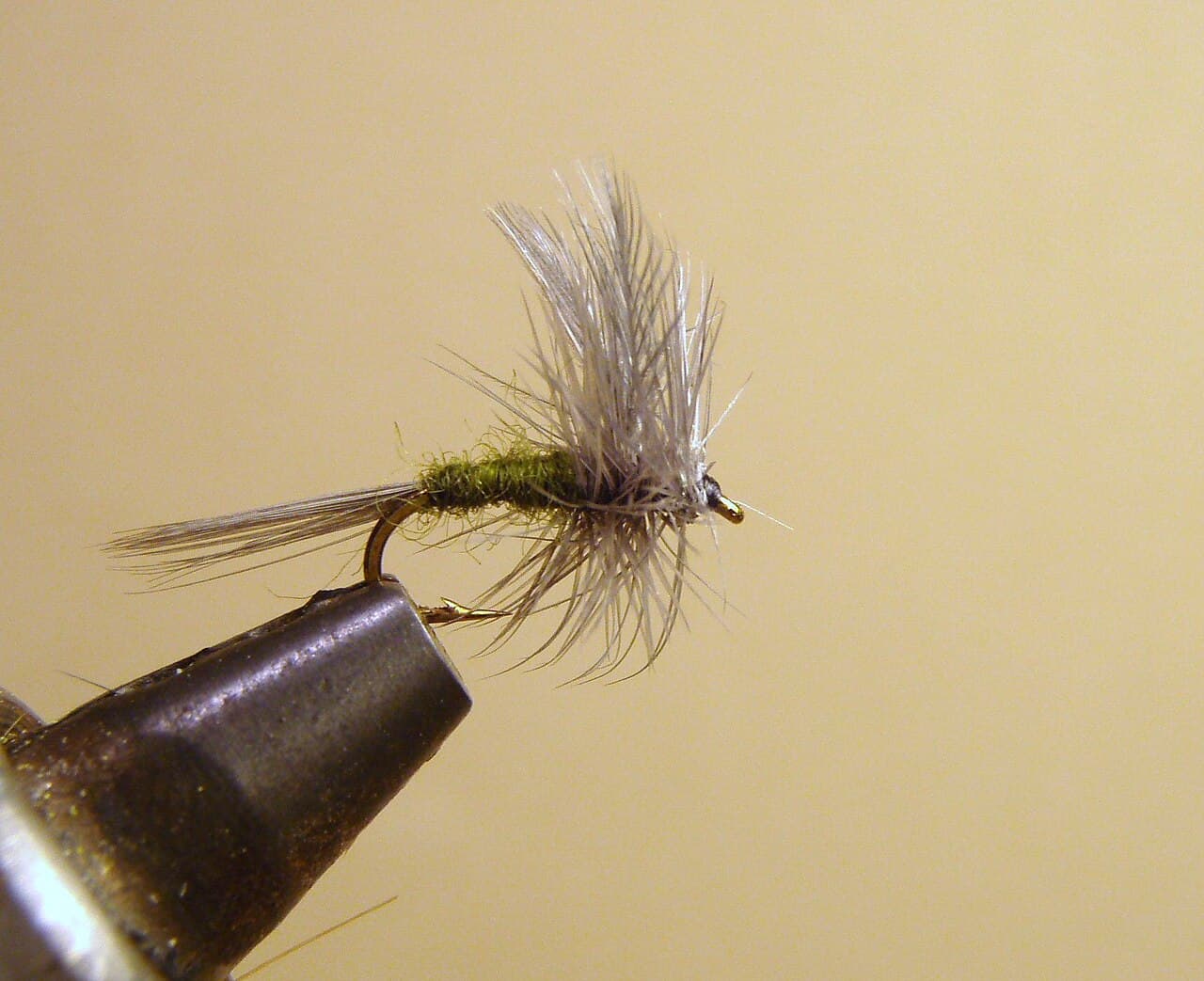 Verified photograph
Pattern family · Large mayfly sizes; verify local species
Green Drake Patterns
A large-mayfly family for Green Drake nymphs, emergers, cripples, duns, and spinners where the hatch occurs.Open family guide ↗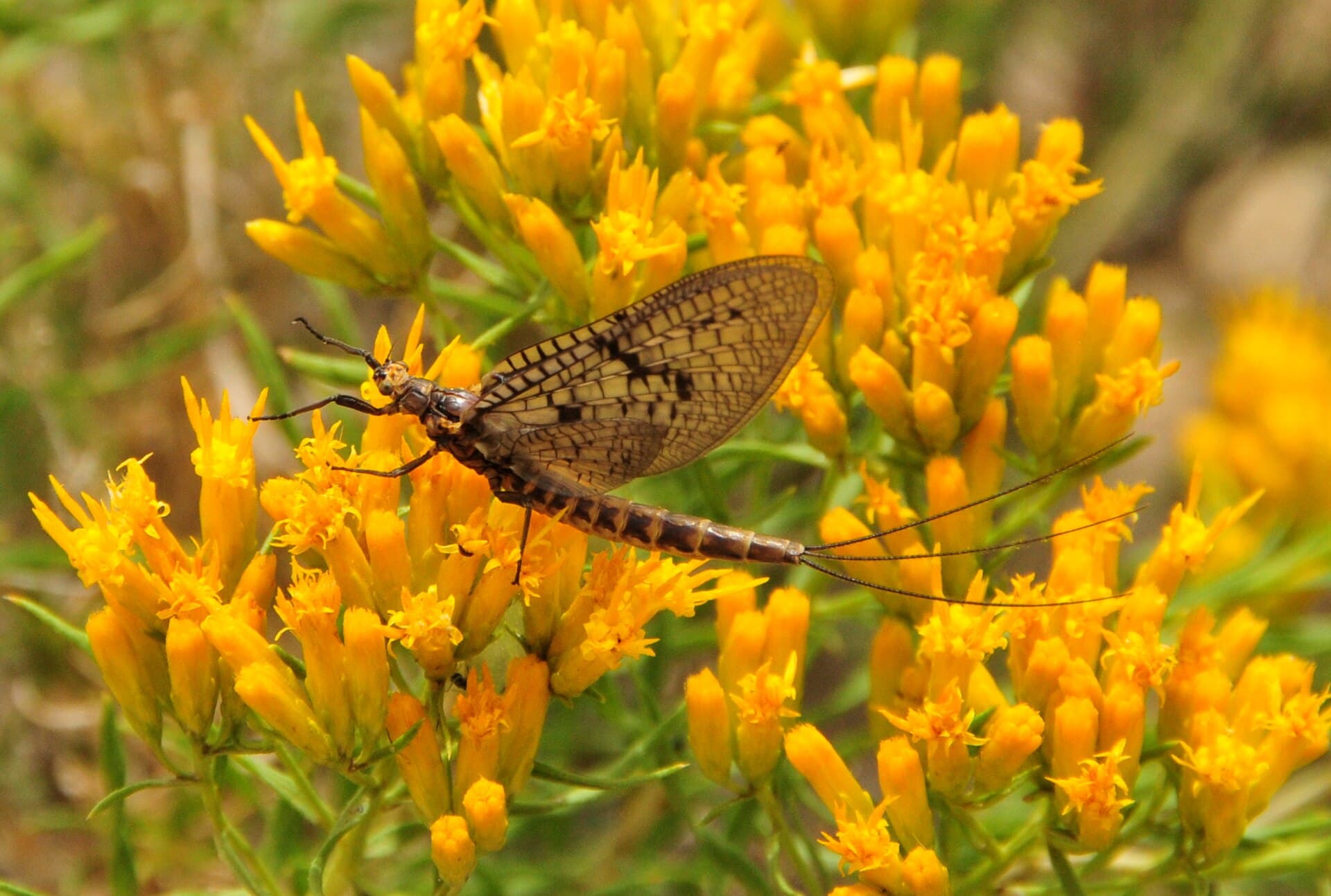 Verified photograph
Pattern family · Large mayfly sizes; verify locally
Brown Drake Patterns
A large-mayfly family separating Brown Drake nymphs, emergers, duns, and pale Coffin Fly spinner forms.Open family guide ↗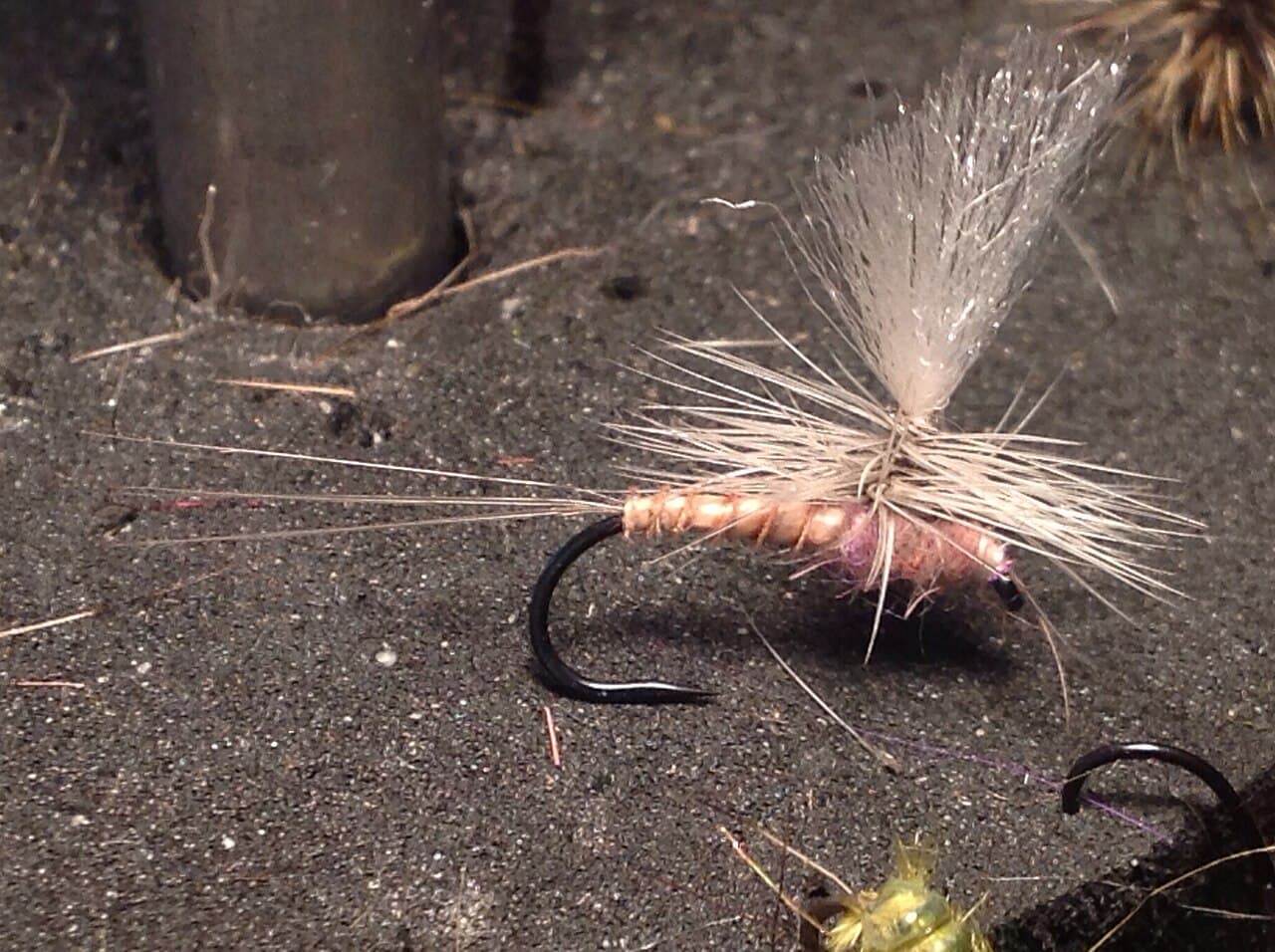 Verified photograph
Pattern family · Often #12–16
Hendrickson Patterns
An eastern mayfly family spanning nymphs, emergers, duns, soft hackles, Sparkle Duns, and spinners.Open family guide ↗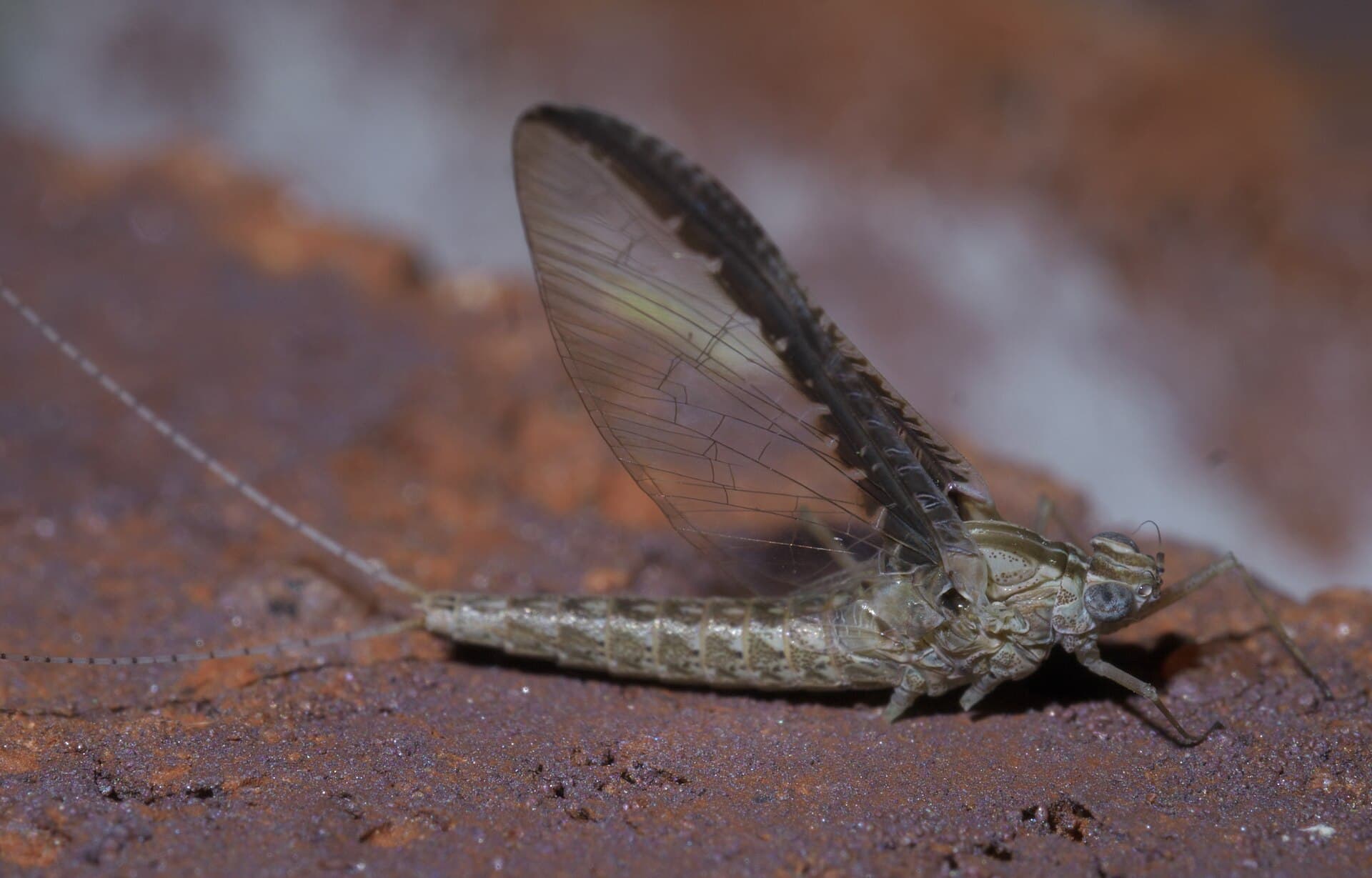 Verified photograph
Pattern family · The reviewed adult references range by species and generation; the Fly Fishers International Callibaetis Parachute source recommends carrying #10–16 rather than trusting one size
Callibaetis Patterns
A source-bounded stillwater guide showing how real Callibaetis adults vary across three named species, and how to choose stage, size, and presentation without treating one mottled-wing dry as the whole hatch.Open family guide ↗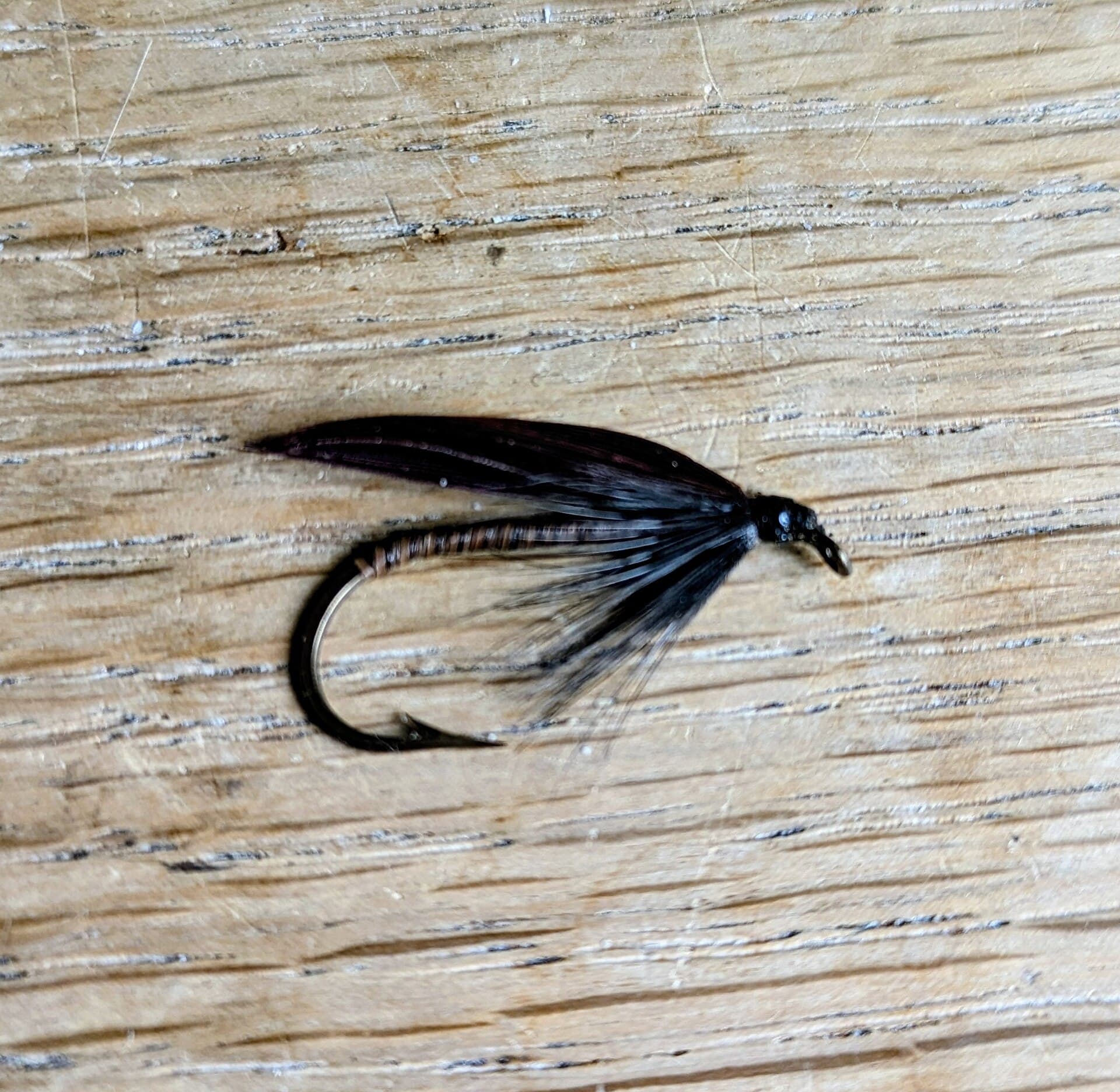 Verified photograph
Pattern family · Small mayfly sizes; verify locally
Blue Quill Patterns
A small eastern mayfly family for Blue Quill nymphs, emergers, duns, and spinners.Open family guide ↗ Verified photograph
Pattern family · No universal hook size; measure or use a current local source because the photographs provide no scale and the family label can refer to several stages
Quill Gordon Patterns
An early eastern mayfly guide that uses three exact Epeorus pleuralis natural references to separate aquatic anatomy from wet, emerger, dry, and spinner fly choices.Open family guide ↗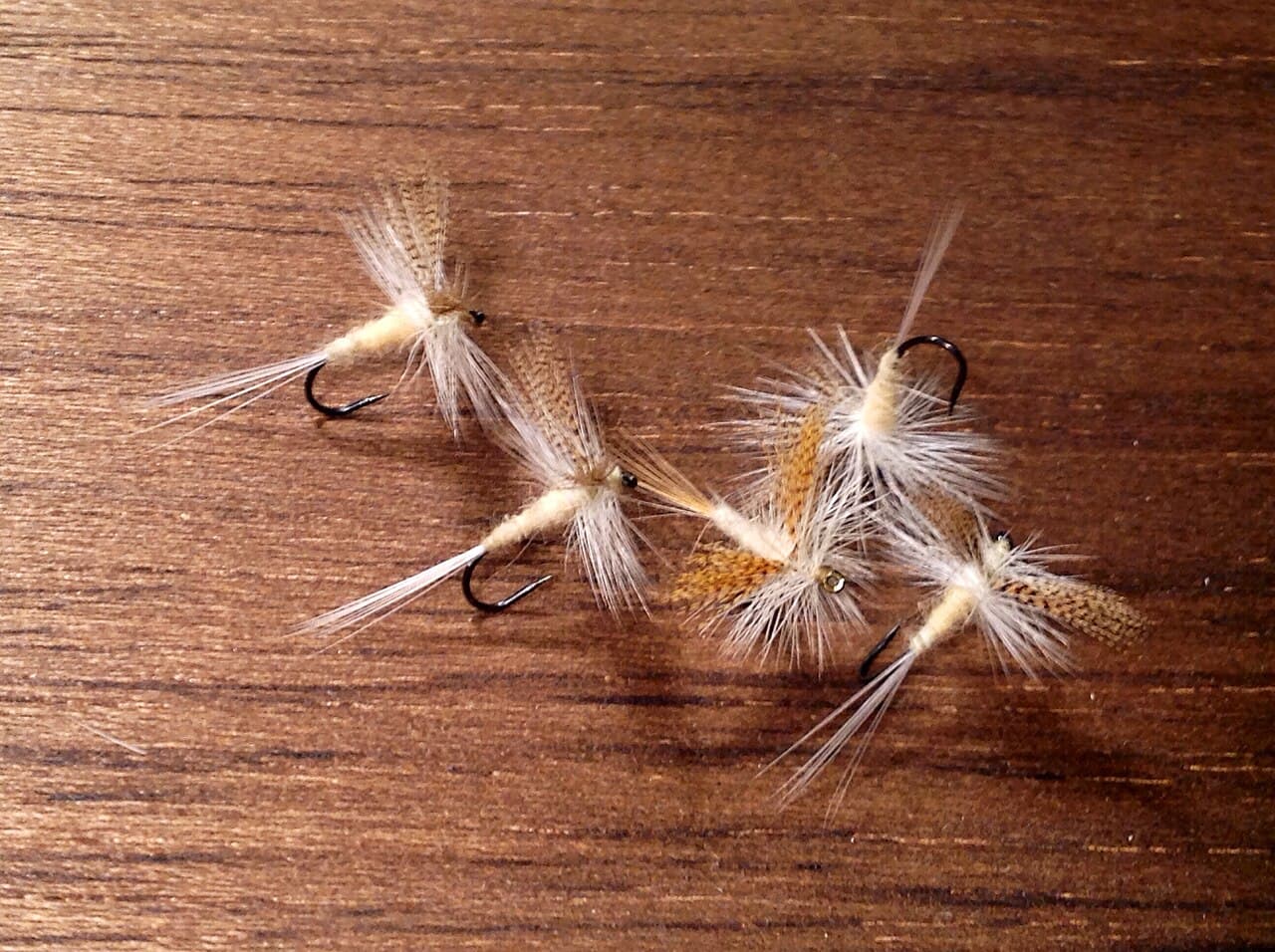 Verified photograph
Pattern family · Often #12–18
Light Cahill Patterns
A pale eastern mayfly family for Light Cahill nymphs, emergers, traditional or parachute dries, and spinners.Open family guide ↗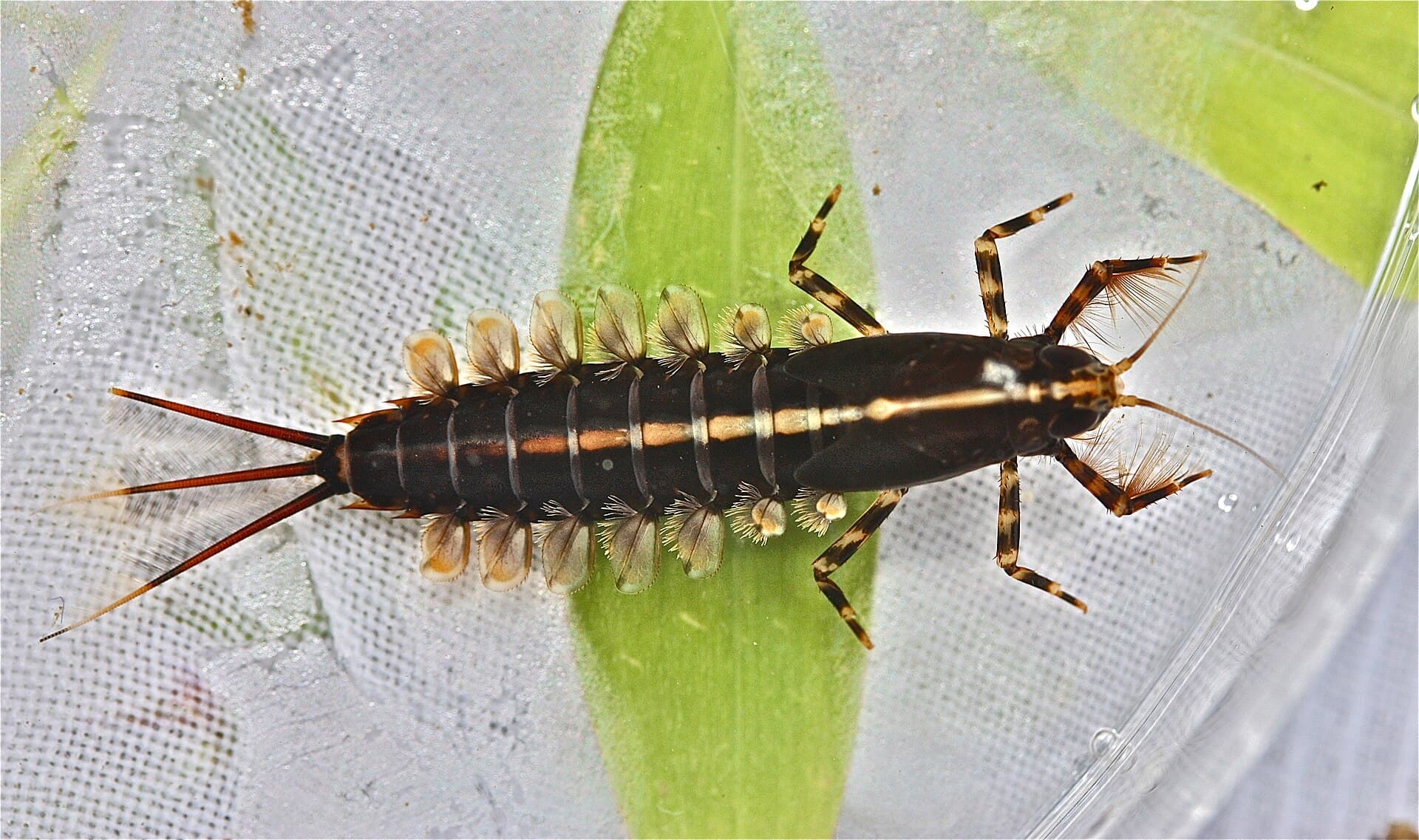 Verified photograph
Pattern family · Often #10–14; verify locally
Isonychia and Mahogany Dun Patterns
A stage-based Isonychia family, including report wording such as Mahogany Dun or Slate Drake.Open family guide ↗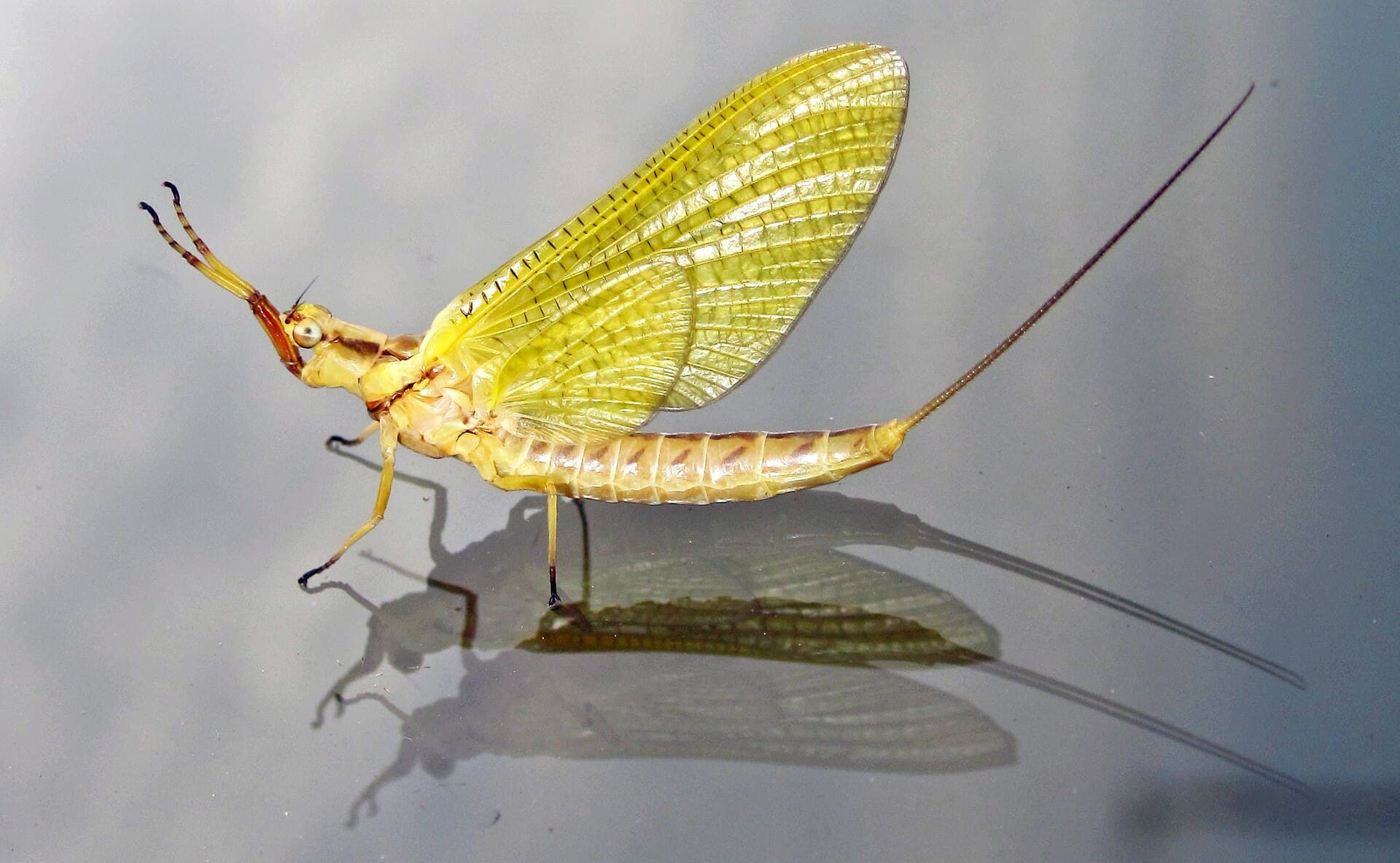 Verified photograph
Pattern family · Large mayfly sizes; verify the local water
Hex Mayfly Patterns
A large-mayfly family for Hexagenia nymph, emerger, dun, and spinner imitations.Open family guide ↗ Verified photograph
Pattern family · No universal hook size; the photographs contain no scale and common-name usage does not establish the local natural's measured length
Gray Fox Mayfly Patterns
A March Brown and Gray Fox naming guide that uses exact Maccaffertium vicarium natural references while keeping aquatic, emerger, dun, wet, and spinner choices separate.Open family guide ↗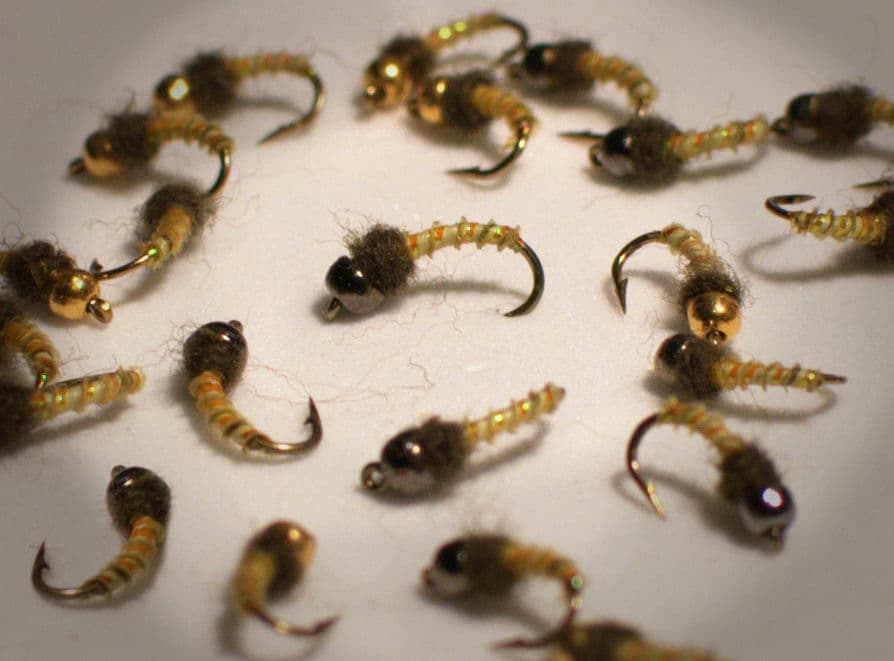 Verified photograph
Pattern family · Often #18–26; local insects vary
Midge Patterns by Stage
A stage-first midge family for larva, pupa, emerger, adult, and cluster patterns.Open family guide ↗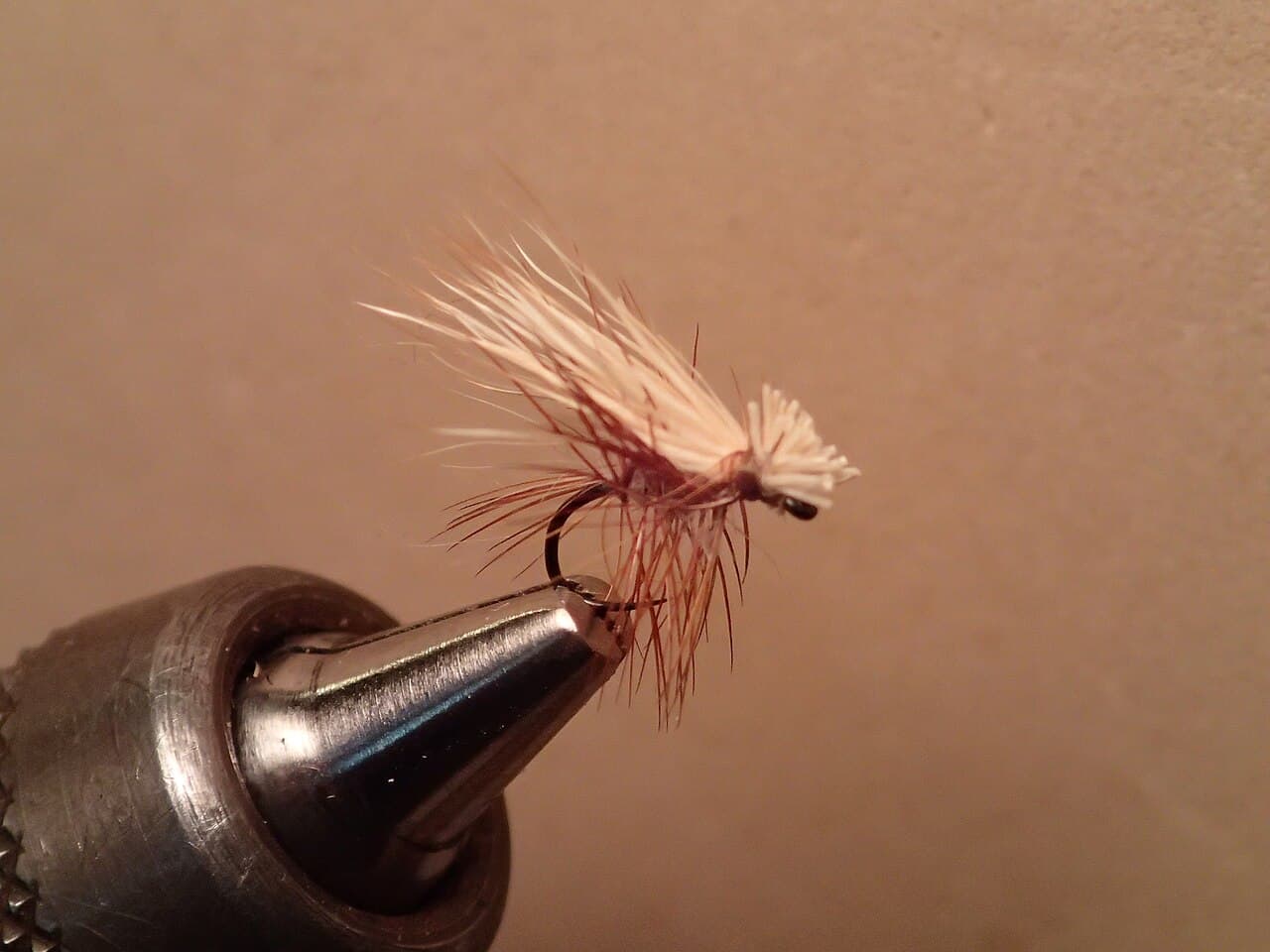 Verified photograph
Pattern family · Match local species; the family label gives no exact size
Caddis Patterns by Stage
A lifecycle guide for caddis larva, pupa, emerger, adult, spent, and skated dry patterns.Open family guide ↗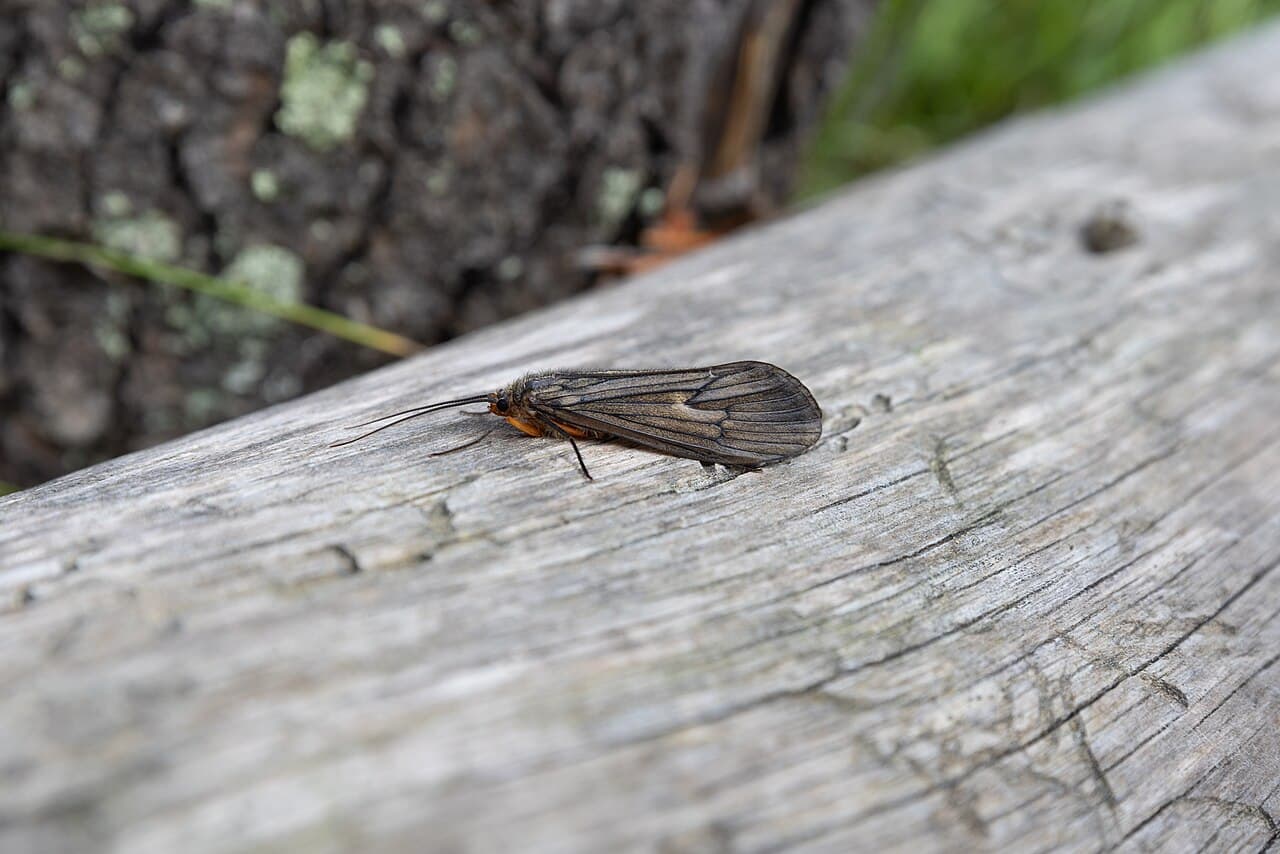 Verified photograph
Pattern family · Often large caddis sizes; verify locally
October Caddis Patterns
A large fall-caddis family separating larva, pupa, wet or emerger, and adult dry forms.Open family guide ↗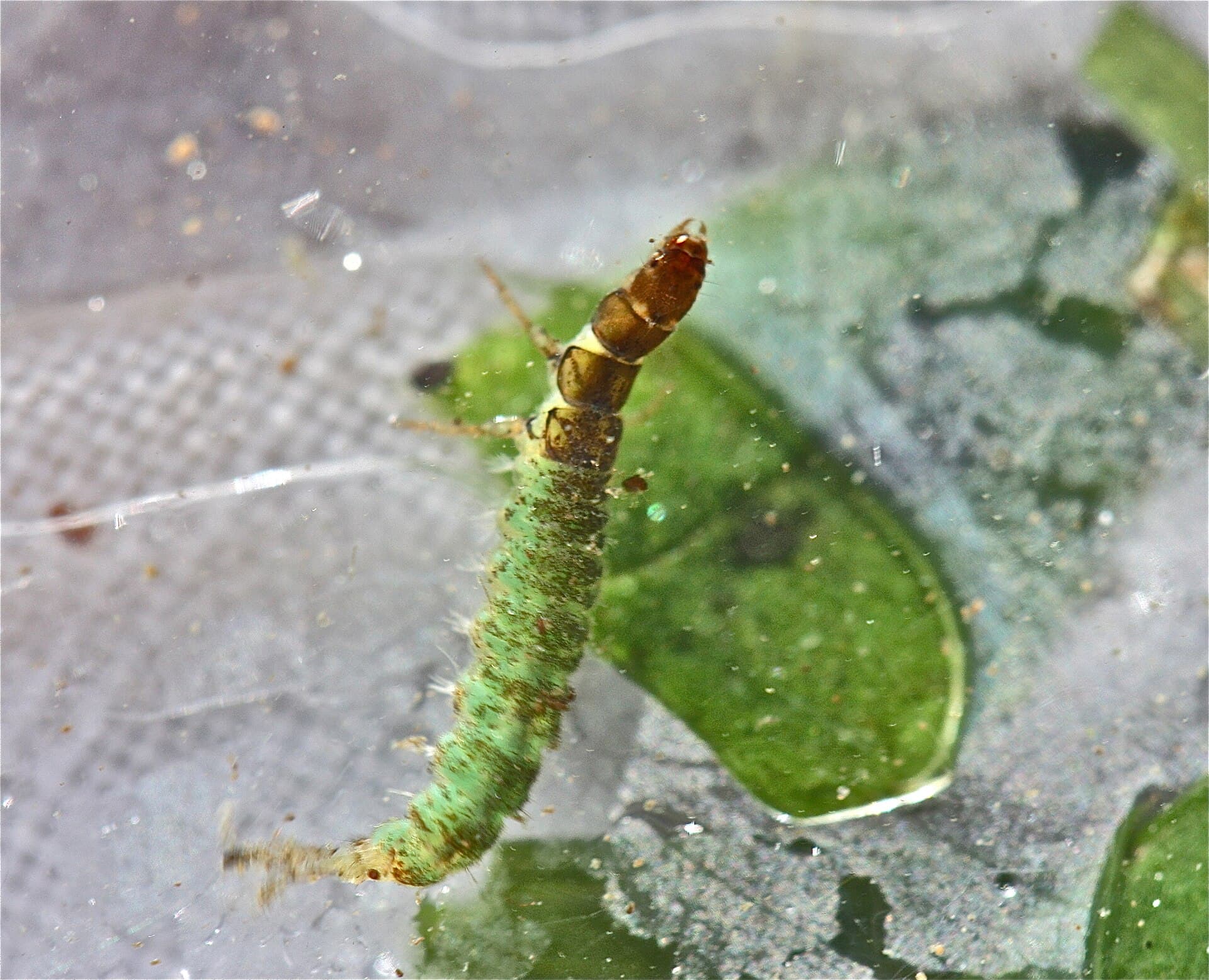 Verified photograph
Pattern family · Species and instar vary; sample or use a trusted local report before choosing hook size
Caddis Larva Patterns
A bottom-stage guide separating exposed net-spinning larvae from portable-case builders without calling every green caddis larva a free-living rockworm.Open family guide ↗ Verified photograph
Nymph · #6–10 in the reviewed coffee-and-black club guide, #12 in the reviewed compact Orvis guide form, Match the local stoneflies, lane, tackle, and hook rules rather than treating one size as universal
Pat's Rubber Legs
Pat Bennett's heavy chenille-and-rubber stonefly nymph: simple enough for a guide box, mobile enough for rough current, and variable enough that every bead, color, and hook form must be named.Open field guide ↗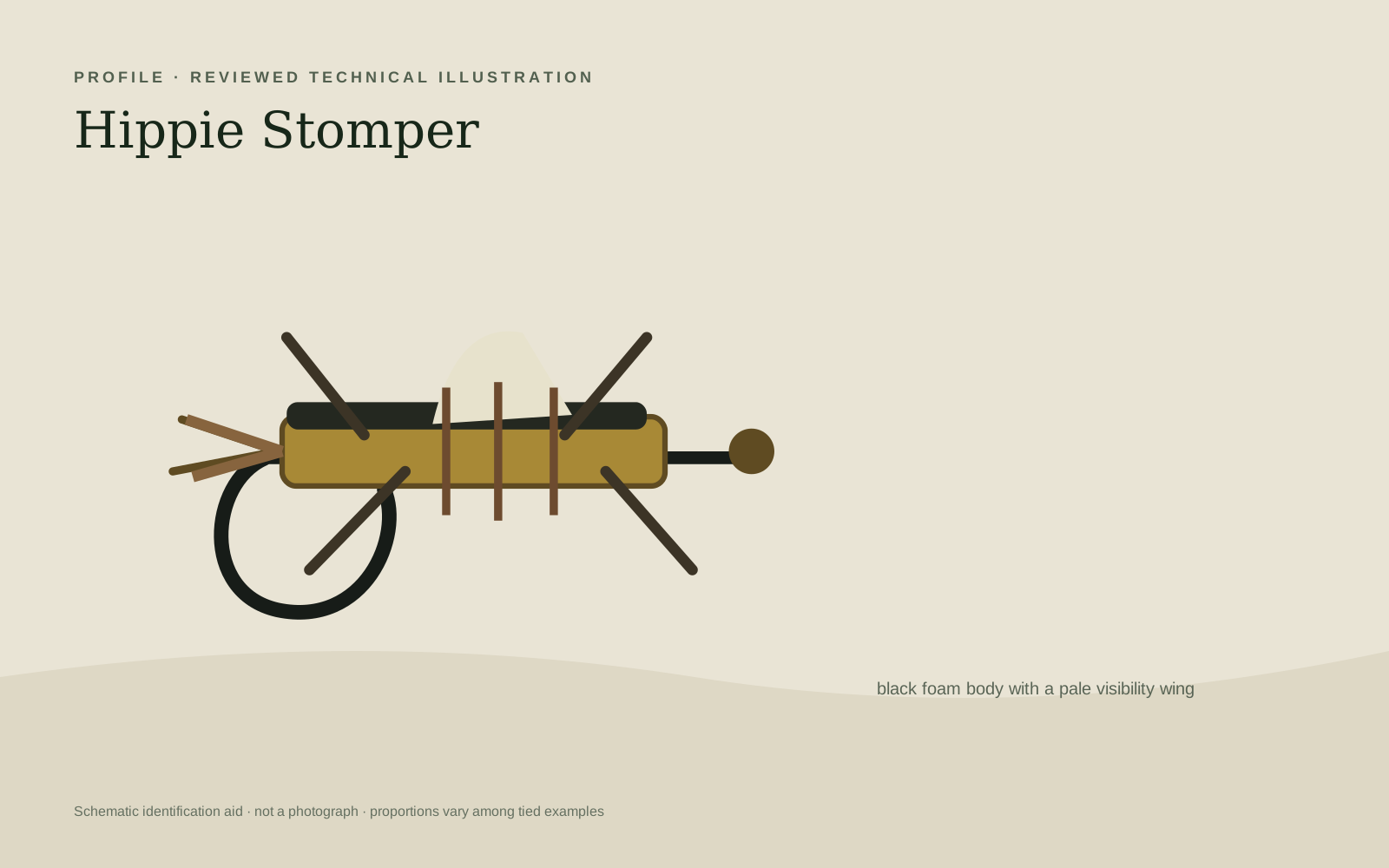 Reviewed illustration
Terrestrial · Multiple small-to-medium sizes; match the river report
Hippie Stomper
Andrew Grillos's compact foam attractor with a visible wing, hackle, hair tail, and rubber legs.Open field guide ↗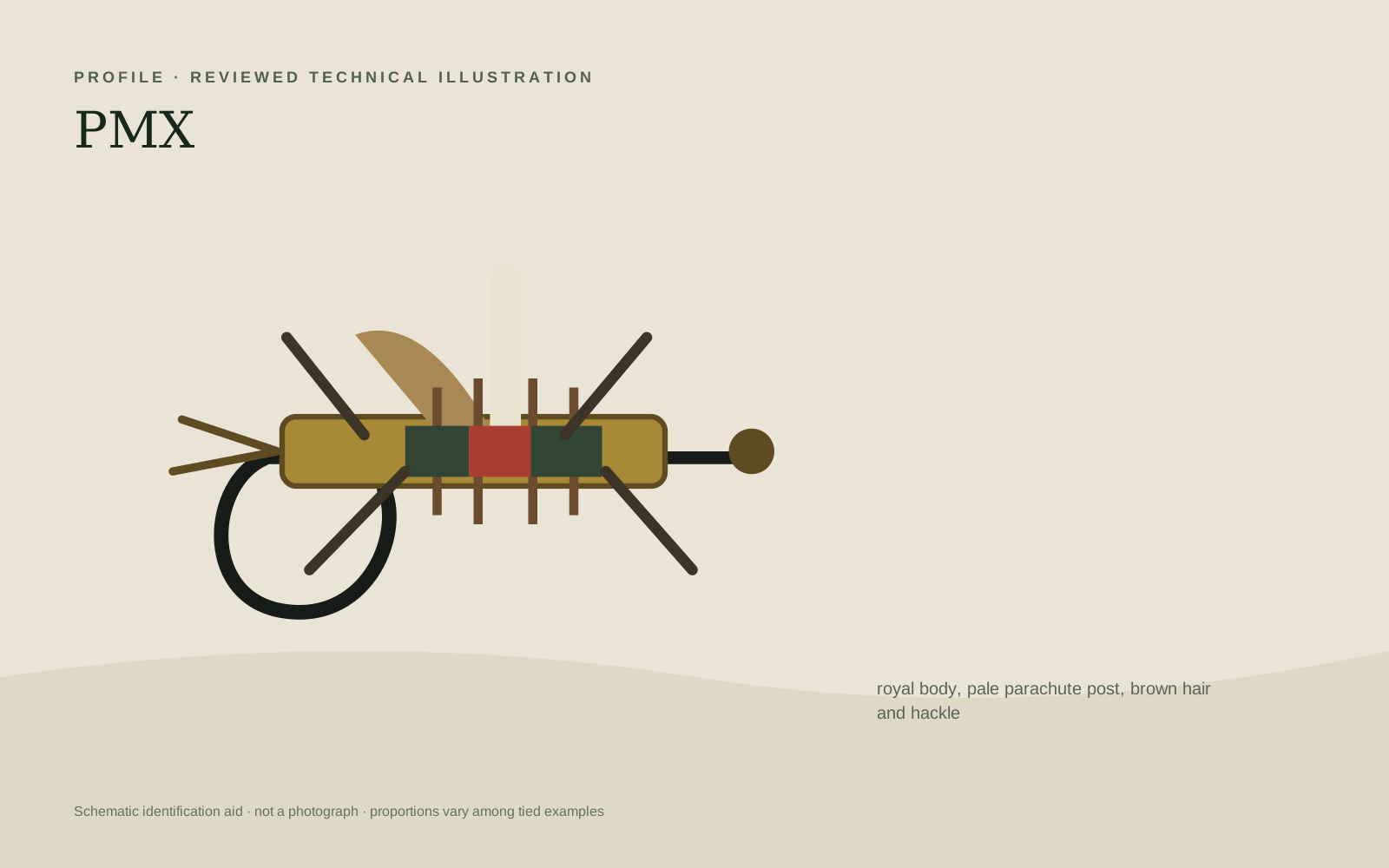 Reviewed illustration
Terrestrial · #8–14
PMX
A low-riding, highly visible all-purpose attractor with a parachute post, hair, hackle, and rubber legs.Open field guide ↗ Verified photograph
Nymph · #8–12 in the reviewed Pacific Northwest guide, #8 in Bob Krumm's archived Ultra Chenille recipe, Other regional recipes vary; match water, rules, and tackle
San Juan Worm
A deliberately simple subsurface worm pattern whose chenille, yarn, wire, or flexible body is secured along a curved hook, with every material and weighted form kept explicitly labeled.Open field guide ↗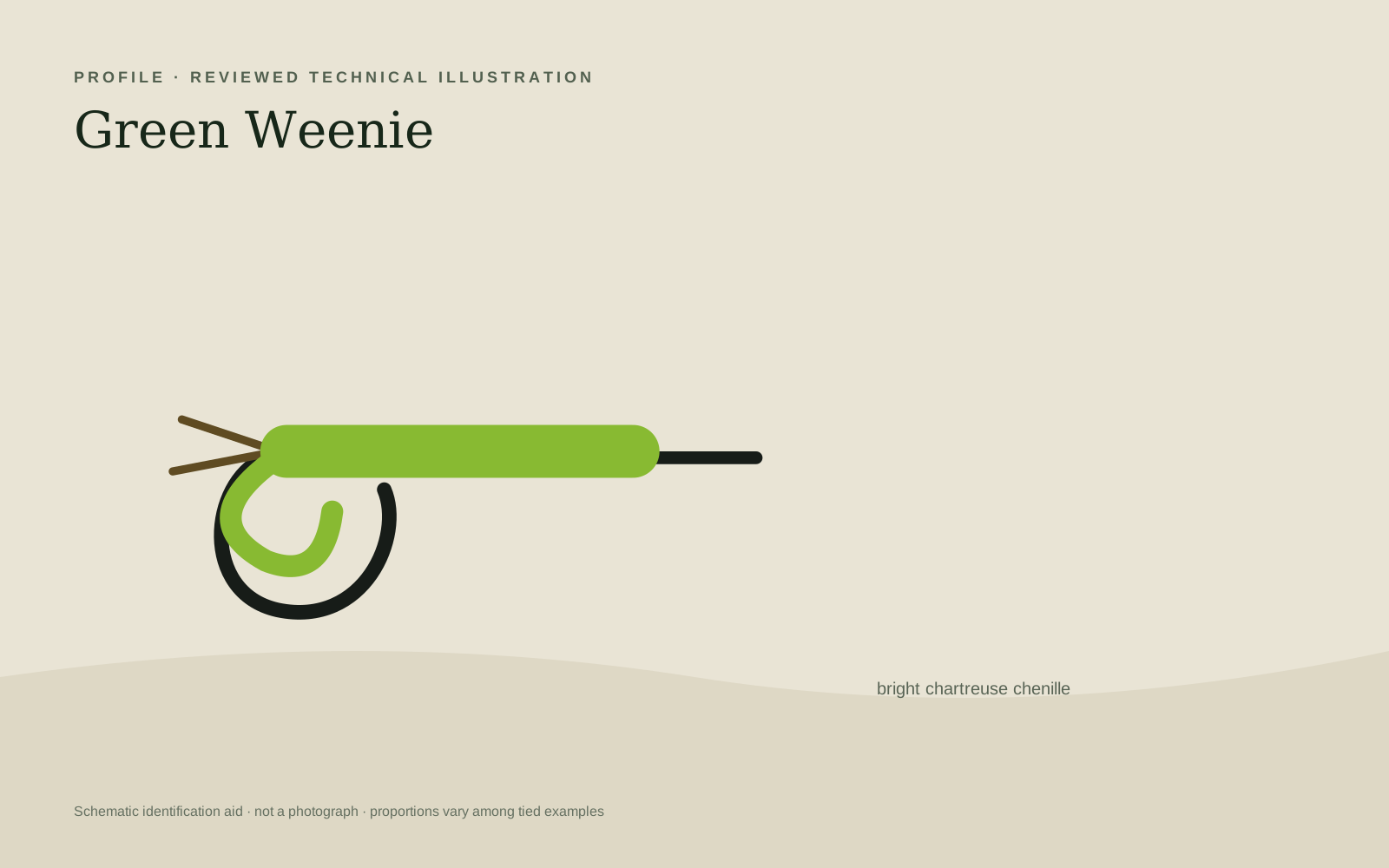 Reviewed illustration
Nymph · #10–12
Green Weenie
A bright chartreuse chenille pattern with a short looped tail, associated with Pennsylvania trout fishing.Open field guide ↗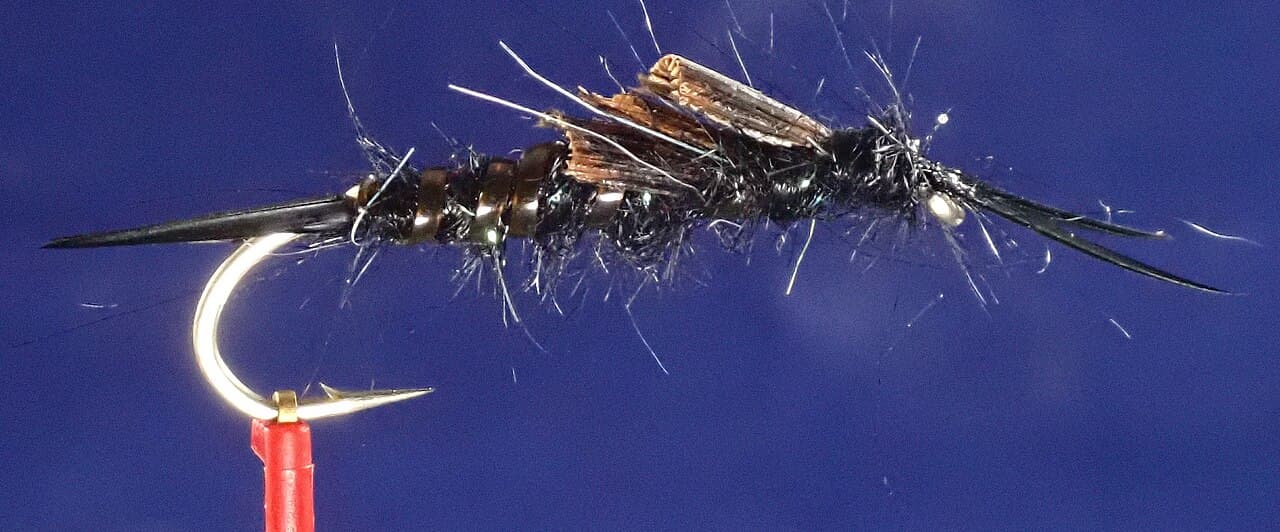 Verified photograph
Pattern family · Varies widely by species and river
Stonefly Patterns by Stage
A stage-first guide separating bottom-oriented nymphs from emerging and adult stonefly patterns.Open family guide ↗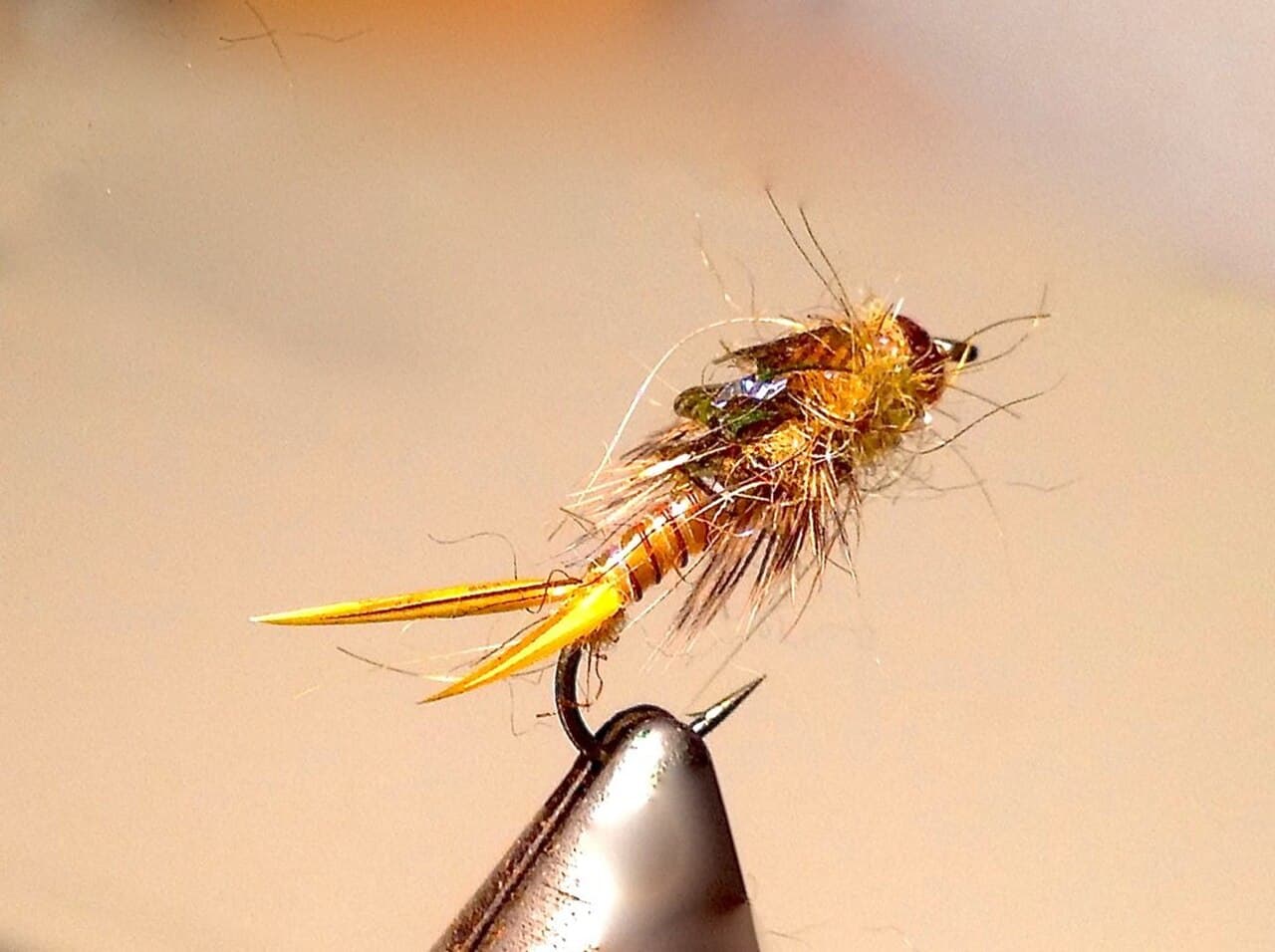 Verified photograph
Pattern family · Often small stonefly sizes; verify locally
Yellow Sally Patterns
A small-stonefly family separating dark or mottled nymphs from yellow-toned adult dry patterns.Open family guide ↗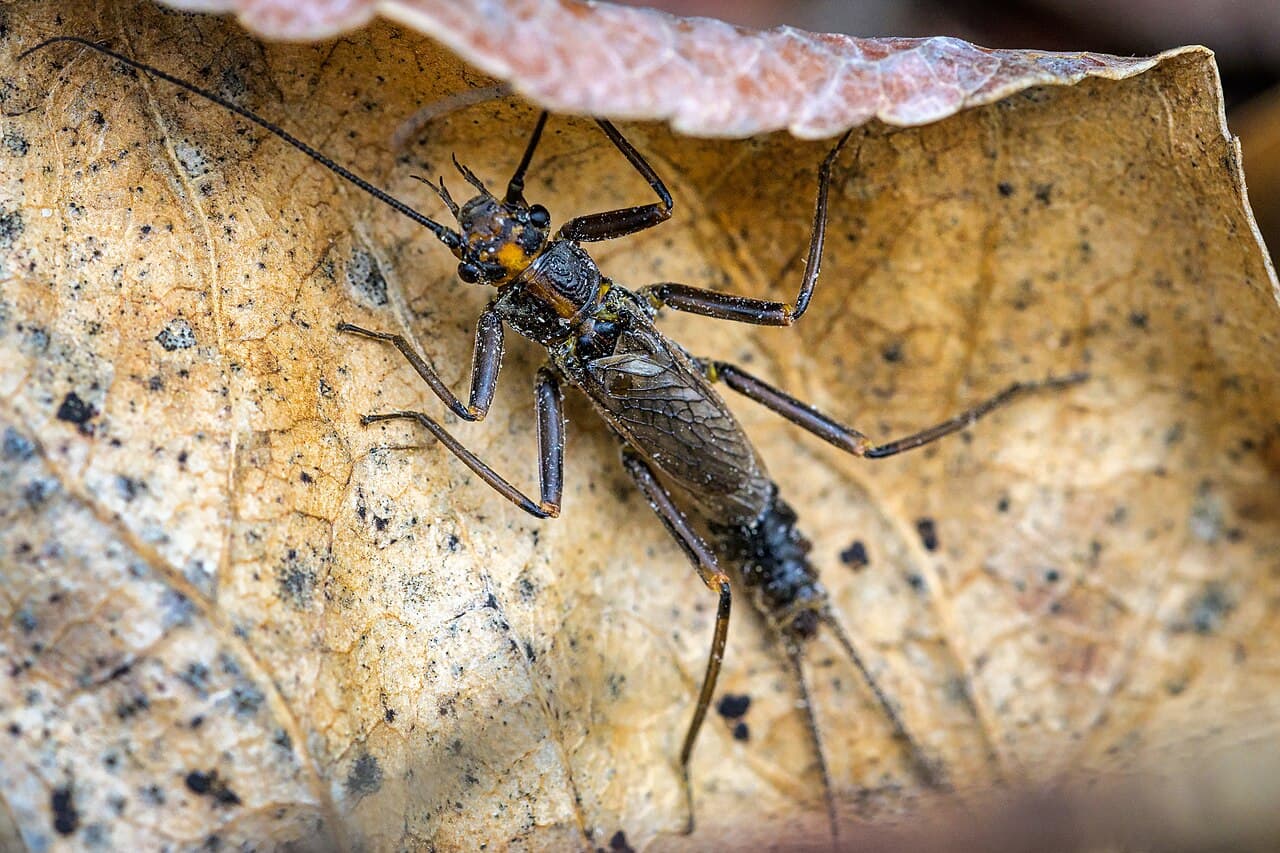 Verified photograph
Pattern family · Adult patterns often #8–10; verify locally
Skwala Stonefly Patterns
An early-season stonefly family with separate bottom nymph and low-riding olive adult patterns.Open family guide ↗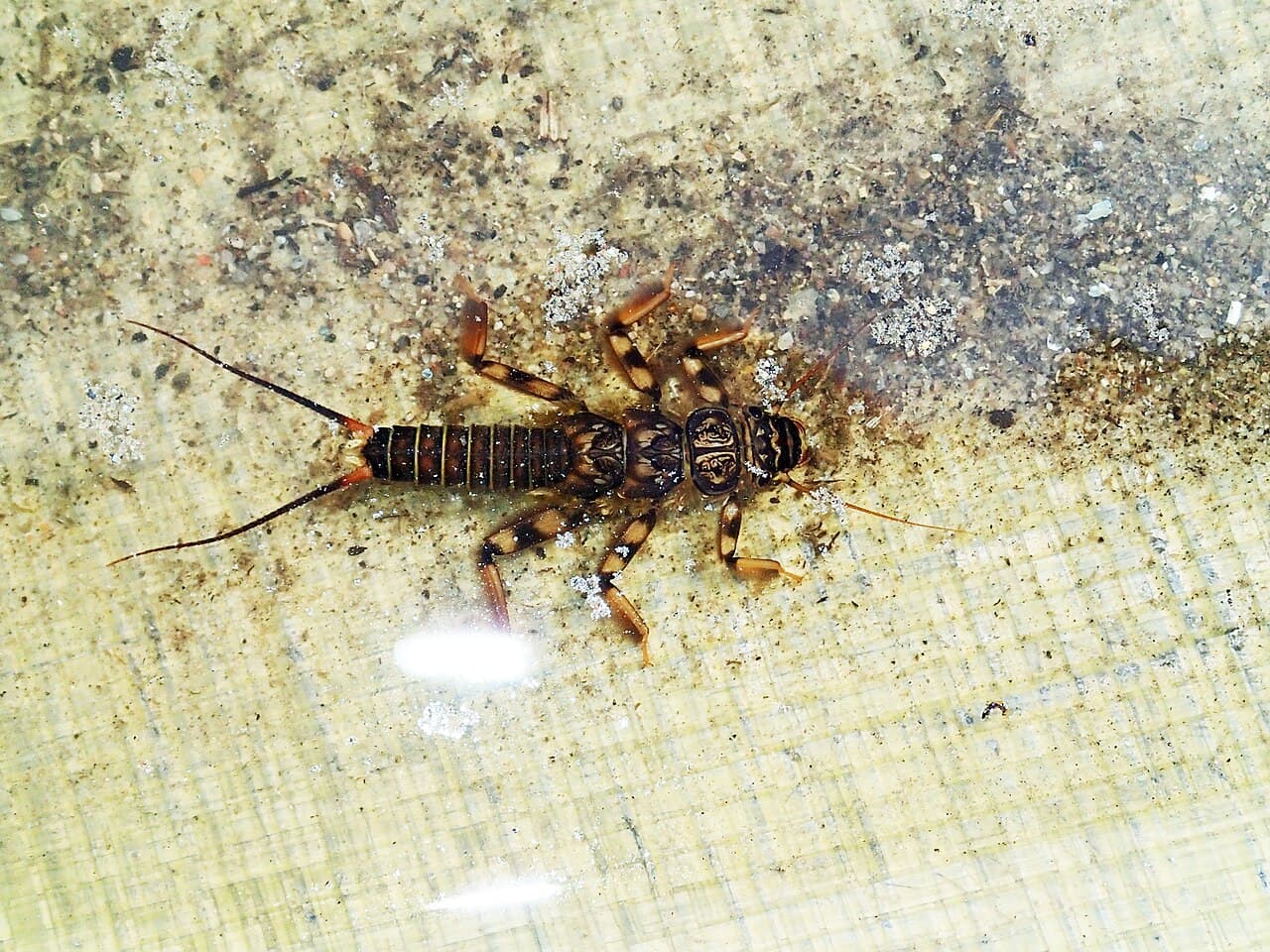 Verified photograph
Pattern family · Large stonefly sizes; nymph references span roughly #4–12
Golden Stonefly Patterns
A large-stonefly family separating robust golden nymphs from winged adult dry patterns.Open family guide ↗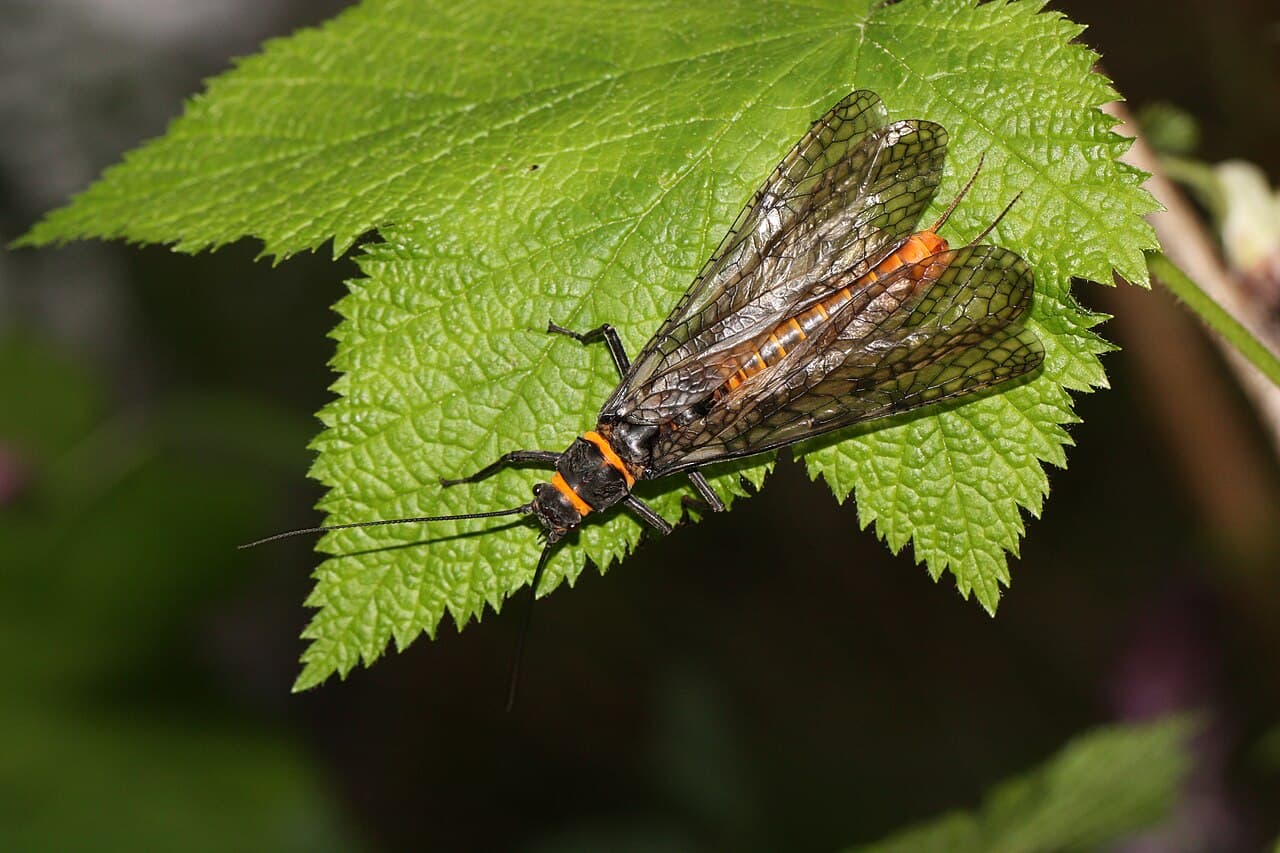 Verified photograph
Pattern family · Large stonefly sizes; verify the river
Salmonfly Patterns
A very large stonefly family separating crawling nymphs from substantial adult dry patterns.Open family guide ↗Verified photographPattern family · Small to medium stonefly sizes; verify locally
Black Stonefly Patterns
A dark-stonefly family separating small black nymphs from winged adult patterns.Open family guide ↗Verified photographPattern family · Species and watershed dependent; the family label does not establish a hook size, Claassenia, golden stones, and smaller nocturnal species must not be treated as one scale
Nocturnal Stonefly Patterns
A timing-and-stage guide that separates bottom nymphs, short-winged Claassenia evidence, and long-winged adult dries before a low-light stonefly choice is made.Open family guide ↗Verified photographPattern family · Tiny ants through very large cicadas
Terrestrial Patterns
A field guide separating ant, beetle, hopper, cricket, cicada, and general attractor silhouettes.Open family guide ↗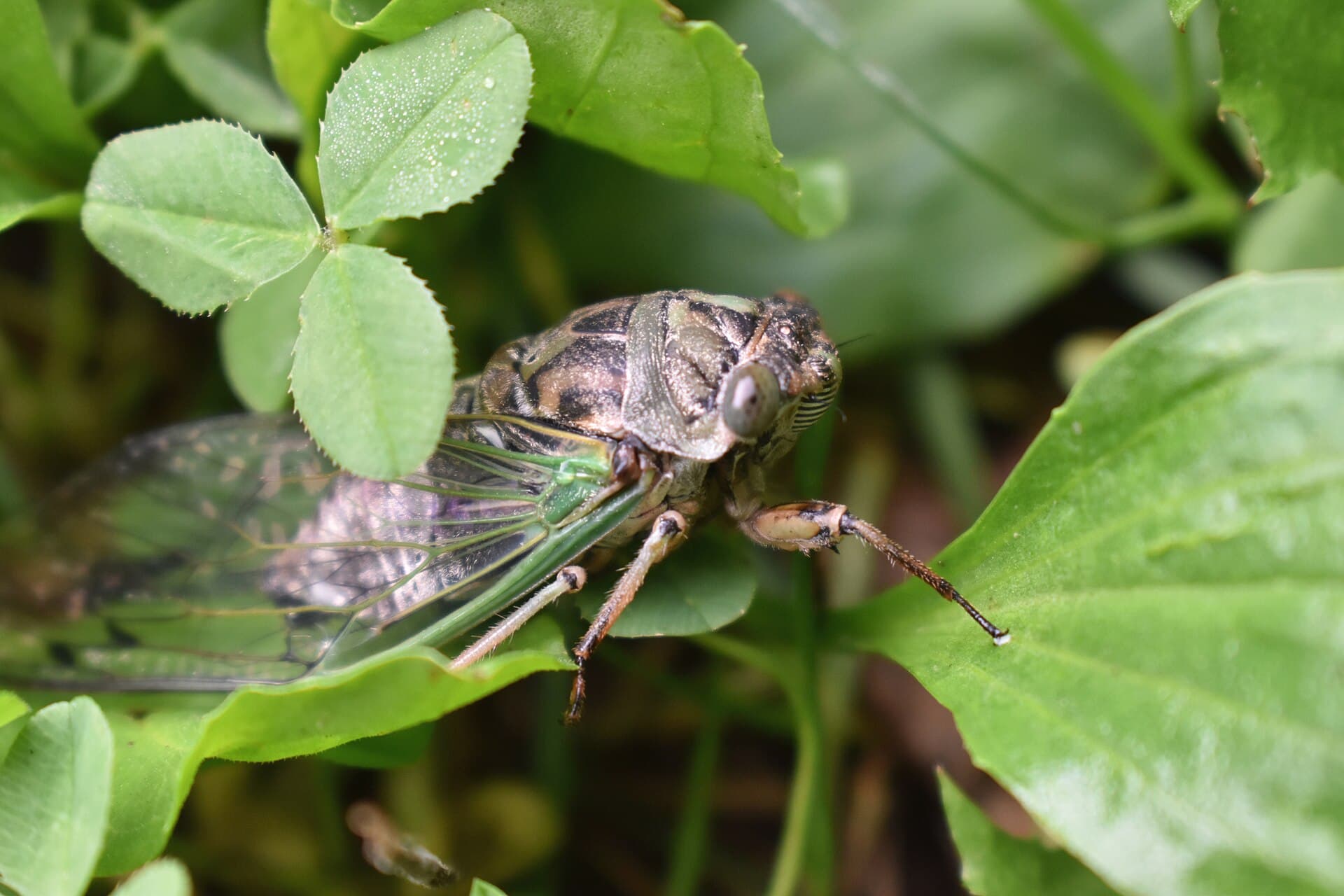 Verified photograph
Pattern family · Large terrestrials; match the local cicada
Cicada Patterns
Large buoyant terrestrial patterns matched to locally present cicadas rather than one universal recipe.Open family guide ↗ Verified photograph
Pattern family · University of Minnesota Extension gives a 1/2–3/4 inch body range for field crickets; match the local individual rather than adding antennae or legs to the measured body length
Cricket Patterns
A practical terrestrial guide using one North American field-cricket species to separate adult female, adult male, and wingless nymph silhouettes before choosing an honest floating artificial.Open family guide ↗ Verified photograph
Pattern family · Large surface flies relative to ordinary trout dries; match the exact pattern, quarry, tackle, and local evidence, Do not infer hook size from the natural photographs
Mouse Patterns
A surface-presentation guide that separates small-mammal body proportion, fly construction, and the wake a mouse pattern must create.Open family guide ↗ Verified photograph
Pattern family · Varies by pattern and regulation
Worm Patterns
A regulation-aware decision guide separating fine aquatic worms, aquatic blackworms, terrestrial earthworms, and the many artificial patterns that may suggest them.Open family guide ↗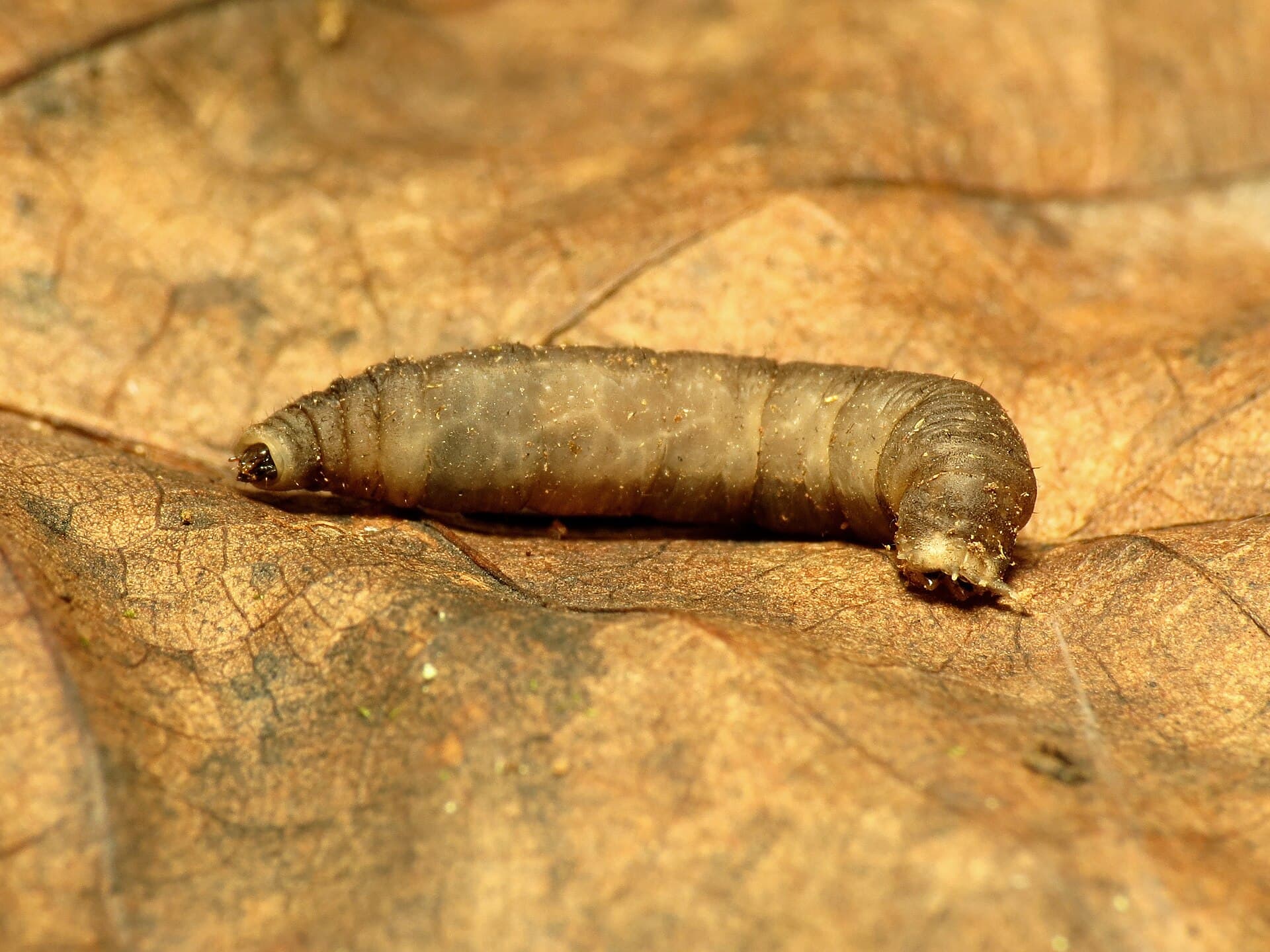 Verified photograph
Pattern family · Aquatic Tipulidae larvae in the USU key span roughly 10–100 mm; match the actual local larva or trusted report, Adult size varies by species
Crane Fly Patterns
A stage guide separating elongated legless crane-fly larvae from gangly one-pair-wing adults while requiring local evidence before either becomes a fishing choice.Open family guide ↗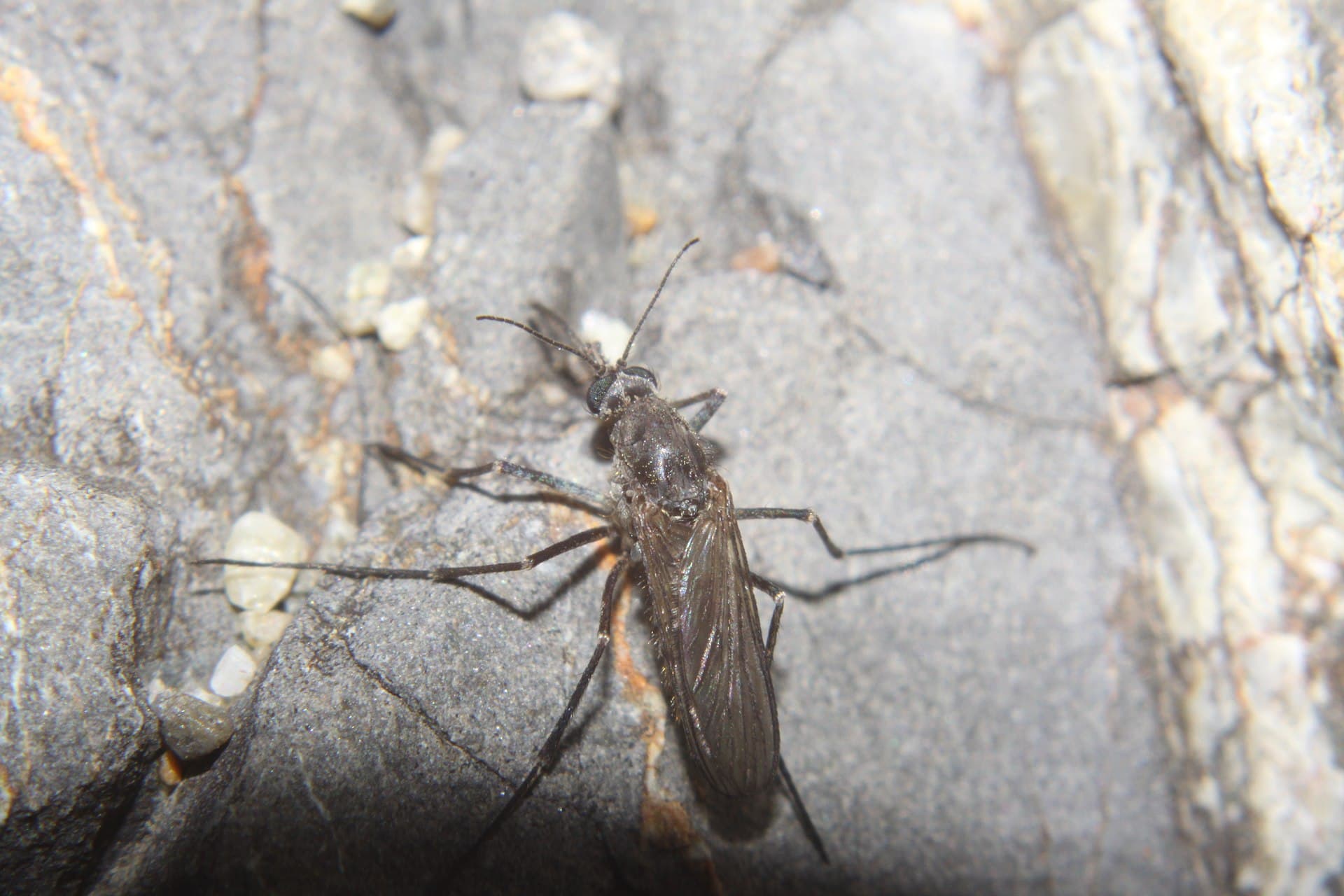 Verified photograph
Pattern family · Small dry-fly sizes; verify locally
Mosquito Patterns
A life-stage guide separating the delicate winged adult from aquatic mosquito larvae and comma-shaped pupae before choosing a fly or waterline.Open family guide ↗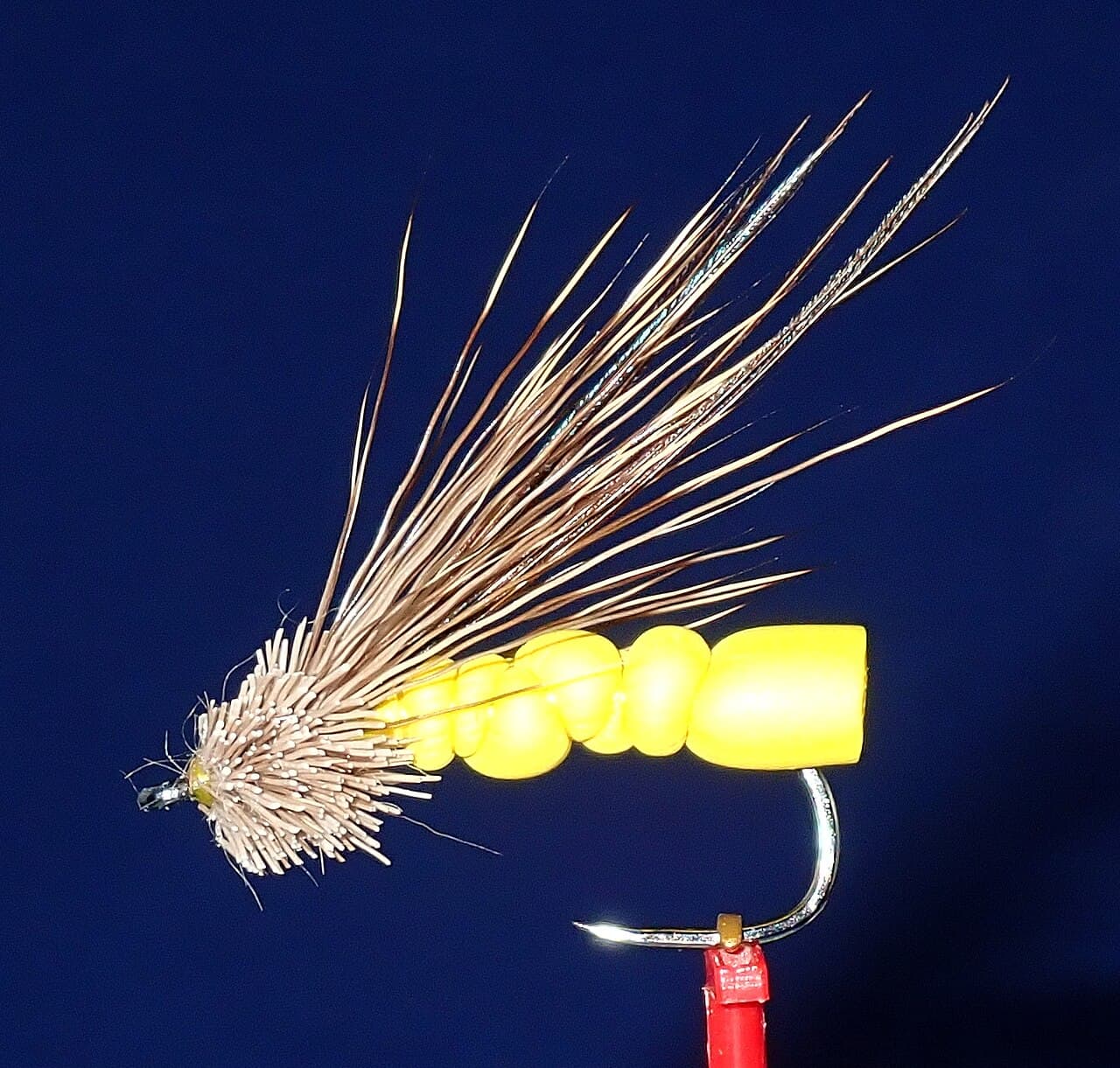 Verified photograph
Pattern family · Small to large; match the report and dropper load
Foam Attractor Dry Patterns
A cross-insect family of buoyant foam dries built for visibility, flotation, and a suggestive terrestrial profile.Open family guide ↗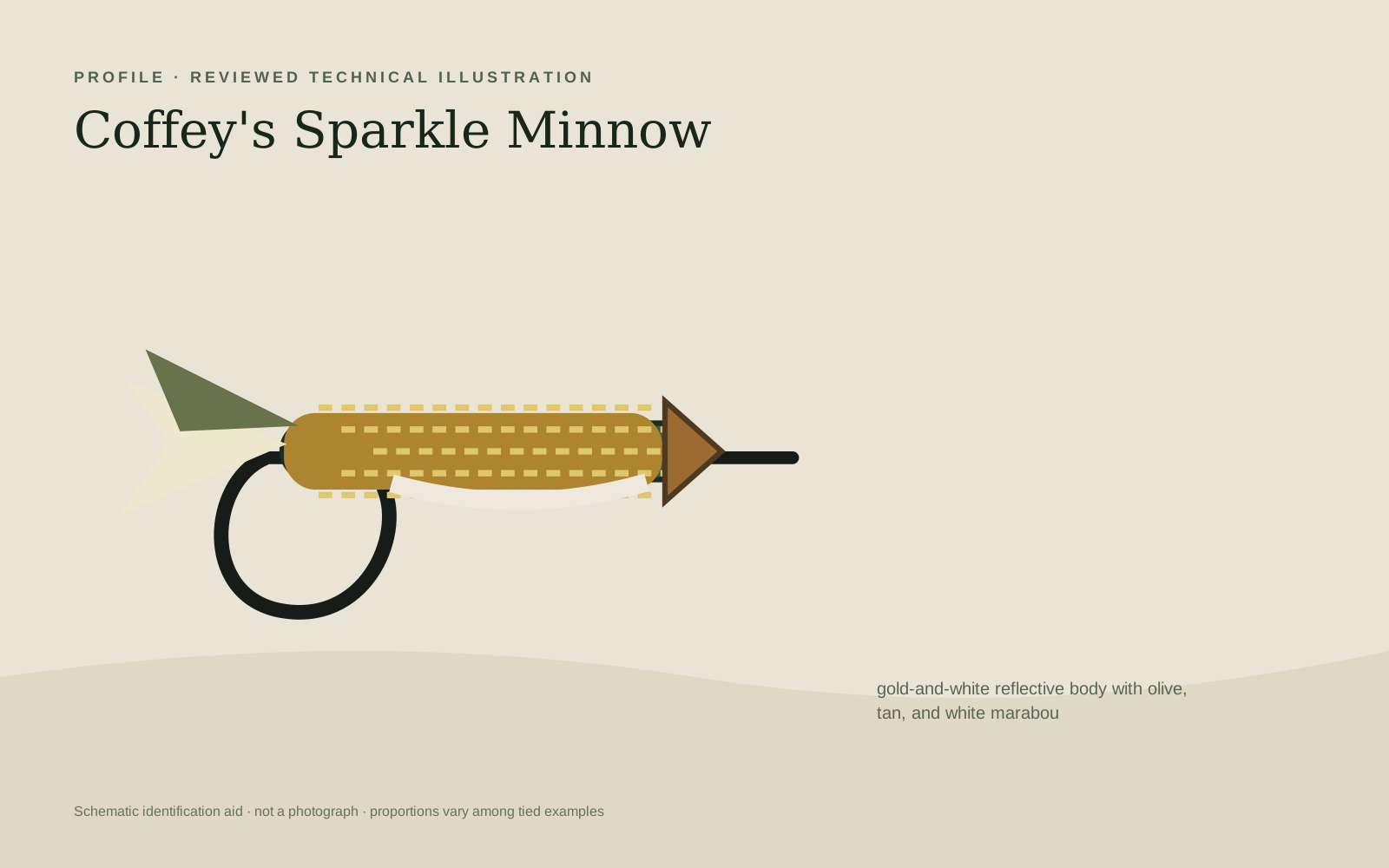 Reviewed illustration
Streamer · Often #4–8; larger regional variations exist
Coffey's Sparkle Minnow
Greg Coffey's cone-head, marabou-and-flash baitfish streamer for swinging, stripping, or controlled dead drifts.Open field guide ↗ Verified photograph
Streamer · Commonly #6–12; a #10 guide form is documented
Muddler Minnow
Don Gapen's classic sculpin-style streamer with a spun deer-hair head, mottled turkey wing, and metallic body.Open field guide ↗ Verified photograph
Streamer · Pearl Zonker source: #2–6 on a 3X-long streamer hook, Point Up Zonker Sculpin source: Gamakatsu SS15 #1/0, Other Zonkers vary; do not transfer the hero's predator scale to every trout water
Zonker Streamer
Dan Byford's rabbit-strip baitfish streamer, reviewed through the traditional reflective Pearl Zonker while an exact weighted Point Up Zonker Sculpin variation makes the family range visible.Open field guide ↗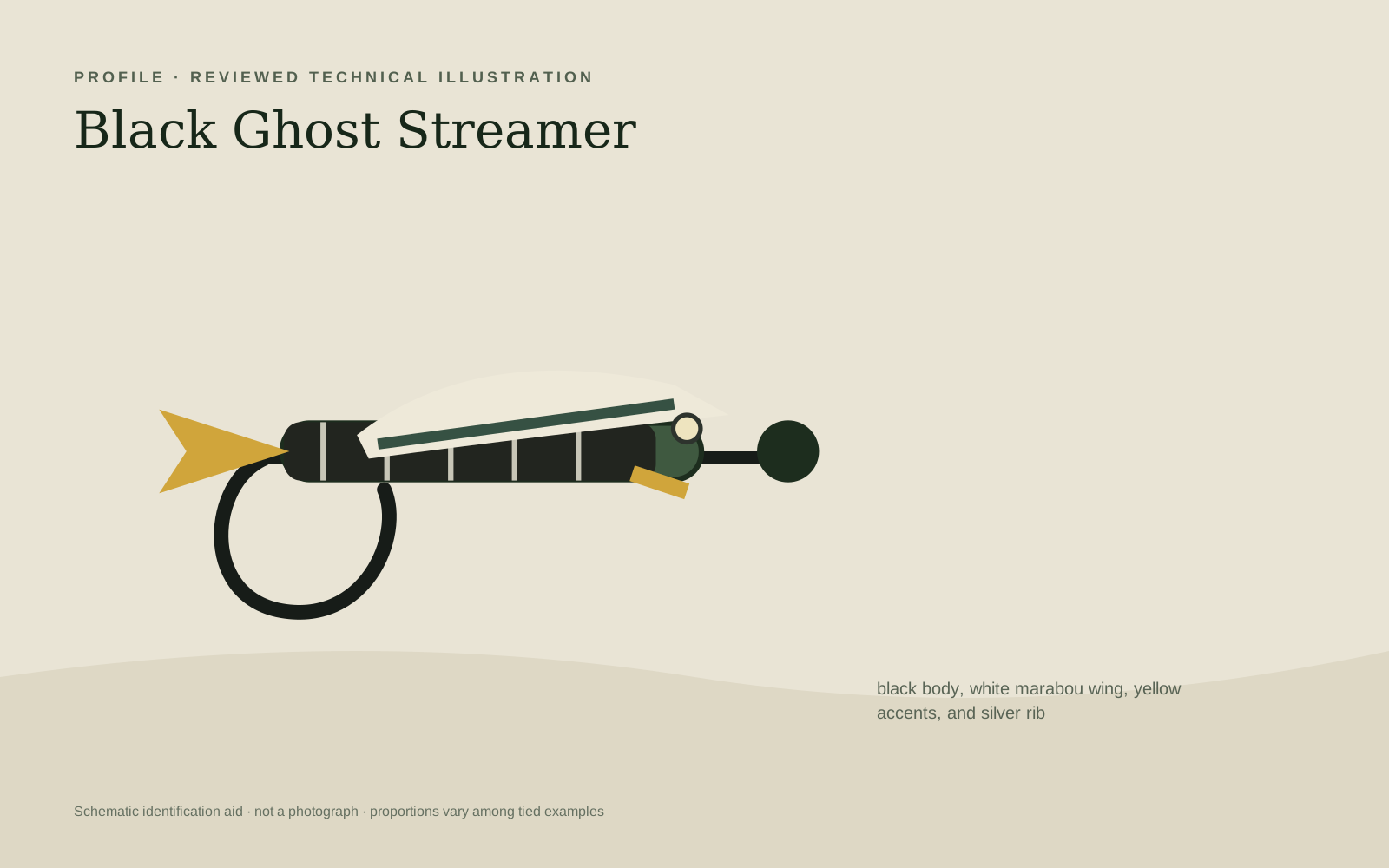 Reviewed illustration
Streamer · #2–10 for the reviewed marabou form
Black Ghost Streamer
Herb Welch's black-bodied Maine streamer, represented here by the common white-marabou-wing form.Open field guide ↗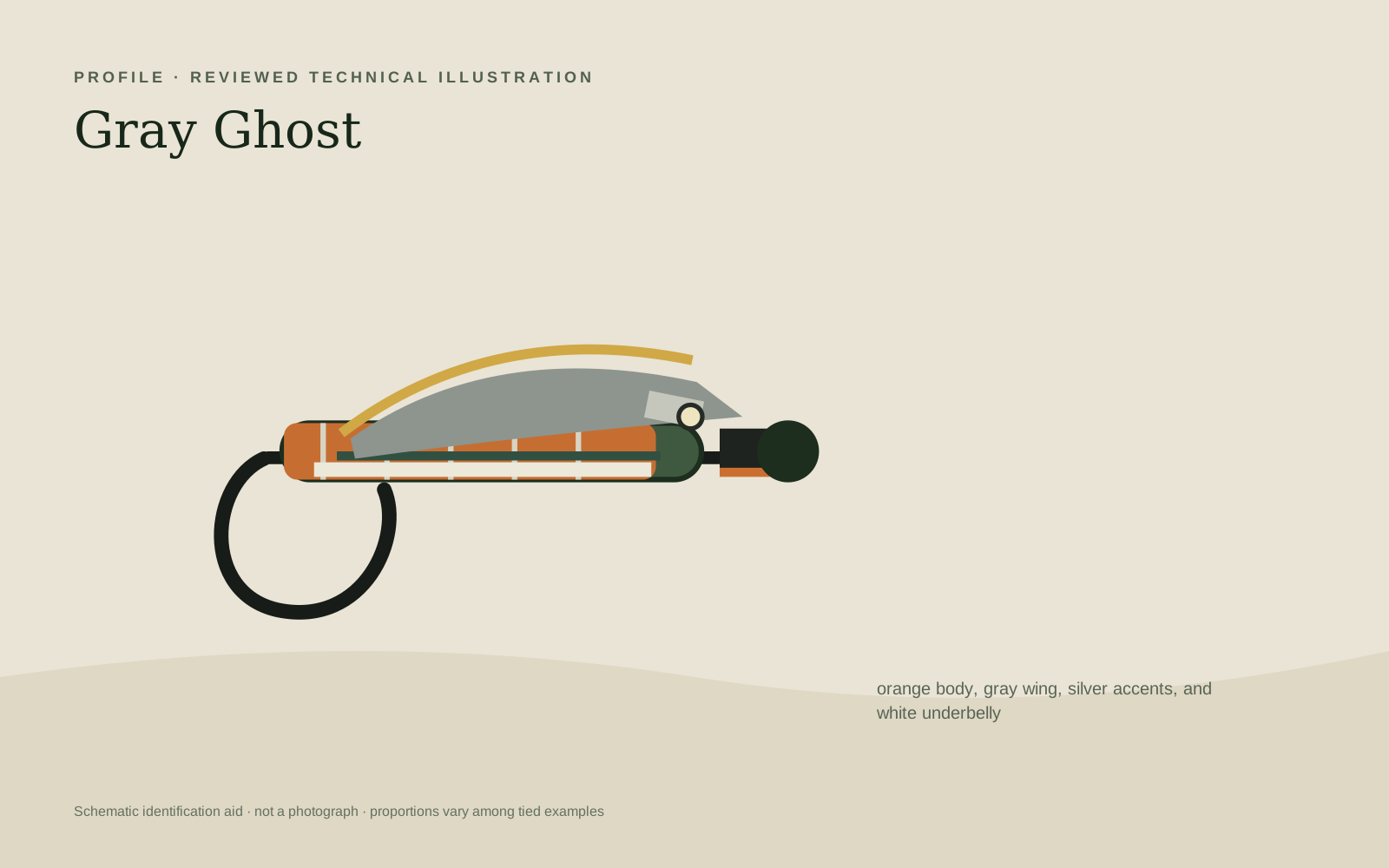 Reviewed illustration
Streamer · #2–6 in the FFI guide
Gray Ghost
Carrie Stevens's layered Rangeley-style featherwing streamer with an orange body and long gray wing.Open field guide ↗ Verified photograph
Streamer · #4–14
Mickey Finn
A classic sparse bucktail streamer with a yellow-red-yellow wing, metallic body, silver rib, and black head.Open field guide ↗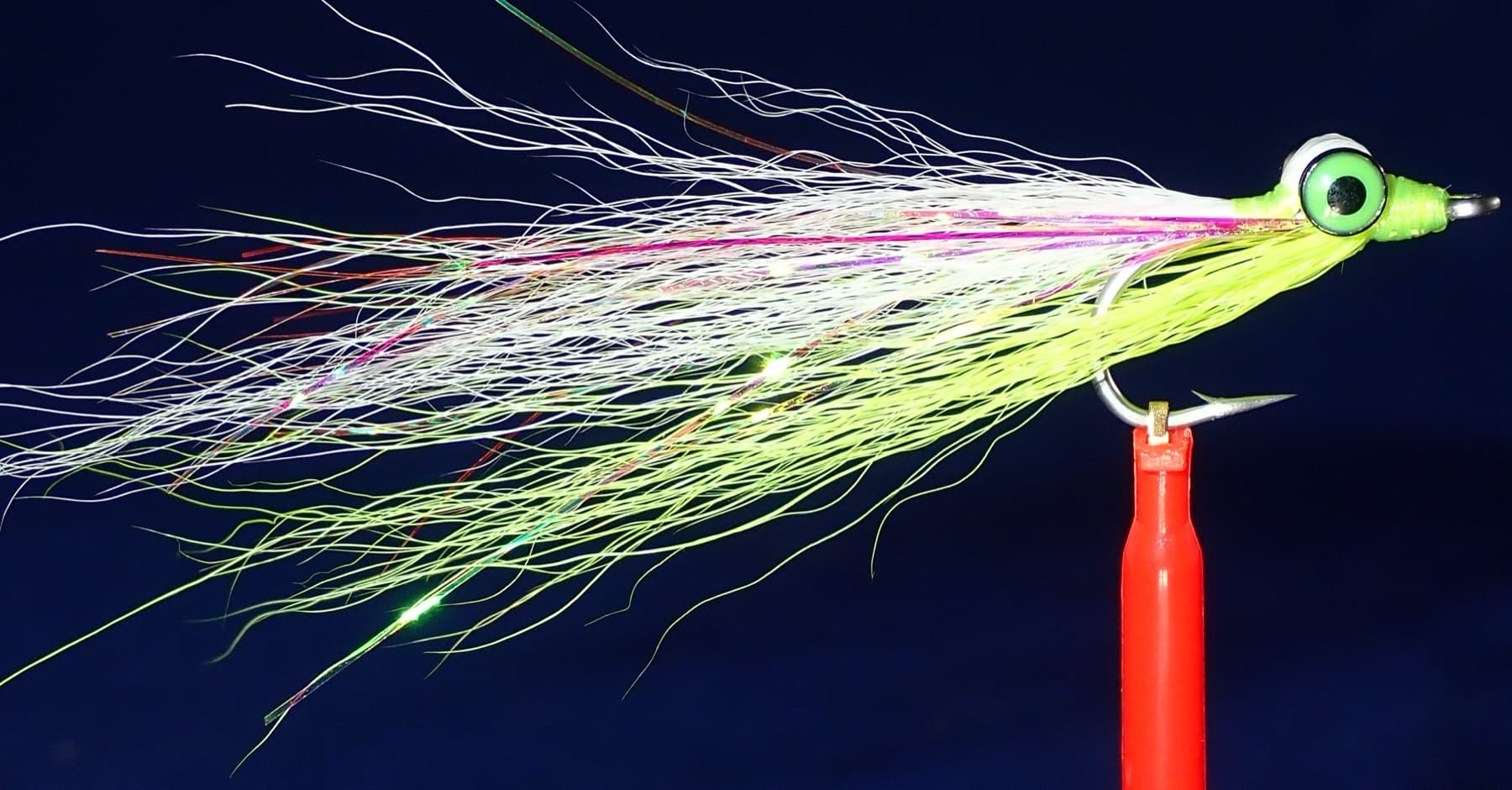 Verified photograph
Pattern family · Match the local forage and tackle; the family label gives no exact size
Baitfish and Minnow Patterns
A forage-first streamer family separating slim, weighted, reflective, and species-shaped baitfish silhouettes.Open family guide ↗ Verified photograph
Pattern family · No universal size; scale the exact pattern to local forage, quarry, tackle, casting space, and regulations, The photographed Mr. Nasty is seven inches and must not be used as a default trout-size reference
Articulated Trout Streamer Patterns
A construction-and-forage guide for choosing joint count, body depth, head shape, hooks, ballast, and retrieve before naming an articulated trout streamer.Open family guide ↗Verified photographStreamer · The FFI guide documents a #4 example; regional forms vary
Clouser Deep Minnow
Bob Clouser's sparse dumbbell-eye baitfish pattern, designed for smallmouth bass and now used across fresh and salt water.Open field guide ↗ Verified photograph
Streamer · No universal size; micro and finesse freshwater forms through large predator flies differ materially, The hand and reel photographs provide handling context only and are not calibrated rulers
Chocklett's Game Changer
Blane Chocklett's multi-jointed baitfish platform, whose connected sections and front-to-rear taper keep swimming and turning after the strip stops.Open field guide ↗ Verified photograph
Other · 2XL streamer hooks #4, #6, or #8 in the reviewed BSA tying guide, match head size, hook gap, quarry, cover, and casting tackle
Sneaky Pete Slider
A tapered-head bass slider that glides, wakes, and pulses with less blunt surface noise than a cupped-face popper.Open field guide ↗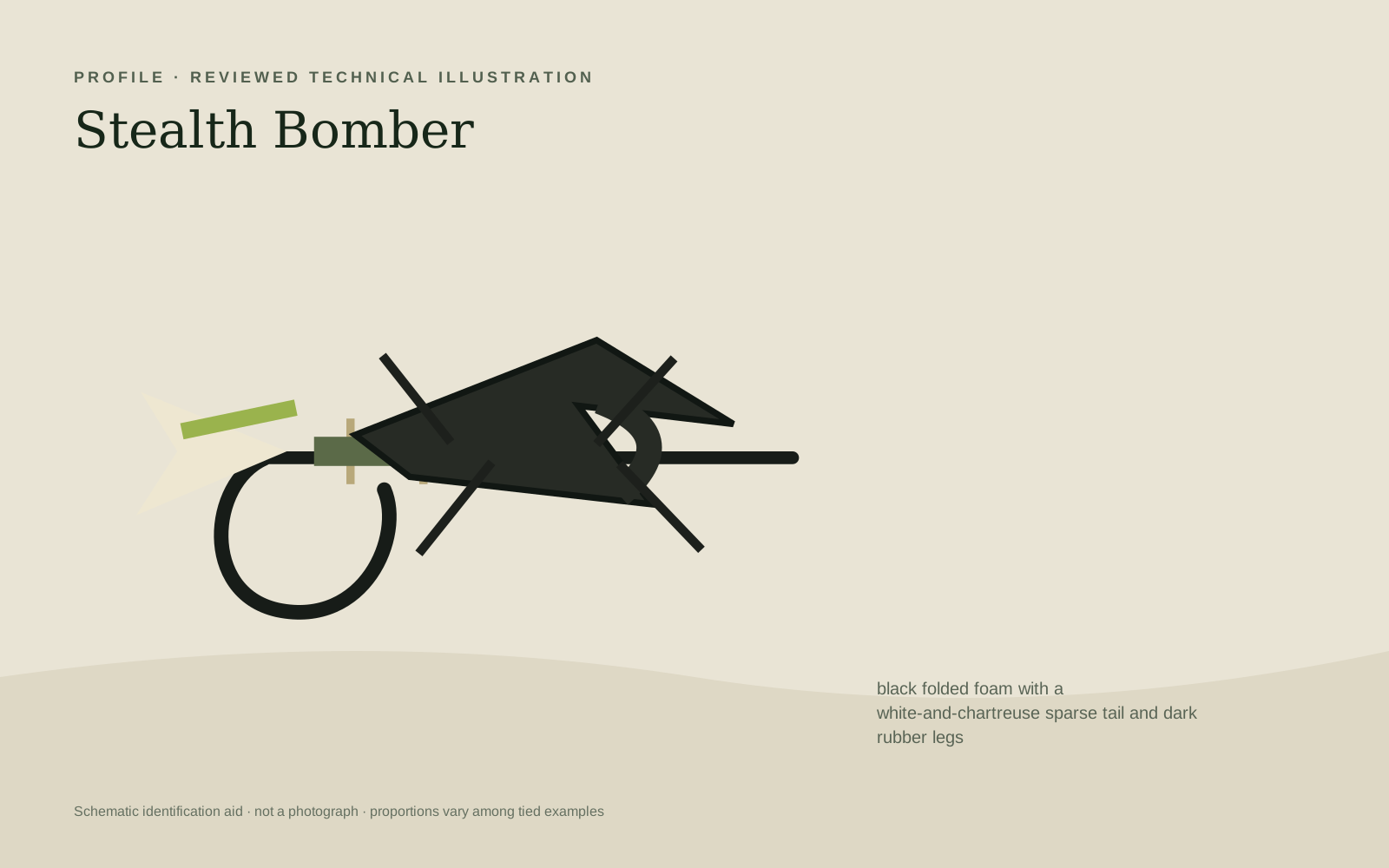 Reviewed illustration
Other · FFI documents sizes #10 through #2 depending on target
Stealth Bomber
Kent Edmonds's folded-sheet-foam diver and slider for bass, bream, and other warmwater fish.Open field guide ↗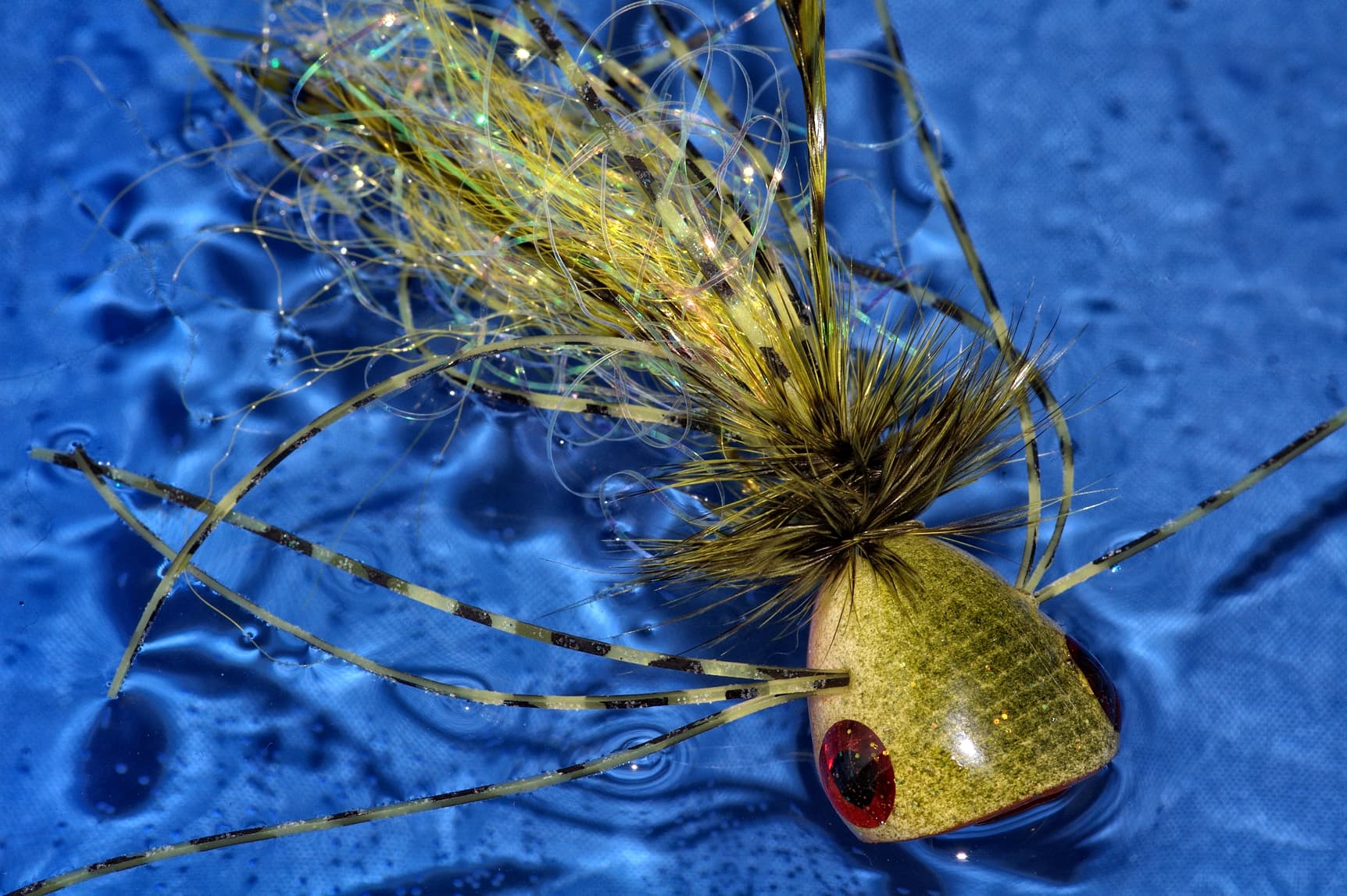 Verified photograph
Pattern family · Small panfish through large bass sizes
Bass and Panfish Popper Patterns
A surface family defined by a forward face that pushes, spits, or pops water rather than one exact recipe.Open family guide ↗ Verified photograph
Pattern family · Small panfish bugs through large bass flies; match quarry, tackle, casting safety, cover, and the exact head
Warmwater Slider and Diver Patterns
A practical surface-action guide for choosing a quiet gliding slider or a strip-to-dive bug by prey shape, head action, cover, and fish response—not by color alone.Open family guide ↗Verified photographPattern family · Small panfish bugs through large bass flies
Warmwater Surface Bug Patterns
A construction-and-silhouette family for foam, deer-hair, frog, and other warmwater surface bugs without an exact pattern name.Open family guide ↗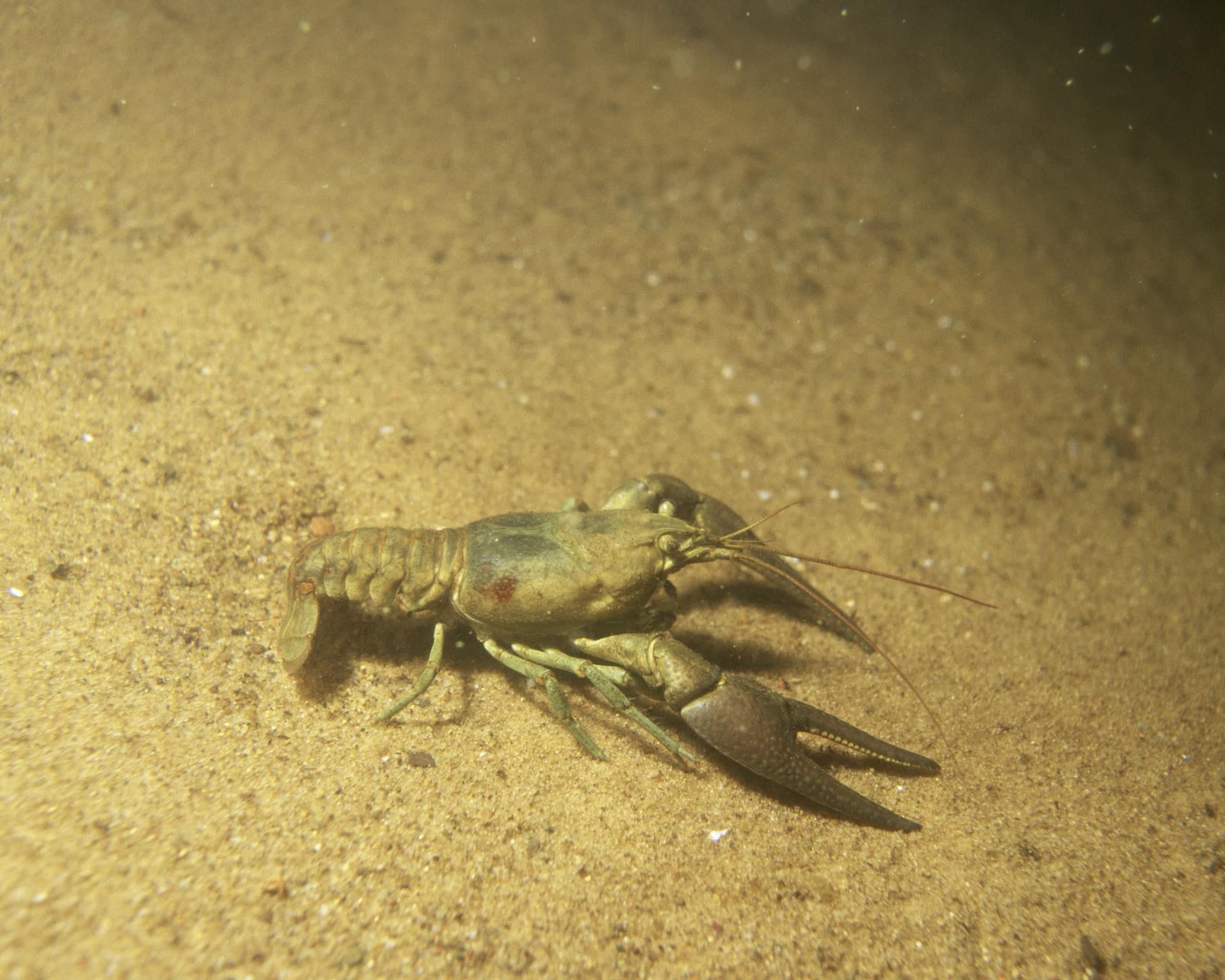 Verified photograph
Pattern family · Match local crayfish and quarry; the family label is not a size
Crayfish and Crawfish Patterns
A bottom-oriented family separating realistic, buggy, jigged, and molting crayfish silhouettes.Open family guide ↗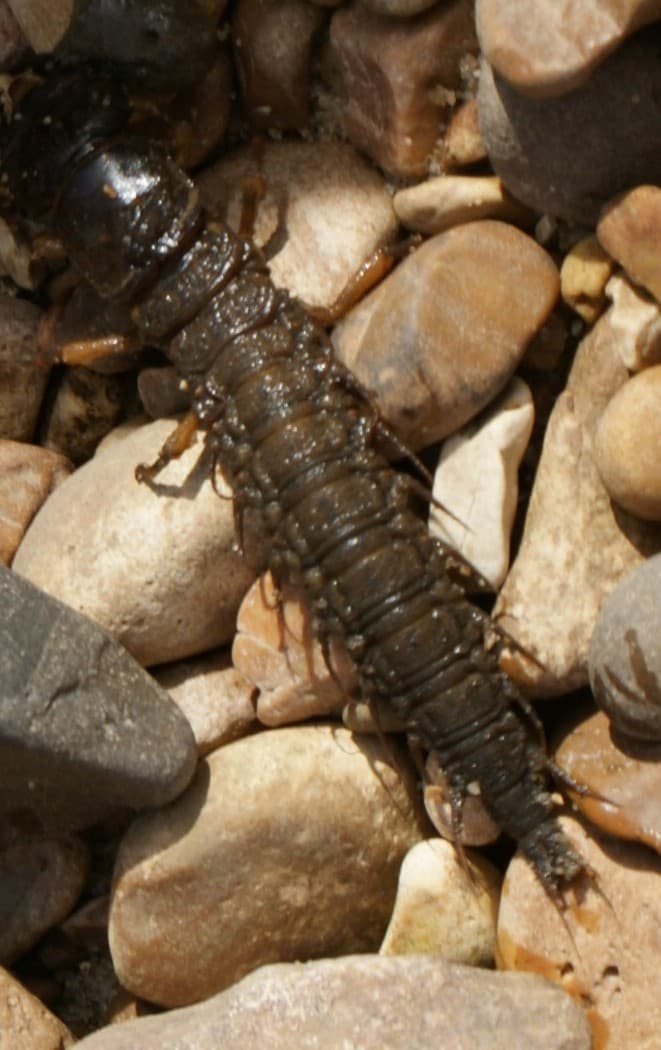 Verified photograph
Pattern family · Large nymph sizes; match local larvae and tackle
Hellgrammite Patterns
A large aquatic-larva family with an elongated segmented body, lateral filaments, six thoracic legs, and paired terminal hooks.Open family guide ↗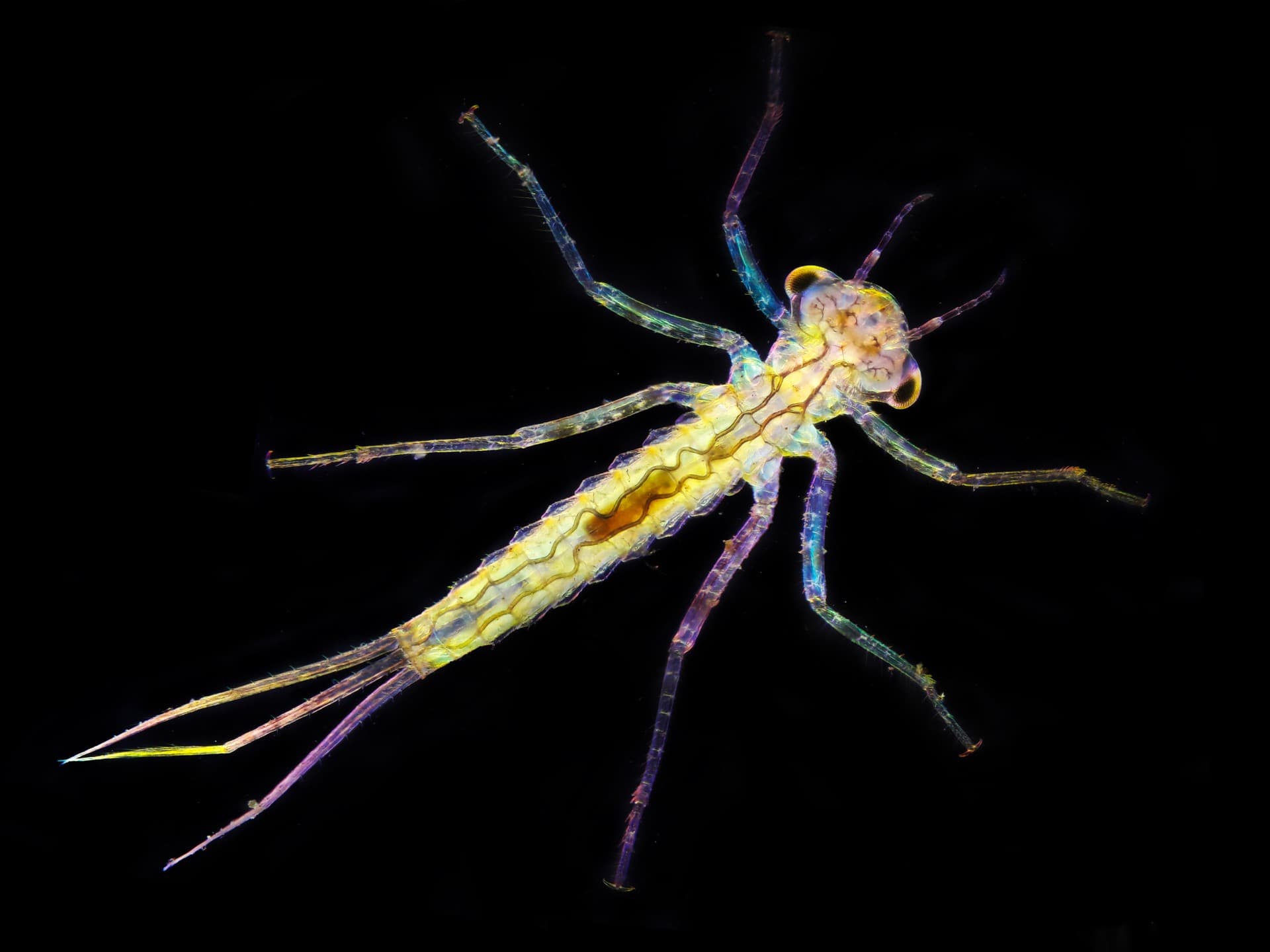 Verified photograph
Pattern family · Match local nymphs; a #10 tying example is documented
Damselfly Nymph Patterns
A slender stillwater-and-slow-water nymph family with a narrow body and three leaf-like tail gills.Open family guide ↗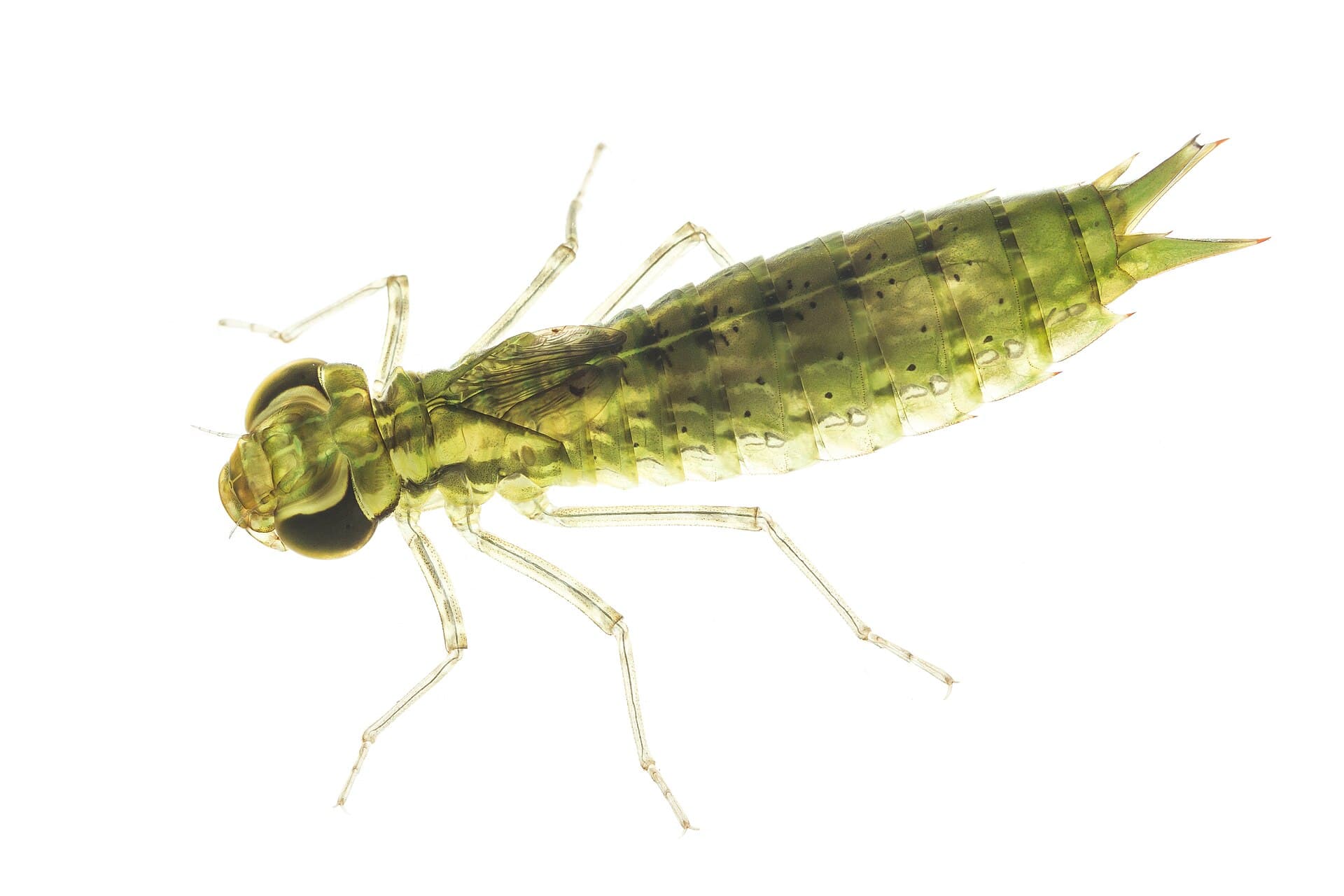 Verified photograph
Pattern family · Mature size varies widely by family and instar; match a local sample or trusted current report instead of one family-wide hook size
Dragonfly Nymph Patterns
A natural-body-plan guide separating streamlined swimming darners from broader crawling and burrowing dragonfly nymphs without collapsing all Odonata into one weighted olive fly.Open family guide ↗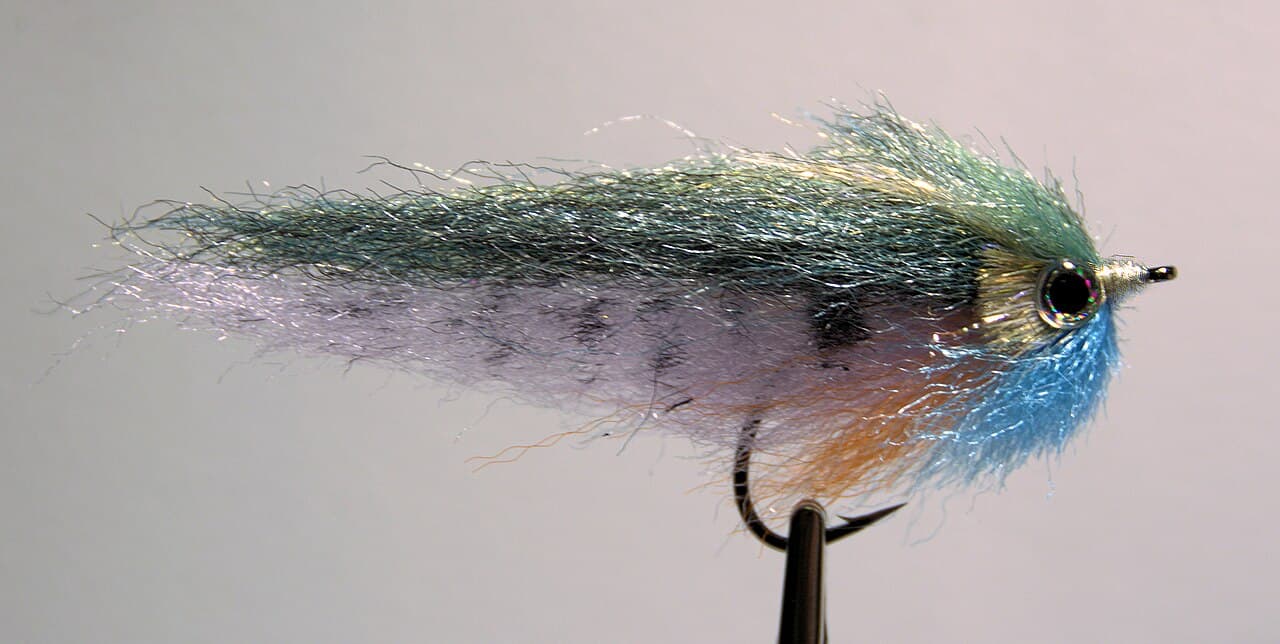 Verified photograph
Pattern family · Match local forage, target species, and tackle
Warmwater Baitfish Patterns
A warmwater forage family separating shad-shaped, articulated, lightly weighted, and general minnow streamers.Open family guide ↗Verified photographPattern family · Common examples span roughly #4–12, but fly mass, prey scale, water depth, leader, and fish behavior matter more than the family label
Carp Fly Patterns
A sight-fishing decision guide for choosing a carp fly by the fish's feeding lane, prey shape, landing softness, sink rate, and hook orientation instead of one universal pattern.Open family guide ↗Verified photographPattern family · Match prey, target fish, and tackle
Warmwater Bottom Bug and Swimming Nymph Patterns
A planning family for jigged, rubber-legged, swimming, and bottom-oriented warmwater nymph wording without an exact recipe.Open family guide ↗ Verified photograph
Egg Flesh · #12–14 in the reviewed Orvis trout recipe, Hook and finished cluster size must fit the target fish, local rules, and observed food
Sucker Spawn
A looped-yarn egg-cluster pattern whose connected bulges create a longer, irregular food profile than a single round egg fly.Open field guide ↗Verified photographEgg Flesh · #6–12 in the reviewed Orvis single-hook bead recipe, Tube and salmon or steelhead forms vary; match tackle and regulations
Egg-Sucking Leech
A mobile leech or streamer body combined with a distinct contrasting egg-like front trigger, with bead, cone, tube, rabbit-strip, articulated, and Woolly-Bugger-based forms kept explicitly labeled.Open field guide ↗ Verified photograph
Egg Flesh · Mustad C67S #12 in the reviewed Orvis recipe, match hook, yarn quantity, target fish, and current regulations rather than assuming one universal size
Glo Bug
A sparse clipped-yarn egg fly whose round body and optional contrasting center dot create a compact single-egg profile around a visible hook.Open field guide ↗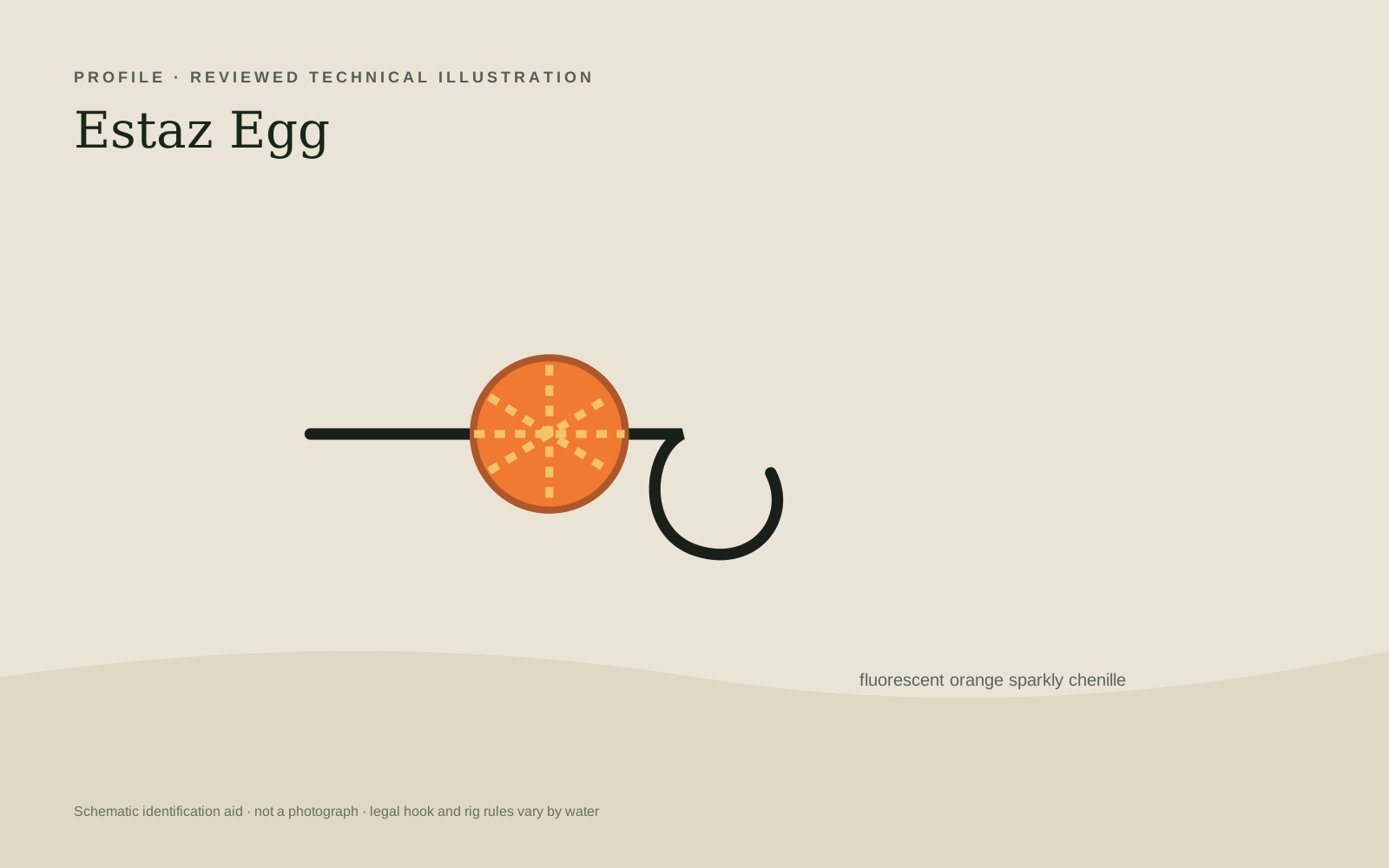 Reviewed illustration
Egg Flesh · No universal size; match the target species, legal hook rules, tackle, and local forage
Estaz Egg
A bright egg-style fly built from dense sparkly Estaz or similar chenille around the hook.Open field guide ↗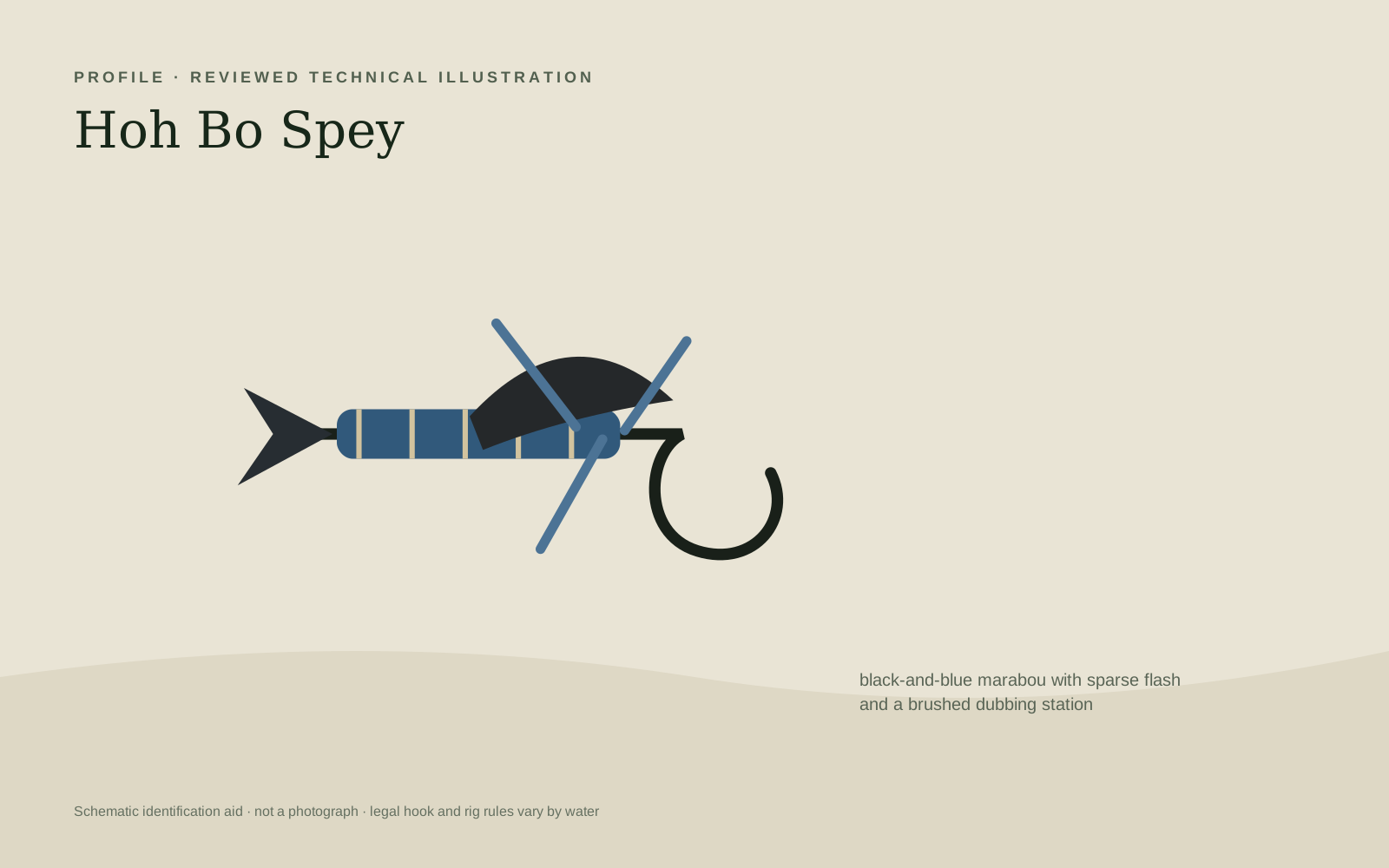 Reviewed illustration
Wet Fly · Approximately two inches in the reviewed Orvis recipe; hook and shank vary
Hoh Bo Spey
Charles St. Pierre's sparse Intruder-style steelhead fly with a compact shank, dubbing station, flash, and marabou collar.Open field guide ↗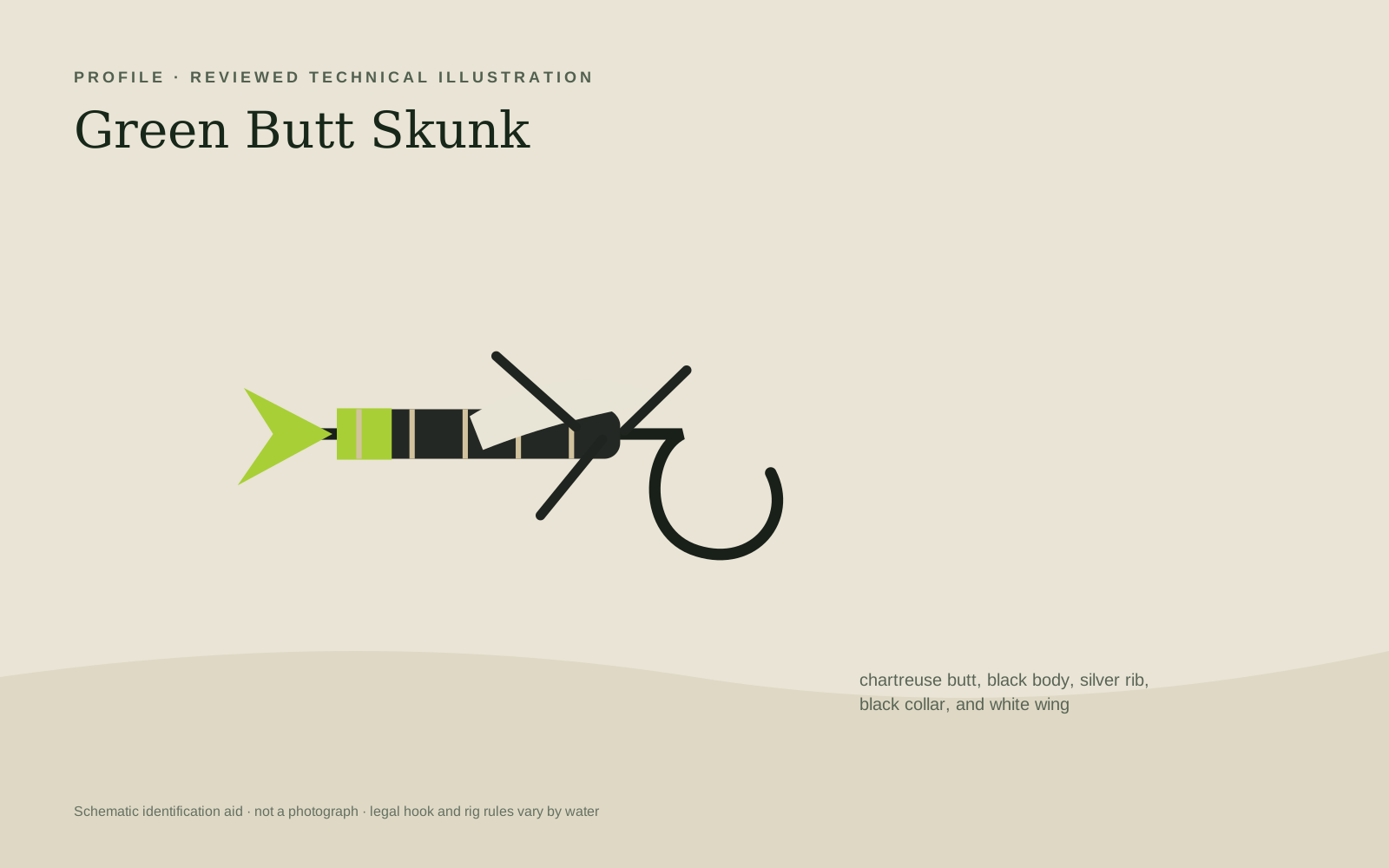 Reviewed illustration
Wet Fly · No universal size; match the target species, legal hook rules, tackle, and local forage
Green Butt Skunk
A classic steelhead hairwing built around a fluorescent-green butt, dark body, silver rib, dark hackle, and pale wing.Open field guide ↗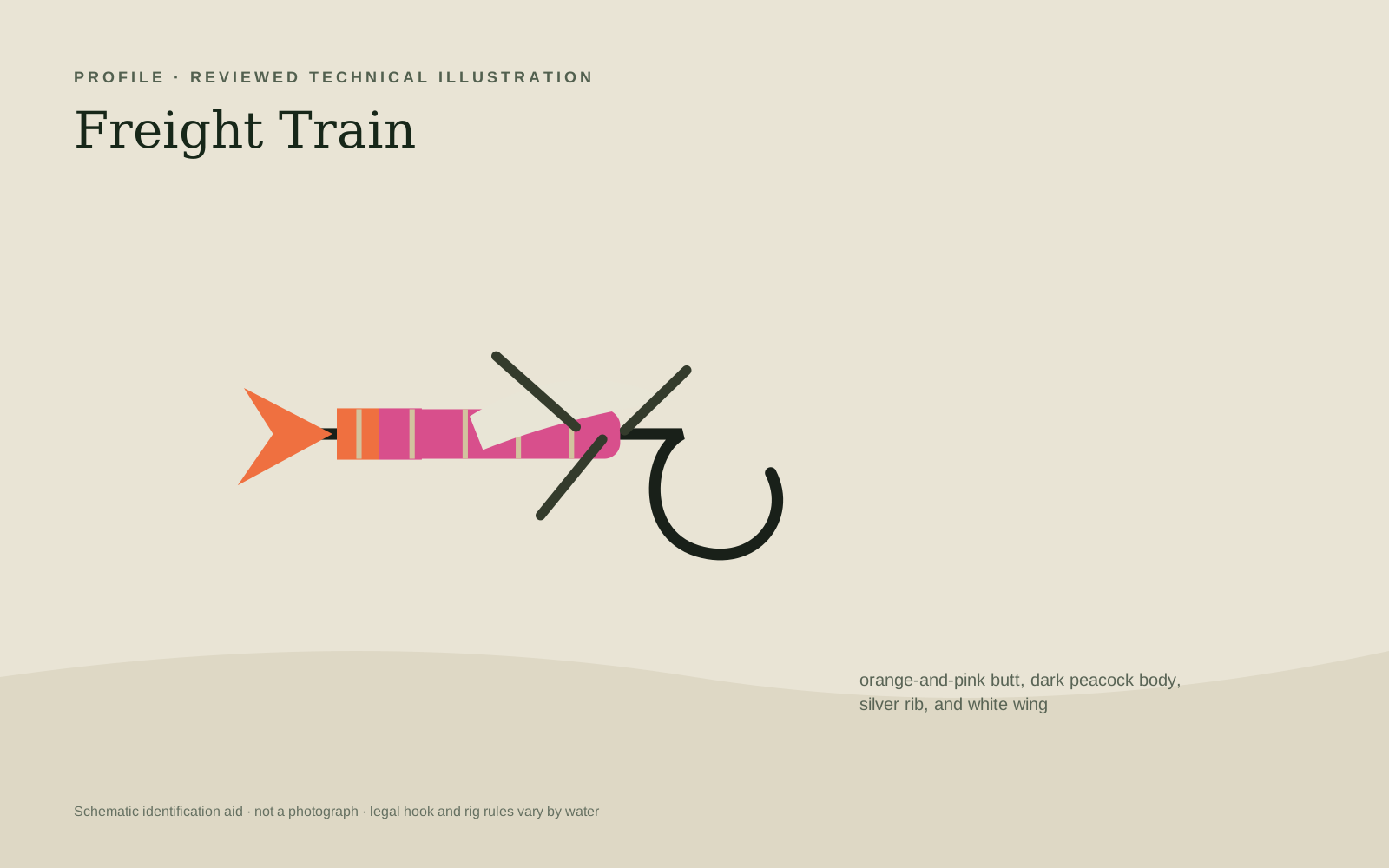 Reviewed illustration
Wet Fly · No universal size; match the target species, legal hook rules, tackle, and local forage
Freight Train
A classic Pacific Northwest steelhead hairwing with fluorescent butt sections, a dark body, and a sparse pale wing.Open field guide ↗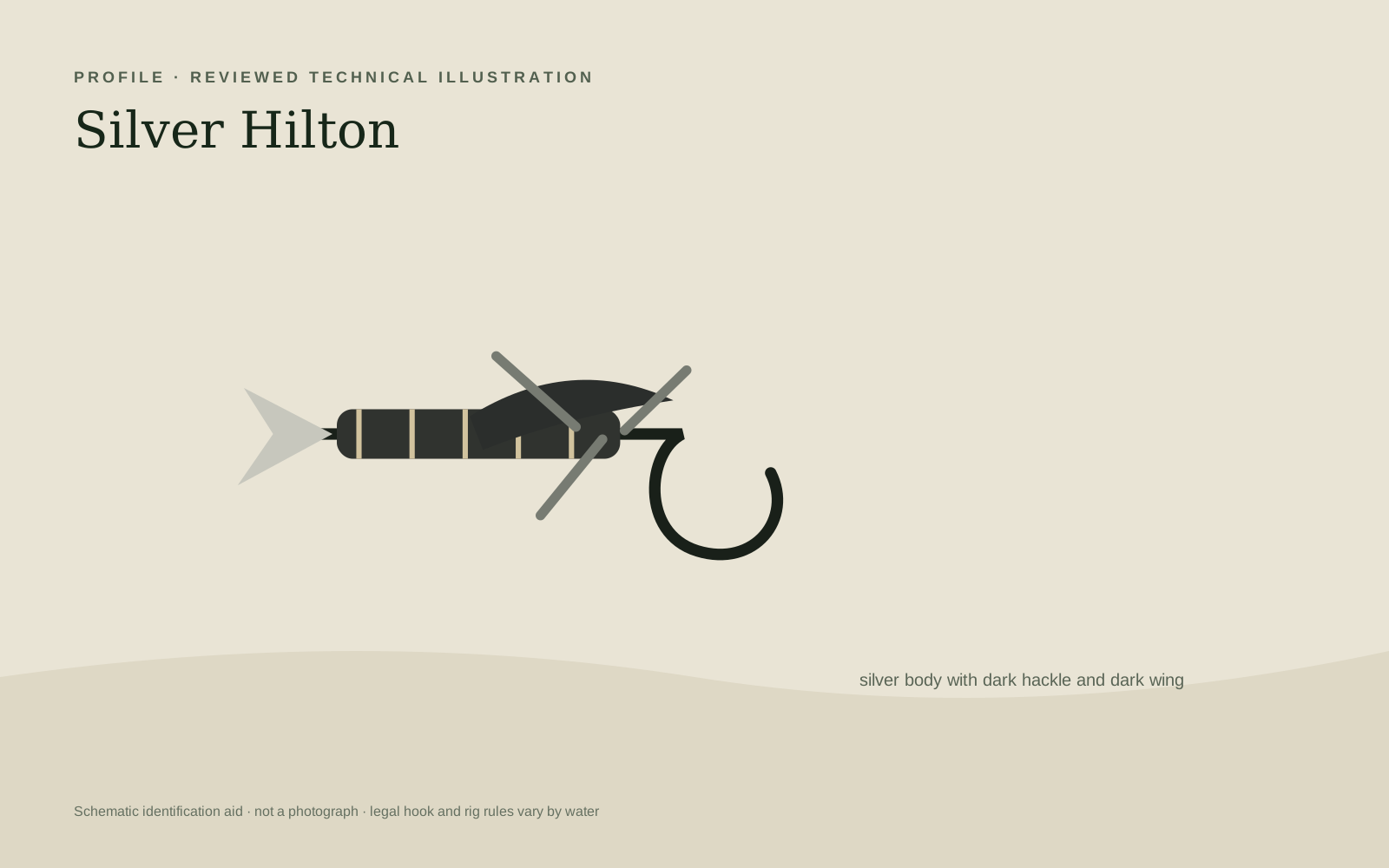 Reviewed illustration
Wet Fly · No universal size; match the target species, legal hook rules, tackle, and local forage
Silver Hilton
A classic dark steelhead wet fly distinguished by a silver body and dark feather or hair wing.Open field guide ↗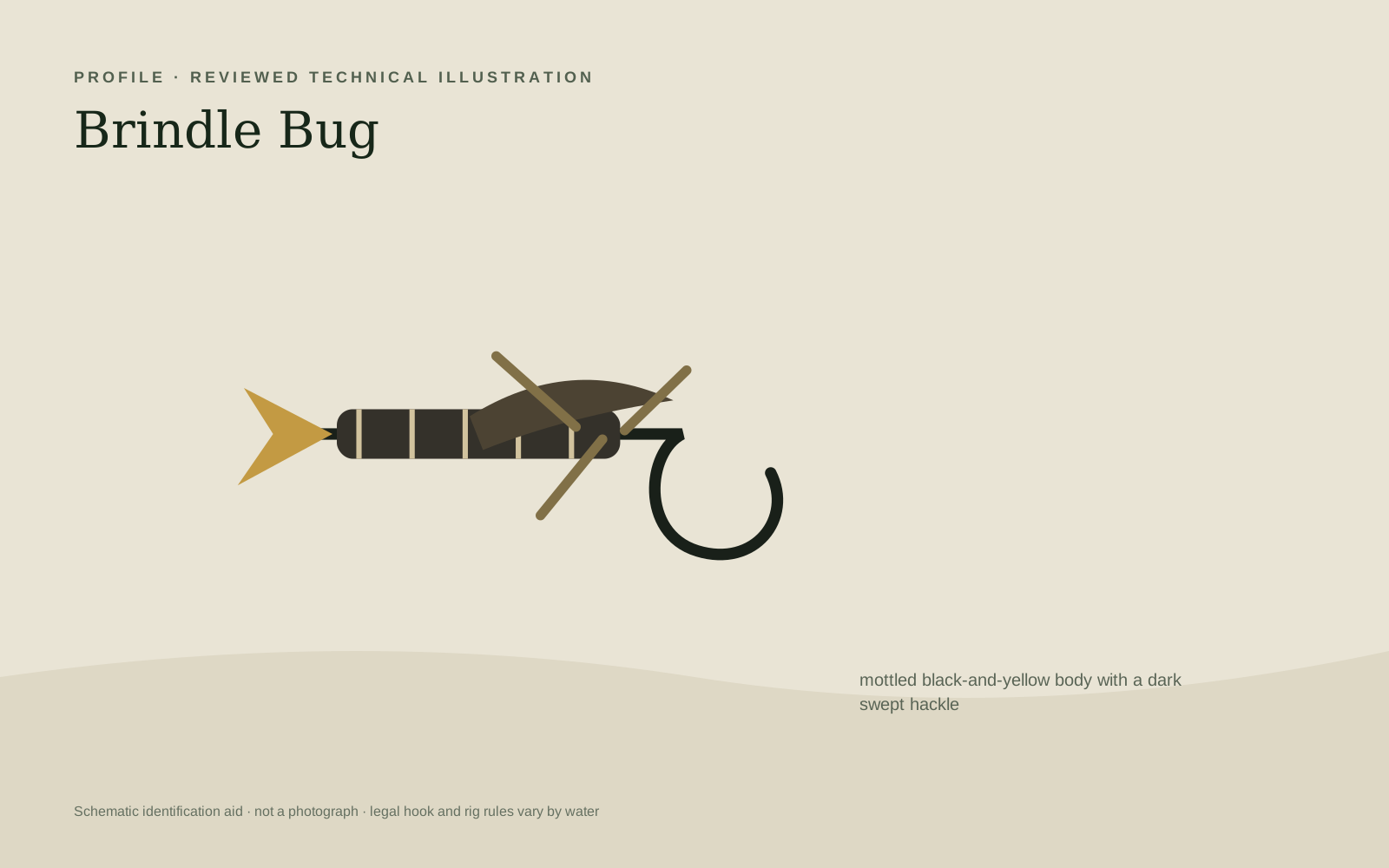 Reviewed illustration
Wet Fly · No universal size; match the target species, legal hook rules, tackle, and local forage
Brindle Bug
A compact classic steelhead wet fly with a mottled dark body, contrasting hackle, and simple low-water profile.Open field guide ↗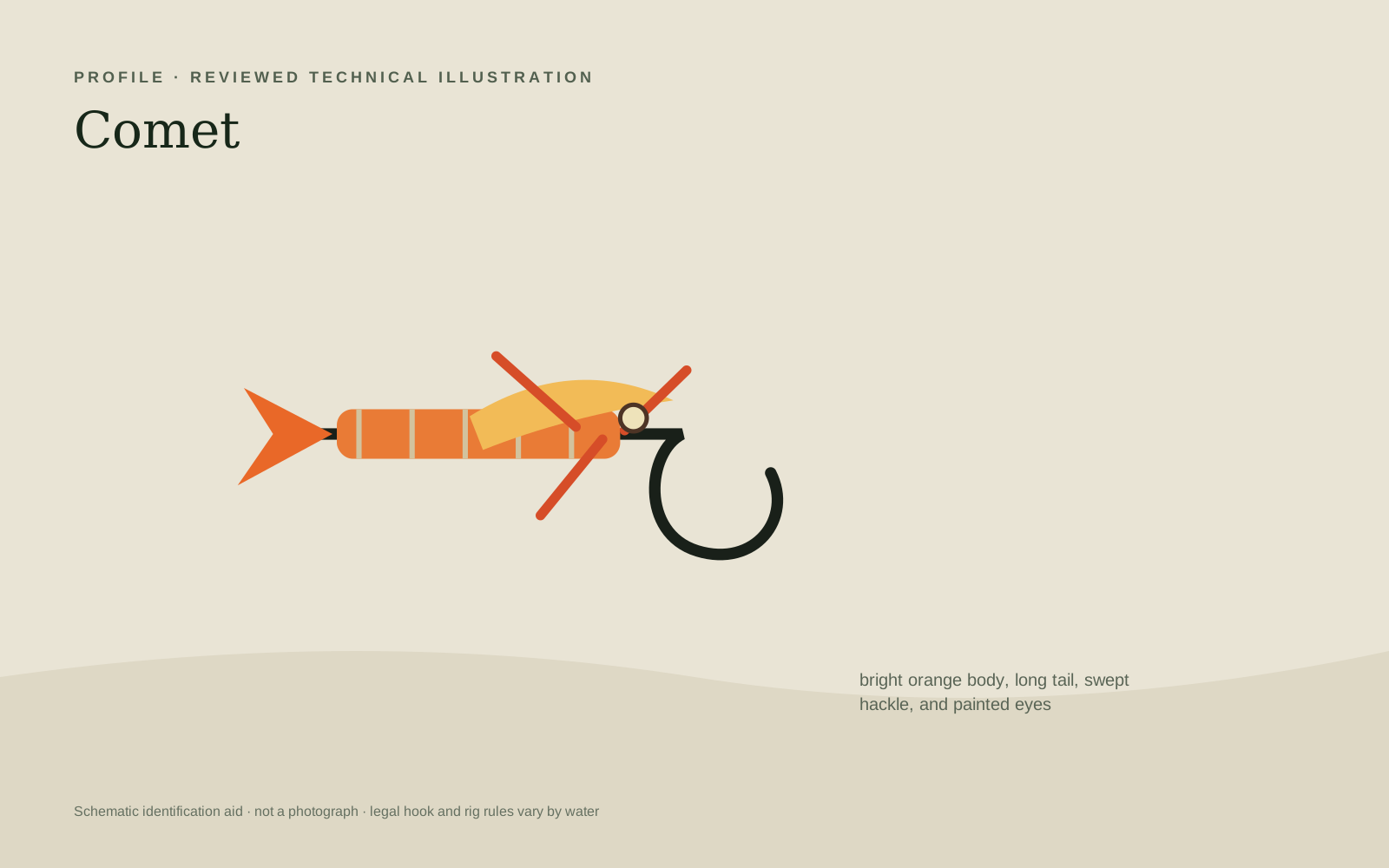 Reviewed illustration
Wet Fly · No universal size; match the target species, legal hook rules, tackle, and local forage
Comet
A bright West Coast salmon and shad fly built around a long tail, chenille body, palmered or collared hackle, and prominent eyes.Open field guide ↗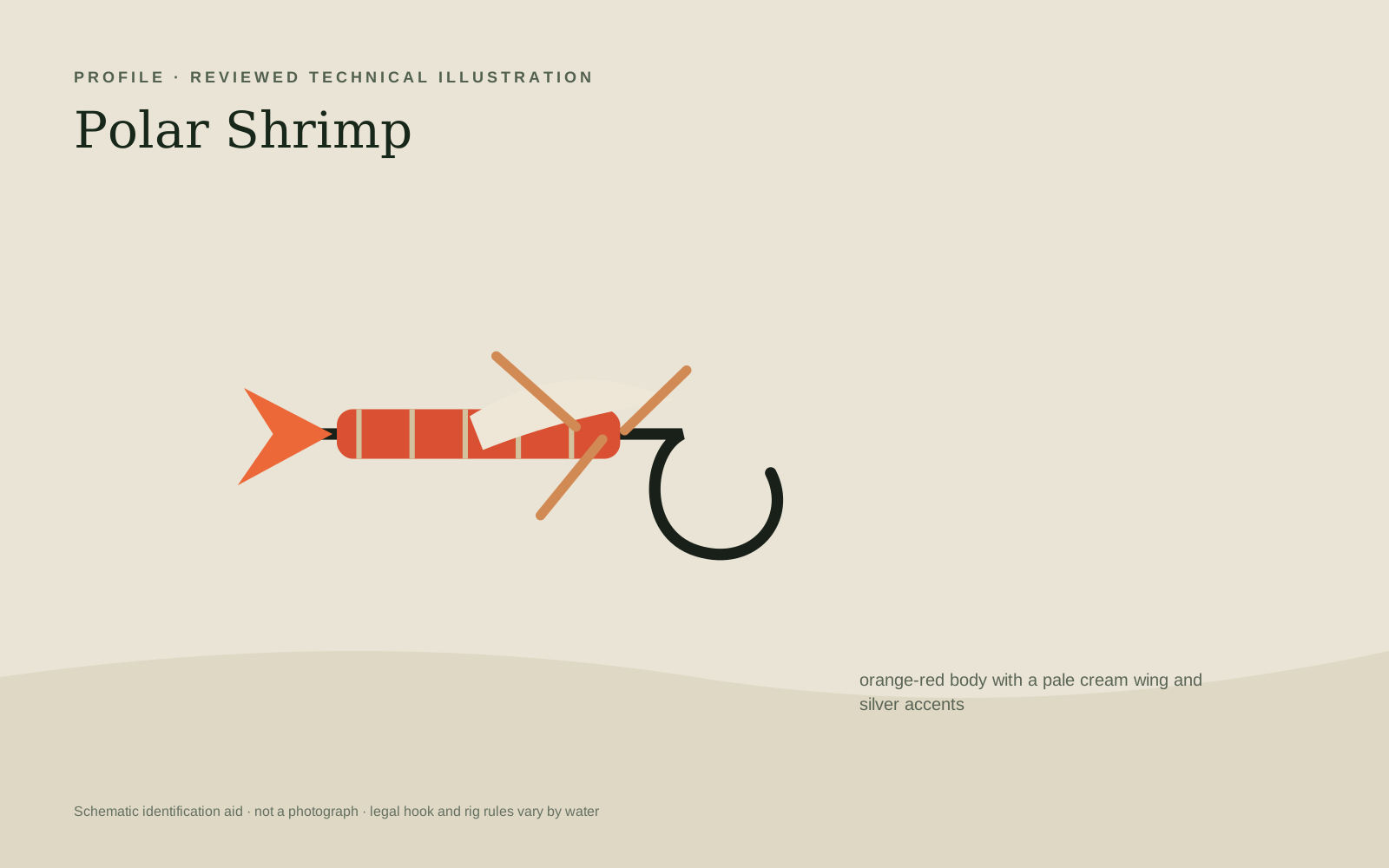 Reviewed illustration
Wet Fly · No universal size; match the target species, legal hook rules, tackle, and local forage
Polar Shrimp
A classic salmon and steelhead hairwing whose orange-red body and pale wing suggest—but do not literally copy—a shrimp.Open field guide ↗ Verified photograph
Saltwater · No universal size; match the target species, legal hook rules, tackle, and local forage
Lefty's Deceiver
Lefty Kreh's adaptable baitfish style combining a feather tail with a bucktail collar that resists fouling.Open field guide ↗ Verified photograph
Saltwater · Original saltwater recipe: #4–2/0, Original freshwater recipes: #6–2 or #2–1/0 on Gartside's listed hooks, Later trout miniatures can be smaller but are not the original saltwater recipe
Gartside Gurgler
Jack Gartside's original one-piece-foam surface commotion fly: sparse tail, five segmented foam sections, palmered hackle, over-shell, and a raised front lip.Open field guide ↗ Verified photograph
Saltwater · No universal hook size; the reviewed Fly Fishers International recipe uses a 3XL or 4XL saltwater hook, Match body length, hook strength, tackle, target species, and local forage rather than copying one thumbnail scale
Crease Fly
Joe Blados's folded-foam baitfish fly: a narrow hollow shell that floats, pops, wakes, and pushes water without becoming a cylindrical popper.Open field guide ↗ Verified photograph
Saltwater · Traditional FFI reference: Tiemco 811S #4 or equivalent, Photographed McFly Super Fiber variation: Mustad 3407 #2, Other permit, bonefish, and redfish forms vary; match prey, depth, target, tackle, and current rules
Merkin Crab
Del Brown's weighted hook-point-up crab fly: splayed hackle claws and flash, a flat trimmed body, mobile rubber legs, and dumbbell ballast arranged to descend at an angle.Open field guide ↗ Verified photograph
Saltwater · No universal production size; scale the fly, leader, line, and hook system to the target, forage, tackle, and current regulations, Flymen's documented Craft Fur Double Deceiver Mini is under four inches and uses #6 rear and front hooks with a 10 mm articulated spine, The photographed Flywheel form cannot be measured reliably from the video frame
Double Deceiver
A long, articulated baitfish platform that carries Deceiver-style feather, bucktail, flash, or synthetic volume across connected rear and front tying sections.Open field guide ↗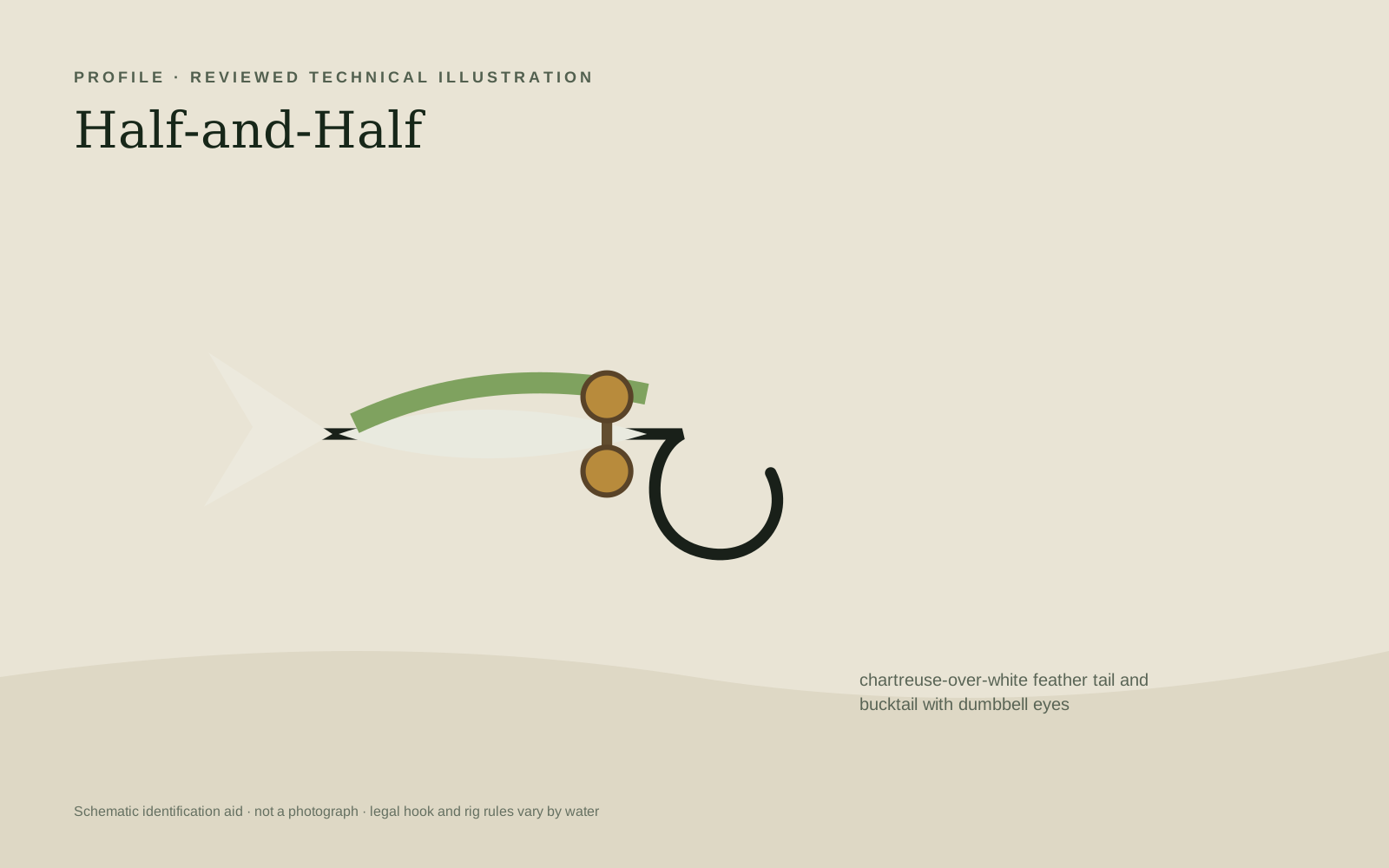 Reviewed illustration
Saltwater · No universal size; match the target species, legal hook rules, tackle, and local forage
Half-and-Half
A Clouser-and-Deceiver hybrid pairing a feather tail with a dumbbell-eye bucktail front section.Open field guide ↗ Verified photograph
Pattern family · No universal family size; the three photographs do not include a dependable scale reference, Fly Fishers International's documented EP Baitfish evaluation form uses an Ahrex SA 280 Minnow #2 or equivalent and is trimmed to a three-inch total length, Scale hook, total length, bulk, eye size, leader, and line to the actual forage, target, tackle, and regulations
EP Minnow & EP-Style Baitfish
A source-controlled family guide for synthetic-fiber baitfish commonly reported as EP minnows or EP-style baitfish, compared through three distinctly named dressings instead of one invented universal recipe.Open family guide ↗ Verified photograph
Pattern family · No universal size; match the target species, legal hook rules, tackle, and local forage
Egg Fly Patterns
A family separating tied yarn, chenille, veiled, clustered, and other hook-mounted egg imitations from loose beads and bait.Open family guide ↗ Verified photograph
Pattern family · No universal size; match the observed tissue fragments, exact tied form, target fish, hook system, tackle, and regulations
Flesh Fly Patterns
A natural-food family for flies that suggest salmon-flesh fragments carried downstream after spawning, with compact, articulated, washed-out, fresh-color, and egg-and-flesh forms kept distinct.Open family guide ↗ Verified photograph
Pattern family · No universal size; match the exact form, target, line, casting room, and regulations
Intruder-Style Steelhead Flies
Ed Ward's large-profile, sparsely dressed swing-fly concept for salmon and steelhead, now tied on shanks and tubes in many colors and material systems.Open family guide ↗ Verified photograph
Pattern family · No universal size; match the exact pattern, target, tackle, prey, and regulations
Tube Fly Patterns
A construction-first guide to flies tied on a hollow tube rather than directly on a hook shank, with the body, leader path, junction system, replaceable hook, tube material, and exact fly pattern kept as separate decisions.Open family guide ↗ Verified photograph
Pattern family · No universal size; choose the exact named pattern, water, tackle, target, hook rules, and presentation
Steelhead Wet, Spey, and Hairwing Patterns
An orientation guide to classic swung steelhead flies, keeping compact hairwings, long-hackled Spey styles, sparse low-water wets, and marabou attractors separate from modern Intruder and tube constructions.Open family guide ↗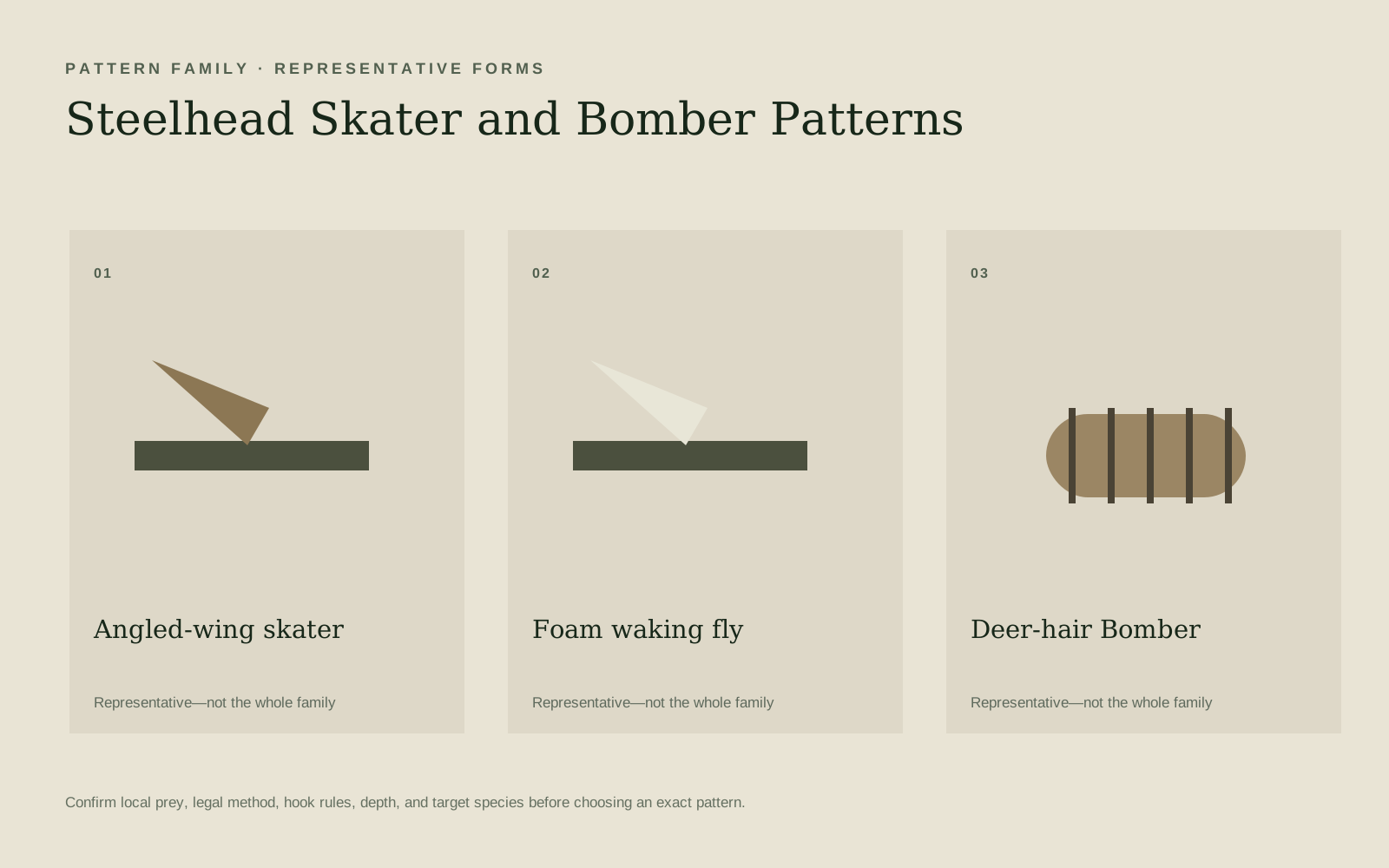 Reviewed illustration
Pattern family · No universal size; match the target species, legal hook rules, tackle, and local forage
Steelhead Skater and Bomber Patterns
A surface family separating waking or riffle-hitched skaters from bushy floating Bomber-style dries.Open family guide ↗ Verified photograph
Pattern family · NOAA's Atlantic salmon presence table gives a 2–3 cm alevin range; other salmon species and development points vary, so verify the local species and never convert a photograph directly into one hook size
Salmon Alevin Patterns
A lifecycle-first alevin guide showing the tiny translucent fish and attached yolk sac clearly enough to separate it from an egg fly, free-feeding fry, parr, smolt, or generic orange-bead streamer.Open family guide ↗ Verified photograph
Pattern family · No universal size; match the target species, legal hook rules, tackle, and local forage
Anadromous Baitfish and Coho Streamer Patterns
A migratory-fish streamer family for emerald shiners, smelt, sparse flash flies, and bright coho-oriented baitfish forms.Open family guide ↗ Verified photograph
Pattern family · No universal size: the cited Single-Wing example uses a 1/0 hook, but feather length, hook, body depth, and overall fly length must match the target forage and tackle
Flatwing Streamer Patterns
A prey-first flatwing guide using real silverside and sand-lance photography to separate translucency, body depth, side flash, and habitat before the angler chooses feather count, support, line, and retrieve.Open family guide ↗ Verified photograph
Pattern family · No universal fly size: match the locally observed sand lance or sand-eel report by body length and depth; the hand-scale photographs are comparison references, not hook-size conversions
Sand Eel Fly Patterns
A source-bounded coastal guide comparing two named sand-lance forms and one natural school before choosing the length, depth, flexibility, and flash of an honestly labeled sand-eel imitation.Open family guide ↗ Verified photograph
Pattern family · No universal size; match the local crab, target species, tackle, water depth, and required landing softness
Saltwater Crab Fly Patterns
A saltwater crab selection guide for matching shell width, claw proportion, leg motion, swimming ability, bottom posture, ballast, and hook orientation to the exact coast and target.Open family guide ↗ Verified photograph
Pattern family · No universal size; match the target species, legal hook rules, tackle, and local forage
Shrimp and Mysis Fly Patterns
A crustacean family separating translucent grass shrimp, compact mysis, spawning shrimp, and larger saltwater shrimp profiles.Open family guide ↗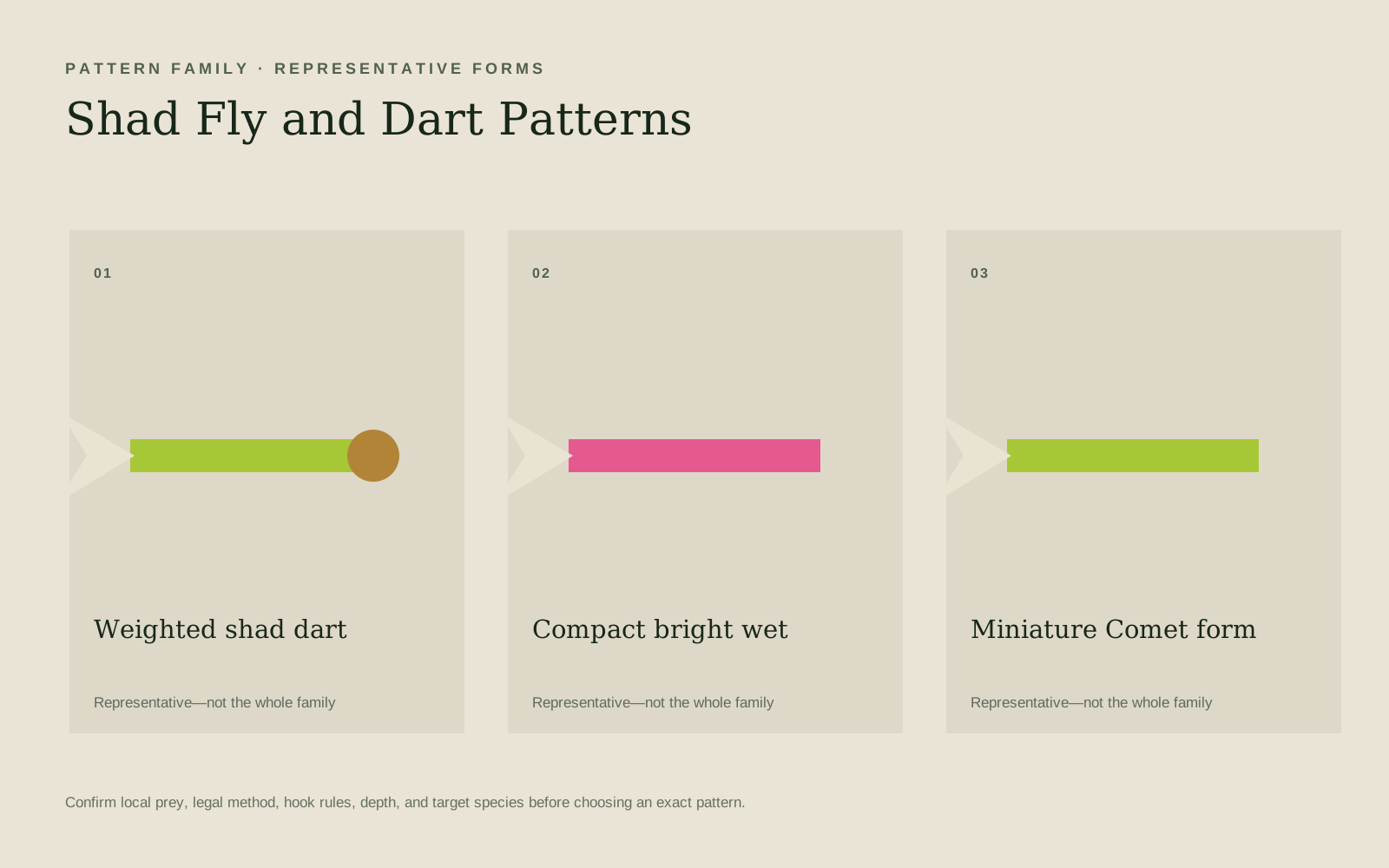 Reviewed illustration
Pattern family · No universal size; match the target species, legal hook rules, tackle, and local forage
Shad Fly and Dart Patterns
A small bright migratory-shad family covering weighted darts, compact Comet-style flies, and sparse pink or chartreuse wets.Open family guide ↗Verified photographPattern family · No universal size; match the target species, legal hook rules, tackle, and local forage
Pike and Musky Predator Fly Patterns
A large-predator family separating long synthetic baitfish, rabbit-strip streamers, articulated profiles, divers, and surface flies.Open family guide ↗ Verified photograph
Pattern family · No universal size; match the target species, legal hook rules, tackle, and local forage
Saltwater Baitfish Fly Patterns
A broad coastal family for bunker, anchovy, silverside, synthetic-minnow, and weedless baitfish forms without a named recipe.Open family guide ↗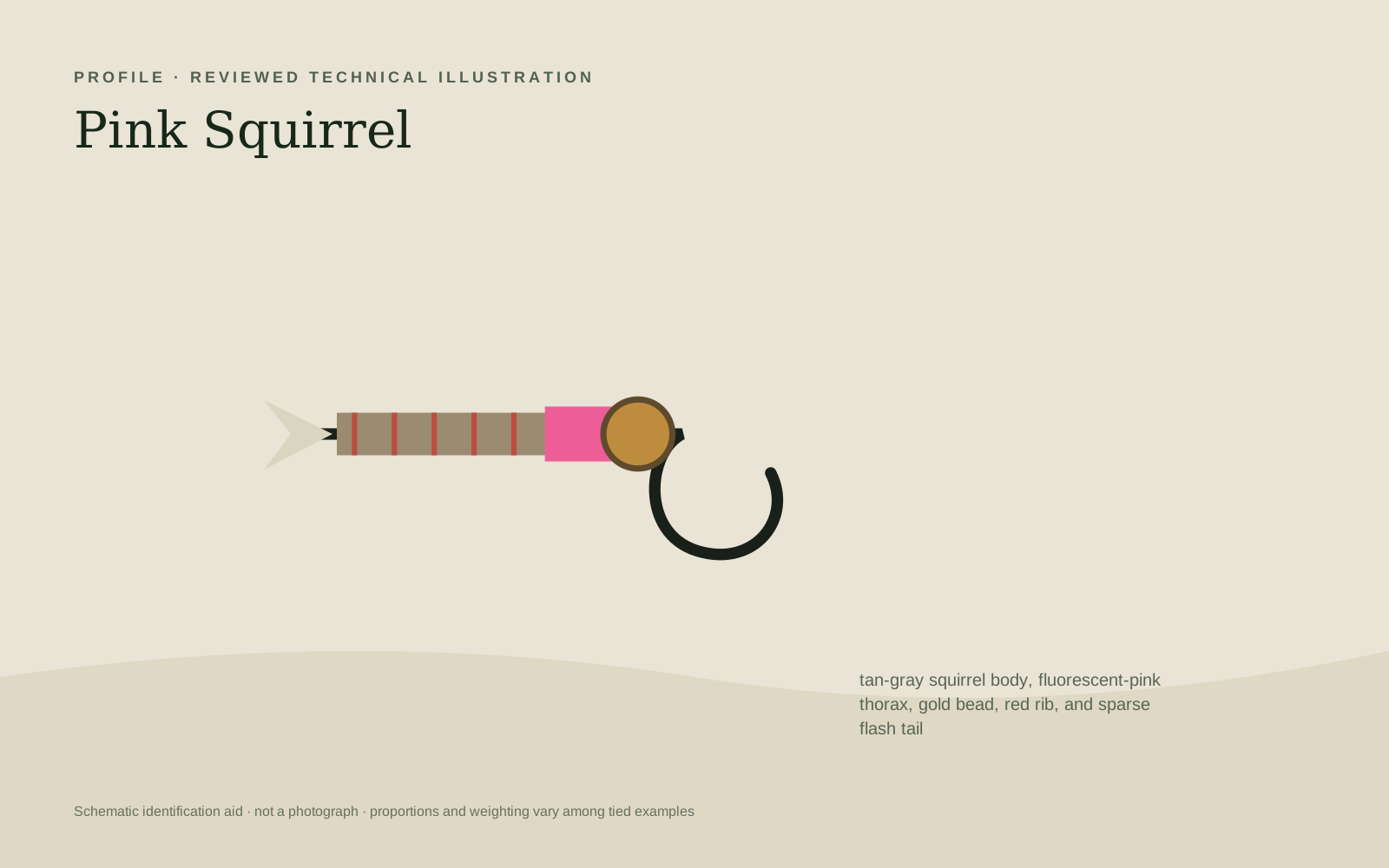 Reviewed illustration
Nymph · #12–18 in the reviewed Orvis variant
Pink Squirrel
John Bethke's Driftless-region attractor nymph with a buggy squirrel-dubbing body and unmistakable fluorescent-pink thorax.Open field guide ↗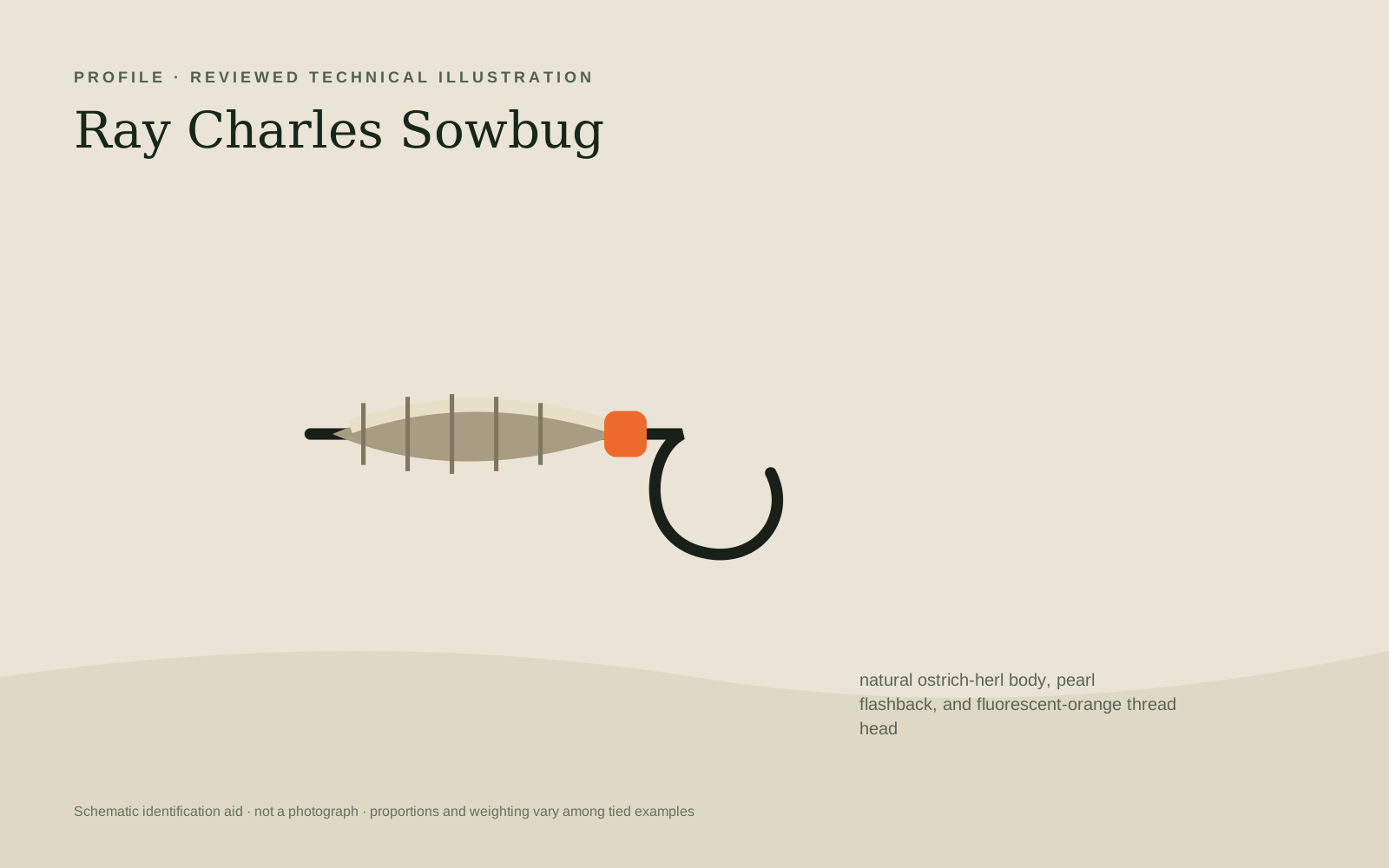 Reviewed illustration
Nymph · Often #12–18; Orvis demonstrates #16
Ray Charles Sowbug
A Bighorn-origin sowbug pattern with a soft ostrich-herl body, pearl flashback, and bright thread head.Open field guide ↗ Verified photograph
Nymph · Reviewed Orvis standard: #14 on a standard nymph hook, Other competition and jig forms vary; match the measured natural, water depth, hook rules, and tackle
Frenchie Nymph
A slim competition-style Pheasant Tail derivative that replaces the traditional PT thorax and legs with a bright dubbed thorax or collar, a Coq de Leon tail, durable wire rib, and fast-sinking bead.Open field guide ↗ Verified photograph
Nymph · #12–22 in the reviewed Orvis recipe, Orvis demonstrates #16 and notes #18–20 are common practical sizes
Rainbow Warrior
Lance Egan's compact pearl-and-red attractor nymph, combining a silver bead, pheasant-tail tail, reflective Flashabou abdomen and wing case, rainbow dubbing thorax, and red collar.Open field guide ↗ Verified photograph
Streamer · #4–12 on a Tiemco 5263 in the reviewed olive Orvis recipe, Cone and tackle must be matched to hook size, water, target, and current rules
Slumpbuster
John Barr's conehead pine-squirrel streamer, combining a reflective braid body, wire-ribbed hide strip, broad mobile collar, and long tail in a compact single-hook profile.Open field guide ↗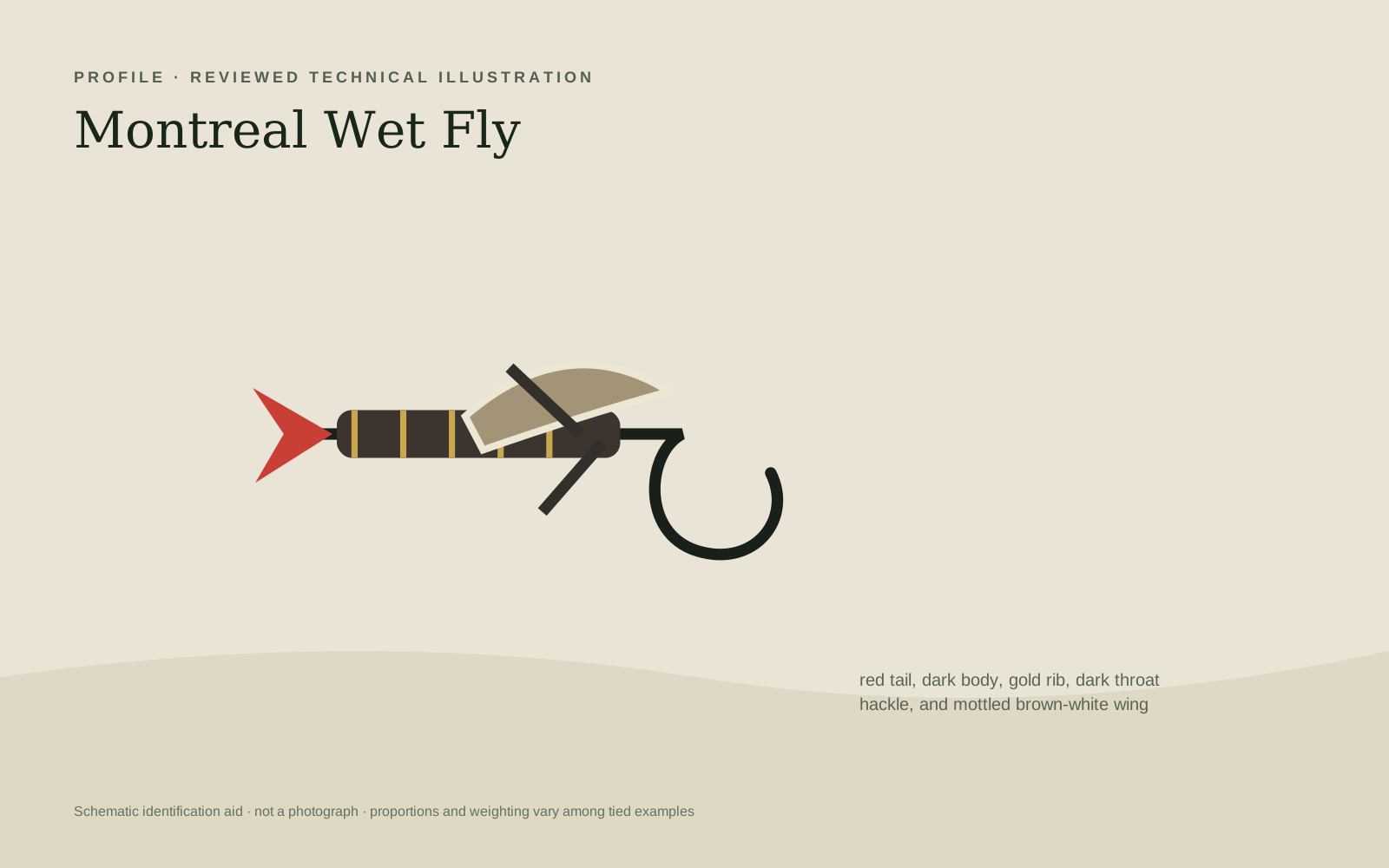 Reviewed illustration
Wet Fly · Traditional wet-fly sizes vary
Montreal Wet Fly
A historic Canadian winged wet fly with a red tail, dark ribbed body, dark hackle, and mottled light-and-dark wing.Open field guide ↗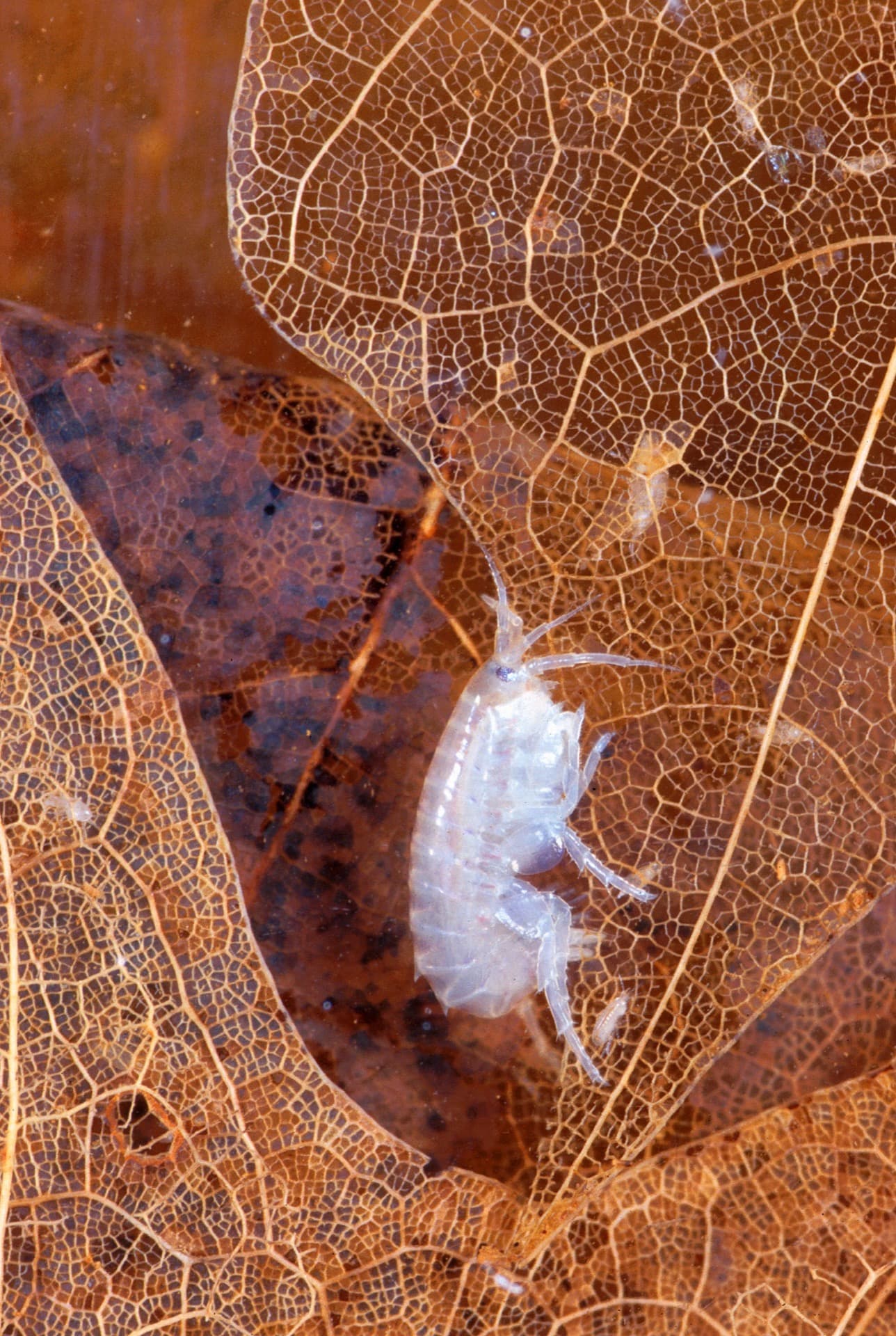 Verified photograph
Pattern family · Commonly #12–18 in the reviewed Simple Scud; naturals vary more widely
Scud Fly Patterns
A freshwater amphipod family defined by a curved shellback, segmented body, many short legs, and locally variable size and color.Open family guide ↗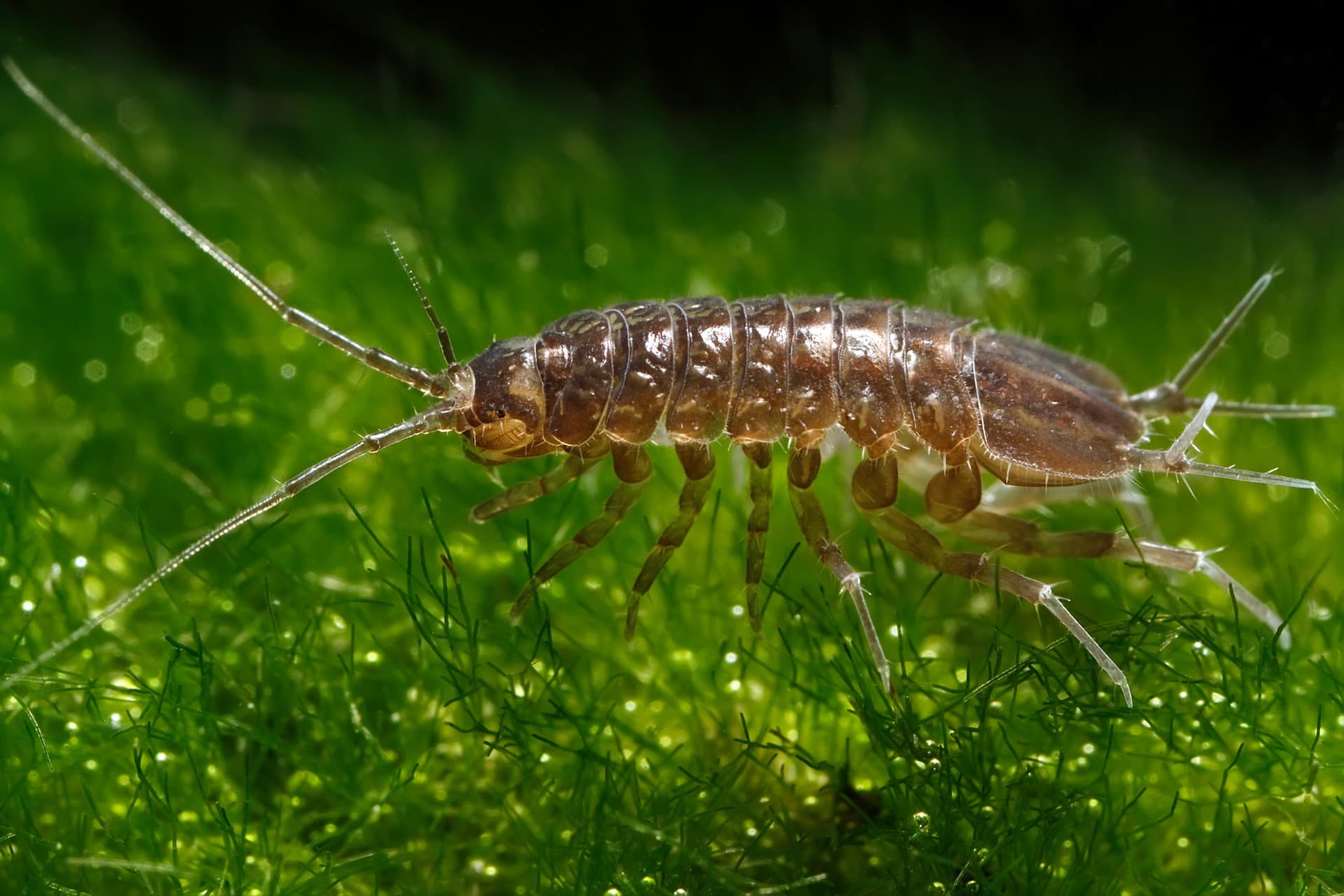 Verified photograph
Pattern family · Often #12–18 in reviewed tailwater patterns
Sowbug and Cress Bug Patterns
A freshwater isopod family with a flattened oval body and overlapping dorsal segmentation, distinct from the side-curved scud profile.Open family guide ↗Verified photographPattern family · No universal size; match the local food form and water
General Nymph Patterns
A deliberately broad family for source rows that identify only a nymph's size, weight, or general profile—not its insect or recipe.Open family guide ↗ Verified photograph
Pattern family · No universal size; match the exact jig hook, compatible bead, body length, target, tackle, and current
Jig Fly Patterns
A hook-and-weighting family in which an angled jig hook—and commonly a compatible slotted bead—supports compact nymphs, bottom bugs, and mobile streamers without turning those different bodies into one pattern.Open family guide ↗ Verified photograph
Pattern family · Utah State University Extension gives a natural-larva range of roughly 3–12 mm; match a sample or trusted report before converting millimeters to a hook
Black Fly Larva Patterns
A flowing-water larva guide separating the club-shaped Simuliidae body, attached colony behavior, and compact cocooned pupa so a tiny dark recommendation does not collapse into a midge or generic thread fly.Open family guide ↗ Verified photograph
Pattern family · The reviewed Fly Fish Food Split Case PMD source describes #16–20; BWO and other exact forms require their own measured local size and recipe