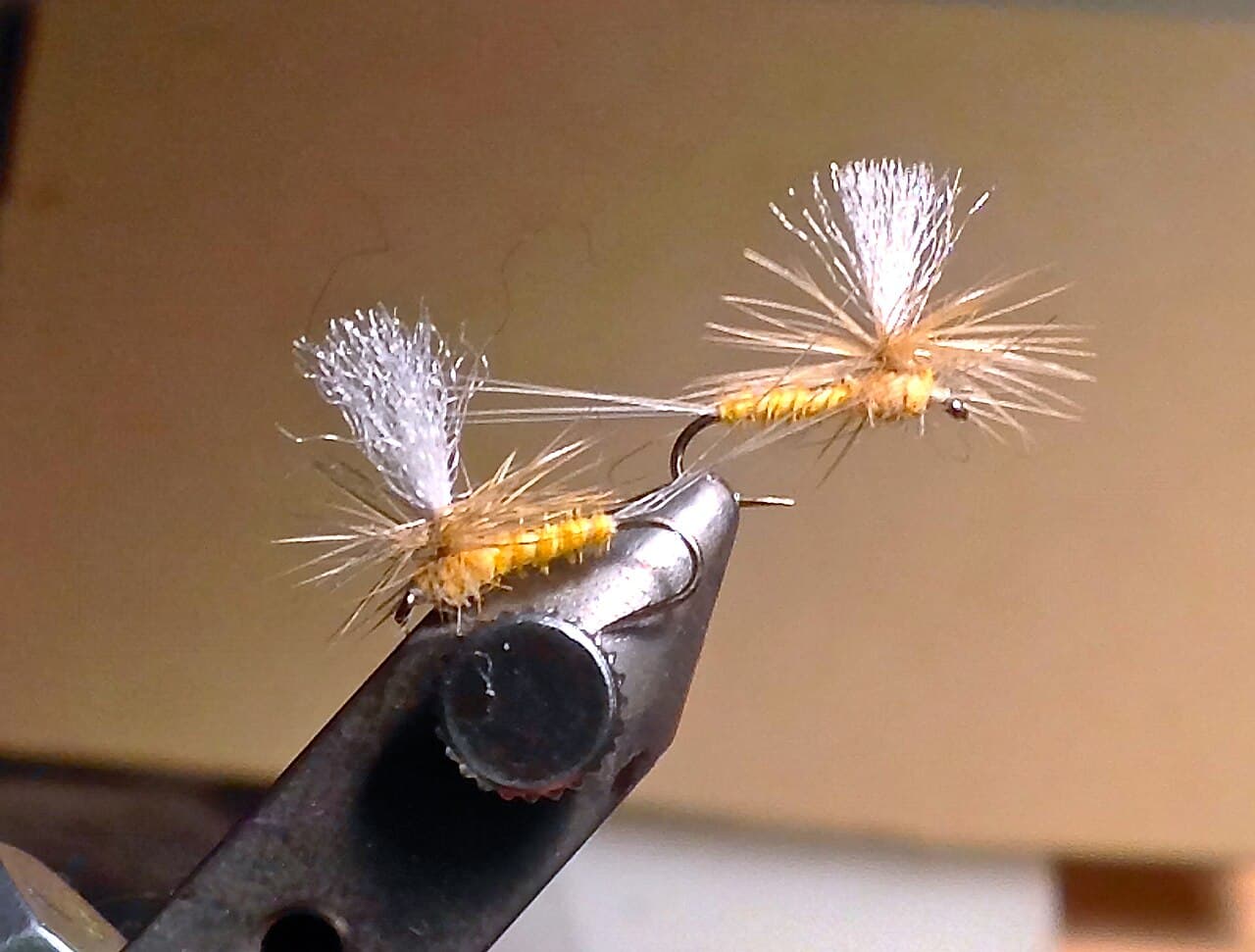
Photograph of two pale yellow Parachute Sulphur dry flies in a viseRepresentative photo · one form in this family

Fly family · guide 43

Sulphur Mayfly Patterns

A pale-mayfly stage family for Sulphur nymphs, emergers, duns, cripples, soft hackles, and spinners.

Size range
Often #14–18; verify locally
Common colors
pale yellow, cream, orange-yellow, rust spinner
Imitates
Sulphur mayfly stages
How to recognize it

Sulphur is hatch wording. Nymphs, emergers, Comparaduns, parachutes, traditional dries, soft hackles, and spinners have different silhouettes and depths.

Photograph of two pale yellow Parachute Sulphur dry flies in a vise
Representative photo · one form in this family

Parachute Sulphur

The parachute dry belongs at the surface after the fish move beyond the nymph or rising soft-hackle stage.

View
stage comparison — adult parachute dry
Color shown
yellow-orange bodies with pale tails, hackle, and upright posts
Look for
Two tied examples show the pale segmented bodies, horizontal parachute hackle, and visible posts of an adult-dry form.
Open full-size photo

On the water

Choose the right version.

Use these tips as a starting point. The river, depth, insects, and fish behavior still decide the final presentation.

01

Why it works

  • Sulphur feeding can move from a slim nymph through a vulnerable rise to a pale adult, and each photographed form occupies a different waterline.
  • The soft mobile collar of Partridge and Yellow can suggest ascent, while the parachute's horizontal hackle and post create an adult surface footprint.
  • Stage, size, and local species matter more than selecting any fly that happens to be yellow.
02

When to use it

  • During a locally established Sulphur window after the report and on-water evidence confirm current activity.
  • Use a nymph before surface feeding, a soft-hackle approach as fish intercept rising insects, and the parachute for clear adult takes.
  • Keep Sulphur and PMD wording separate unless the local entomology and report explicitly support the same practical match.
03

How to fish it

  • Dead-drift the Pheasant Tail approach at the feeding depth and adjust weight before changing to unrelated colors.
  • Fish Partridge and Yellow on a subsurface drift followed by a controlled lift or swing when rising behavior is credible.
  • Present the Parachute Sulphur drag-free in the rise lane and match size before maximizing post visibility.
04

Mistakes to avoid

  • Treating Sulphur and PMD as automatic synonyms.
  • Showing one pale dry as the whole family.

Make the choice

Choose the form before the color.

A family name is only a starting point. Use the waterline, construction, and observed food to narrow it to the form that fits the river.

  1. Choose the Pheasant Tail only as a general slim nymph approach; it is not an exact Sulphur identity.
  2. Choose Partridge and Yellow as one pale soft-hackle presentation for the rise, keeping its named recipe visible.
  3. Choose the Parachute Sulphur for an adult dry with a pale body, split tails, horizontal hackle, and upright post.

Common variations

Small changes can make a different fly.

Three verified, non-AI photographs compare one general named nymph approach, a Partridge and Yellow rising-stage approach, and an exact Parachute Sulphur adult dry. Each borrowed approach keeps its real name and is not presented as a universal Sulphur recipe.

Pheasant Tail nymph approach

A general named mayfly nymph for the subsurface job, not a universal Sulphur recipe.
Colors shown
natural brown, copper
Weighting
The photographed form is unweighted; rig weight sets depth.

Partridge and Yellow approach

A sparse yellow-bodied soft hackle for one rising-stage presentation.
Colors shown
yellow, mottled partridge
Weighting
Unweighted wet fly; leader and rig set depth.

Parachute Sulphur

A pale yellow-orange adult dry with split tails, horizontal hackle, and a bright post.
Colors shown
yellow-orange, pale gray-white
Weighting
Unweighted dry fly.

Related patterns

Sulphur ComparadunSparkle DunSoft-Hackle Wet FliesRusty SpinnerMayfly Patterns by Stage

How this guide was checked

Fly information and photo sources.

Guide checked on 2026-07-13. Every image has its own source and usage record. Natural insects and hand-tied flies can vary in shape and proportion.

Pattern sources

Orvis NewsHow to Match the HatchOrvis NewsPhil's Top 6 Patterns for Spring Mayfly Hatches

Image credits