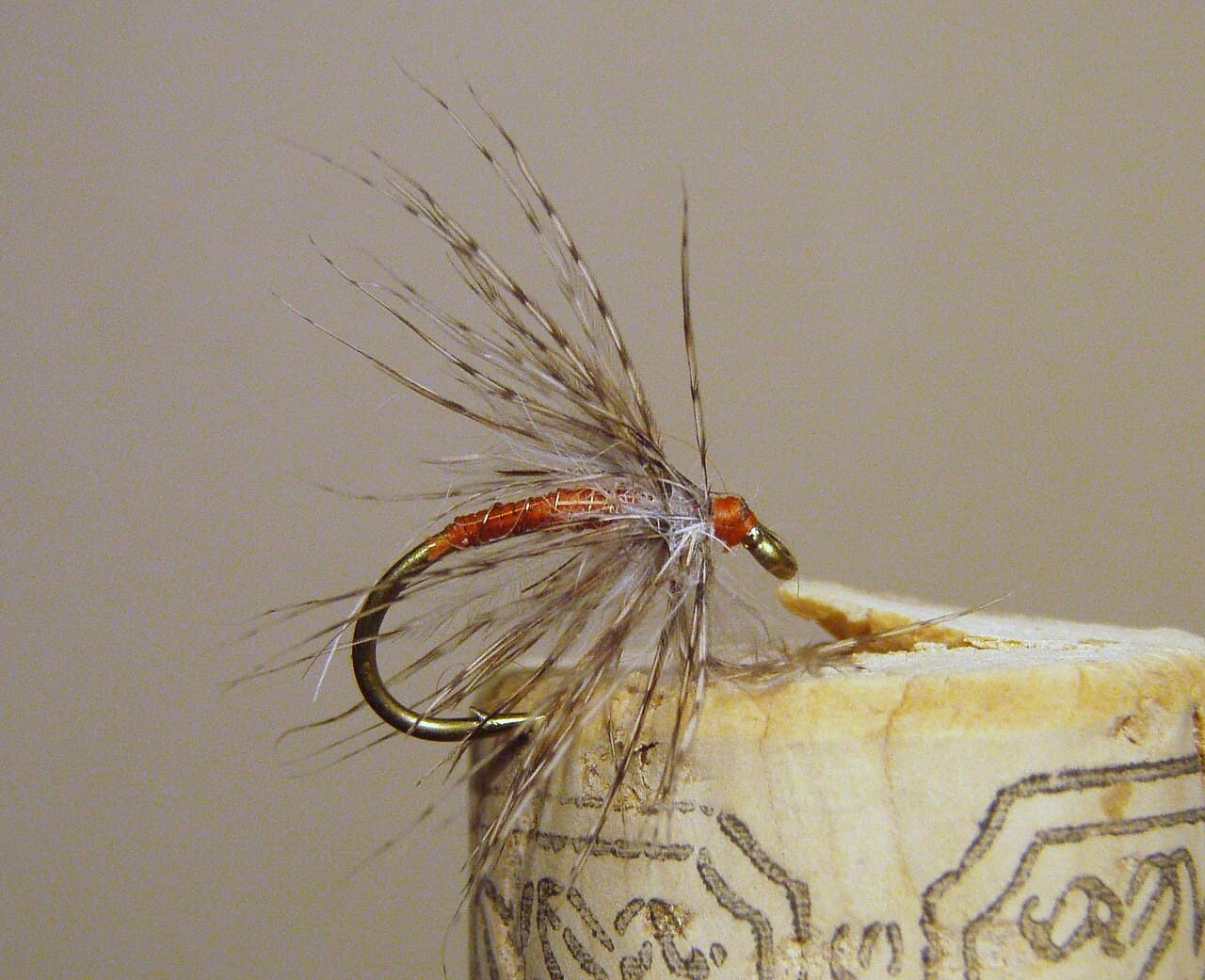
Macro side photograph of a Partridge and Orange soft-hackle wet flyRepresentative photo · one form in this family

Fly family · guide 24

Soft-Hackle Wet Flies

A family of sparse wet flies whose mobile feather collar suggests legs, wings, or an emerging insect.

Size range
#10–20
Common colors
natural, orange, olive, pheasant brown
Imitates
emerging mayfly, emerging caddis, drowned adult insect
How to recognize it

A slim body and sparse webby feather collar define the family. Body material, tail, bead, and insect-specific color create different named patterns.

Macro side photograph of a Partridge and Orange soft-hackle wet fly
Representative photo · one form in this family

Partridge and Orange

The orange body changes the trigger color, while the sparse soft collar remains the family's defining moving element.

View
family comparison — orange silk body
Color shown
orange body with mottled gray-brown partridge hackle
Look for
A slim orange body and sparse mottled collar show the classic North Country soft-hackle architecture.
Open full-size photo

On the water

Choose the right version.

Use these tips as a starting point. The river, depth, insects, and fish behavior still decide the final presentation.

01

Why it works

  • A sparse webby collar moves with very little current, suggesting legs, wings, or an insect struggling during emergence without requiring a rigid exact-species silhouette.
  • The slim body keeps the fly in the wet-fly and emerger scale while color and material let the angler match a darker, brighter, or more segmented local cue.
  • Soft hackles can work during a dead drift, controlled lift, or swing because each presentation changes how the collar opens and pulses.
02

When to use it

  • Before and during mayfly or caddis emergence, especially when fish feed just below the surface rather than taking high-riding adults.
  • Through riffle tails, glides, and transition water where a dead drift can naturally turn into a controlled lift or swing.
  • When a sparse moving fly is more appropriate than a heavy bead-head nymph or bulky streamer.
03

How to fish it

  • Start with a dead drift at the observed feeding depth, then allow the line to tighten gradually so the fly lifts rather than jerks upward.
  • For a traditional swing, cast across or slightly downstream, mend to control speed, and keep enough contact to detect a take without dragging the fly unnaturally.
  • Use a floating line for shallow and film presentations; add leader length or minimal labeled weight only when depth and current require it.
04

Mistakes to avoid

  • Treating soft hackle as one exact fly.
  • Calling a soft-hackle streamer the same family without context.

Make the choice

Choose the form before the color.

A family name is only a starting point. Use the waterline, construction, and observed food to narrow it to the form that fits the river.

  1. Choose Partridge and Orange when a bright traditional body and sparse mottled collar fit the insects or visibility you need.
  2. Choose Partridge and Olive Quill when a subdued, visibly segmented body is a better match for olive-toned emerging insects.
  3. Choose Partridge and Yellow for a pale body cue, but do not relabel it as Partridge and Orange simply because the collar is similar.
  4. Choose Starling and Purple when a darker finer collar and higher-contrast body suit low light, stain, or a different observed insect profile.

Common variations

Small changes can make a different fly.

Four verified, non-AI photographs compare Partridge and Orange, Partridge and Olive Quill, Partridge and Yellow, and Starling and Purple. Body material, body color, and collar feather remain named instead of being collapsed into one generic soft hackle.

Partridge and Orange

A slim orange body with a sparse mottled partridge collar.
Colors shown
orange, mottled gray-brown
Weighting
The photographed form is unweighted; control depth with leader, cast, and presentation.

Partridge and Olive Quill

An olive quill body adds visible segmentation beneath a partridge collar.
Colors shown
olive, mottled gray-brown
Weighting
The photographed form is unweighted.

Partridge and Yellow

A pale yellow silk body keeps the same sparse wet-fly architecture with a different trigger color.
Colors shown
yellow, mottled brown
Weighting
The photographed form is unweighted.

Starling and Purple

Purple silk and a dark starling collar create a finer, higher-contrast alternative to the partridge forms.
Colors shown
purple, black
Weighting
The photographed form is unweighted.

Related patterns

Partridge and OrangeCaddis Pupa PatternsPheasant Tail NymphMayfly Patterns by Stage

How this guide was checked

Fly information and photo sources.

Guide checked on 2026-07-13. Every image has its own source and usage record. Natural insects and hand-tied flies can vary in shape and proportion.

Pattern sources

Orvis NewsTying with Tom Fly-Pattern ScheduleOrvis NewsHow to Tie and Fish Tandem RigsFly Fishers InternationalFly of the Month: Soft Hackle

Image credits