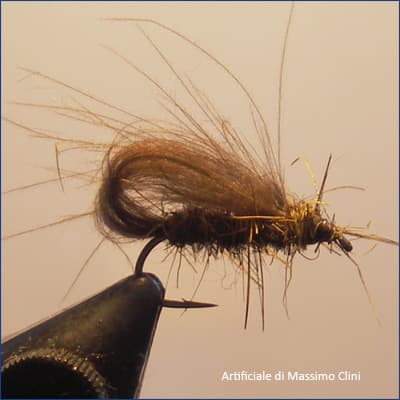
Close photograph of a brown artificial caddis-pupa imitation held in a fly viseRepresentative photo · one form in this family

Fly family · guide 17

Caddis Pupa Patterns

A family of subsurface caddis patterns spanning pupa, ascending emerger, and soft-hackle presentations.

Size range
Varies by species; often #10–18
Common colors
olive, tan, cream, amber
Imitates
caddis pupa, ascending caddis emerger
How to recognize it

Caddis pupa is a life-stage family. Curved bodies, wing pads, legs, beads, and soft-hackle collars differ among exact patterns and must be labeled.

Close photograph of a brown artificial caddis-pupa imitation held in a fly vise
Representative photo · one form in this family

Brown Caddis-Pupa Imitation

The source identifies this exact tied fly as an imitation of a caddis pupa. It is one dressing—not a universal caddis-pupa recipe.

View
family comparison — exact artificial caddis-pupa imitation
Color shown
dark brown body with a lighter segmented abdomen and swept fibers
Look for
A curved segmented body, pronounced thorax, and sparse swept fibers create a compact subsurface pupa profile.
Open full-size photo

On the water

Choose the right version.

Use these tips as a starting point. The river, depth, insects, and fish behavior still decide the final presentation.

01

Why it works

  • Caddis pupae move from the streambed through the water column toward emergence, giving fish repeated opportunities to intercept the same life stage at different depths.
  • A curved segmented body and compact thorax suggest the pupa itself, while a sparse soft-hackle collar can add motion during a controlled lift or swing.
  • Separating pupa, larva, emerger, and adult prevents an angler from choosing a fly by the word caddis alone when fish are feeding at one specific depth.
02

When to use it

  • Before and during verified caddis emergence, especially when current reports, local samples, or subsurface feeding indicate pupae rather than adults.
  • Use a weighted pupa near the streambed early, then reduce weight or choose an unweighted form as fish begin feeding higher in the column or film.
  • Use the soft-hackle approach only as a presentation option when rising or swinging movement is plausible; the photographed Partridge and Orange is not a universal caddis imitation.
03

How to fish it

  • Dead-drift the exact pupa near the active depth, keeping contact without forcing it to scrape every rock.
  • Allow selected drifts to finish with a controlled lift or swing when fish are intercepting ascending pupae, and be ready for a firm take.
  • Change depth and weighting before cycling colors; match size and body tone to local caddis rather than to one gallery photograph.
04

Mistakes to avoid

  • Using one exact pupa as the entire family.
  • Confusing cased larvae with pupae.

Make the choice

Choose the form before the color.

A family name is only a starting point. Use the waterline, construction, and observed food to narrow it to the form that fits the river.

  1. Choose a compact pupa imitation when the observed stage is below the surface and a curved segmented body fits the local insects.
  2. Choose a weighted form for deeper riffle lanes and an unweighted form for mid-column or film presentations; the page's photographed pupa does not reveal universal internal ballast.
  3. Choose a sparse soft hackle for a lift or swing only when movement and depth support that approach, keeping its exact pattern name visible.
  4. Open a cased-larva, X-Caddis, or Elk Hair Caddis destination when that stage or construction is actually present; none is interchangeable with the pupa family.

Common variations

Small changes can make a different fly.

Three verified, non-AI photographs separate an exact brown caddis-pupa imitation, natural pupae or cases attached to rock, and a clearly named Partridge and Orange soft-hackle presentation reference. The soft hackle is not relabeled as an exact pupa, and cased larvae remain a different life stage.

Brown Caddis-Pupa Imitation

A source-identified artificial with a curved segmented abdomen, compact thorax, and sparse swept fibers.
Colors shown
dark brown, tan-brown
Weighting
No bead or external weight is visible; exact internal ballast is not established by the photograph.

Natural Caddis Pupae on Rock

A natural habitat reference showing pupae or cases attached to the underside of stone before emergence.
Colors shown
brown, tan, stone gray
Weighting
Not applicable; this photograph shows natural insects or cases, not an artificial fly.

Partridge and Orange Soft Hackle

A clearly named wet fly used only to demonstrate a sparse rising or swinging presentation.
Colors shown
orange, mottled gray-brown
Weighting
The photographed fly has no bead or external weight.

Related patterns

X-CaddisElk Hair CaddisSoft-Hackle Wet Flies

How this guide was checked

Fly information and photo sources.

Guide checked on 2026-07-13. Every image has its own source and usage record. Natural insects and hand-tied flies can vary in shape and proportion.

Pattern sources

Orvis NewsHow to Tie Craig Mathews's X-CaddisOrvis NewsHow to Tie and Fish Tandem RigsOrvis NewsHow to Fish Caddis-Pupa Flies

Image credits