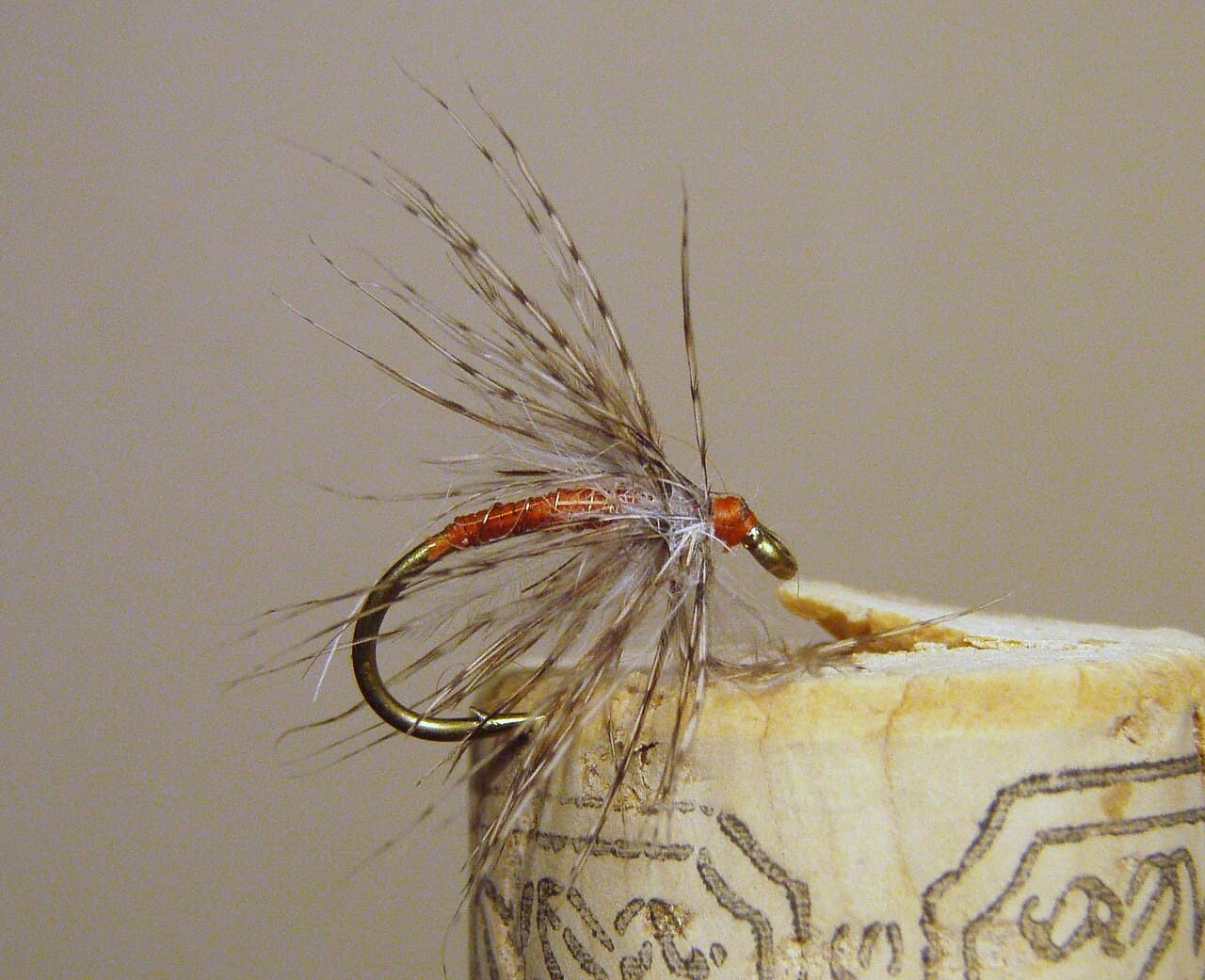
Materials
- Hook
- Standard wet-fly hook, sizes 12–18
- Tying thread and head
- Pearsall's Gossamer #19 hot-orange silk or a clearly labeled modern hot-orange tying-thread substitute
- Body
- The same hot-orange silk or thread, wound in smooth touching turns
- Hackle
- Hungarian-partridge feather selected for soft fibers suited to the hook size
- Thread preparation
- Firm fly-tying wax when required by the selected traditional silk
- Finish
- Small orange thread head; no bead, rib, dubbing, or trailing shuck in this reviewed form
Steps
- Select a partridge feather whose fibers reach approximately the intended collar length, then strip excess fibers so the finished hackle will stay sparse.
- Start the orange thread near the eye, leaving room for the hackle and final head, and secure the prepared feather by its stem with the concave side positioned for the wrap.
- Carry the orange thread rearward in touching turns to just short of the hook point, creating a short smooth body rather than filling the entire bend.
- Return the thread forward in controlled touching turns so the orange body remains slim and even, stopping behind the reserved head space.
- Wind the hackle rearward toward the waiting thread for about two turns—or less for a sparser collar. Hold the feather tip up, then weave the thread forward through the fibers with a gentle back-and-forth motion until it reaches the eye, avoiding trapped fibers.
- Build the smallest practical thread head, make a three-turn whip finish, trim the secured hackle tip, and inspect the collar from both sides to make sure the hook gap is open and the fibers are not crowded.
Reviewed tying source: Guide to Using Hackle — Partridge & Orange ↗