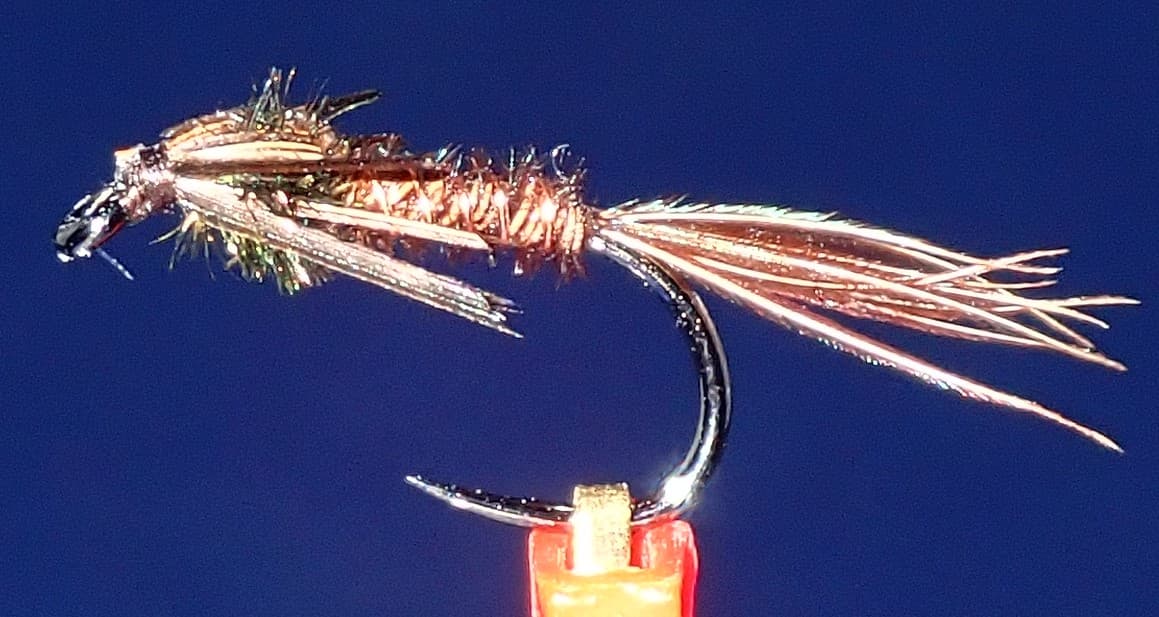
Side photograph of an American Pheasant Tail Nymph representing the subsurface mayfly-nymph stageRepresentative photo · one form in this family

Fly family · guide 41

Mayfly Patterns by Stage

A stage-first guide for reports that name a mayfly but do not identify a species or exact fly.

Size range
Match the local insect; the family label gives no exact size
Common colors
olive, tan, brown, cream, gray
Imitates
mayfly nymph, mayfly emerger, dun or cripple, spent spinner
How to recognize it

Mayfly nymphs, emergers, upright-wing duns, cripples, soft hackles, and flat-wing spinners occupy different depths and require different profiles.

Side photograph of an American Pheasant Tail Nymph representing the subsurface mayfly-nymph stage
Representative photo · one form in this family

Pheasant Tail mayfly-nymph form

The Pheasant Tail is one useful nymph-form reference, not a claim that every mayfly nymph shares this exact recipe or color.

View
stage comparison — subsurface nymph form
Color shown
natural pheasant brown with copper rib
Look for
A slim segmented body, tail fibers, wing case, and legs create a general mayfly-nymph profile.
Open full-size photo

On the water

Choose the right version.

Use these tips as a starting point. The river, depth, insects, and fish behavior still decide the final presentation.

01

Why it works

  • Mayfly patterns work best when their depth and silhouette match the life stage fish are actually feeding on, not simply the hatch name in a report.
  • Nymphs, emerging insects, upright duns, and spent spinners create visibly different profiles and require different drift heights.
  • Rise form and water position often reveal the useful stage faster than changing among unrelated colors or exact pattern names.
02

When to use it

  • When a river report says mayfly without identifying the species, stage, or exact pattern.
  • When subsurface flashes, bulging rises, upright adults, or gentle spinner sips provide evidence about where fish are feeding.
  • During a verified local mayfly window, while keeping seasonal guidance separate from a live hatch observation.
03

How to fish it

  • Fish nymph forms below the surface at the active depth; adjust weight and leader before changing the fly family.
  • Place emerger and Sparkle Dun forms in or just under the film with minimal drag when fish show bulging or head-and-tail rises.
  • Use upright dries for dun feeding and flat low spinner patterns only when spent adults or subtle surface sips support that stage.
04

Mistakes to avoid

  • Using one dry as the picture for all mayflies.
  • Calling seasonal wording a live hatch observation.

Make the choice

Choose the form before the color.

A family name is only a starting point. Use the waterline, construction, and observed food to narrow it to the form that fits the river.

  1. Choose a Pheasant Tail or another correctly sized mayfly nymph when fish are feeding below and no surface stage is established.
  2. Choose a Sparkle Dun or emerger form when insects are transitioning and fish take low in the film rather than cleanly on top.
  3. Choose an Adams-style upright dry when visible duns and conventional surface rises support an adult silhouette.
  4. Choose a spent-wing spinner pattern when natural adults lie flat and fish make subtle film-level sips; the natural PMD photo shows the stage, not a fly recipe.

Common variations

Small changes can make a different fly.

Four verified, non-AI photographs compare a subsurface nymph pattern, low-riding Sparkle Dun, upright adult dry, and a natural spinner-stage reference. The natural insect is explicitly labeled and no single photo is presented as the mayfly lifecycle.

Nymph form

A slim segmented subsurface pattern representing the pre-emergent stage.
Colors shown
olive, brown, tan
Weighting
Choose fly weight and rigging for the actual feeding depth.

Low emerger or Sparkle Dun form

A low body and trailing shuck cover the vulnerable transition into an adult dun.
Colors shown
hatch-matched olive, tan, cream, brown
Weighting
Unweighted film or surface form; preserve the low waterline.

Upright adult-dun form

An upright wing and conventional dry-fly silhouette suit fish taking newly emerged adults.
Colors shown
species-matched body, gray or pale wing
Weighting
Floating dry form; floatant and hackle affect waterline.

Spent-spinner stage

A natural PMD reference shows the slender body and wing position that flat spinner patterns need to suggest.
Colors shown
rust, tan, pale translucent wing
Weighting
The photo shows a natural insect. Artificial spinner forms should ride flat in or on the film.

Related patterns

Pheasant Tail NymphSparkle DunAdams Dry FlyParachute AdamsRusty Spinner

How this guide was checked

Fly information and photo sources.

Guide checked on 2026-07-13. Every image has its own source and usage record. Natural insects and hand-tied flies can vary in shape and proportion.

Pattern sources

Orvis NewsHow to Match the HatchOrvis NewsPhil's Top 6 Patterns for Spring Mayfly Hatches

Image credits