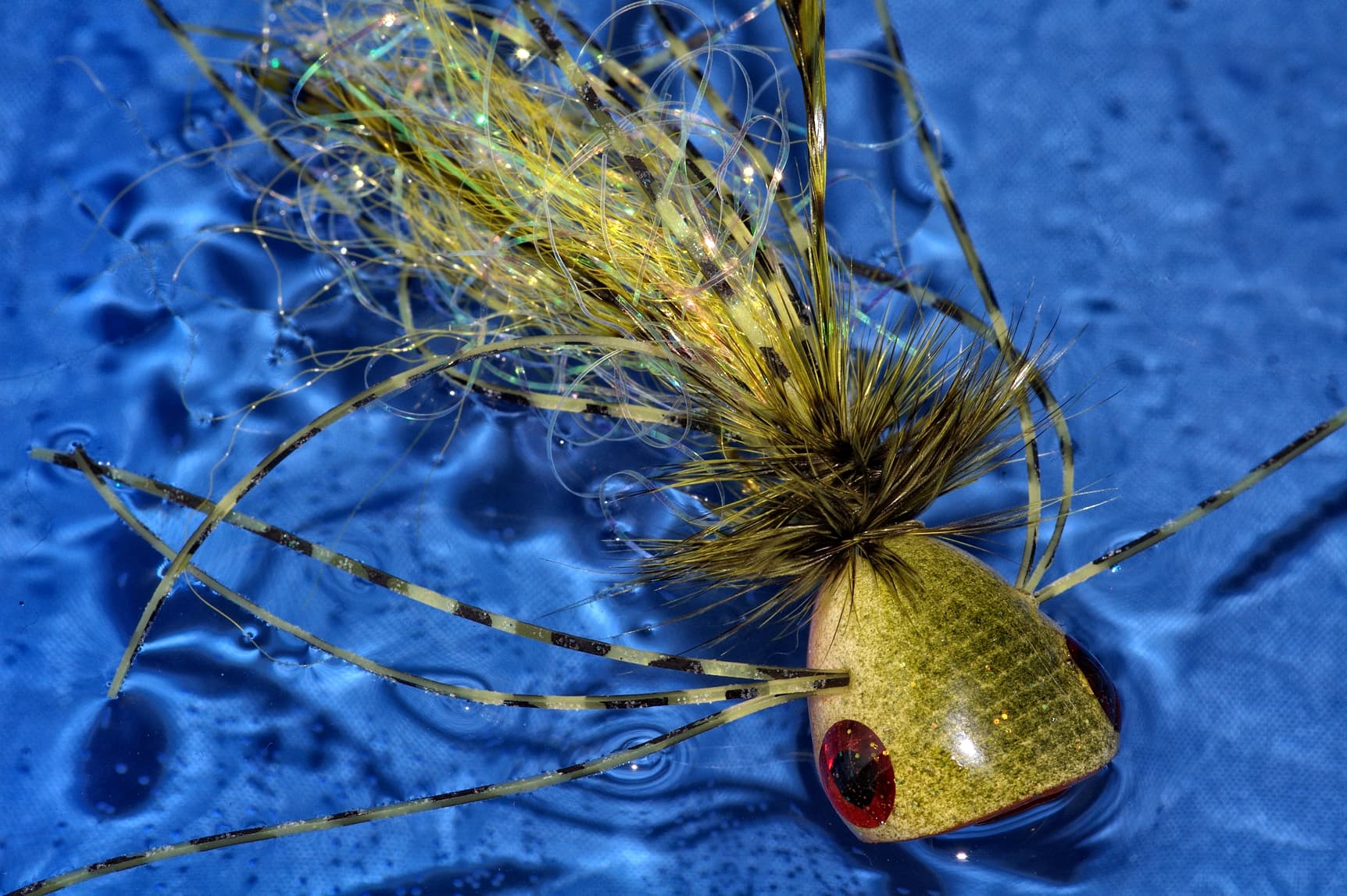
Macro photograph of a large olive bass popper used as the loud shaped-head warmwater surface-bug exampleRepresentative photo · one form in this family

Fly family · guide 93

Warmwater Surface Bug Patterns

A construction-and-silhouette family for foam, deer-hair, frog, and other warmwater surface bugs without an exact pattern name.

Size range
Small panfish bugs through large bass flies
Common colors
black, yellow, chartreuse, white, frog and insect tones
Imitates
frogs, large insects, spiders, distressed surface prey
How to recognize it

Surface bug wording can mean a foam attractor, spun-deer-hair bug, frog profile, spider-like panfish fly, or shaped head. Material alone does not establish whether the fly pops, slides, dives, or simply floats.

Macro photograph of a large olive bass popper used as the loud shaped-head warmwater surface-bug example
Representative photo · one form in this family

Olive Bass Popper

Choose the Bass Popper when a recessed face and large profile should push water; this form is not a quiet slider or deer-hair diver.

View
family comparison — shaped-head surface bug
Color shown
olive-gold head with barred olive legs, dark hackle, and flash
Look for
A large recessed face, prominent eye, long barred legs, and reflective tail create the family's loud shaped-head form.
Open full-size photo

On the water

Choose the right version.

Use these tips as a starting point. The river, depth, insects, and fish behavior still decide the final presentation.

01

Why it works

  • Warmwater fish can key on surface displacement, a frog-like profile, or a falling terrestrial, so the fly's head action and silhouette must be selected separately.
  • The Bass Popper pushes water, the Froggy Bass Bug supplies a compact frog-themed outline, and the hopper and beetle float as insect forms without a popping face.
  • Keeping the four source names visible prevents generic surface-bug wording from becoming one imaginary universal recipe or an unsupported weedless claim.
02

When to use it

  • Around banks, overhanging vegetation, shade, weed edges, wood, and calm pockets where bass or panfish can feed upward.
  • Choose the popper when audible disturbance is useful, the frog-themed bug around frog-like forage and suitable lanes, the hopper near bank-terrestrial activity, or the beetle for a compact low-disturbance meal.
  • Season, cover, prey, wind, and surface activity matter more than the broad family label; none of the photographs is proof of a current bite.
03

How to fish it

  • Pop and pause the shaped-head Bass Popper, but twitch the hopper or beetle gently enough to preserve an insect-like drift or small disturbance.
  • Use the Froggy Bass Bug with controlled short strips and pauses suited to its exact head; do not drag it through cover as though the photograph proves a weed guard.
  • Match hook, leader, and casting stroke to the actual head size and cover, and check foam, legs, knots, and hook point after vegetation or fish contact.
04

Mistakes to avoid

  • Treating foam bug, deer-hair bug, and frog as one exact construction.
  • Claiming a fly is weedless without an identified guard and tested orientation.

Make the choice

Choose the form before the color.

A family name is only a starting point. Use the waterline, construction, and observed food to narrow it to the form that fits the river.

  1. Choose the Olive Bass Popper when a large recessed face and long legs should create the strongest push and sound.
  2. Choose the Froggy Bass Bug for a compact green-and-black frog-themed profile, while verifying any weed guard on the exact fly in hand.
  3. Choose the Foam Hopper for a large segmented terrestrial silhouette that floats without a popping face.
  4. Choose the Black Foam Beetle for a compact rounded insect profile and minimal surface disturbance; the bright post is only an angler aid.
  5. Open the slider/diver family when the required action is a quiet glide or a dive-and-rise path; neither action is represented here.

Common variations

Small changes can make a different fly.

Four verified, non-AI photographs compare a loud shaped-head Bass Popper, compact Froggy Bass Bug, large Foam Hopper, and compact Black Foam Beetle. Sliders, divers, spun-deer-hair bugs, and weedless frogs remain linked but are not visually claimed.

Olive Bass Popper

A large recessed-face shaped-head bug for strong surface displacement.
Colors shown
olive, gold, black, flash
Weighting
Floating shaped head.

Froggy Bass Bug

A compact frog-themed bass bug with a squared head, eye, rubber legs, hackle, and sparse tail.
Colors shown
chartreuse, black, olive
Weighting
Floating head; weedlessness is not established by the photograph.

Foam Hopper

A large segmented foam terrestrial with a deer-hair head and long insect outline.
Colors shown
yellow, natural deer hair
Weighting
Unweighted floating terrestrial.

Black Foam Beetle

A small rounded foam terrestrial with short legs and a visibility post.
Colors shown
black, orange sight post
Weighting
Unweighted floating terrestrial.

Related patterns

Bass and Panfish Popper PatternsWarmwater Slider and Diver PatternsGrasshopper PatternsBeetle Patterns

How this guide was checked

Fly information and photo sources.

Guide checked on 2026-07-13. Every image has its own source and usage record. Natural insects and hand-tied flies can vary in shape and proportion.

Pattern sources

Orvis NewsThree Keys to Catching Bass on Topwater BugsOrvisBass and Panfish Fishing Flies

Image credits