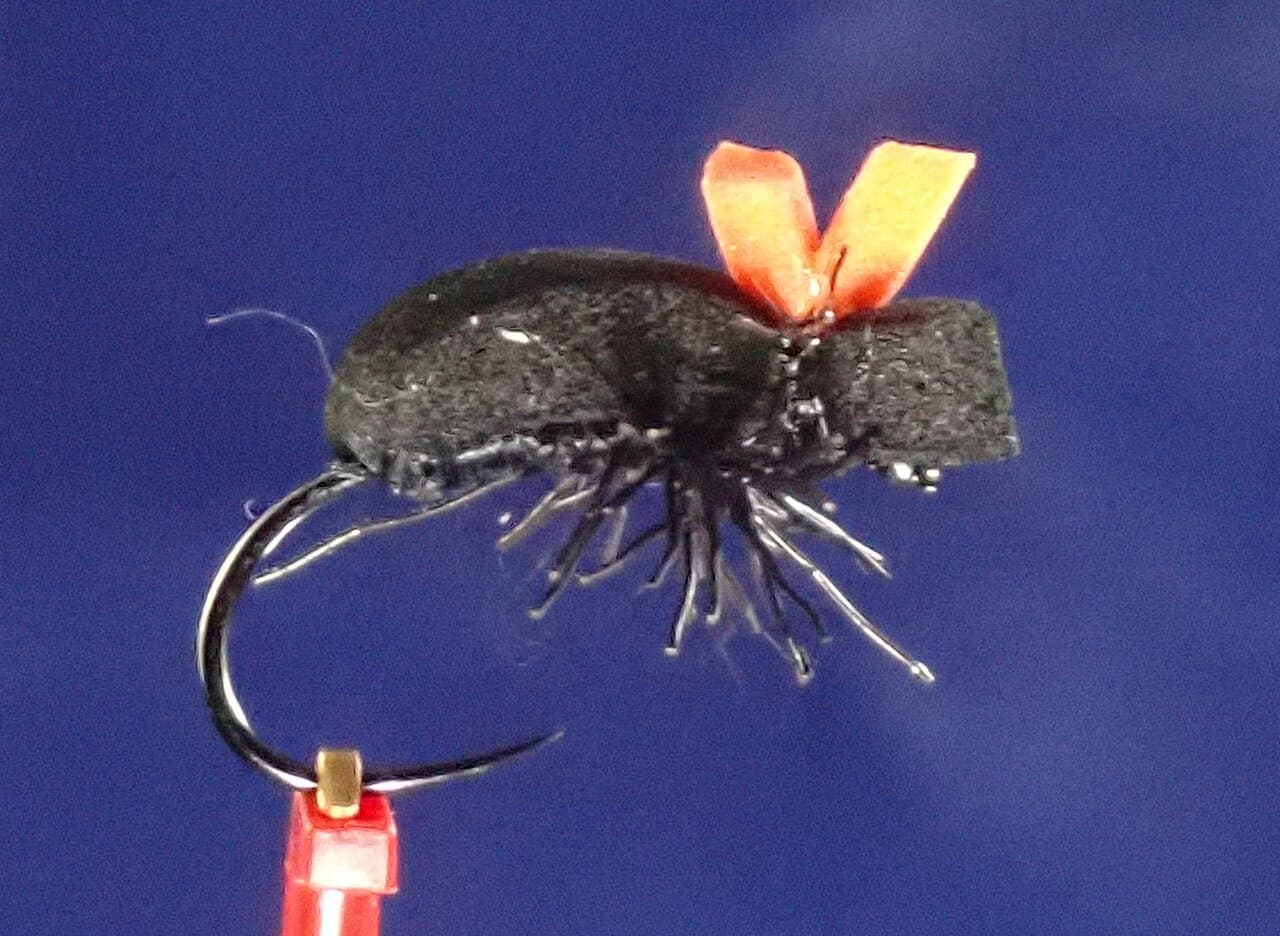
Side photograph of a black foam beetle fly with short legs and an orange sight postRepresentative photo · one form in this family

Fly family · guide 20

Beetle Patterns

Low-profile terrestrial patterns built to suggest a rounded beetle shell and short legs.

Size range
#10–18
Common colors
black, brown, iridescent
Imitates
terrestrial beetle, drowned beetle
How to recognize it

Beetle flies range from simple foam shells to hair-bodied and sunken forms. A rounded back and compact profile distinguish the family from ants and hoppers.

Side photograph of a black foam beetle fly with short legs and an orange sight post
Representative photo · one form in this family

Black foam beetle

The orange post improves visibility for the angler; the rounded black shell and short legs carry the beetle impression.

View
family comparison — foam-shell profile
Color shown
black with an orange sight post
Look for
A rounded foam shell, short rubber legs, and bright sight post form a compact floating beetle.
Open full-size photo

On the water

Choose the right version.

Use these tips as a starting point. The river, depth, insects, and fish behavior still decide the final presentation.

01

Why it works

  • A compact rounded back and short-leg impression create a broad beetle silhouette without requiring an exact species match.
  • A low-floating beetle can be subtle enough for calm edges while still providing a substantial terrestrial meal.
  • Foam, hair-shell, and featherwing constructions change buoyancy and waterline, giving anglers practical choices beyond color alone.
02

When to use it

  • During terrestrial season near shaded banks, woody cover, and overhanging vegetation.
  • On windy or warm days when land insects are likely to enter the river from the surrounding bank.
  • When fish are taking compact surface food but a large hopper is too intrusive or a small ant is difficult to track.
03

How to fish it

  • Place the fly tight to shaded banks, woody cover, or overhanging vegetation and begin with a drag-free drift.
  • Allow the current to carry the fly into mid-river seams; terrestrials that enter near shore do not remain there.
  • Use a tiny twitch sparingly, and choose a sinking or weighted presentation only when the exact selected beetle form supports it.
04

Mistakes to avoid

  • Confusing beetles with two-lobed ants.
  • Assuming every black foam fly is a beetle.

Make the choice

Choose the form before the color.

A family name is only a starting point. Use the waterline, construction, and observed food to narrow it to the form that fits the river.

  1. Choose a black foam beetle when flotation and a visible sight post are the main needs.
  2. Choose a brown foam beetle when local terrestrials or fish response favor a lighter natural shell color.
  3. Choose the narrower Crowe form when a thick foam shell feels too bulky for the water or fish.
  4. Treat featherwing beetles as a materially different traditional construction, not as a cosmetic version of the foam fly.

Common variations

Small changes can make a different fly.

Four verified, non-AI photographs compare black and brown foam beetles with Crowe and featherwing constructions. The page treats shell material, profile, color, and sight posts as meaningful differences.

Black foam beetle

A compact rounded foam shell with short legs and a bright sight post.
Colors shown
black, orange sight post
Weighting
Unweighted floating form.

Black Crowe Beetle

A narrower glossy hair-shell form with sparse legs.
Colors shown
black
Weighting
No external weight is visible; waterline depends on dressing and materials.

Black Featherwing Beetle

A traditionally dressed form with swept feather wing and dense hackle.
Colors shown
black, dark gray
Weighting
Unweighted photographed form.

Brown foam beetle

A brown shell and tan legs using the same broad buoyant foam approach.
Colors shown
brown, tan, chartreuse sight spot
Weighting
Unweighted floating form.

Related patterns

Ant PatternsGrasshopper Patterns

How this guide was checked

Fly information and photo sources.

Guide checked on 2026-07-13. Every image has its own source and usage record. Natural insects and hand-tied flies can vary in shape and proportion.

Pattern sources

Orvis NewsHow to Choose Gear for Wet-Wading, Part IIOrvis NewsHow to Tie and Fish Tandem RigsOrvis NewsDon't Wait Until Summer to Fish Terrestrials

Image credits