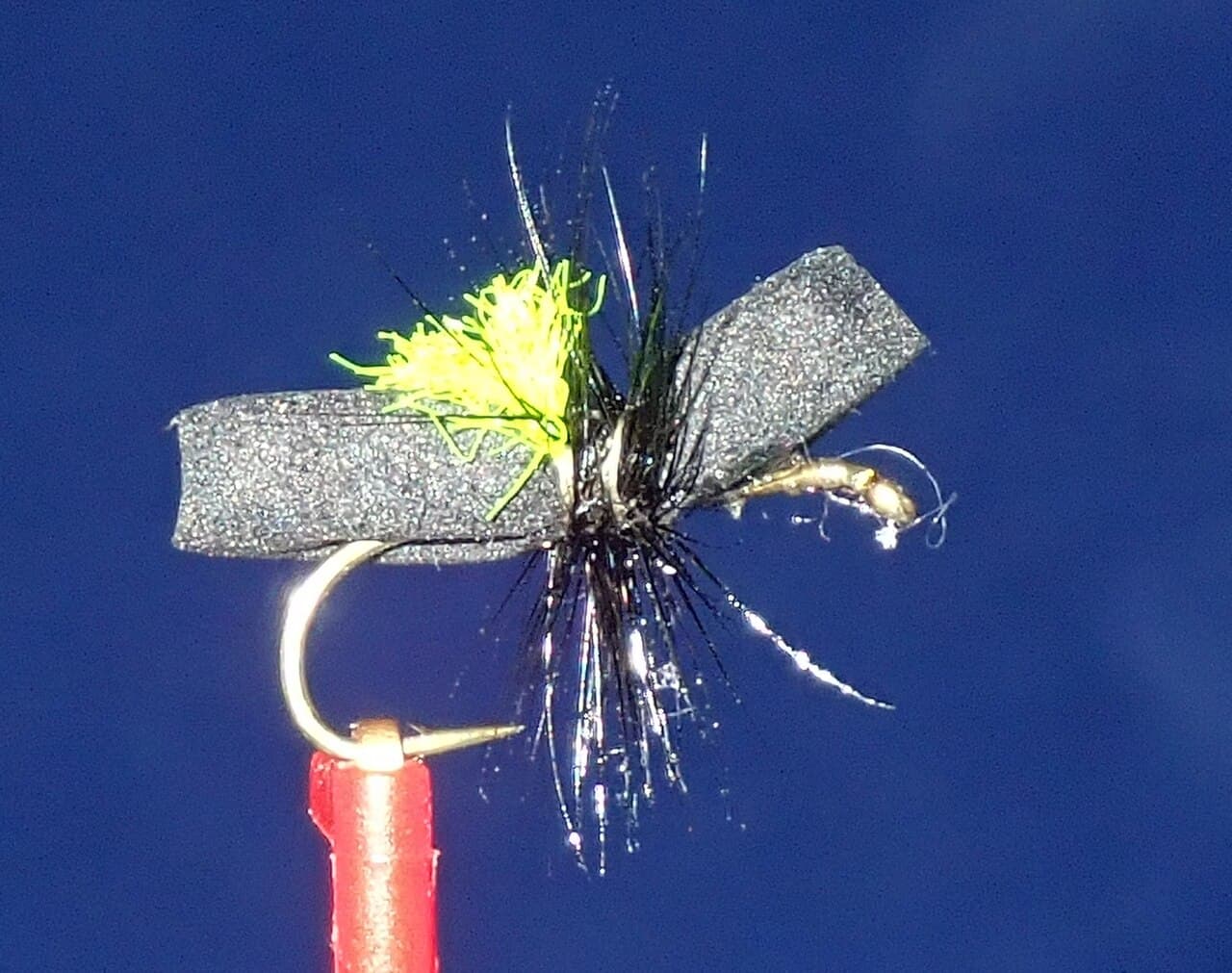
Side photograph of a black foam ant fly with two body lobes and a chartreuse sight spotRepresentative photo · one form in this family

Fly family · guide 19

Ant Patterns

Dry and sunken terrestrial patterns unified by an ant's pinched waist and two-lobed body.

Size range
#12–20
Common colors
black, cinnamon, red-black
Imitates
terrestrial ant, flying ant, drowned ant
How to recognize it

Ant patterns can be foam, fur-bodied, winged, or sunken. The narrow waist and paired body lobes matter more than one material recipe.

Side photograph of a black foam ant fly with two body lobes and a chartreuse sight spot
Representative photo · one form in this family

Black foam ant

The buoyant foam form is easy to see, but its sight spot is an angler aid—not part of the insect being imitated.

View
family comparison — buoyant foam profile
Color shown
black with a chartreuse sight spot
Look for
Two foam body lobes, a pinched waist, legs, and a visible sight post identify the floating form.
Open full-size photo

On the water

Choose the right version.

Use these tips as a starting point. The river, depth, insects, and fish behavior still decide the final presentation.

01

Why it works

  • The paired body lobes and narrow waist give trout a strong ant silhouette even when material and color vary.
  • Ants enter rivers from land rather than through an aquatic hatch, so they can offer a familiar food shape when no mayflies or caddis are emerging.
  • Floating, winged, and sinking forms cover genuinely different situations instead of forcing every ant encounter into one surface presentation.
02

When to use it

  • During warm terrestrial seasons.
  • Along grassy, wooded, or overhanging banks.
  • When drowned insects collect in seams.
03

How to fish it

  • Start with a drag-free drift near likely drop zones, then let the current carry the fly away from the bank before recasting.
  • Use an occasional very small twitch only when it helps suggest a struggling terrestrial; return immediately to a natural drift.
  • Fish the sinking form just below the film with an appropriate indicator or tight connection, and keep the buoyant foam form on the surface.
04

Mistakes to avoid

  • Treating an ant-dropper rig as one fly.
  • Showing a foam ant as all ant patterns.

Make the choice

Choose the form before the color.

A family name is only a starting point. Use the waterline, construction, and observed food to narrow it to the form that fits the river.

  1. Choose a foam ant when visibility and buoyancy matter, especially in riffles or as the dry in a light dry-dropper rig.
  2. Choose a fur-bodied ant for a subtler traditional surface profile without a thick foam shell.
  3. Choose a sinking ant when drowned terrestrials are collecting below the film or surface refusals suggest fish are feeding subsurface.
  4. Choose a winged ant only when seasonal flying-ant activity or the insects on the water support that form.

Common variations

Small changes can make a different fly.

Four verified, non-AI photographs compare foam, fur-bodied, sinking, and winged black ant forms. Each image keeps waterline and construction differences explicit.

Black foam ant

A buoyant two-lobed foam form with legs and a bright angler-visible sight spot.
Colors shown
black, chartreuse sight spot
Weighting
Unweighted floating form.

Black fur ant

A dubbed or fur-bodied surface form that keeps the paired lobes without a foam shell.
Colors shown
black
Weighting
Unweighted dry form; dress and float only as needed.

Black sinking ant

A slim hard-bodied form intended to ride below the surface film.
Colors shown
glossy black
Weighting
Sinking form; exact internal weight is not established by the photograph.

Black winged ant

A two-lobed ant body with a visible swept wing for flying-ant falls.
Colors shown
black, pale wing
Weighting
Unweighted surface form.

Related patterns

Beetle PatternsGrasshopper Patterns

How this guide was checked

Fly information and photo sources.

Guide checked on 2026-07-13. Every image has its own source and usage record. Natural insects and hand-tied flies can vary in shape and proportion.

Pattern sources

Orvis NewsSix Flies for Mountain Brook TroutOrvis NewsDon't Wait Until Summer to Fish Terrestrials

Image credits