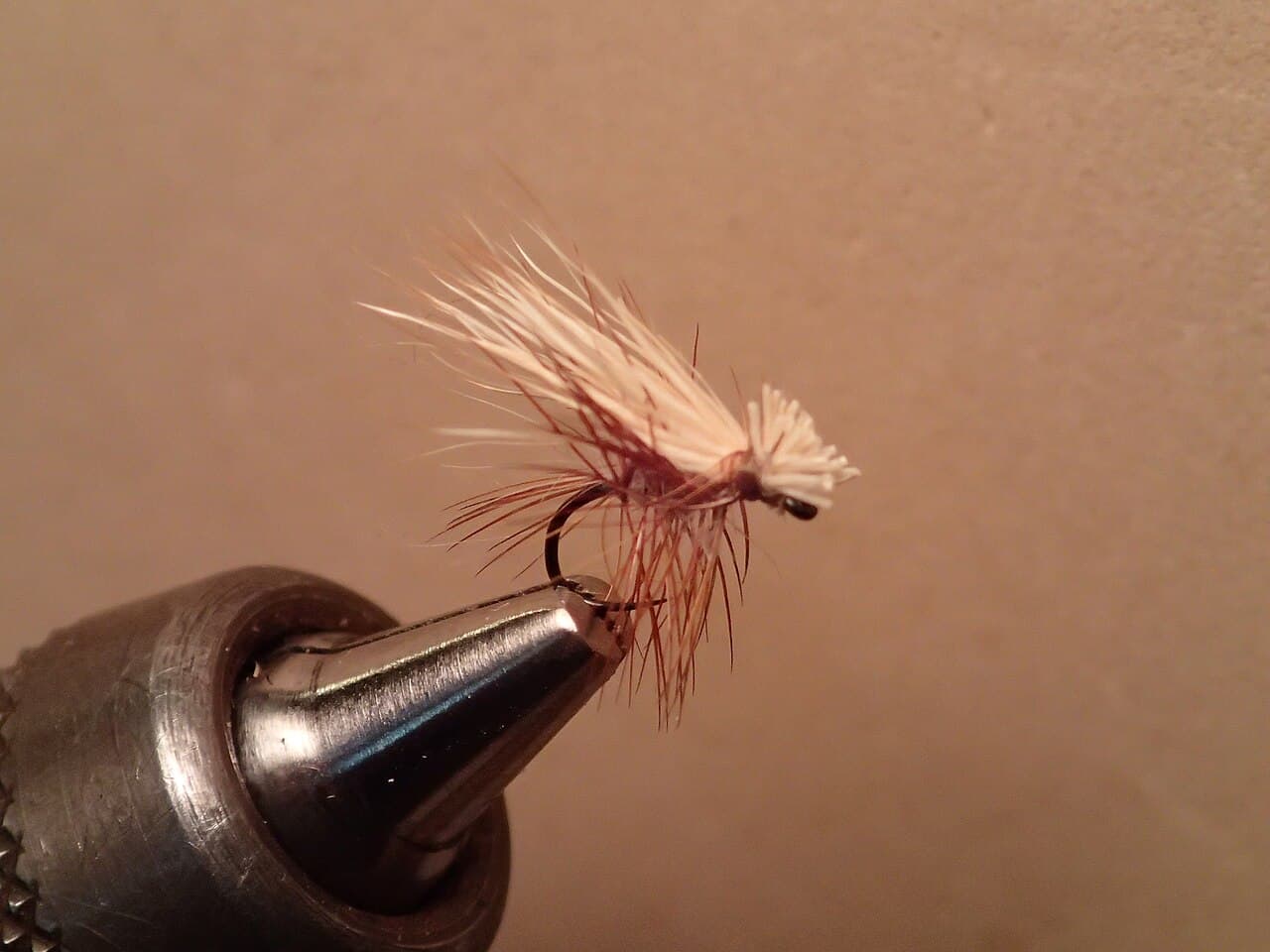
Side photograph of an Elk Hair Caddis representing a high-floating adult caddis formRepresentative photo · one form in this family

Fly family · guide 56

Caddis Patterns by Stage

A lifecycle guide for caddis larva, pupa, emerger, adult, spent, and skated dry patterns.

Size range
Match local species; the family label gives no exact size
Common colors
olive, tan, cream, amber, orange
Imitates
caddis larva, caddis pupa, emerging caddis, adult or spent caddis
How to recognize it

Caddis is not one fly. Larvae live below, pupae and emergers rise through the column, tent-wing adults ride or move on top, and spent forms create other silhouettes.

Side photograph of an Elk Hair Caddis representing a high-floating adult caddis form
Representative photo · one form in this family

Elk Hair Caddis adult form

This adult dry belongs on the surface; it does not represent the larva or rising pupa stages.

View
stage comparison — buoyant adult dry
Color shown
light elk-hair wing with warm brown hackle
Look for
A tented hair wing and heavily hackled footprint create a buoyant adult caddis silhouette.
Open full-size photo

On the water

Choose the right version.

Use these tips as a starting point. The river, depth, insects, and fish behavior still decide the final presentation.

01

Why it works

  • Caddis stages occupy different parts of the river: larvae live below, pupae rise through the column, and tent-wing adults ride or move on the surface.
  • A mobile soft-hackle can suggest a rising insect without claiming one exact pupa recipe, while an Elk Hair Caddis creates a buoyant adult silhouette with a tented wing.
  • Matching stage and behavior prevents the common error of fishing a high-floating adult when trout are feeding on larvae or ascending pupae below it.
02

When to use it

  • During a seasonal caddis window after the river report and observations confirm caddis activity.
  • Choose the larval stage before emergence, a rising or wet-fly presentation when subsurface movement increases, and an adult only when fish take winged insects at the surface.
  • Use splashy rises, visible adults, seine samples, and the depth of takes to refine the stage instead of assuming tan color identifies the answer.
03

How to fish it

  • Dead-drift a larva pattern near its natural bottom lane; the natural larva photograph is identification context, not the fly to tie on.
  • For the Partridge and Orange approach, start with a subsurface dead drift, then allow a controlled lift or swing that suggests a rising pupa.
  • Dead-drift the Elk Hair Caddis on top and skate or twitch it only when observed adult behavior supports deliberate movement.
04

Mistakes to avoid

  • Using an Elk Hair Caddis for larva and pupa stages.
  • Skating every adult presentation.

Make the choice

Choose the form before the color.

A family name is only a starting point. Use the waterline, construction, and observed food to narrow it to the form that fits the river.

  1. Use the natural cased-larva image to recognize the head, legs, body, and portable case. It is not an artificial fly.
  2. Choose a specific caddis-larva pattern for the bottom stage; do not place the photographed natural specimen in a pattern gallery without its reference label.
  3. Use Partridge and Orange as a named soft-hackle presentation option for the rising stage, not as a renamed LaFontaine Sparkle Pupa or universal caddis pupa.
  4. Choose an Elk Hair Caddis when a buoyant tent-wing adult fits the fish behavior; the two adult photos make that architecture easy to compare.
  5. Open the linked LaFontaine Sparkle Pupa, X-Caddis, or Elk Hair Caddis page when the report names that exact construction.

Common variations

Small changes can make a different fly.

Four verified, non-AI photographs separate a natural cased larva reference, one named wet-fly approach to the rising stage, and two clear adult Elk Hair Caddis views. The wet fly is not relabeled as a dedicated caddis pupa, and the natural larva is not presented as an artificial pattern.

Natural cased larva reference

A real caddisfly larva emerging from its case, shown only to explain the bottom-stage anatomy.
Colors shown
olive-brown larva, dark plant-material case
Weighting
Not applicable; this image shows a natural insect.

Partridge and Orange wet-fly approach

A sparse named soft hackle used as one rising or swinging presentation option without being relabeled as a dedicated pupa pattern.
Colors shown
orange body, mottled partridge collar
Weighting
The photographed form is unweighted; leader and presentation set depth.

Elk Hair Caddis adult form

A buoyant tent-wing adult dry shown from two clear real-photo angles.
Colors shown
pale elk-hair wing, warm brown-gray body and hackle
Weighting
Unweighted dry fly.

Related patterns

Caddis Larva PatternsCaddis Pupa PatternsLaFontaine Sparkle PupaX-CaddisElk Hair Caddis

How this guide was checked

Fly information and photo sources.

Guide checked on 2026-07-13. Every image has its own source and usage record. Natural insects and hand-tied flies can vary in shape and proportion.

Pattern sources

Orvis NewsThe American Grannom Is a Springtime GemOrvis NewsHow to Fish Caddis-Pupa Flies

Image credits