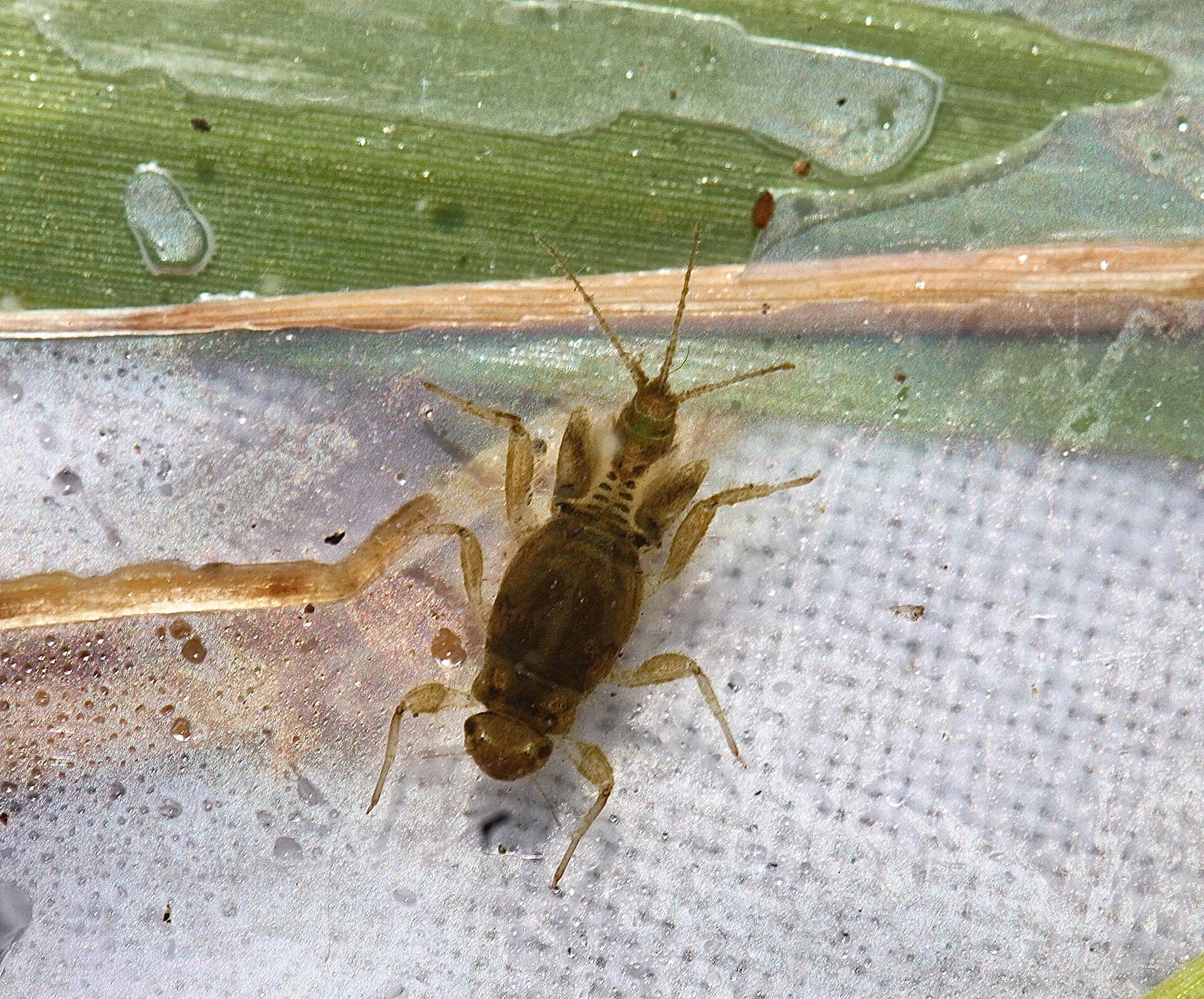
Overhead macro photograph of a natural tan-brown Tricorythodes little stout crawler nymph with broad head, dark wing pads, compact legs, and three tailsRepresentative photo · one form in this family

Fly family · guide 44

Trico Patterns

A tiny-mayfly family covering Trico nymphs, emergers, duns, clusters, and spent spinners.

Size range
Often #20–24
Common colors
black, pale olive, white or translucent wing
Imitates
Trico mayfly stages
How to recognize it

Trico is a hatch family. Sparse nymphs and emergers fish below or in the film; duns and clustered or individual spinners use different surface silhouettes.

Overhead macro photograph of a natural tan-brown Tricorythodes little stout crawler nymph with broad head, dark wing pads, compact legs, and three tails
Representative photo · one form in this family

Tricorythodes Nymph Dorsal View

Natural-nymph reference—not an artificial Trico fly. The source identifies the genus Tricorythodes; the photograph documents the stout underwater stage, not an emerger, dun, spinner, or proof of a local hatch.

View
family comparison — source-identified Tricorythodes nymph dorsal view
Color shown
muted tan-brown with a darker abdomen
Look for
The overhead view shows the tiny stout body, broad head and eyes, paired dark wing pads, compact legs, and three tails of a little stout crawler.
Open full-size photo

On the water

Choose the right version.

Use these tips as a starting point. The river, depth, insects, and fish behavior still decide the final presentation.

01

Why it works

  • Trico fishing often succeeds or fails on stage and scale: the tiny stout nymph, emerging insect, upright adult, and spent-wing spinner occupy different lanes and cannot be represented by one black-and-white fly.
  • The nymph photographs show a compact crawler body, broad head and eyes, wing pads, short legs, and three tails rather than the long slim outline of many generic mayfly nymphs.
  • At the surface, a sparse low-floating or spent-wing construction can match a very small footprint, but none of those artificial stages is pictured here and the page does not manufacture visual evidence for them.
02

When to use it

  • Use Trico-stage patterns only after current observation or a trusted report confirms the hatch and the fish's feeding level.
  • A nymph is plausible before the surface event; an emerger or dun fits the transition, and a spinner or cluster belongs only when adults collect or fall spent on the water.
  • Start around the page's documented #20–24 range, then match the local sample and visibility conditions instead of assuming every river's Trico is the same size or shade.
03

How to fish it

  • Fish a very small locally matched nymph below the surface with a controlled drag-free drift and only enough weight to reach the feeding lane.
  • For surface feeding, choose the exact emerger, dun, cluster, or spinner pattern demanded by the rise form and use a fine but responsible tippet and an accurate short presentation.
  • Track the artificial with a nearby visible helper only when necessary, but do not let that helper alter the Trico's drift or obscure which fly received the take.
04

Mistakes to avoid

  • Calling every tiny black mayfly a Trico.
  • Using a high-riding dry for spent spinners.

Make the choice

Choose the form before the color.

A family name is only a starting point. Use the waterline, construction, and observed food to narrow it to the form that fits the river.

  1. Use the dorsal photograph for the broad head, compact body, paired dark wing pads, short legs, and three tails of a source-identified Tricorythodes nymph.
  2. Use the oblique photograph for body depth and side proportions; it prevents the small crawler from being interpreted as a flat silhouette only.
  3. Use the rear-oblique photograph for the long three-tail arrangement, tapered abdomen, bristles, and small wing pads.
  4. Choose nymph, emerger, dun, cluster, or spinner by exact stage and pattern name. The gallery contains no artificial Trico and no adult-stage photograph, and the interface says so before the user relies on it.

Common variations

Small changes can make a different fly.

Three verified, non-AI photographs show separately sourced views of natural Tricorythodes little stout crawler nymphs. The gallery intentionally documents only the underwater stage; Trico emergers, duns, clusters, and spinners remain text-only until exact licensed photographs are reviewed.

Natural Tricorythodes nymph dorsal view

A complete overhead little-stout-crawler reference showing the head, eyes, wing pads, legs, abdomen, and three tails.
Colors shown
muted tan-brown, dark wing pads
Weighting
Natural insect reference; artificial weight and hook size must be selected independently.

Natural Tricorythodes nymph side view

An oblique natural reference that shows the nymph's squat depth, rounded head, short legs, and three-tail profile.
Colors shown
pale sand-brown, darker mottling
Weighting
Natural insect reference; no artificial construction or ballast is implied.

Natural Tricorythodes tail detail

A rear-oblique natural reference emphasizing the three tails, tapered abdomen, marginal bristles, wing pads, and compact legs.
Colors shown
warm brown, subtle dorsal mottling
Weighting
Natural insect reference; it supplies no spinner color or tying recipe.

Related patterns

Mayfly Patterns by StageRS2Sparkle DunRusty Spinner

How this guide was checked

Fly information and photo sources.

Guide checked on 2026-07-13. Every image has its own source and usage record. Natural insects and hand-tied flies can vary in shape and proportion.

Pattern sources

Orvis NewsHow to Tie a Trico SpinnerOrvis NewsHow to Match the Hatch

Image credits