When to use it
- In lakes, ponds, slower pools, vegetation, debris, or bottom niches where dragonfly nymphs occur.
- For trout and warmwater fish feeding on large aquatic insects.
Pattern family · guide 97
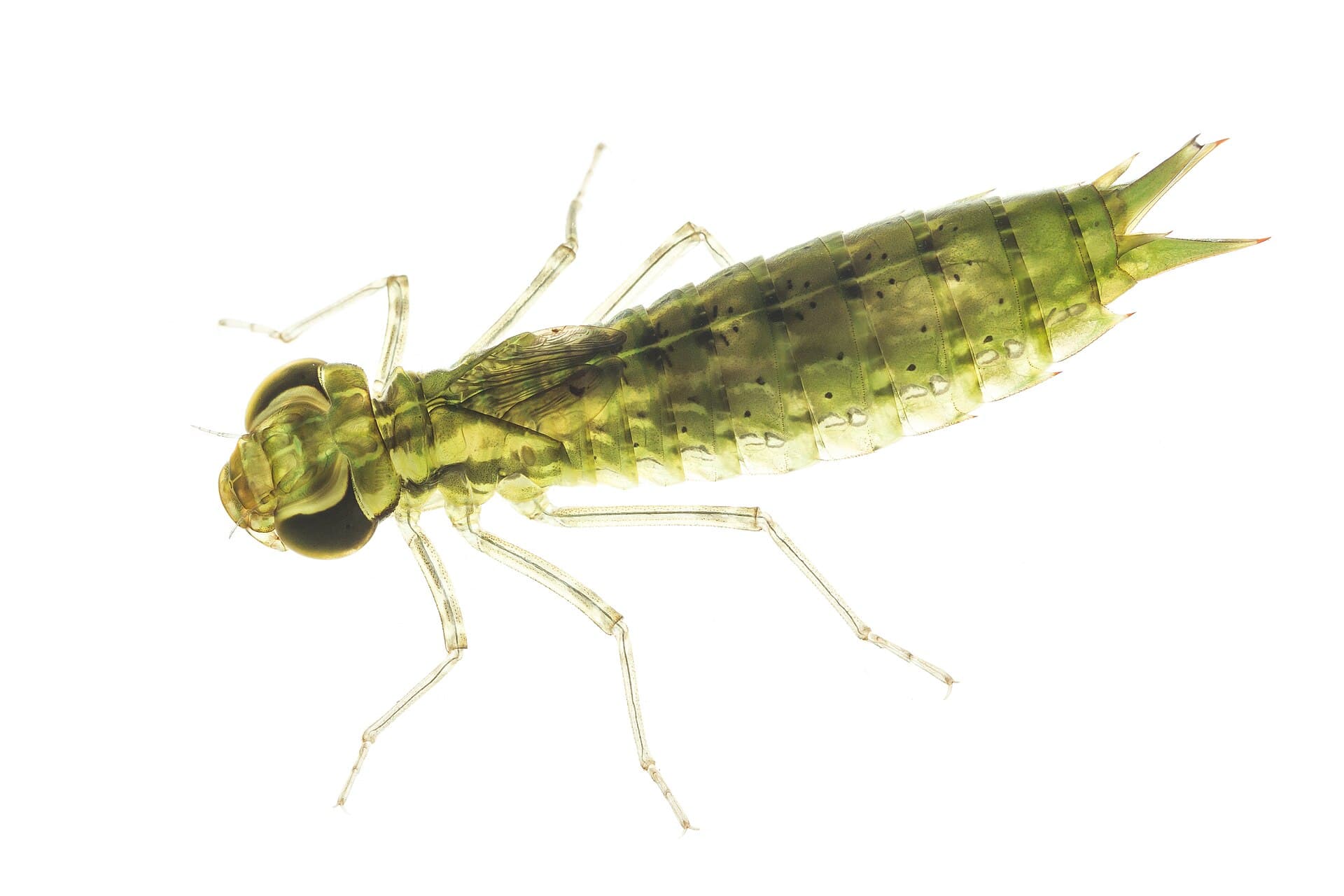
A stockier Odonata nymph family separating swimming darners from broad crawling or burrowing forms.
Dragonfly nymphs are shorter, broader, and more robust than damselfly nymphs and lack the damsel's three leaf-like tail gills. Darner and clubtail-like forms differ in body shape, locomotion, weighting, and retrieve.
Representative forms
A family-level comparison of Slender swimming darner, Broad crawling clubtail, Weighted dragon nymph; no single drawing represents the whole family.
On the water
The river, depth, insects, and fish behavior still decide the final presentation. These are reviewed starting points—not a claim about what is happening today.
Variant control
This comparison separates materially different silhouettes, head actions, weighting, or swimming orientations. It is a family guide, not a claim that one drawing represents every warmwater fly.
Representative family forms
Dragonfly nymphs are shorter, broader, and more robust than damselfly nymphs and lack the damsel's three leaf-like tail gills. Darner and clubtail-like forms differ in body shape, locomotion, weighting, and retrieve.Review trail
Pattern facts were reviewed on 2026-07-12. Every image has its own rights record; photographed hand-tied flies may still vary slightly in proportion.