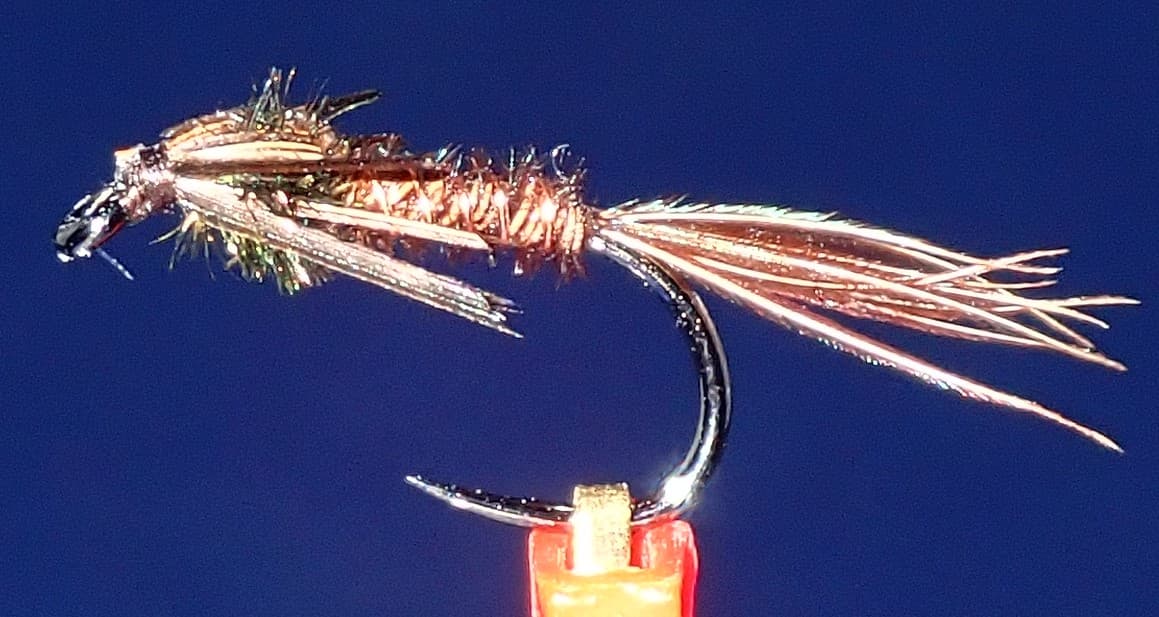
Side photograph of a Pheasant Tail representing a slim general mayfly-nymph formRepresentative photo · one form in this family

Fly family · guide 142

General Nymph Patterns

A deliberately broad family for source rows that identify only a nymph's size, weight, or general profile—not its insect or recipe.

Size range
No universal size; match the local food form and water
Common colors
natural brown, olive, black, subtle or bright attractor accents
Imitates
unspecified aquatic insect nymph
How to recognize it

A generic nymph label may describe an unweighted natural, beadhead searching fly, tungsten pattern, or sparse small nymph. Those qualifiers affect depth and silhouette but do not establish a named recipe or insect family.

Side photograph of a Pheasant Tail representing a slim general mayfly-nymph form
Representative photo · one form in this family

Pheasant Tail mayfly-nymph form

Use the Pheasant Tail as a named slim mayfly-nymph option, not as the identity of every report that says only nymph.

View
family comparison — slim natural nymph
Color shown
natural pheasant brown with copper rib
Look for
A slim segmented body, small thorax, wing case, tails, and restrained materials create a natural mayfly-nymph approach.
Open full-size photo

On the water

Choose the right version.

Use these tips as a starting point. The river, depth, insects, and fish behavior still decide the final presentation.

01

Why it works

  • A general nymph recommendation identifies a subsurface fishing role, not one insect or recipe; profile, size, weight, and movement create different choices within it.
  • A slim mayfly form, broad stonefly form, and flexible rubber-leg form displace water differently and suggest different food even when all are fished below the surface.
  • Depth and drift usually decide whether a useful nymph reaches the fish before bead color or an attractor accent becomes important.
02

When to use it

  • When a river report says only nymph or small nymph and does not provide enough evidence for an exact named pattern.
  • When fish are feeding subsurface and no consistent surface activity supports a dry or emerger presentation.
  • Use local samples, water type, expected insect scale, and target depth to narrow the generic recommendation to an honest named form.
03

How to fish it

  • Start with a natural drift at the depth fish are using, changing weight, leader, or cast angle before cycling through unrelated fly colors.
  • Choose a slim form for small mayfly-like food, a broad stonefly form for substantial bottom insects, or flexible legs when movement fits the current.
  • Keep the exact pattern name visible in the rig and report so a general family recommendation never erases the fly's real construction.
04

Mistakes to avoid

  • Treating every member of the family as one exact recipe.
  • Letting a generic size, bead, jig, or dropper label erase the pattern's actual body profile and life-stage cues.

Make the choice

Choose the form before the color.

A family name is only a starting point. Use the waterline, construction, and observed food to narrow it to the form that fits the river.

  1. Choose the Pheasant Tail for a slim, restrained mayfly-nymph profile with clear segmentation.
  2. Choose the Kaufmann Black Stone when a broad imitative stonefly body, tails, wing cases, and legs match the river.
  3. Choose Rubber Legs when flexible motion and a substantial bottom profile are useful, while keeping the exact recipe or variant labeled.
  4. Choose the Little Yellow Stonefly nymph when a smaller pale stonefly form is supported; generic nymph does not mean large and dark.

Common variations

Small changes can make a different fly.

Four verified, non-AI photographs show why 'nymph' is not one visual identity: a slim Pheasant Tail, broad imitative Kaufmann stone, movement-led Rubber Legs, and smaller pale Little Yellow Stonefly. Every image keeps its exact named form.

Pheasant Tail mayfly-nymph form

A slim segmented, restrained nymph for a small natural mayfly profile.
Colors shown
natural pheasant brown, dark thorax
Weighting
The photographed form is unweighted; named bead-head forms remain separate variants.

Kaufmann Black Stone nymph form

A broad dark imitative stonefly with wing cases, paired tails, and visible legs.
Colors shown
black, charcoal, dark brown
Weighting
Fish near bottom with weight matched to the lane.

Rubber Legs nymph form

A simplified substantial nymph emphasizing flexible movement in current.
Colors shown
dark brown-black, tan legs
Weighting
Weight varies by the exact named form and must remain labeled.

Little Yellow Stonefly nymph form

A smaller pale nymph that prevents the broad family label from collapsing into one large dark fly.
Colors shown
pale yellow, cream, light brown
Weighting
Use only enough weight to reach the feeding lane.

Related patterns

Pheasant Tail NymphStonefly Nymph PatternsPat's Rubber LegsJig Fly PatternsMayfly Patterns by Stage

How this guide was checked

Fly information and photo sources.

Guide checked on 2026-07-13. Every image has its own source and usage record. Natural insects and hand-tied flies can vary in shape and proportion.

Pattern sources

OrvisNymph Flies for Fly FishingFly Fishers InternationalBiology of Fly Selection

Image credits