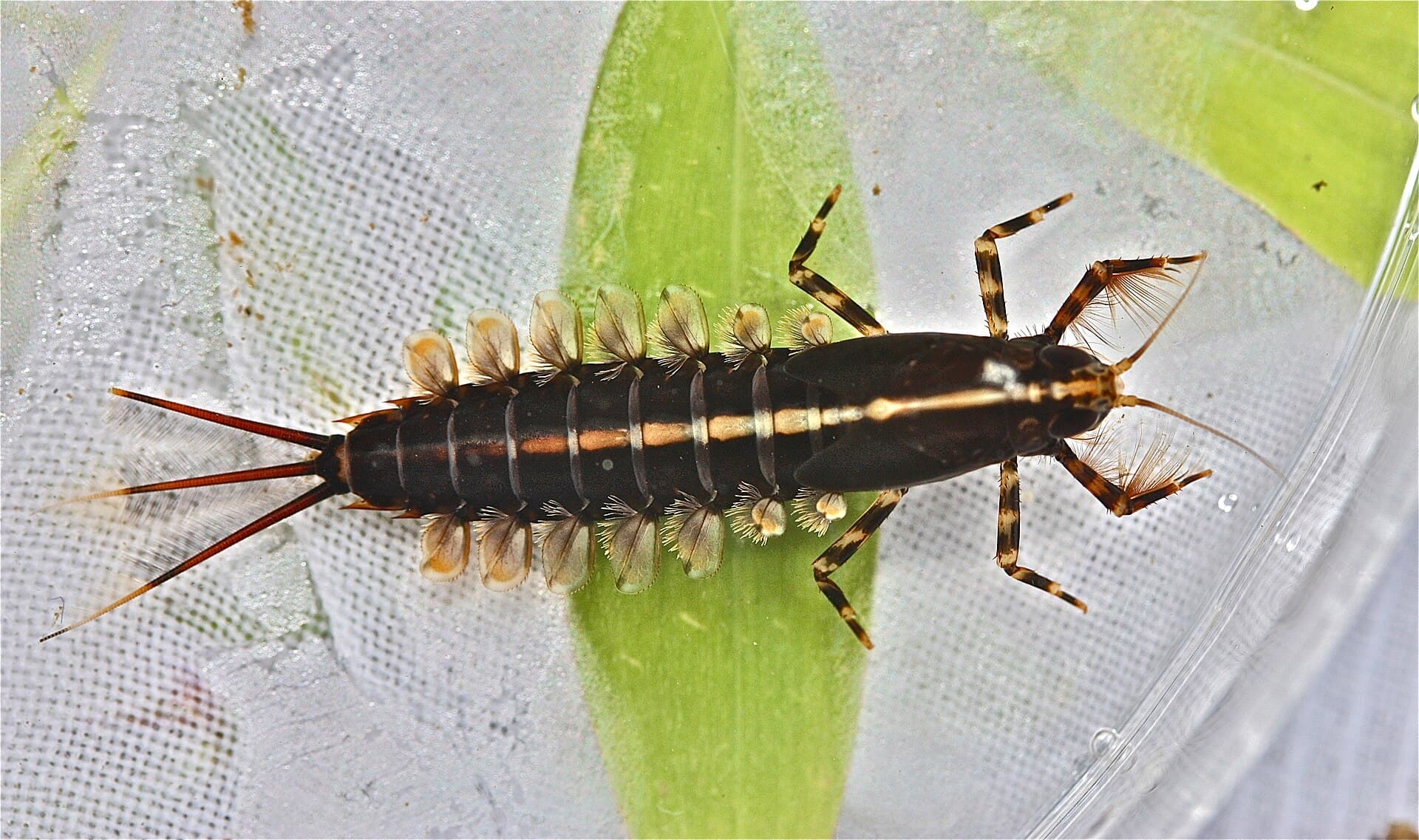
Large overhead macro photograph of a natural Isonychia bicolor nymph with dark mahogany body, pale dorsal stripe, three tails, gills, and fringed forelegsRepresentative photo · one form in this family

Fly family · guide 52

Isonychia and Mahogany Dun Patterns

A stage-based Isonychia family, including report wording such as Mahogany Dun or Slate Drake.

Size range
Often #10–14; verify locally
Common colors
claret, mahogany, brown-black, dun wing
Imitates
Isonychia nymph, Isonychia emerger, Mahogany Dun or Slate Drake adult, Isonychia spinner
How to recognize it

Isonychia nymphs are active swimmers; emergers, parachute or other dry forms, and spinners occupy different levels. Mahogany Dun can be regional hatch wording, so it does not identify one exact fly recipe.

Large overhead macro photograph of a natural Isonychia bicolor nymph with dark mahogany body, pale dorsal stripe, three tails, gills, and fringed forelegs
Representative photo · one form in this family

Isonychia bicolor Nymph

Natural-nymph reference—not an artificial fly. The source identifies Isonychia bicolor; use this view for the swimming-nymph body plan and contrast, not as proof of the species, size, or shade in a particular river.

View
family comparison — source-identified Isonychia bicolor nymph dorsal view
Color shown
dark mahogany-brown with a pale dorsal stripe and banded legs
Look for
The overhead view makes the streamlined body, pale center stripe, plate-like abdominal gills, three tails, and dense swimming fringes on the forelegs readable at once.
Open full-size photo

On the water

Choose the right version.

Use these tips as a starting point. The river, depth, insects, and fish behavior still decide the final presentation.

01

Why it works

  • Isonychia nymphs are active swimmers with a long tapered profile, three tails, broad abdominal gills, a pale dorsal stripe, and conspicuously fringed forelegs, so size, silhouette, and movement matter more than mahogany color alone.
  • A slim artificial nymph can suggest the underwater stage, while an emerger, upright dry, or spinner performs a different water-column job and must remain named separately.
  • The natural adult confirms that the winged stage is structurally different from the nymph; it does not make every reddish-brown mayfly a Mahogany Dun or Slate Drake.
02

When to use it

  • Only when current river evidence, local samples, or a trusted report supports Isonychia activity and the selected stage is plausible.
  • Fish a swimming-nymph approach below the surface before or between visible rises; move to an emerger or adult dry only when fish behavior and insects at the surface justify it.
  • Treat Mahogany Dun and Slate Drake as regional common-name clues, then verify the local insect, size, timing, and stage rather than relying on color wording alone.
03

How to fish it

  • Dead-drift a locally matched nymph near its active depth, then allow a controlled lift or short swing only when an emerging or swimming path is credible.
  • Keep the imitation slim enough to preserve the natural's swimmer outline, and choose weight separately from the broad family name so the fly reaches the lane without becoming an oversized jig.
  • For adult feeding, use the exact emerger, dun, or spinner construction required by the rise form; those artificial stages are intentionally unpictured here until licensed photography passes review.
04

Mistakes to avoid

  • Dead-drifting every Isonychia nymph by default.
  • Treating Mahogany Dun as one universal exact fly.

Make the choice

Choose the form before the color.

A family name is only a starting point. Use the waterline, construction, and observed food to narrow it to the form that fits the river.

  1. Use the dorsal Isonychia bicolor photograph for the complete nymph outline: dark tapered body, pale center stripe, broad side gills, banded legs, and three tails.
  2. Use the angled Isonychia bicolor detail to recognize the long brush-like fringe on the forelegs; it is a natural anatomy clue, not a tying-material instruction.
  3. Use the genus-level adult photograph only for upright wings, reddish body, long forelegs, and tails. Its visible egg mass and Maryland origin do not establish a spinner pattern or another river's species.
  4. Choose an artificial by exact name and stage. Nymph, soft-hackle or emerger, Mahogany Dun or Slate Drake dry, and spinner forms remain separate unpictured decisions.

Common variations

Small changes can make a different fly.

Three verified, non-AI photographs compare two source-identified Isonychia bicolor nymph views with a genus-level natural Isonychia adult. They document the swimming nymph, its diagnostic brush-like forelegs, and one adult form; no artificial nymph, emerger, dry, spinner, local species, or current hatch is visually claimed.

Natural Isonychia bicolor nymph

A complete dorsal natural-nymph reference showing swimmer proportions, pale back stripe, gills, legs, and three tails.
Colors shown
dark mahogany-brown, cream dorsal stripe, banded legs
Weighting
Natural insect reference; artificial ballast must be selected separately for the current and depth.

Natural Isonychia brushleg detail

An angled natural-nymph reference that makes the diagnostic filtering fringe on the forelegs and broad abdominal gills especially clear.
Colors shown
chestnut brown, pale dorsal stripe
Weighting
Natural insect reference; no artificial hook, material, or weight is implied.

Natural Isonychia adult

A genus-level adult reference with upright wings, a reddish body, long forelegs, two tails, and a visible egg mass.
Colors shown
deep reddish brown, clear smoky wing, dark tails
Weighting
Natural adult reference; no dry-fly construction or buoyancy choice is implied.

Related patterns

Mayfly Patterns by StageSoft-Hackle Wet FliesSparkle DunRusty SpinnerMarch Brown Dry Flies

How this guide was checked

Fly information and photo sources.

Guide checked on 2026-07-13. Every image has its own source and usage record. Natural insects and hand-tied flies can vary in shape and proportion.

Pattern sources

Orvis NewsHow to Tie an Isonychia Nymph and EmergerOrvis NewsHow to Tie an Isonychia Parachute

Image credits