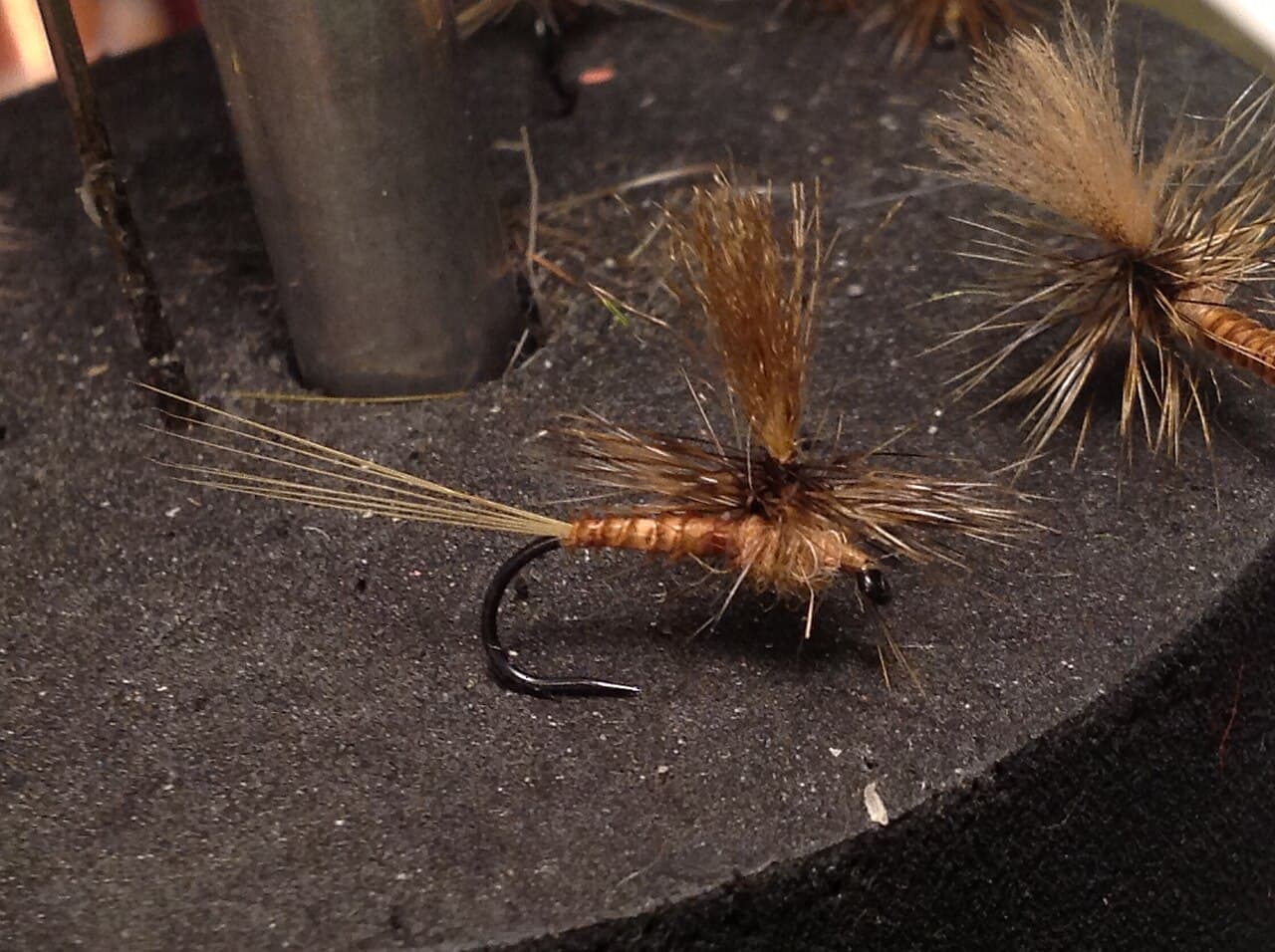
Macro side photograph of a March Brown Parachute dry fly with a copper-brown body and tan upright postRepresentative photo · one form in this family

Fly family · guide 15

March Brown Dry Flies

A family destination for dry flies used around March Brown mayfly adults—not one exact recipe.

Size range
Commonly #10–14; verify locally
Common colors
brown, tan, mottled wing
Imitates
March Brown adult mayfly
How to recognize it

This family includes traditional hackled, parachute, and Comparadun-style March Brown dries. Each exact construction rides differently and should be named when known.

Macro side photograph of a March Brown Parachute dry fly with a copper-brown body and tan upright post
Representative photo · one form in this family

March Brown Parachute

The parachute is one named adult-dry construction; its waterline and post are not interchangeable with the traditional wet form.

View
family comparison — parachute adult dry
Color shown
copper-brown segmented body, brown hackle, tan upright post
Look for
A horizontal parachute hackle and upright post create a lower, more visible adult footprint than a traditional hackled dry.
Open full-size photo

On the water

Choose the right version.

Use these tips as a starting point. The river, depth, insects, and fish behavior still decide the final presentation.

01

Why it works

  • March Brown wording can describe a hatch or several different artificial constructions, so the useful choice starts with waterline and stage rather than brown color alone.
  • A nymph works below, the traditional winged wet can be drifted or swung through the rise, and the parachute presents a visible adult footprint at the surface.
  • The natural adult's broad mottled wing and long tails provide an anatomy check while its European species label prevents a false claim about every North American river.
02

When to use it

  • During an established local March Brown window after the report and on-water evidence confirm current activity.
  • Use a nymph before rises, a wet fly while insects or fish move upward, and a dry only when adult takes are credible.
  • Verify local species, size, and timing; the natural reference on this page is Rhithrogena germanica and is not a universal regional identity.
03

How to fish it

  • Dead-drift a slim named nymph near the active depth; the Pheasant Tail shown here is one general approach, not an exact March Brown recipe.
  • Present the traditional March Brown wet on a dead drift, controlled lift, or swing according to the observed rise path and water speed.
  • Fish the March Brown Parachute drag-free in a defined rise lane and use the post for visibility without oversizing the fly.
04

Mistakes to avoid

  • Treating an insect name as one exact fly.
  • Using one photograph to represent every construction.

Make the choice

Choose the form before the color.

A family name is only a starting point. Use the waterline, construction, and observed food to narrow it to the form that fits the river.

  1. Choose the Pheasant Tail only as a general slim nymph approach when its size and profile fit local samples.
  2. Choose the traditional winged wet variation for a submerged, soft-hackled March Brown construction rather than calling it a dry.
  3. Choose the March Brown Parachute for a lower adult-dry footprint with a visible upright post.
  4. Use the natural subimago only to study adult wing shape, tails, and proportions; it is not an artificial fly or a universal local-species claim.

Common variations

Small changes can make a different fly.

Four verified, non-AI photographs compare a March Brown Parachute, a traditional winged wet variation, one clearly labeled general nymph approach, and a natural Rhithrogena germanica subimago. The natural insect and Pheasant Tail are not presented as exact universal March Brown patterns.

Pheasant Tail nymph approach

A general slim mayfly-nymph approach that keeps its own name and is not relabeled as an exact March Brown.
Colors shown
natural pheasant brown, copper
Weighting
The photographed form is unweighted; rig weight sets depth.

March Brown traditional wet-fly variation

A mottled winged wet form with soft barred hackle for subsurface presentation.
Colors shown
mottled brown, tan, barred feather
Weighting
The photographed form has no visible bead or external weight.

March Brown Parachute

A copper-brown adult dry with horizontal parachute hackle and a visible upright post.
Colors shown
copper-brown, tan post, brown hackle
Weighting
Unweighted dry fly.

Natural March Brown subimago

A natural Rhithrogena germanica adult reference for wing, tail, and body proportions.
Colors shown
brown-gray, mottled translucent wing
Weighting
Not applicable; this image shows a natural insect.

Related patterns

Mayfly Patterns by StagePale Morning Dun PatternsHendrickson PatternsSoft-Hackle Wet Flies

How this guide was checked

Fly information and photo sources.

Guide checked on 2026-07-13. Every image has its own source and usage record. Natural insects and hand-tied flies can vary in shape and proportion.

Pattern sources

Orvis NewsA Superfine March BrownOrvis NewsHow to Tie and Fish Tandem Rigs

Image credits