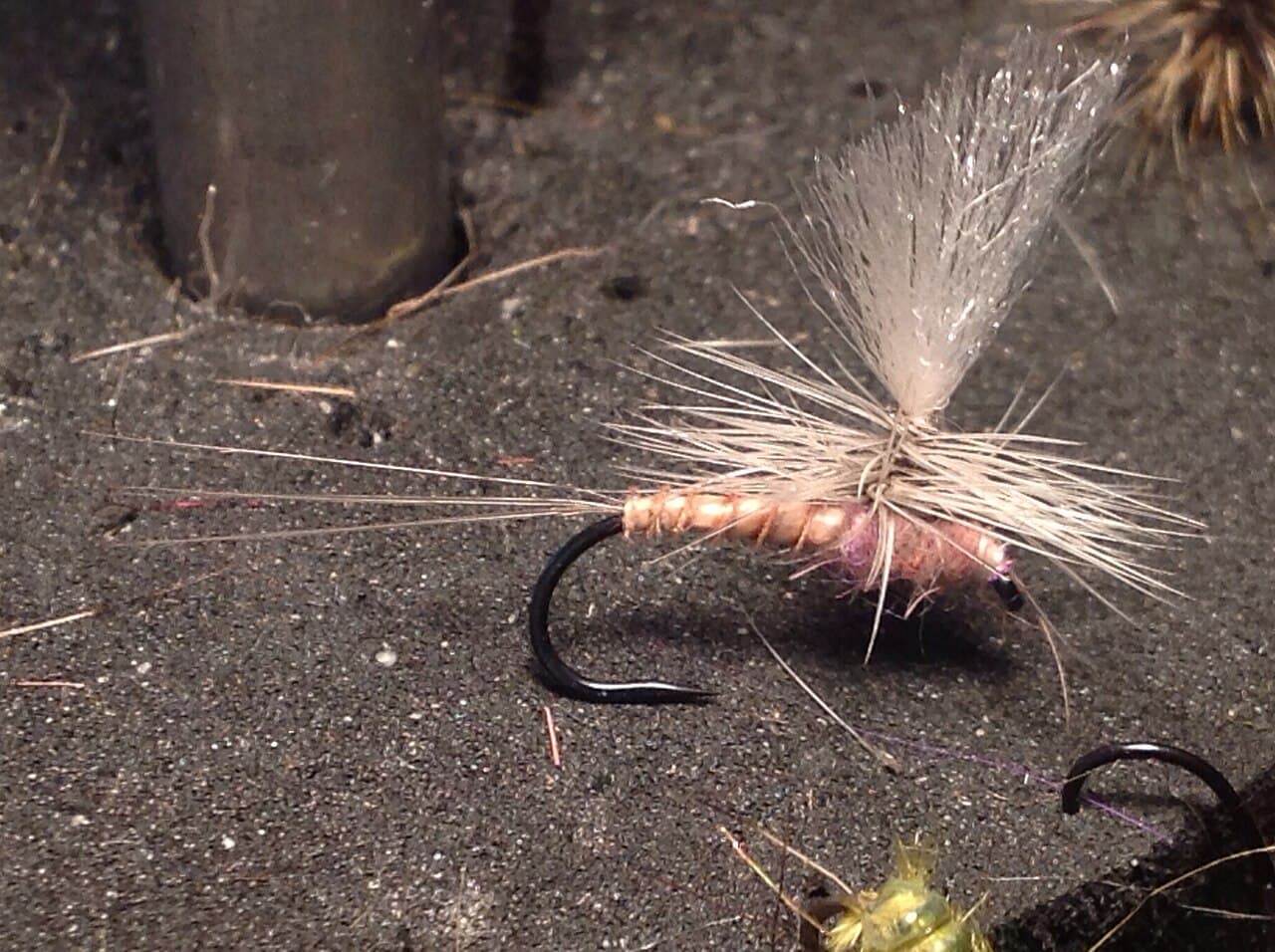
Macro side photograph of a Pink Hendrickson Parachute dry fly with a pale upright postRepresentative photo · one form in this family

Fly family · guide 47

Hendrickson Patterns

An eastern mayfly family spanning nymphs, emergers, duns, soft hackles, Sparkle Duns, and spinners.

Size range
Often #12–16
Common colors
pink-tan, gray, brown, rust spinner
Imitates
Hendrickson mayfly stages
How to recognize it

Hendrickson is a hatch name. Nymphs and emergers, upright or low-riding duns, and rusty spent spinners are different fly jobs.

Macro side photograph of a Pink Hendrickson Parachute dry fly with a pale upright post
Representative photo · one form in this family

Pink Hendrickson Parachute

Use the parachute for the adult-dun job; its higher post and hackle footprint remain separate from the low trailing-shuck Sparkle Dun.

View
stage comparison — adult parachute dry
Color shown
pink-tan body, gray hackle, pale upright post
Look for
A segmented pink-tan abdomen, split tails, horizontal hackle, and visible post create an adult-dun presentation distinct from the Sparkle Dun.
Open full-size photo

On the water

Choose the right version.

Use these tips as a starting point. The river, depth, insects, and fish behavior still decide the final presentation.

01

Why it works

  • The natural crawler nymph, low trailing-shuck Sparkle Dun, and higher-post parachute show three materially different Hendrickson jobs.
  • A Sparkle Dun sits low and suggests the transition, while a parachute creates a visible adult footprint for established dun rises.
  • Keeping Red Quill named in the shared photograph prevents two similar hatch constructions from being collapsed into one exact fly.
02

When to use it

  • During an established local Hendrickson window after current reports and observations support it.
  • Use a matching nymph before surface activity, a Sparkle Dun for film-stage feeding, and the parachute for adult-dun takes.
  • Confirm size and regional timing; do not call every pink-tan mayfly a Hendrickson.
03

How to fish it

  • Use the natural nymph photograph to judge crawler shape, then select an artificial nymph with matching size and profile for a near-bottom dead drift.
  • Fish the Hendrickson Sparkle Dun flush in the film with the trailing shuck visible and no drag.
  • Use the Pink Hendrickson Parachute in a defined adult rise lane and preserve the lower body profile beneath the visible post.
04

Mistakes to avoid

  • Calling any pink dry an exact Hendrickson pattern.
  • Ignoring the spent-spinner stage.

Make the choice

Choose the form before the color.

A family name is only a starting point. Use the waterline, construction, and observed food to narrow it to the form that fits the river.

  1. Use the natural Ephemerella subvaria nymph only for anatomy and stage recognition; it is not a pattern or tying recipe.
  2. Choose the Hendrickson Sparkle Dun for a low hackleless transition form; note that its photograph also contains a separately named Red Quill.
  3. Choose the Pink Hendrickson Parachute for a visible adult dry with horizontal hackle and split tails.

Common variations

Small changes can make a different fly.

Three verified, non-AI photographs compare a natural Ephemerella subvaria nymph, exact Hendrickson and Red Quill Sparkle Duns, and a Pink Hendrickson Parachute. The natural nymph is clearly labeled and the paired Sparkle Dun photograph preserves both pattern names.

Natural Ephemerella subvaria nymph

A natural crawler-nymph reference for body, legs, gills, wing pads, and tails.
Colors shown
tan-brown, dark wing pads
Weighting
Not applicable; this image shows a natural insect.

Hendrickson and Red Quill Sparkle Duns

Low deer-hair-wing transition flies with trailing shucks; both photographed names remain disclosed.
Colors shown
pink-tan, brown, amber shuck
Weighting
Unweighted film patterns.

Pink Hendrickson Parachute

A pink-tan adult dry with split tails, horizontal hackle, and a pale post.
Colors shown
pink-tan, gray, white post
Weighting
Unweighted dry fly.

Related patterns

March Brown Dry FliesSparkle DunRusty SpinnerSoft-Hackle Wet FliesMayfly Patterns by Stage

How this guide was checked

Fly information and photo sources.

Guide checked on 2026-07-13. Every image has its own source and usage record. Natural insects and hand-tied flies can vary in shape and proportion.

Pattern sources

Orvis NewsHow to Tie the Hendrickson Sparkle DunOrvis NewsHow to Match the Hatch

Image credits