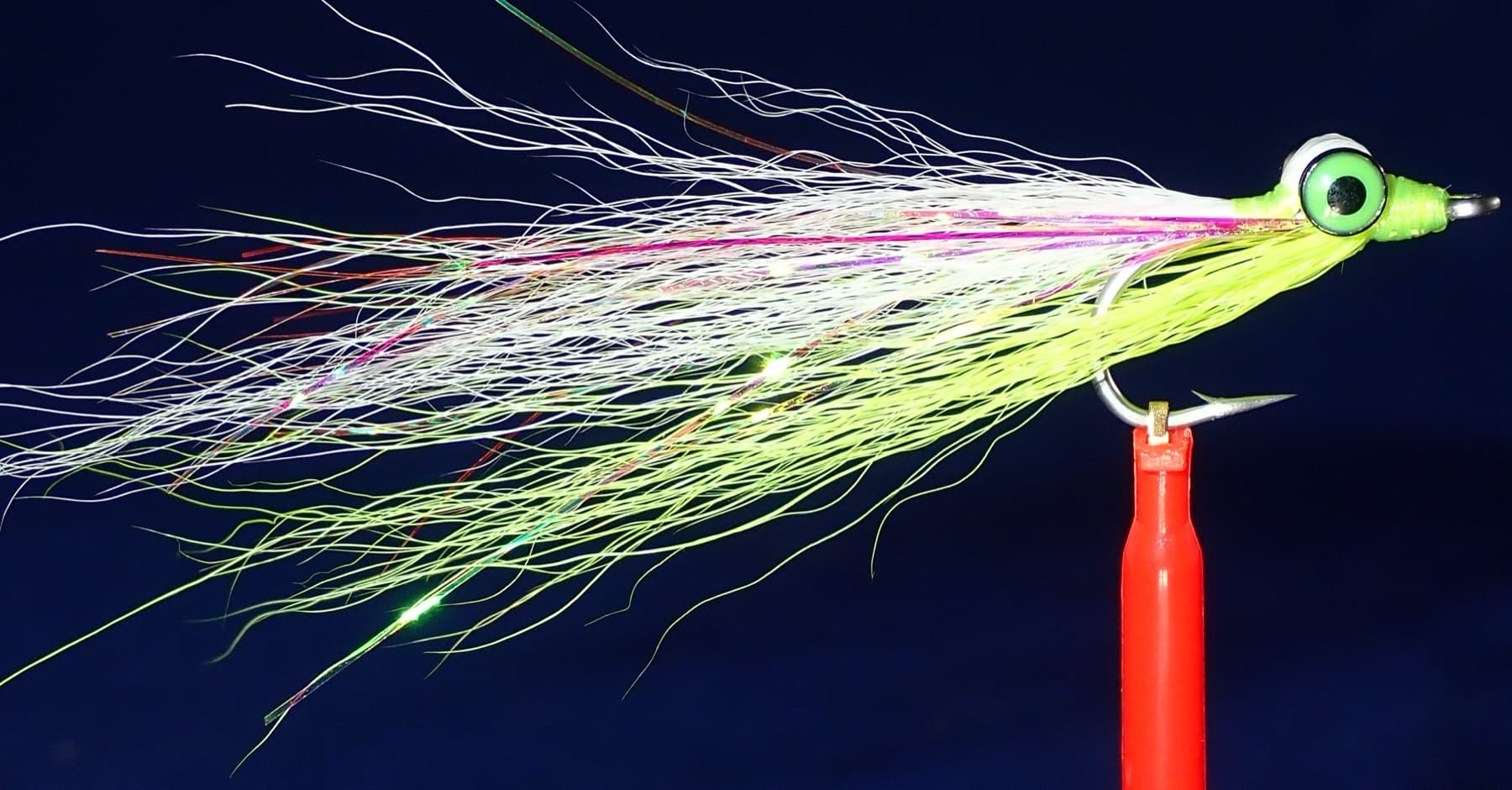
Photograph of a chartreuse-and-white Clouser Deep Minnow representing a weighted inverted baitfish formRepresentative photo · one form in this family

Fly family · guide 85

Baitfish and Minnow Patterns

A forage-first streamer family separating slim, weighted, reflective, and species-shaped baitfish silhouettes.

Size range
Match the local forage and tackle; the family label gives no exact size
Common colors
silver-white, olive-white, pearl, brown-olive, locally matched tones
Imitates
local freshwater forage fish, injured or fleeing baitfish
How to recognize it

Baitfish and minnow wording does not identify one fly. Local forage size and shape, flash, body depth, hook orientation, and weighting distinguish shiner, smelt, dace, sculpin, and general minnow imitations.

Photograph of a chartreuse-and-white Clouser Deep Minnow representing a weighted inverted baitfish form
Representative photo · one form in this family

Clouser Deep Minnow

Choose the Clouser form when depth, a jigging path, and hook-point-up orientation matter more than a long flowing tail.

View
family comparison — weighted inverted profile
Color shown
chartreuse over white
Look for
Dumbbell eyes create an inverted, weighted minnow that jigs and rides hook point up.
Open full-size photo

On the water

Choose the right version.

Use these tips as a starting point. The river, depth, insects, and fish behavior still decide the final presentation.

01

Why it works

  • Baitfish flies give predatory fish a recognizable prey-sized silhouette, but effectiveness depends on matching body depth, movement, and water position to local forage.
  • Weighted eyes, flowing feather tails, sparse bucktail, and broad deer-hair heads create genuinely different swimming paths and displacement.
  • A useful choice begins with forage shape and target depth; flash and color refine the decision after the physical form is correct.
02

When to use it

  • When trout or warmwater fish are visibly chasing minnows or seasonal forage knowledge supports baitfish feeding.
  • In low light, stain, deeper water, current breaks, structure, or other places where small fish become vulnerable.
  • When a report names baitfish or minnow without an exact pattern; inspect local forage and choose the silhouette before the color.
03

How to fish it

  • Set the selected fly at the forage depth using its built-in weight, leader, line, and cast angle rather than adding indiscriminate weight.
  • Use strips, pauses, swings, jigs, or controlled dead drifts that match the form: Clousers jig, Deceivers flow, bucktails track, and Muddlers push water.
  • Vary speed only after the fly is in the correct lane, and keep hook orientation and snag risk visible when fishing close to structure.
04

Mistakes to avoid

  • Using one Clouser or Zonker image for the entire family.
  • Treating shiner, smelt, sculpin, and generic minnow wording as interchangeable.

Make the choice

Choose the form before the color.

A family name is only a starting point. Use the waterline, construction, and observed food to narrow it to the form that fits the river.

  1. Choose a Clouser Deep Minnow for built-in depth, a jigging path, and hook-point-up orientation near cover.
  2. Choose Lefty's Deceiver for a long flowing feather tail and fuller baitfish profile without fixed dumbbell-eye weight.
  3. Choose a Mickey Finn or another sparse bucktail when a narrow easy-casting silhouette and reflective attractor profile fit the water.
  4. Choose a Muddler Minnow when broad-headed sculpin-like forage, bottom structure, or water-pushing action matters more than an open-water minnow shape.

Common variations

Small changes can make a different fly.

Four verified, non-AI photographs compare a weighted inverted Clouser, flowing feather-tail Deceiver, sparse bucktail Mickey Finn, and broad-headed Muddler. Shape, weight, orientation, and movement remain separate from color.

Clouser Deep Minnow

A weighted inverted minnow whose dumbbell eyes create a jigging path and hook-point-up orientation.
Colors shown
chartreuse-white, olive-white, natural and attractor combinations
Weighting
Dumbbell-eye mass defines the form and must match tackle and depth.

Lefty's Deceiver

A feather-tail baitfish with a surrounding hair collar and a longer flowing profile.
Colors shown
chartreuse-white, red-white, brown-white, local baitfish tones
Weighting
The reviewed form has no visible dumbbell eyes; use rig and retrieve for depth.

Mickey Finn

Sparse stacked bucktail and a reflective body create a narrow bright minnow impression.
Colors shown
yellow-red-yellow, metallic body
Weighting
The photographed classic has no visible external weight.

Muddler Minnow

A clipped deer-hair head creates a broad sculpin-like front profile and pushes water.
Colors shown
natural brown, gold, mottled wing
Weighting
Head buoyancy and any added weight must be considered separately.

Related patterns

Clouser Deep MinnowLefty's DeceiverMickey FinnMuddler MinnowTrout Streamer PatternsSculpin Patterns

How this guide was checked

Fly information and photo sources.

Guide checked on 2026-07-13. Every image has its own source and usage record. Natural insects and hand-tied flies can vary in shape and proportion.

Pattern sources

Orvis NewsBlane Chocklett and His Baitfish PatternsOrvis NewsFloating Line or Sinking Tip for Streamers?

Image credits