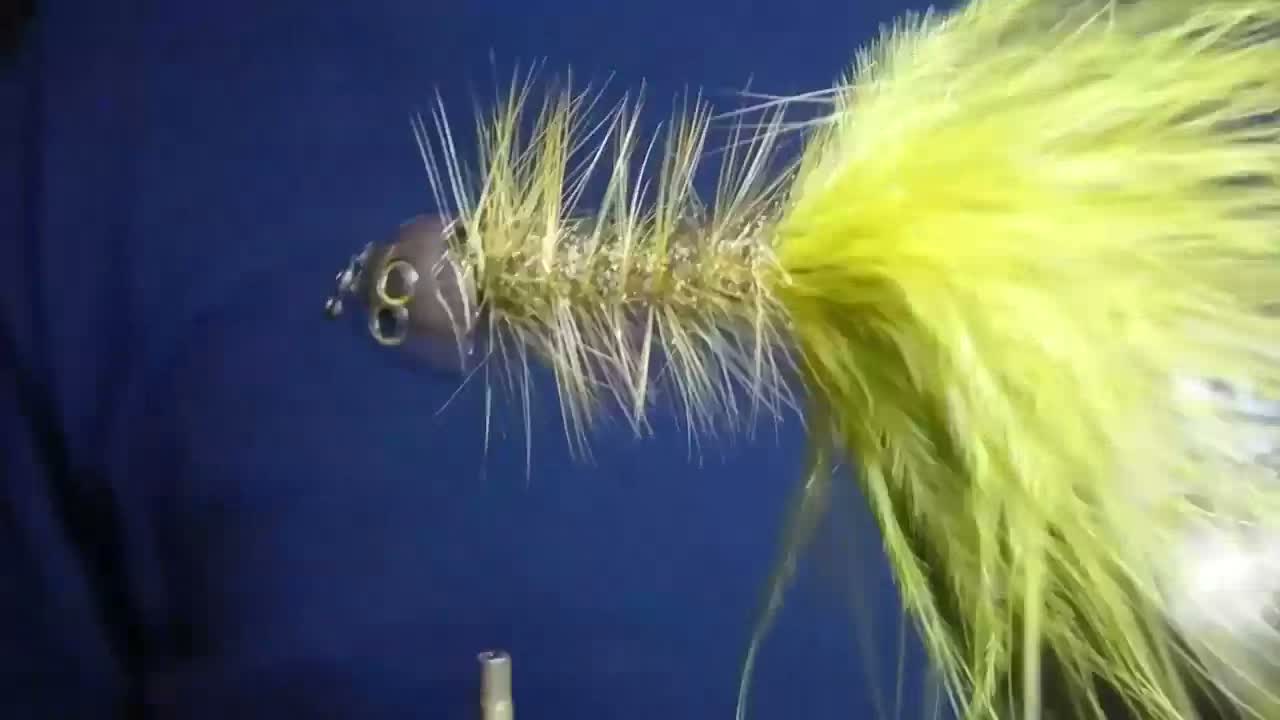
Close video-frame photograph of a completed Green Olive Helmet Sculpin fly with a dark weighted head and bright olive tailRepresentative photo · one form in this family

Fly family · guide 23

Sculpin Patterns

A bottom-oriented streamer family built around a broad head and tapered baitfish body.

Size range
#2–12
Common colors
olive, tan, brown, black
Imitates
freshwater sculpin, bottom-oriented baitfish
How to recognize it

Sculpin flies may use muddler heads, cones, dumbbells, jigs, or soft materials. The broad-head, bottom-hugging profile defines the family—not one exact construction.

Close video-frame photograph of a completed Green Olive Helmet Sculpin fly with a dark weighted head and bright olive tail
Representative photo · one form in this family

Green Olive Helmet Sculpin

A real frame from the source's tying video of the completed Green Olive Helmet Sculpin. It documents one weighted modern construction, not every sculpin fly.

View
family comparison — exact Green Olive Helmet Sculpin
Color shown
bright olive tail and collar with a mottled tan body and dark helmet head
Look for
A broad weighted helmet, visible eye, compact mottled body, and long mobile olive tail create a bottom-oriented streamer profile.
Open full-size photo

On the water

Choose the right version.

Use these tips as a starting point. The river, depth, insects, and fish behavior still decide the final presentation.

01

Why it works

  • Freshwater sculpins have a broad head, wide fins, and sharply tapered body, creating a distinctive bottom-oriented silhouette that differs from a slim open-water minnow.
  • A helmet or cone can force a darting bottom path, while a clipped deer-hair Muddler head creates displacement and a broad profile with less built-in external weight.
  • Short movement followed by a stop can suggest a small bottom fish trying to escape between rocks, where trout may have little time to inspect it.
02

When to use it

  • Near boulders, ledges, undercut banks, deep seams, and other structure where a bottom-oriented baitfish is plausible.
  • During higher or stained water, low light, or periods when larger trout are actively taking streamers near the bottom.
  • Choose the exact construction for depth and snag risk: a helmet form for deliberate bottom contact or a Muddler-style form when a lighter broad head is more useful.
03

How to fish it

  • Cast quartering upstream, let the fly reach the target lane, then use short sharp strips with clear stops so it darts near the streambed.
  • Dead-drift broadside in higher water or mend a downstream presentation through a tailout when that path keeps the fly close to structure.
  • Keep enough contact to detect a hard take, but do not force the hook into every gap; adjust head weight, line density, angle, and leader before changing color.
04

Mistakes to avoid

  • Calling every baitfish streamer a sculpin.
  • Ignoring head weight and snag risk.

Make the choice

Choose the form before the color.

A family name is only a starting point. Use the waterline, construction, and observed food to narrow it to the form that fits the river.

  1. Choose the Green Olive Helmet Sculpin for a broad externally weighted head, visible eye, compact body, and long mobile olive tail.
  2. Choose the classic Muddler Minnow for its clipped deer-hair head, mottled turkey wing, and traditional broad-headed streamer architecture.
  3. Use the natural Checkered Sculpin only to study the broad head, wide pectoral fins, mottling, and taper; verify the actual forage species and size locally.
  4. Open an exact conehead, jig, articulated, or micro-sculpin destination when a report names that construction; one family photograph does not define all of them.

Common variations

Small changes can make a different fly.

Three verified, non-AI photographs compare an exact Green Olive Helmet Sculpin, an exact classic Muddler Minnow used as a traditional sculpin-style streamer, and a natural Checkered Sculpin body-plan reference. The natural fish is not used to claim one universal local species or color.

Green Olive Helmet Sculpin

A source-identified modern sculpin fly with a broad dark helmet, mottled compact body, and long olive tail.
Colors shown
bright olive, tan, dark brown
Weighting
The broad helmet is visible external weight and is part of the photographed form.

Classic Muddler Minnow

A traditional named streamer with a clipped deer-hair head and mottled turkey wing, included as a sculpin-style approach.
Colors shown
natural deer hair, mottled brown, gold, red
Weighting
No visible bead, cone, or dumbbell; line and rigging establish depth.

Natural Checkered Sculpin Reference

A natural Maryland specimen used only to explain broad-headed sculpin anatomy and taper.
Colors shown
mottled brown, tan, charcoal
Weighting
Not applicable; this photograph shows a natural fish.

Related patterns

Muddler MinnowTrout Streamer PatternsLeech Patterns

How this guide was checked

Fly information and photo sources.

Guide checked on 2026-07-13. Every image has its own source and usage record. Natural insects and hand-tied flies can vary in shape and proportion.

Pattern sources

Orvis NewsHow to Tie and Fish Tandem RigsOrvis NewsFish Facts: Sculpins (genus Cottus)Orvis NewsHow to Tie the Muddler Minnow

Image credits

Classic Muddler MinnowMuddler Minnow.jpgSource ↗

Marc Yarascavitch, via Wikimedia Commons; released into the public domain by the copyright holder

License
Public domain
Changes
Downloaded from Wikimedia's 1920px derivative; no crop, resize, or color adjustment.