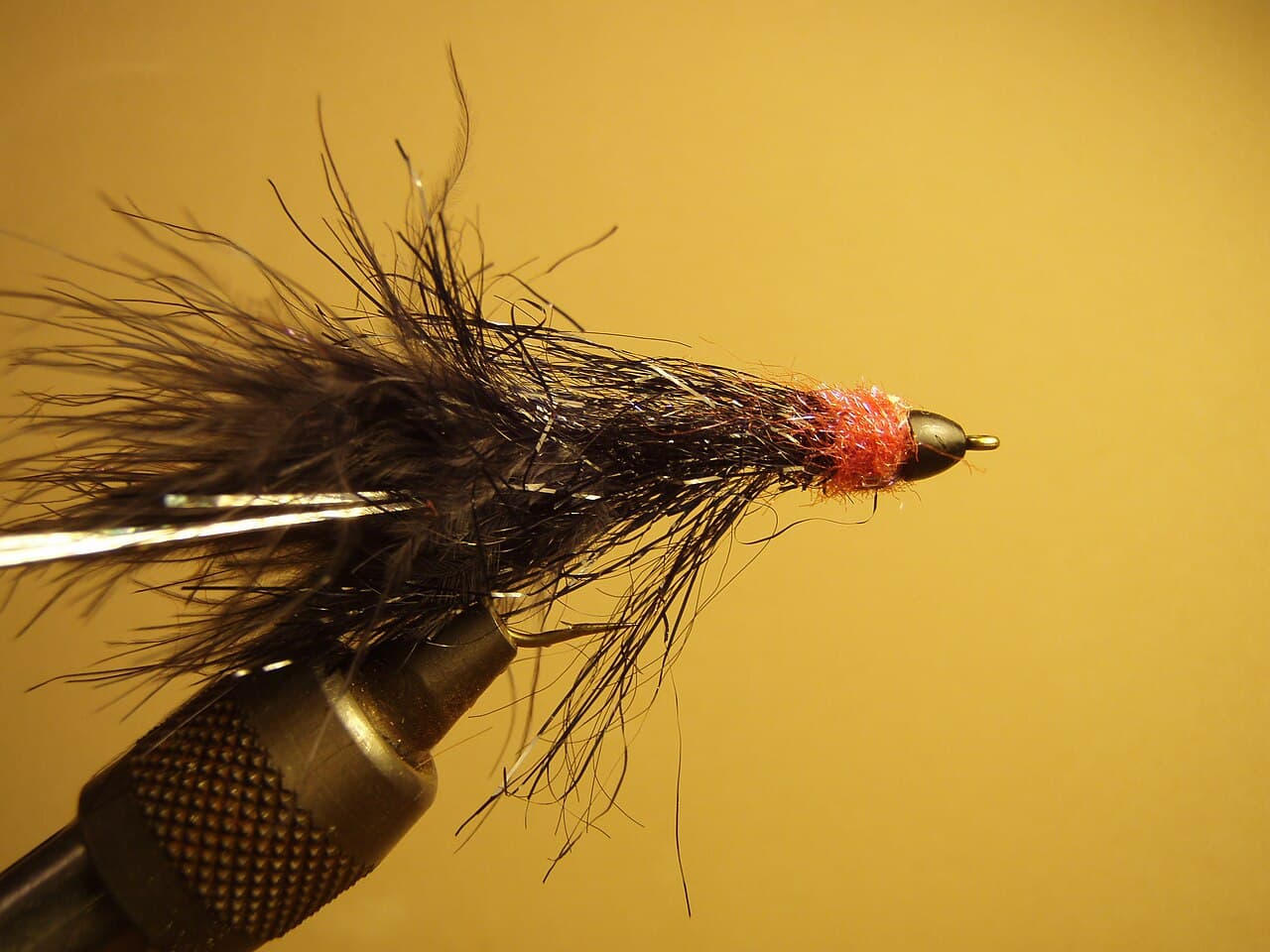
Macro side photograph of a Black Conehead Egg-Sucking Leech with a long mobile black body and orange-red collarRepresentative photo · one form in this family

Fly family · guide 22

Leech Patterns

A mobile streamer family spanning marabou, rabbit-strip, balanced, and sparse leech profiles.

Size range
#4–14
Common colors
black, olive, brown, purple
Imitates
leech, large aquatic invertebrate, general swimming food
How to recognize it

Leech patterns share an elongated moving silhouette, but material, weighting, hook orientation, and retrieve vary. Pine-squirrel, rabbit-strip, balanced, and Woolly Bugger forms remain separately labeled rather than being presented as one recipe.

Macro side photograph of a Black Conehead Egg-Sucking Leech with a long mobile black body and orange-red collar
Representative photo · one form in this family

Black Conehead Egg-Sucking Leech

The conehead, orange-red collar, and long black materials define this named weighted form; it is not interchangeable with a plain Woolly Bugger.

View
family comparison — conehead egg-sucking leech
Color shown
black marabou and hackle with orange-red egg collar and dark cone
Look for
A long mobile black tail and body, bright egg collar, and conehead create a weighted leech form with a separate front trigger.
Open full-size photo

On the water

Choose the right version.

Use these tips as a starting point. The river, depth, insects, and fish behavior still decide the final presentation.

01

Why it works

  • Long marabou, hackle, and fur continue moving during pauses, giving leech-style flies a living profile without a fast retrieve.
  • The conehead Egg-Sucking Leech adds weight and a bright front trigger, while pine squirrel creates a fuller slow-moving body and a classic Bugger stays compact and versatile.
  • Separating weight, material, and hook orientation is more useful than treating every dark streamer as the same leech.
02

When to use it

  • In stillwaters, deep edges, slow seams, stained water, and low light when a mobile elongated meal is plausible.
  • Choose the conehead for added depth, the pine-squirrel form for a fuller slow profile, or the classic Bugger for a smaller generalist presentation.
  • Match local prey, target species, hook size, and regulations; dark color alone does not identify a leech pattern.
03

How to fish it

  • Strip with deliberate pauses so marabou, hackle, or fur can pulse and settle instead of retrieving at one constant speed.
  • Swing or dead-drift the conehead form when current and depth make a weighted path useful; account for the orange egg collar as a separate trigger.
  • Suspend or slowly retrieve lighter Bugger forms around edges and drop-offs, changing sink rate before cycling through unrelated colors.
04

Mistakes to avoid

  • Calling every dark streamer a leech.
  • Ignoring balanced versus conventional hook orientation.

Make the choice

Choose the form before the color.

A family name is only a starting point. Use the waterline, construction, and observed food to narrow it to the form that fits the river.

  1. Choose the Black Conehead Egg-Sucking Leech for built-in front weight, a long black profile, and an orange-red collar.
  2. Choose the large Black Pine Squirrel Woolly Bugger for a dense fur body, long mixed tail, flash, and slower substantial movement.
  3. Choose the classic Black Woolly Bugger as a compact marabou-and-hackle leech approach without the cone, egg collar, or fur body.
  4. Open a balanced or rabbit-strip leech destination when the report names that exact orientation or construction; this page does not substitute one of the three photographed flies for it.

Common variations

Small changes can make a different fly.

Three verified, non-AI photographs compare a conehead Egg-Sucking Leech, a large pine-squirrel Woolly Bugger variation, and a classic Black Woolly Bugger approach. Balanced and rabbit-strip leeches remain linked but are not visually claimed until their own reviewed photography is available.

Black Conehead Egg-Sucking Leech

A weighted black leech streamer with an orange-red front collar and conehead.
Colors shown
black, orange-red, dark cone
Weighting
Conehead weight is part of the photographed form.

Black Pine Squirrel Woolly Bugger

A large dense fur-and-hackle variation with a mixed tail, flash, and orange head.
Colors shown
black, brown, orange, flash
Weighting
No visible bead or cone; line and leader determine depth.

Classic Black Woolly Bugger approach

A compact marabou-tail and palmered-hackle generalist used as one leech presentation.
Colors shown
black
Weighting
The photographed form is unweighted; weighted Bugger variants must remain labeled.

Related patterns

Woolly BuggerTrout Streamer PatternsZonker StreamerSculpin Patterns

How this guide was checked

Fly information and photo sources.

Guide checked on 2026-07-13. Every image has its own source and usage record. Natural insects and hand-tied flies can vary in shape and proportion.

Pattern sources

Orvis NewsHow to Tie and Fish Tandem RigsOrvis NewsHow to Tie a Pine Squirrel Streamer

Image credits