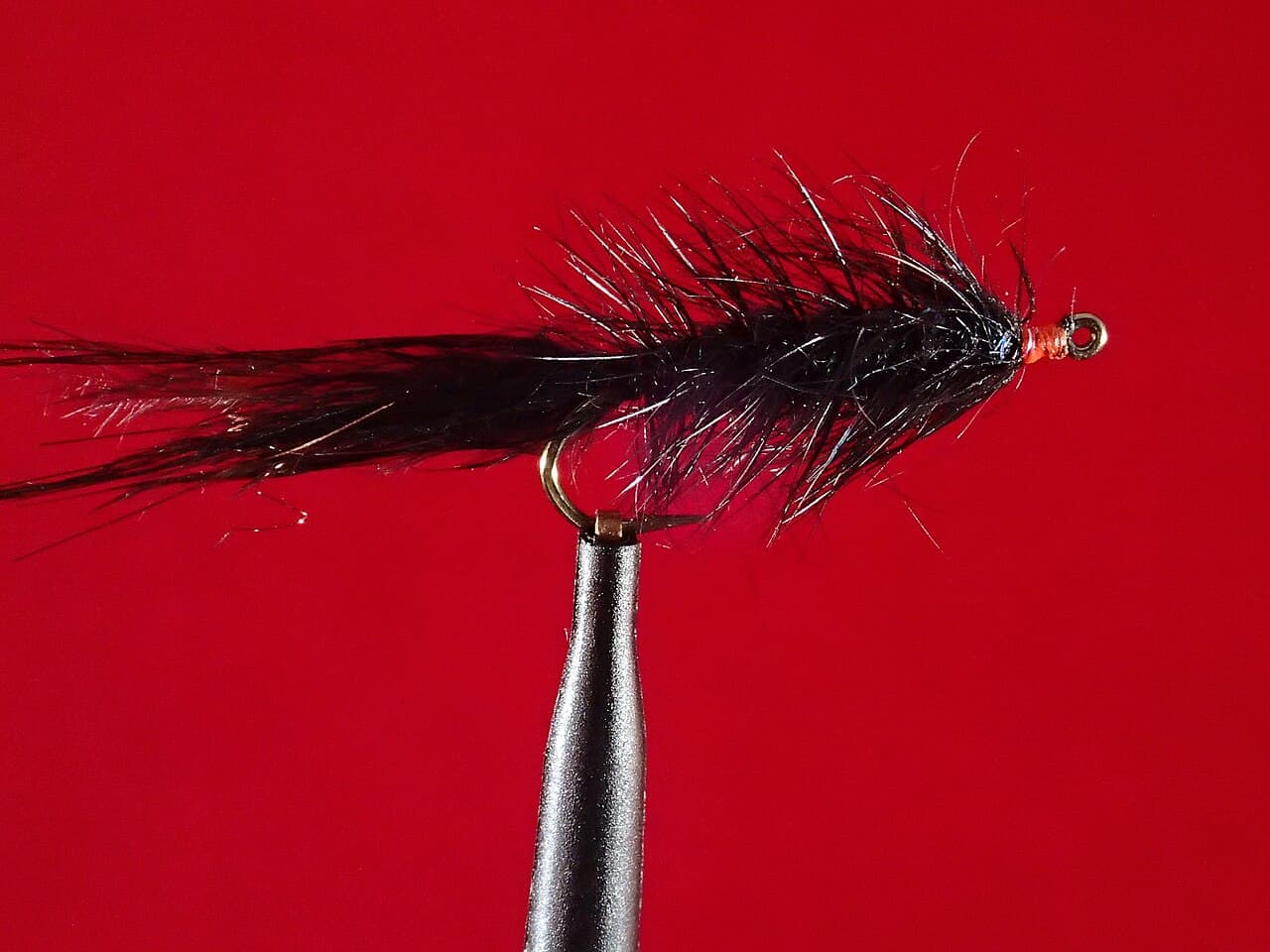
Traditional black Woolly Bugger streamer shown in side profile against a red backgroundVerified exact-pattern photograph
← Fly Box

Streamer · guide 05

Woolly Bugger

A mobile marabou-and-hackle streamer that can suggest several large food forms without being one exact imitation.

Common size
#6–12
Colors reviewed
black, olive, tan or brown, purple-and-black variation
Imitates
leech, sculpin or baitfish impression, crayfish impression, hellgrammite, large stonefly nymph
How to recognize it

The shared pattern language is a marabou tail, chenille or dubbed body, and palmered hackle. Bead heads, dumbbell eyes, flash, rubber tails, colors, and body materials materially change the tied variation and must be labeled.

Traditional black Woolly Bugger streamer shown in side profile against a red background
Exact-pattern photograph

Traditional black Woolly Bugger

The cleanest exact-pattern profile in the Woolly Bugger pilot gallery.

View
side profile
Color shown
black
Look for
Marabou tail and palmered hackle over a dark body.
Open full-size photo

On the water

Understand it. Then fish it.

The river, depth, insects, and fish behavior still decide the final presentation. These are reviewed starting points—not a claim about what is happening today.

01

When to use it

  • Low light, stained water, higher flows, or water where a larger moving food form is plausible.
  • Along banks, undercuts, boulders, deeper slots, and lake edges.
  • Dead-drifted or lightly jigged when fish are more responsive to a large nymph or leech profile than an aggressively stripped streamer.
02

How to fish it

  • Strip, swing, dead-drift, or jig the fly according to depth, current, and the food form you are trying to suggest.
  • Use black as a strong silhouette and olive or tan when a lighter natural impression fits the water.
  • Match bead, cone, or dumbbell weight to the required depth and label the weighted variation accurately.
03

Mistakes to avoid

  • Calling every marabou streamer a Woolly Bugger.
  • Showing a dumbbell-eye or bead-head version while describing an unweighted traditional fly.
  • Claiming the pattern exactly imitates one food item in every river and presentation.

Variant control

Small changes matter.

Four exact-pattern photographs show the traditional black profile plus three clearly labeled color and weighting variations.

Traditional black

Black marabou tail, dark body, and palmered hackle in the classic overall profile.
Colors shown
black
Weighting
The reviewed image has a small head but is presented as the traditional profile reference.

Black-and-brown bead head

A weighted, flash-accented black-and-brown variation.
Colors shown
black, brown, metallic flash
Weighting
Bead head.

Olive dumbbell-eye

A heavily dressed olive variation with prominent dumbbell eyes.
Colors shown
olive, black, metallic
Weighting
Dumbbell eyes.

Purple-and-black bead head

Purple marabou and body with black hackle and a metallic bead.
Colors shown
purple, black
Weighting
Bead head.

Review trail

Sources, rights, and limits.

Pattern facts were reviewed on 2026-07-12. Every image has its own rights record; photographed hand-tied flies may still vary slightly in proportion.

Pattern sources

Orvis Fly Fishing Learning CenterTom Rosenbauer's 12 Essential Trout FliesOrvis NewsHow to Tie a Better Woolly BuggerOrvis NewsThe Origins of the Woolly Bugger

Image credits

CC BY-SA 4.0Mike Cline, via Wikimedia Commons, CC BY-SA 4.0Public domainMike Cline, via Wikimedia Commons; public domainPublic domainMike Cline, via Wikimedia Commons; public domainPublic domainMike Cline, via Wikimedia Commons; public domain