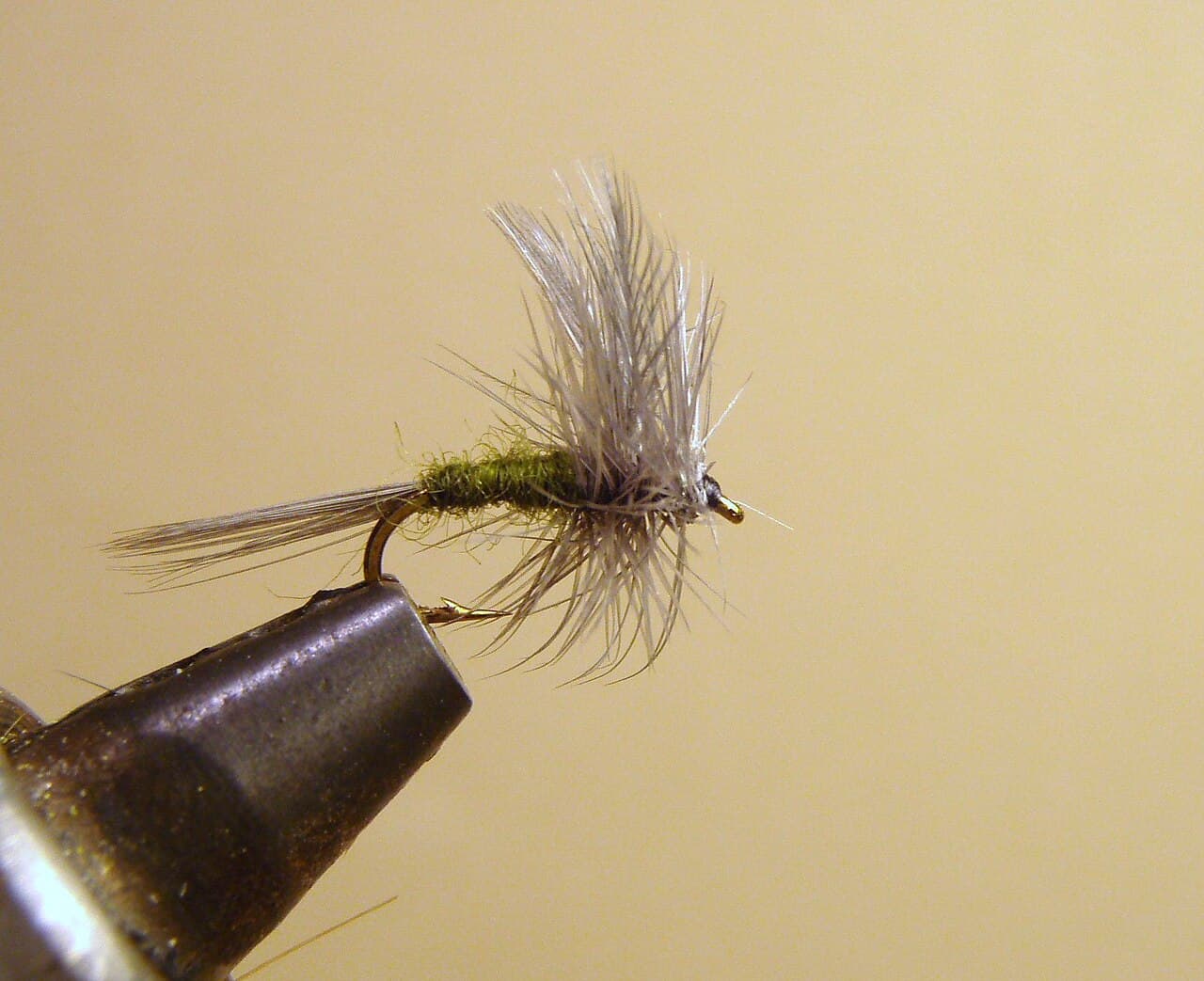
Macro side photograph of a Green Drake Dry Fly with an olive body and upright gray wingsRepresentative photo · one form in this family

Fly family · guide 45

Green Drake Patterns

A large-mayfly family for Green Drake nymphs, emergers, cripples, duns, and spinners where the hatch occurs.

Size range
Large mayfly sizes; verify local species
Common colors
olive, brown, cream, mottled wing
Imitates
Green Drake mayfly stages
How to recognize it

Green Drake is a hatch family, not one fly. Large nymph, low emerger or cripple, upright dun, and spent-wing forms remain distinct.

Macro side photograph of a Green Drake Dry Fly with an olive body and upright gray wings
Representative photo · one form in this family

Green Drake Dry Fly

This adult dry is one named Green Drake construction; it does not represent the natural larva or every regional Green Drake species.

View
stage comparison — upright adult dry
Color shown
olive-green body, gray upright wings, mixed gray hackle
Look for
A long olive body, tails, paired upright wings, and conventional hackle form a large adult-dun silhouette.
Open full-size photo

On the water

Choose the right version.

Use these tips as a starting point. The river, depth, insects, and fish behavior still decide the final presentation.

01

Why it works

  • Green Drake is a common-name family, and the photographed natural Eastern larva, natural adult, and artificial dry make both life-stage and regional-species boundaries visible.
  • The large winged dry creates an upright adult silhouette, while the burrowing larva occupies a completely different bottom-stage lane.
  • The natural adult's strongly mottled wings and substantial scale give the angler a real reference without claiming the artificial must copy every color patch.
02

When to use it

  • Only where Green Drakes are established and current river evidence makes the stage seasonally plausible.
  • Use a locally matched nymph before emergence and the adult dry only when large winged mayflies or corresponding rises are observed.
  • Verify which regional insect the report means; Eastern Ephemera guttulata and western Green Drake usage should not be treated as one species.
03

How to fish it

  • Use the natural larva only to study a burrowing Eastern nymph; choose a locally appropriate artificial and dead-drift it at the active depth.
  • Present the Green Drake Dry Fly drag-free in the rise lane, allowing its large profile to remain visible without adding motion unsupported by the naturals.
  • Compare the natural adult's size, mottled upright wing, and body proportions before adjusting the artificial's color or size.
04

Mistakes to avoid

  • Turning 'where present' into a current claim.
  • Using one large dry for every stage.

Make the choice

Choose the form before the color.

A family name is only a starting point. Use the waterline, construction, and observed food to narrow it to the form that fits the river.

  1. Use the natural larva and adult as Eastern Green Drake anatomy references, not as artificial patterns or universal western-species claims.
  2. Choose the photographed Green Drake Dry Fly for one upright adult construction with an olive body, tails, gray wings, and hackle.
  3. Open local report sources before choosing a nymph, emerger, cripple, or spinner that is not yet photographed on this family page.

Common variations

Small changes can make a different fly.

Three verified, non-AI photographs compare an exact Green Drake Dry Fly with clearly labeled natural Eastern Green Drake larva and adult references. The page states that eastern and western Green Drake names may refer to different insects, so the natural species is not universalized.

Natural Eastern Green Drake larva

A natural burrowing-nymph reference with a long body and tusk-like mouthparts.
Colors shown
pale yellow-tan, dark internal line
Weighting
Not applicable; this image shows a natural insect.

Green Drake Dry Fly

One upright adult-dun construction with an olive body, tails, gray wings, and hackle.
Colors shown
olive green, gray wing and hackle
Weighting
Unweighted dry fly.

Natural Eastern Green Drake adult

A natural adult reference for large scale, mottled wings, body, and tails.
Colors shown
green-yellow, mottled brown-green wings
Weighting
Not applicable; this image shows a natural insect.

Related patterns

Mayfly Patterns by StageSparkle DunPale Morning Dun PatternsMarch Brown Dry Flies

How this guide was checked

Fly information and photo sources.

Guide checked on 2026-07-13. Every image has its own source and usage record. Natural insects and hand-tied flies can vary in shape and proportion.

Pattern sources

Orvis NewsHow to Match the HatchOrvis NewsPhil's Top 6 Patterns for Spring Mayfly Hatches

Image credits