Macro side photograph of a tied Golden Stonefly Nymph with a broad yellow-brown body, bead, paired tails, and rubber legsRepresentative photo · one form in this family

Fly family · guide 70

Nocturnal Stonefly Patterns

A timing-and-stage guide that separates bottom nymphs, short-winged Claassenia evidence, and long-winged adult dries before a low-light stonefly choice is made.

Size range
Species and watershed dependent; the family label does not establish a hook size, Claassenia, golden stones, and smaller nocturnal species must not be treated as one scale
Common colors
golden-brown, brown and dark olive, locally matched mottling and underside tone
Imitates
nocturnal stonefly nymph, adult nocturnal stonefly
How to recognize it

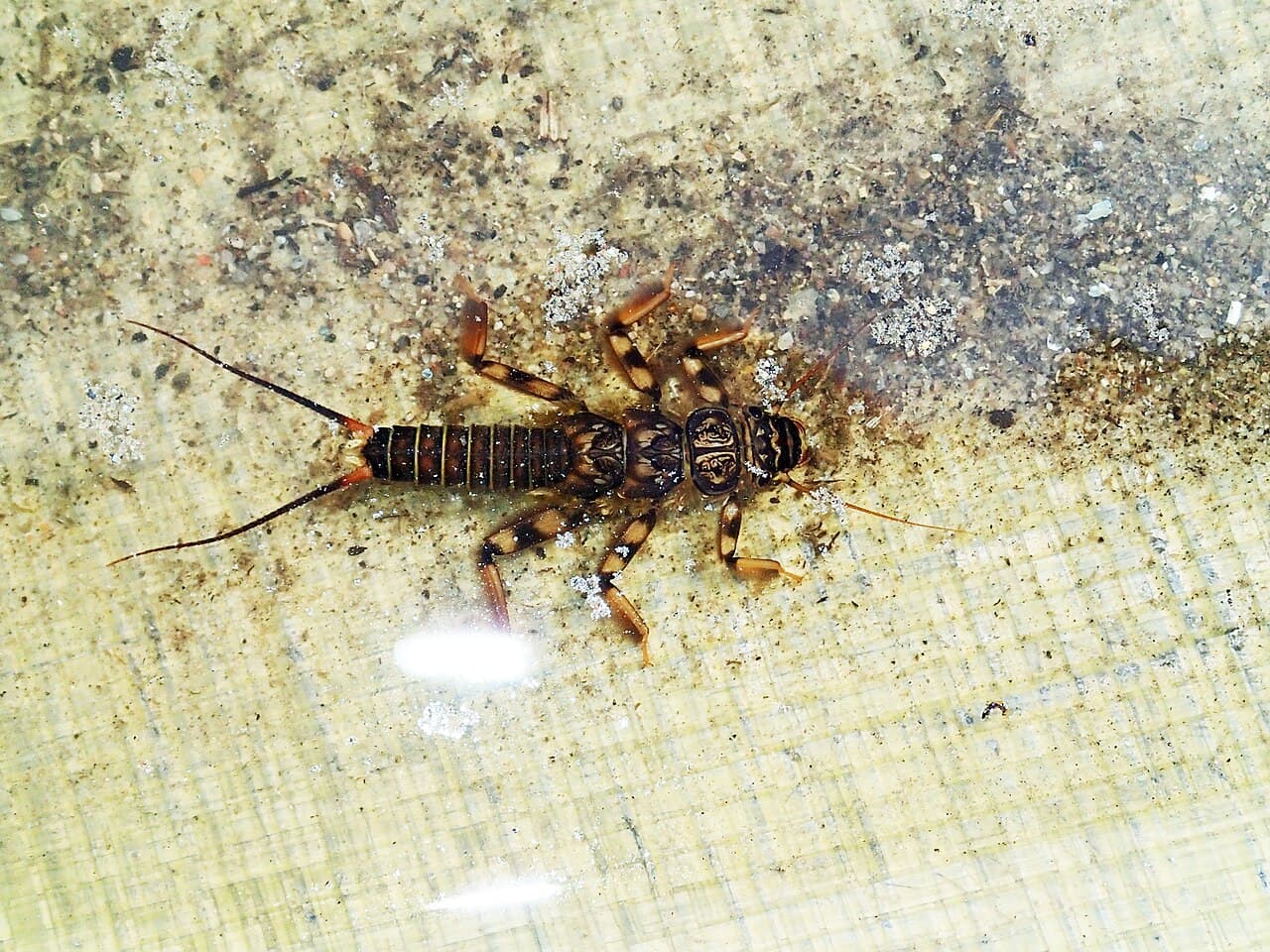
Nocturnal stonefly is a behavior and report label, not one fly. Stonefly nymphs have two tails, long antennae, six legs, and a broad segmented body; adults add wings, but wing length and flight ability vary by species. Claassenia sabulosa can emerge and move near shore after dark in documented western populations, yet that evidence does not identify every nighttime stonefly or support one universal calendar.

Macro side photograph of a tied Golden Stonefly Nymph with a broad yellow-brown body, bead, paired tails, and rubber legs
Representative photo · one form in this family

Golden Stonefly Nymph

Artificial Golden Stonefly Nymph photographed and labeled by the source as a Claassenia sabulosa imitation—not a natural insect or universal nocturnal-stone recipe. Its bead and rubber legs are one weighted approach to the pre-emergence bottom lane.

View
stage comparison — photographed weighted nymph artificial
Color shown
golden yellow-brown body with dark mottling and rubber legs
Look for
A broad golden segmented body, dark thorax, paired tails, bead, and flexible legs create a substantial bottom-stage artificial.
Open full-size photo

On the water

Choose the right version.

Use these tips as a starting point. The river, depth, insects, and fish behavior still decide the final presentation.

01

Why it works

  • Before emergence, a substantial stonefly nymph can place a broad, leggy bottom meal in the migration lane toward shore.
  • After dark, some stoneflies move, emerge, mate, or return eggs close to shoreline rocks, creating a bank-oriented opportunity that is easy to miss during a daytime-only check.
  • The gallery makes the decisive distinction visible: a weighted nymph, a source-identified natural body, and a buoyant long-winged dry solve different water-depth and species problems rather than forming one interchangeable pattern set.
02

When to use it

  • When fresh local evidence—new shucks on shoreline rocks, active insects, a trusted current report, or direct low-light observation—supports stonefly movement on that exact river.
  • Use a nymph before or during a verified shoreward crawl; consider a surface fly only when adults or surface disturbances show that an adult lane actually exists.
  • Treat the Gunnison River Claassenia research as one documented population, not a nationwide hatch schedule. Confirm species, season, access rules, sunset, and safe wading conditions locally.
03

How to fish it

  • Dead-drift the exact nymph close to the bottom and toward bank-side migration water, adjusting rig depth and weight before changing to a larger silhouette.
  • For confirmed adult activity, cover shoreline rocks, seams, and adjacent soft water with a controlled drift or wake that matches what the adults are doing; do not automatically copy a generic Stimulator retrieve.
  • Choose a short-winged or long-winged artificial by the observed insect. The Orange Stimulator photograph is a contrast, not a recommendation for short-winged Claassenia.
04

Mistakes to avoid

  • Treating nocturnal stonefly as one exact species, recipe, size, or hatch date.
  • Using a long-winged dry to represent a short-winged adult without checking the natural insect.
  • Assuming a daytime absence means there was no after-dark emergence, or that a historic evening report is still current.

Make the choice

Choose the form before the color.

A family name is only a starting point. Use the waterline, construction, and observed food to narrow it to the form that fits the river.

  1. Use the photographed Golden Stonefly Nymph only as one weighted bottom-stage artificial. Its bead, rubber legs, golden body, and source label remain visible; it is not a natural specimen or universal Claassenia recipe.
  2. Use the natural Claassenia sabulosa photograph for source-identified body anatomy only. Because the Commons record does not state life stage, location, date, or size, the page does not infer any of them.
  3. Use the Orange Stimulator to recognize a buoyant long-winged adult-dry architecture and, just as importantly, to reject it when the observed adult is short-winged or not riding the surface.
  4. Choose the fishable fly by verified stage, body size, wing length, color, ballast, hook, and local activity. Exact short-wing adults, emergers, and other nocturnal stonefly recipes remain unpictured until licensed photographs pass review.

Common variations

Small changes can make a different fly.

Three verified, non-AI photographs compare one weighted Golden Stonefly Nymph artificial, a source-identified natural Claassenia sabulosa specimen whose life stage is not stated, and an Orange Stimulator used as a deliberately long-winged adult-dry contrast. The page does not claim that all three are the same stage, exact recipe, species match, size, or local hatch.

Weighted Golden Stonefly Nymph approach

A tied bead-and-rubber-leg nymph shown for one substantial bottom-stage presentation before or during migration.
Colors shown
golden brown, dark brown, black bead
Weighting
Visible bead; the photograph does not establish internal weight or the correct mass for a given river.

Natural Claassenia sabulosa reference

A source-identified natural specimen used for body anatomy while its unstated life stage, size, date, and location remain explicit limits.
Colors shown
golden brown, dark mottling
Weighting
Natural insect reference; no artificial weight, hook, or waterline is implied.

Long-winged Orange Stimulator contrast

A buoyant long-winged adult-stonefly artificial included to compare—not collapse—adult wing and surface forms.
Colors shown
orange, brown, tan wing
Weighting
Buoyant dry construction with no visible added ballast; it is not an exact short-wing Claassenia imitation.

Related patterns

Stonefly Patterns by StageGolden Stonefly PatternsStonefly Nymph PatternsStimulator

How this guide was checked

Fly information and photo sources.

Guide checked on 2026-07-13. Every image has its own source and usage record. Natural insects and hand-tied flies can vary in shape and proportion.

Pattern sources

Orvis NewsMatch the Hatch by Observing Flight PatternsAnnals of the Entomological Society of AmericaDescription and Theoretical Considerations of Mate Finding and Other Adult Behaviors in a Colorado Population of Claassenia sabulosaTexas A&M AgriLife ExtensionStonefly

Image credits