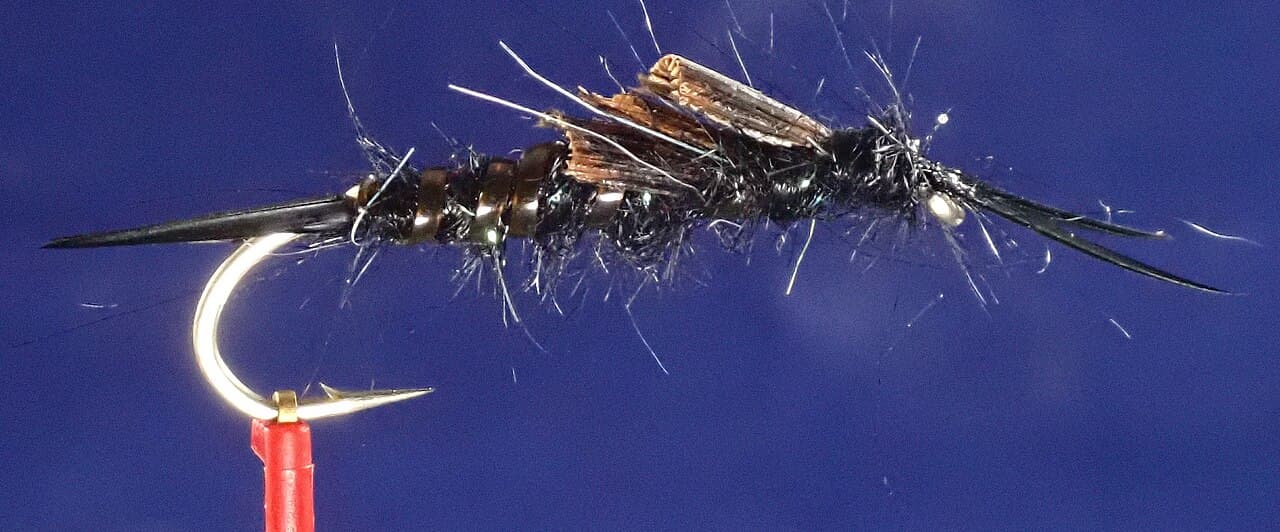
Side photograph of a Kaufmann Black Stone representing a dark bottom-oriented stonefly nymphRepresentative photo · one form in this family

Fly family · guide 64

Stonefly Patterns by Stage

A stage-first guide separating bottom-oriented nymphs from emerging and adult stonefly patterns.

Size range
Varies widely by species and river
Common colors
black, brown, olive, golden, yellow
Imitates
stonefly nymph, emerging stonefly, adult stonefly
How to recognize it

Stonefly nymphs are broad, two-tailed, and subsurface; adults carry long folded wings and live or fall near banks. Generic stonefly wording does not name one recipe, species, size, or color.

Side photograph of a Kaufmann Black Stone representing a dark bottom-oriented stonefly nymph
Representative photo · one form in this family

Kaufmann Black Stone nymph form

Use this as a dark nymph-form reference, not as proof that every local stonefly shares its size or black coloration.

View
stage comparison — dark imitative nymph
Color shown
black with dark brown wing cases
Look for
A segmented dark abdomen, paired tails, wing cases, and projecting legs create an imitative bottom-stage silhouette.
Open full-size photo

On the water

Choose the right version.

Use these tips as a starting point. The river, depth, insects, and fish behavior still decide the final presentation.

01

Why it works

  • Stonefly nymphs live and move near the bottom, while winged adults create a separate bank-and-surface opportunity; the useful pattern must match that change in position.
  • A broad Kaufmann profile emphasizes anatomy, flexible rubber legs emphasize movement, and a small pale nymph prevents the family from defaulting to a large black fly.
  • A buoyant Stimulator can suggest a winged adult in broken water, but it does not establish the exact local species, color, or hatch timing.
02

When to use it

  • Where the river report, stream samples, shed shucks, or adult sightings establish current stonefly activity.
  • Use nymphs before and during bottom-stage movement; switch to an adult dry only when adults or fish behavior support a surface presentation.
  • Choose size and color from local evidence because stoneflies range from small pale forms to large dark or golden insects.
03

How to fish it

  • Dead-drift the nymph near bottom through pockets, riffles, and seams, adjusting weight for the lane before changing the pattern itself.
  • Use a rubber-leg form when added movement fits turbulent water, or a more imitative Kaufmann-style form when body segmentation matters.
  • Present the Stimulator near banks or broken-water lanes with a drag-free drift; add only a restrained twitch when adult behavior supports it.
04

Mistakes to avoid

  • Using one dry image for nymph recommendations.
  • Assuming every stonefly is large or golden.

Make the choice

Choose the form before the color.

A family name is only a starting point. Use the waterline, construction, and observed food to narrow it to the form that fits the river.

  1. Choose the dark Kaufmann form for a broad segmented nymph with visible wing cases, tails, and legs.
  2. Choose the Rubber Legs form when flexible movement and a substantial bottom profile are more useful than fine anatomical detail.
  3. Choose the Little Yellow Stonefly nymph when the observed insect is smaller and paler; not every stonefly is large or black.
  4. Choose the orange Stimulator only as a buoyant adult-dry approach, and open the exact Stimulator page when that named pattern is the recommendation.

Common variations

Small changes can make a different fly.

Four verified, non-AI photographs compare three materially different stonefly-nymph approaches with one clearly labeled adult-dry approach. Size, color, movement, and life stage remain separate decisions rather than one generic stonefly image.

Kaufmann Black Stone nymph form

A broad dark, segmented, imitative nymph with paired tails, legs, and wing cases.
Colors shown
black, charcoal, dark brown
Weighting
Fish near bottom with hook or rig weight appropriate to the lane.

Rubber Legs nymph form

A substantial bottom fly using long flexible legs to add movement in current.
Colors shown
dark brown-black, tan legs
Weighting
Weight varies by named construction and must remain labeled.

Little Yellow Stonefly nymph form

A smaller pale stage option that keeps scale and color grounded in the observed insect.
Colors shown
pale yellow, cream, light brown
Weighting
Use only enough weight to reach the active lane.

Orange Stimulator adult approach

A long-winged buoyant dry used as one adult-stonefly approach, not the whole family.
Colors shown
orange, brown, pale hair wing
Weighting
Unweighted dry fly.

Related patterns

Stonefly Nymph PatternsYellow Sally PatternsSkwala Stonefly PatternsGolden Stonefly PatternsSalmonfly PatternsStimulator

How this guide was checked

Fly information and photo sources.

Guide checked on 2026-07-13. Every image has its own source and usage record. Natural insects and hand-tied flies can vary in shape and proportion.

Pattern sources

Orvis NewsMatch the Hatch by Observing Flight PatternsOrvis News5 Top Patterns for the Skwala Hatch

Image credits