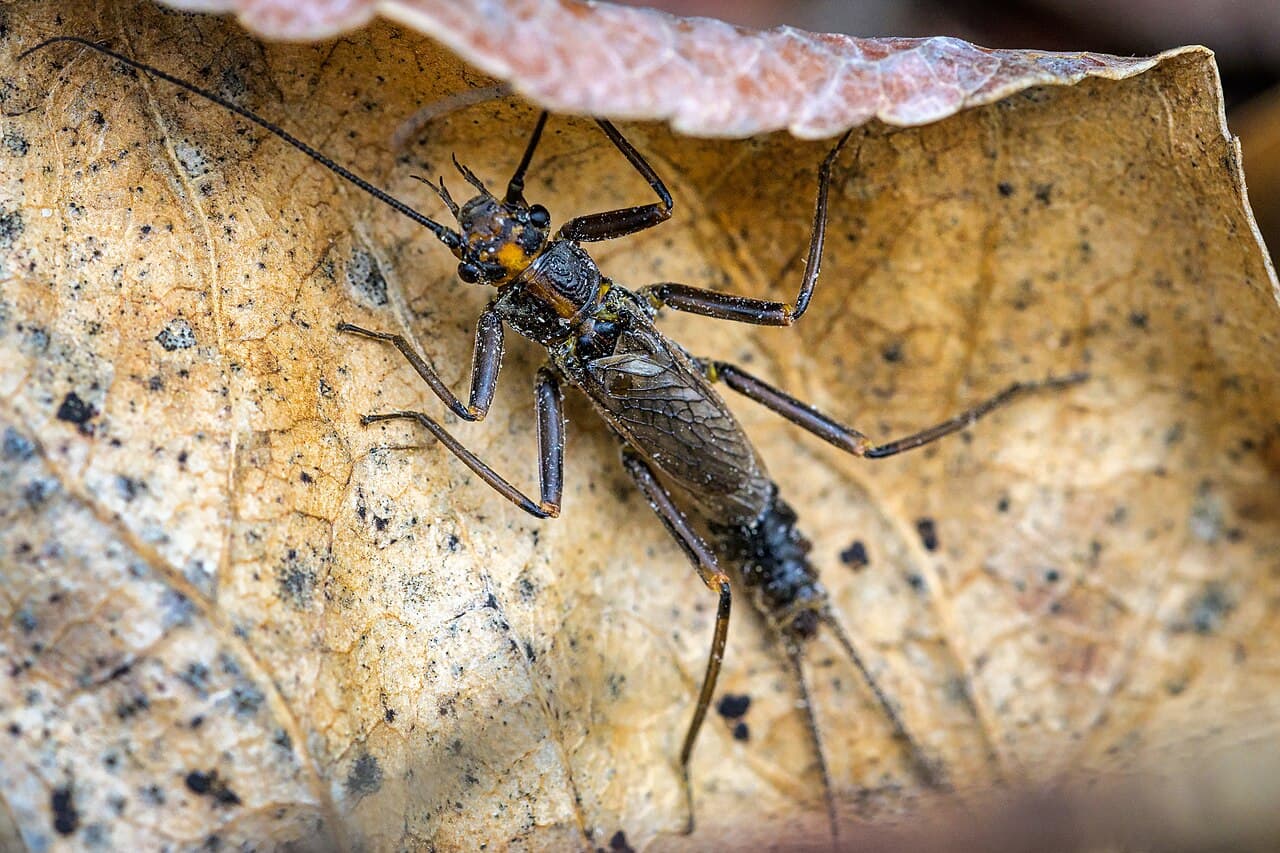
Detailed field photograph of a natural Skwala americana adult stonefly on a dry leafRepresentative photo · one form in this family

Fly family · guide 66

Skwala Stonefly Patterns

An early-season stonefly family with separate bottom nymph and low-riding olive adult patterns.

Size range
Adult patterns often #8–10; verify locally
Common colors
dark brown, olive, black
Imitates
Skwala nymph, adult Skwala stonefly
How to recognize it

Skwala is an insect and hatch label. Dark olive-brown nymphs and olive adult dries are materially different forms; seasonal timing also varies by watershed.

Detailed field photograph of a natural Skwala americana adult stonefly on a dry leaf
Representative photo · one form in this family

Natural Skwala americana adult

Natural-insect reference—not an artificial fly. Use it to judge adult scale, dark wings, and subtle olive-yellow details; verify the local species.

View
stage comparison — natural Skwala americana adult reference
Color shown
dark brown-black body with subdued olive-yellow markings and smoky wings
Look for
The natural adult shows a slimmer body, long antennae, two tails, dark folded wings, and restrained yellow-olive accents.
Open full-size photo

On the water

Choose the right version.

Use these tips as a starting point. The river, depth, insects, and fish behavior still decide the final presentation.

01

Why it works

  • Skwala nymphs move near bottom before a bank-oriented adult opportunity, so nymph and dry selections solve different jobs.
  • The Kaufmann form emphasizes segmented anatomy, Rubber Legs emphasizes mobile appendages, and the Stimulator supplies a buoyant winged adult footprint.
  • The natural adult's subdued olive-yellow accents, dark folded wing, and slim body prevent the common mistake of treating any large bright stonefly dry as a Skwala.
02

When to use it

  • During an established early-season Skwala period when current river reporting, shucks, nymph movement, or adults support the choice.
  • Use nymph approaches near bottom before consistent adult activity; select the adult dry only when the surface stage is credible.
  • Verify local species, size, and timing instead of publishing one calendar date or exact color for every watershed.
03

How to fish it

  • Dead-drift the Kaufmann or Rubber Legs approach near the active bottom lane, using only enough weight to maintain contact without constant snagging.
  • Fish the dark Stimulator near banks, seams, and broken water with a drag-free drift and a restrained twitch only when adult behavior supports it.
  • Use the natural adult photograph to judge scale, folded-wing shape, antennae, and subtle coloring; it is not the fly to tie on.
04

Mistakes to avoid

  • Publishing one calendar date for every river.
  • Using an adult dry for a nymph recommendation.

Make the choice

Choose the form before the color.

A family name is only a starting point. Use the waterline, construction, and observed food to narrow it to the form that fits the river.

  1. Choose the Kaufmann Black Stone as one dark, anatomically explicit nymph approach.
  2. Choose the dark Rubber Legs form when flexible movement and a substantial bottom profile fit the water.
  3. Choose the dark Stimulator as one buoyant adult approach only when its size and olive-brown tone fit the observed Skwala.
  4. Use the natural Skwala americana adult only for anatomy and scale; verify the local species before treating it as an exact match.

Common variations

Small changes can make a different fly.

Four verified, non-AI photographs compare a natural Skwala americana adult with clearly labeled Kaufmann Black Stone, dark Rubber Legs, and dark Stimulator approaches. None of the three artificial patterns is renamed as one exact universal Skwala recipe.

Kaufmann Black Stone approach

A long segmented dark nymph with paired tails, wing cases, and legs.
Colors shown
black, dark brown
Weighting
Hook or rig weight must match the bottom lane.

Dark Rubber Legs approach

A movement-led dark nymph with long flexible legs and a variegated body.
Colors shown
dark variegated body, tan-brown legs
Weighting
Weight varies by exact construction and must remain labeled.

Dark Stimulator adult approach

A long-winged buoyant adult dry used only when size and color fit local Skwala activity.
Colors shown
dark brown, olive-brown, tan hair
Weighting
Unweighted dry fly.

Natural Skwala americana adult

A natural adult reference for subtle olive markings, dark folded wings, long antennae, and two tails.
Colors shown
dark brown-black, subdued olive-yellow
Weighting
Not applicable; this image shows a natural insect.

Related patterns

Stonefly Patterns by StageStonefly Nymph PatternsPat's Rubber LegsStimulator

How this guide was checked

Fly information and photo sources.

Guide checked on 2026-07-13. Every image has its own source and usage record. Natural insects and hand-tied flies can vary in shape and proportion.

Pattern sources

Orvis News5 Top Patterns for the Skwala HatchOrvis NewsHow to Fish the Skwala Hatch

Image credits