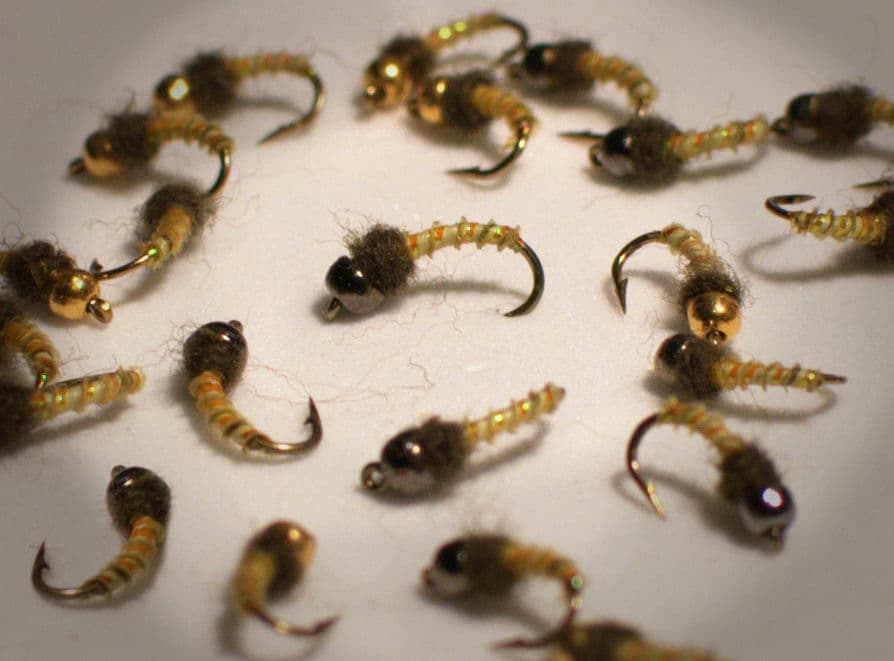
Group photograph of small cream-and-orange Biot Midge pupa patterns with dark thoraxes and varied beadsRepresentative photo · one form in this family

Fly family · guide 55

Midge Patterns by Stage

A stage-first midge family for larva, pupa, emerger, adult, and cluster patterns.

Size range
Often #18–26; local insects vary
Common colors
black, red, cream, olive, brown
Imitates
midge larva, midge pupa, midge emerger, adult midge or cluster
How to recognize it

Midge wording can mean a threadlike larva, wing-padded pupa, film emerger, tiny adult, or visible cluster. Those profiles fish at different depths.

Group photograph of small cream-and-orange Biot Midge pupa patterns with dark thoraxes and varied beads
Representative photo · one form in this family

Biot Midge pupa group

A group view shows normal bead and proportion variation while keeping the same segmented subsurface architecture.

View
stage comparison — segmented subsurface midge group
Color shown
cream biot bodies with orange ribbing and dark thoraxes
Look for
Multiple small curved flies show the segmented body, compact thorax, and bead choices common to one subsurface midge-pupa approach.
Open full-size photo

On the water

Choose the right version.

Use these tips as a starting point. The river, depth, insects, and fish behavior still decide the final presentation.

01

Why it works

  • Midge larvae, pupae, emergers, and adults are small but occupy different depths, so a slender silhouette presented in the correct layer is more useful than one generic midge fly.
  • Curved bodies and segmentation suggest subsurface larvae or pupae, while a soft wing or shuck changes the fly into a film-stage emerger.
  • Small hot spots, beads, and collars can improve visibility or sink rate, but they remain labeled variants rather than natural features shared by every midge.
02

When to use it

  • Year-round in midge-rich water, especially in cold periods or tailwaters when larger aquatic insects are limited.
  • Use the depth of takes, visible shucks, adults, and rise form to decide whether fish are on larvae, pupae, emergers, or the surface.
  • Reduce fly size only when local insects and fish response support it; tiny is not a substitute for reaching the correct lane.
03

How to fish it

  • Dead-drift larvae and pupae at the feeding depth with a light, controlled rig that preserves the fly's slim profile.
  • Raise an emerger toward the film with less weight, a greased leader section, or a controlled lift only when observed behavior supports that transition.
  • Use an adult or cluster dry only for verified surface feeding; the photographed subsurface patterns do not represent that separate job.
04

Mistakes to avoid

  • Using one Zebra Midge image for the lifecycle.
  • Assuming visible adults mean surface feeding.

Make the choice

Choose the form before the color.

A family name is only a starting point. Use the waterline, construction, and observed food to narrow it to the form that fits the river.

  1. Choose the Biot Midge group when a visibly segmented, curved pupa form and small bead variations fit the water.
  2. Choose the exact Zebra Midge for a very small ribbed bead-head profile; its in-hand photograph makes the true scale visible.
  3. Choose the winged black emerger near the film when the emerging wing and suspended posture are more important than a bare pupa silhouette.
  4. Choose the sparse black Buzzer for a slim pupa approach, keeping its green collar labeled; open Griffith's Gnat or another exact adult page when fish are actually on top.

Common variations

Small changes can make a different fly.

Four verified, non-AI photographs compare a segmented Biot Midge group, a Zebra Midge scale view, a winged film emerger, and a sparse black Buzzer. Adult-cluster patterns remain linked but are not visually claimed until the exact pages receive reviewed photography.

Biot Midge pupa group

Small curved segmented pupa forms with visible bead and proportion variation.
Colors shown
cream, orange rib, dark thorax
Weighting
Bead material and size vary across the photographed group.

Zebra Midge

A named small ribbed bead-head pattern shown in-hand for honest scale.
Colors shown
dark body, metallic rib
Weighting
The photographed form has a metal bead.

Black midge emerger

A curved black body and soft emerging wing create a film-stage form.
Colors shown
black, brown wing, chartreuse tag
Weighting
Use little or no additional weight near the film.

Black Buzzer with green collar

A sparse glossy pupa-style form with a small labeled hot spot.
Colors shown
black, green collar
Weighting
The photographed form is unweighted apart from the hook; rig weight sets depth.

Related patterns

Zebra MidgeBlack Beauty MidgeMercury MidgeTop Secret MidgeGriffith's Gnat

How this guide was checked

Fly information and photo sources.

Guide checked on 2026-07-13. Every image has its own source and usage record. Natural insects and hand-tied flies can vary in shape and proportion.

Pattern sources

Orvis NewsHow to Fish Midge Patterns in WinterOrvis NewsHow to Tie a Mercury Midge

Image credits