Technical reviewed side profile illustration of Ray Charles Sowbug showing soft full ostrich-herl body, flat pearl flashback, bright thread head, sparse flattened profileReviewed technical illustration
← Fly Box

Nymph · guide 135

Ray Charles Sowbug

A Bighorn-origin sowbug pattern with a soft ostrich-herl body, pearl flashback, and bright thread head.

Common size
Often #12–18; Orvis demonstrates #16
Colors reviewed
natural gray-tan, pearl back, fluorescent orange head
Imitates
aquatic sowbug, small freshwater isopod
How to recognize it

The reviewed natural form uses one ostrich herl for a full soft body, a flat pearl flashback over the top, and a fluorescent-orange head. Curved-hook, soft-hackle, fire-bead, pink, and gray forms remain labeled variants.

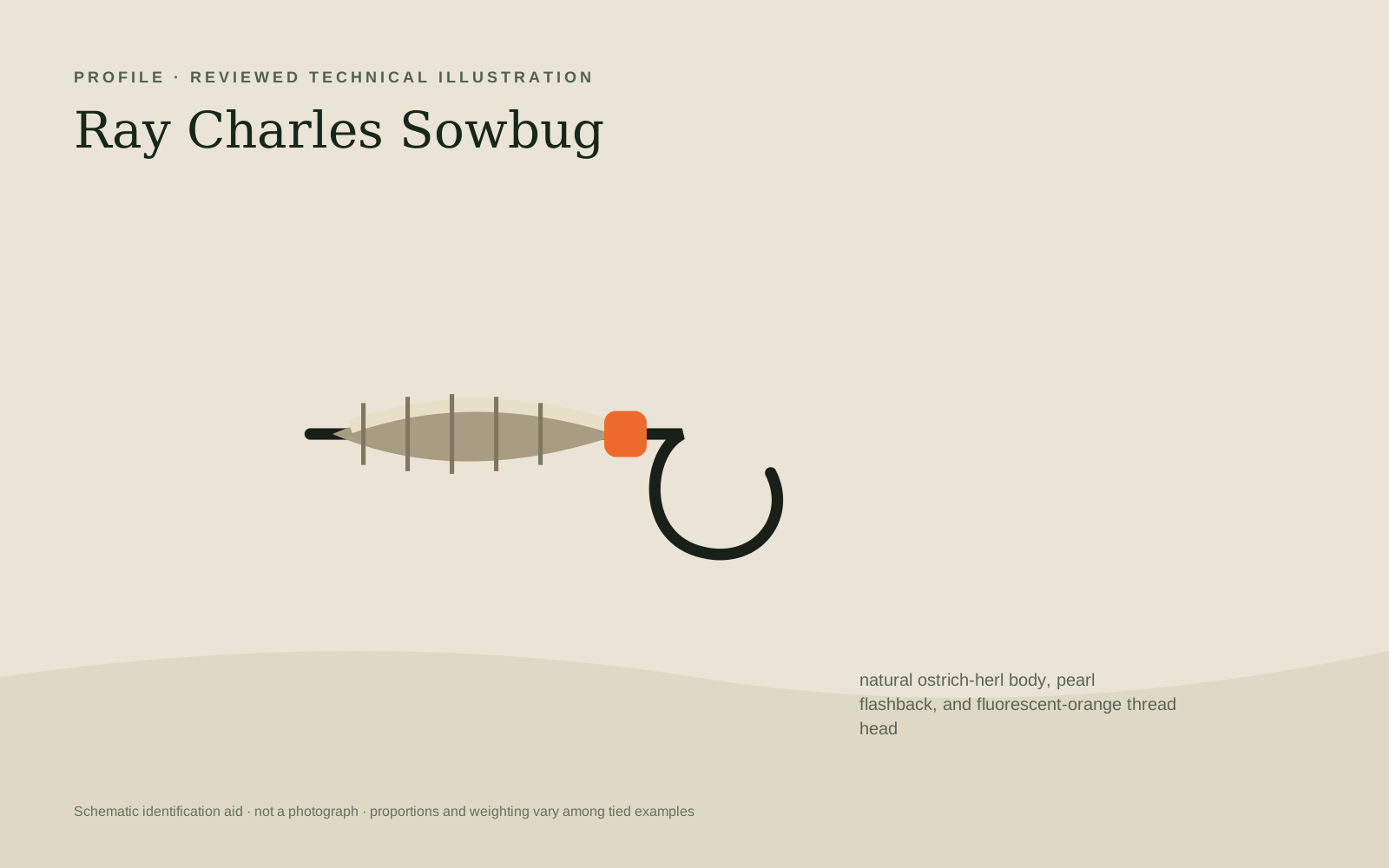
Technical reviewed side profile illustration of Ray Charles Sowbug showing soft full ostrich-herl body, flat pearl flashback, bright thread head, sparse flattened profile
Technical illustration

Ray Charles Sowbug reviewed side profile

A schematic profile emphasizing soft full ostrich-herl body and flat pearl flashback.

View
reviewed side profile
Color shown
natural ostrich-herl body, pearl flashback, and fluorescent-orange thread head
Look for
soft full ostrich-herl body; flat pearl flashback; bright thread head; sparse flattened profile
Open full-size image

On the water

Understand it. Then fish it.

The river, depth, insects, and fish behavior still decide the final presentation. These are reviewed starting points—not a claim about what is happening today.

01

When to use it

  • When the local food form, size, water type, and target depth support the exact pattern or family member.
  • Use the linked river report as seasonal context, then verify what is present before choosing size and weight.
02

How to fish it

  • Start with a natural drift at the depth fish are using; add a controlled lift, swing, or short movement only when the food form supports it.
  • Adjust depth and drift before treating a bead color or hot spot as the deciding factor.
03

Mistakes to avoid

  • Treating every similarly colored fly as Ray Charles Sowbug.
  • Letting a generic size, bead, jig, or dropper label erase the pattern's actual body profile and life-stage cues.

Variant control

Small changes matter.

Three reviewed technical illustrations show the identified profile, construction, and fishing orientation. Hook brand, bead mass, color, size, and regional tying choices remain labeled variables.

Reviewed identified form

The reviewed natural form uses one ostrich herl for a full soft body, a flat pearl flashback over the top, and a fluorescent-orange head. Curved-hook, soft-hackle, fire-bead, pink, and gray forms remain labeled variants.
Colors shown
natural gray-tan, pearl back, fluorescent orange head
Weighting
Bead material, underbody weight, hook orientation, and rig weight determine sink rate; a family name does not.

Related patterns

Sowbug and Cress Bug PatternsScud Fly PatternsPink Squirrel

Review trail

Sources, rights, and limits.

Pattern facts were reviewed on 2026-07-12. Every image has its own rights record; photographed hand-tied flies may still vary slightly in proportion.

Pattern sources

Orvis Learning CenterRay Charles Sow Bug Pattern and Tying InstructionsOrvis NewsA Bighorn Guide's Top Seven Sowbug Patterns

Image credits

BlueStreamFly-owned original technical illustration© 2026 BlueStreamFly · Mountain Brook Run LLCBlueStreamFly-owned original technical illustration© 2026 BlueStreamFly · Mountain Brook Run LLCBlueStreamFly-owned original technical illustration© 2026 BlueStreamFly · Mountain Brook Run LLC