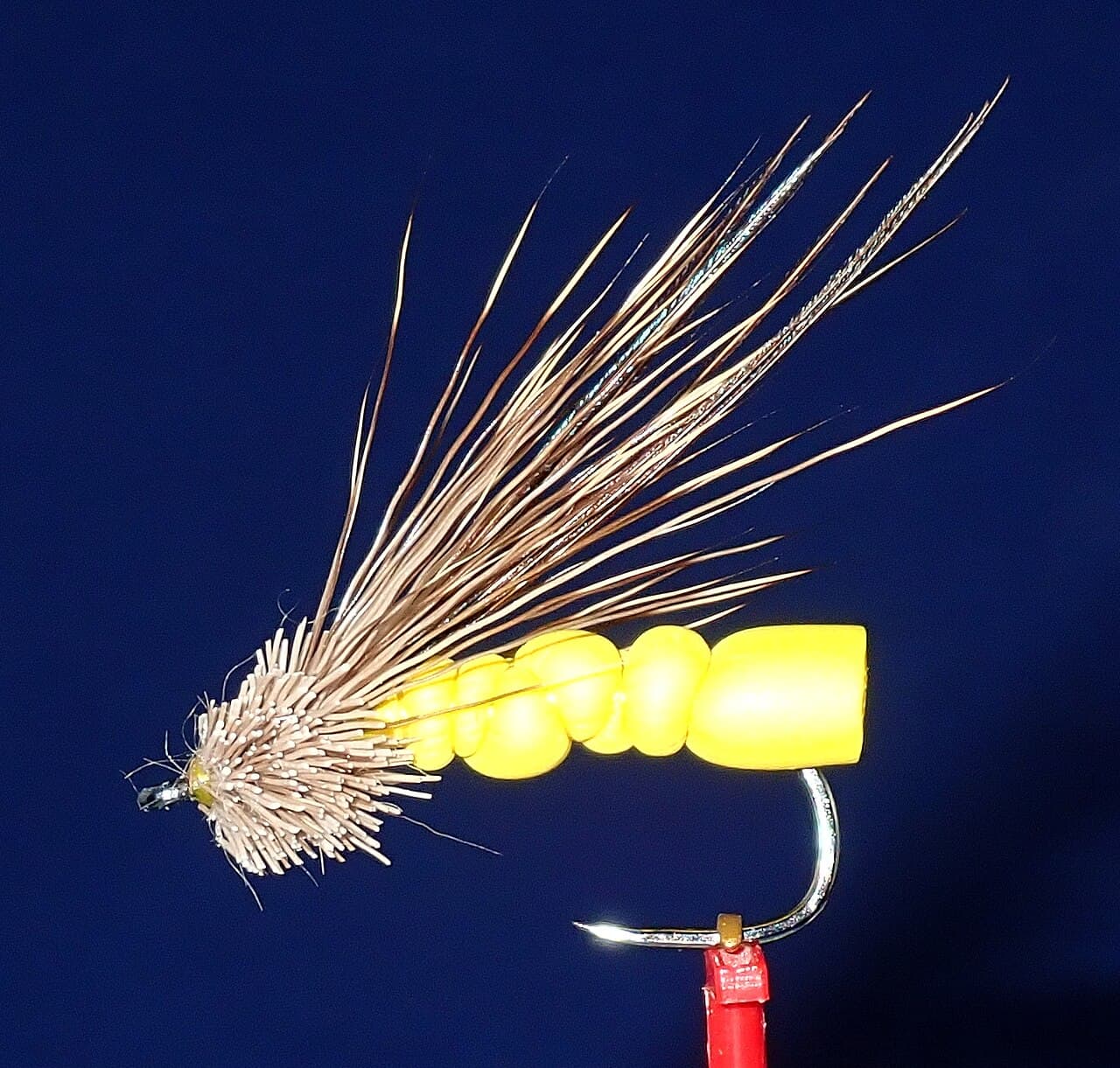
Close photograph of a yellow Foam Hopper representing a large buoyant foam-attractor formRepresentative photo · one form in this family

Fly family · guide 78

Foam Attractor Dry Patterns

A cross-insect family of buoyant foam dries built for visibility, flotation, and a suggestive terrestrial profile.

Size range
Small to large; match the report and dropper load
Common colors
black, tan, olive, yellow, purple, royal
Imitates
general terrestrial, stonefly adult, hopper, large caddis or attractor insect
How to recognize it

Foam attractor describes construction and fishing role, not one exact fly. Body length, wing, legs, post, and waterline distinguish Hippie Stompers, Chubbies, foam ants, and other named designs.

Close photograph of a yellow Foam Hopper representing a large buoyant foam-attractor form
Representative photo · one form in this family

Foam Hopper

Choose the hopper-sized form only when insect scale and bank context support it; foam construction alone does not prove a hopper is present.

View
family comparison — large segmented foam form
Color shown
yellow with natural deer hair
Look for
A large segmented foam body and substantial deer-hair head maximize flotation and visual presence.
Open full-size photo

On the water

Choose the right version.

Use these tips as a starting point. The river, depth, insects, and fish behavior still decide the final presentation.

01

Why it works

  • Closed-cell foam adds flotation and visibility, but body silhouette—not foam alone—determines whether the fly reads as a hopper, ant, beetle, or broad attractor.
  • The same buoyancy can help in broken water or support a modest legal dropper, while size and shape let the angler select a more plausible food profile.
  • A bright post may help the angler see the fly without changing the insect silhouette fish see from below.
02

When to use it

  • In broken water, along grassy or wooded banks, during verified terrestrial activity, or when a visible dry-dropper support fly is appropriate.
  • Choose a hopper-sized form only when seasonal insect size and bank context support it; choose ant or beetle forms for smaller, more compact food.
  • Use the river report as context, then verify natural insect size, wind, shade, cover, and the dropper load before selecting the amount of foam.
03

How to fish it

  • Cast near plausible drop zones and begin with a drag-free drift; add a short restrained twitch only when the selected terrestrial would struggle or kick.
  • Balance hook size, leader, flotation, and any legal dropper so the foam fly retains its intended waterline rather than sinking or twisting the rig.
  • Track the post or top surface, but judge the fly by the body and leg silhouette presented to the fish.
04

Mistakes to avoid

  • Treating foam attractor as one named recipe.
  • Failing to identify the exact pattern shown in a photograph.

Make the choice

Choose the form before the color.

A family name is only a starting point. Use the waterline, construction, and observed food to narrow it to the form that fits the river.

  1. Choose the Foam Hopper for a large segmented body and substantial profile near grassy banks; do not use it merely because it floats well.
  2. Choose the foam ant for two small body lobes and a pinched waist when a compact ant silhouette is plausible.
  3. Choose the foam beetle for a single rounded shell and short-leg footprint without the ant's waist or hopper's long body.
  4. Open the Hippie Stomper, PMX, or Chubby Chernobyl page when that exact named construction is recommended; those patterns are not represented by the three photos here.

Common variations

Small changes can make a different fly.

Three verified, non-AI photographs compare large hopper, small two-lobed ant, and compact rounded beetle constructions. Hippie Stomper, Chubby Chernobyl, and PMX remain linked but are not visually claimed here until their exact photo sets pass review.

Foam Hopper

A large segmented foam terrestrial with a substantial head, wing, and rear-leg impression.
Colors shown
yellow, tan, brown
Weighting
High-floating dry; dropper capacity depends on the exact construction and tackle.

Black foam ant

A small floating terrestrial with two distinct body lobes and a narrow waist.
Colors shown
black, white visibility post
Weighting
Unweighted dry fly.

Black foam beetle

A compact rounded shell with short legs and a visible top post.
Colors shown
black, bright visibility post
Weighting
Unweighted dry fly.

Related patterns

Hippie StomperPMXChubby ChernobylAnt PatternsGrasshopper PatternsBeetle Patterns

How this guide was checked

Fly information and photo sources.

Guide checked on 2026-07-13. Every image has its own source and usage record. Natural insects and hand-tied flies can vary in shape and proportion.

Pattern sources

Orvis NewsTom's Secret Tips for Fishing Terrestrial FliesOrvis NewsPhil's Top 10 Dry Flies for Mountain Streams

Image credits