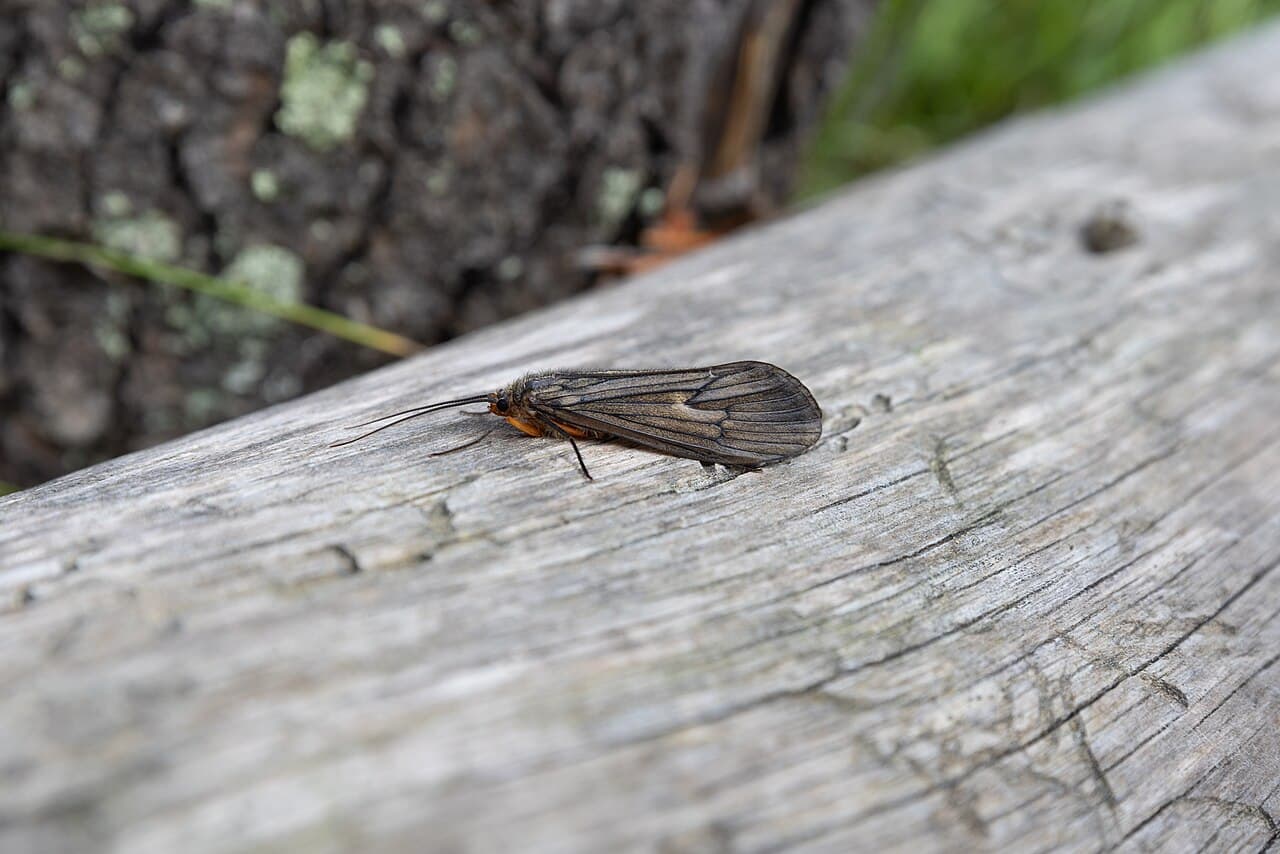
Close field photograph of a natural October Caddis adult resting on a log in YellowstoneRepresentative photo · one form in this family

Fly family · guide 57

October Caddis Patterns

A large fall-caddis family separating larva, pupa, wet or emerger, and adult dry forms.

Size range
Often large caddis sizes; verify locally
Common colors
amber, burnt orange, brown, cream
Imitates
October Caddis larva, October Caddis pupa, October Caddis emerger, adult October Caddis
How to recognize it

October Caddis names a hatch group. Amber or orange pupae, soft-hackle or wet forms, and large tent-wing adults fish at different levels.

Close field photograph of a natural October Caddis adult resting on a log in Yellowstone
Representative photo · one form in this family

Natural October Caddis adult

Natural-insect reference—not an artificial fly. Use it for the adult's tent-wing shape, antennae, and orange underside rather than as a universal pattern recipe.

View
stage comparison — natural winged adult reference
Color shown
dark mottled tent wings with amber-orange underside
Look for
Long antennae, substantial size, and dark tented wings over an orange underside define the natural adult silhouette.
Open full-size photo

On the water

Choose the right version.

Use these tips as a starting point. The river, depth, insects, and fish behavior still decide the final presentation.

01

Why it works

  • The cased larva, rising soft-hackle approach, winged natural adult, and tent-wing dry architecture occupy distinct positions in the lifecycle and water column.
  • The natural adult's substantial dark wing and orange underside explain why color alone is insufficient and why adult silhouettes differ from smaller generic caddis dries.
  • Keeping the Partridge and Orange and Elk Hair Caddis labels visible gives useful presentation examples without fabricating exact-pattern identity.
02

When to use it

  • During a locally established autumn October Caddis period after current reports, cases, shucks, or adults support the stage.
  • Use a larval imitation below, a rising or pupa pattern during ascent, and an adult dry only when adult behavior or fish response makes the surface credible.
  • Verify local Dicosmoecus species and size; the natural references do not prove the same insect occurs on every river page.
03

How to fish it

  • Use the natural cased-larva photograph only for recognition, then dead-drift a correctly sized artificial near the bottom.
  • Fish Partridge and Orange as a named mobile rising approach on a drift, lift, or swing—not as a renamed exact October Caddis pupa.
  • Use the Elk Hair Caddis only to understand tent-wing adult architecture, then select a large correctly colored October Caddis dry for actual surface fishing.
04

Mistakes to avoid

  • Using one orange dry for the lifecycle.
  • Treating a seasonal recommendation as a current hatch.

Make the choice

Choose the form before the color.

A family name is only a starting point. Use the waterline, construction, and observed food to narrow it to the form that fits the river.

  1. Use the natural Dicosmoecus larva to recognize the head, legs, and long portable case; it is not an artificial fly.
  2. Choose Partridge and Orange as one orange soft-hackle presentation for the rise while preserving its exact name.
  3. Use the natural adult to judge antennae, tent-wing shape, size, and orange underside.
  4. Use the Elk Hair Caddis as a clearly labeled adult-form reference only; choose an exact large October Caddis dry when the report names one.

Common variations

Small changes can make a different fly.

Four verified, non-AI photographs compare natural Dicosmoecus larva and October Caddis adult references with a clearly labeled Partridge and Orange rising approach and an Elk Hair Caddis adult-form reference. Neither borrowed artificial is renamed as an exact October Caddis pattern.

Natural Dicosmoecus larva and case

A natural cased-larva reference for the bottom stage.
Colors shown
dark brown case, brown larval head
Weighting
Not applicable; this image shows a natural insect.

Partridge and Orange approach

A named mobile soft hackle used to demonstrate one rising-stage presentation.
Colors shown
orange, mottled gray-brown
Weighting
Unweighted wet fly; leader and rig set depth.

Natural October Caddis adult

A natural adult reference for tented dark wings, antennae, size, and orange underside.
Colors shown
dark mottled wing, amber-orange underside
Weighting
Not applicable; this image shows a natural insect.

Elk Hair Caddis adult-form reference

A named general caddis dry used to explain tent-wing architecture, not an exact October Caddis identity.
Colors shown
pale hair wing, warm brown
Weighting
Unweighted dry fly.

Related patterns

Caddis Patterns by StageCaddis Pupa PatternsLaFontaine Sparkle PupaX-CaddisElk Hair Caddis

How this guide was checked

Fly information and photo sources.

Guide checked on 2026-07-13. Every image has its own source and usage record. Natural insects and hand-tied flies can vary in shape and proportion.

Pattern sources

Orvis NewsHow to Tie an October Caddis PupaOrvis NewsHow to Fish Caddis-Pupa Flies

Image credits