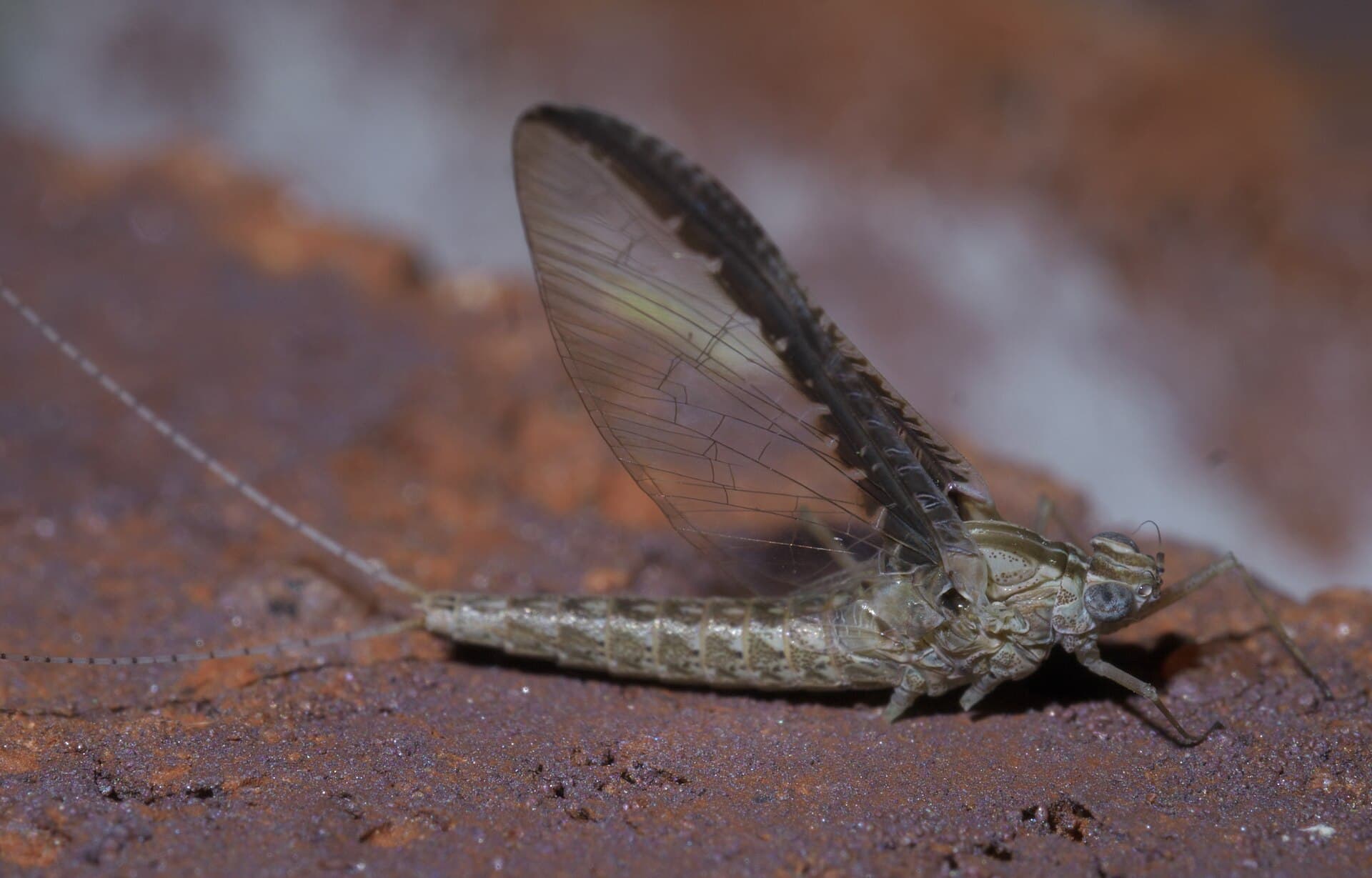
Close side photograph of a natural Callibaetis floridanus adult with mottled gray-brown body, upright dark-edged wings, long forelegs, and two tailsRepresentative photo · one form in this family

Fly family · guide 48

Callibaetis Patterns

A source-bounded stillwater guide showing how real Callibaetis adults vary across three named species, and how to choose stage, size, and presentation without treating one mottled-wing dry as the whole hatch.

Size range
The reviewed adult references range by species and generation; the Fly Fishers International Callibaetis Parachute source recommends carrying #10–16 rather than trusting one size
Common colors
mottled gray-brown, silver-gray, pale amber-brown, clear to boldly bordered wings
Imitates
Callibaetis mayfly stages
How to recognize it

Callibaetis are small minnow mayflies associated with stillwaters, but the fishing label can refer to swimming nymphs, emergers, upright winged adults, or spent imagos. The three natural adults here all carry upright wings and paired tails, yet their wing mottling, eye form, abdomen color, and proportions differ enough that one universal gray-and-mottled recipe would be misleading.

Close side photograph of a natural Callibaetis floridanus adult with mottled gray-brown body, upright dark-edged wings, long forelegs, and two tails
Representative photo · one form in this family

Callibaetis floridanus Adult

Natural Callibaetis floridanus adult—not an artificial fly, a full lifecycle, or current lake evidence. The source identifies this Oklahoma specimen at 9.3 mm; use its mottled wing and body proportions as one species reference, then match the locally observed stage, brood, size, and color.

View
adult-form comparison — source-identified Callibaetis floridanus side profile
Color shown
mottled gray-brown body with dark-banded translucent wings
Look for
The close side profile makes the small minnow mayfly's upright mottled wing, segmented abdomen, large forelegs, and paired tails readable at once.
Open full-size photo

On the water

Choose the right version.

Use these tips as a starting point. The river, depth, insects, and fish behavior still decide the final presentation.

01

Why it works

  • A Callibaetis imitation works when it matches the stage trout are actually taking: a moving nymph below the surface, an emerger in or under the film, an upright adult, or a spent spinner is a different silhouette and presentation problem.
  • All three natural adults show a small mayfly outline with upright wings and tails, but their real wing pattern and body tone vary; that makes size, stage, and observed contrast more useful than a single universal color label.
  • The FFI adult pattern uses a visible parachute and mottled wonder-wing treatment, but the natural gallery remains the identity reference and does not turn that one artificial into the entire Callibaetis lifecycle.
02

When to use it

  • On stillwaters with established Callibaetis and current evidence such as observed swimming nymphs, shucks, winged adults, spent insects, reliable reports, or feeding behavior consistent with the stage.
  • Use a nymph or emerger only when subsurface movement or film activity supports it; move to an upright dry or spinner only when the rise form and insects on the water support that choice.
  • Expect brood and species differences in size and tone. Recheck the lake instead of assuming a date, a previous trip, or one photographed species predicts today's fly.
03

How to fish it

  • Retrieve or suspend a correctly identified swimming-nymph artificial with controlled, stage-appropriate movement; do not fish every Callibaetis nymph as a river dead drift.
  • For emergers and adults, place the fly in the feeding path and preserve a drag-free or gently animated presentation that matches what the naturals are doing at the film.
  • For spinner activity, choose a low spent-wing pattern in the observed body tone and size. The three upright adults in this gallery are not photographs of spent artificial spinners.
04

Mistakes to avoid

  • Presenting three natural adults as photographs of nymph, emerger, and spinner artificial patterns.
  • Treating a Brazilian C. radiatus male or either North American species as proof of the species present on a particular lake.
  • Matching only the dark wing border while ignoring stage, size, movement, waterline, and the fish's rise form.

Make the choice

Choose the form before the color.

A family name is only a starting point. Use the waterline, construction, and observed food to narrow it to the form that fits the river.

  1. Use C. floridanus to study one heavily mottled adult side profile with a gray-brown abdomen, large forelegs, upright wing, and paired tails. The source identifies a 9.3 mm Oklahoma specimen.
  2. Use C. californicus to compare a silver-gray adult with especially bold dark edging on the wing and an embedded one-millimeter scale bar. It is still a natural adult, not a dry-fly recipe.
  3. Use the Brazilian C. radiatus male imago to see a much clearer-winged, amber adult with large reddish eyes. Its geography and sex are disclosed so variation is not mistaken for one North American hatch color.
  4. Choose the fishable artificial only after identifying stage and waterline. Exact nymph, emerger, parachute, dun, and spinner patterns remain unpictured until their own licensed photo sets pass review.

Common variations

Small changes can make a different fly.

Three verified, non-AI photographs compare source-identified natural adults of Callibaetis floridanus, C. californicus, and C. radiatus. They demonstrate genuine species-level variation in wing mottling, body tone, eyes, and proportions without claiming an artificial fly, nymph, emerger, spinner fall, local species, or current hatch.

Natural Callibaetis floridanus adult reference

A source-identified Oklahoma adult showing one mottled gray-brown species form in close side profile.
Colors shown
mottled gray-brown, dark-edged translucent wing
Weighting
Natural adult reference; it supplies no artificial hook, flotation, or local-size instruction.

Natural Callibaetis californicus adult reference

A source-identified silver-gray adult with bold outer-wing mottling and a visible one-millimeter scale bar.
Colors shown
silver-gray, bold black-and-clear wing edge
Weighting
Natural adult reference; the scale bar does not define a universal hook size.

Natural Callibaetis radiatus male imago reference

A source-identified Brazilian male imago showing clearer wings, reddish eyes, long forelegs, and an amber body.
Colors shown
pale amber-brown, nearly clear wing
Weighting
Natural adult reference; no North American occurrence or artificial construction is implied.

Related patterns

Mayfly Patterns by StageSparkle DunRusty SpinnerGeneral Nymph Patterns

How this guide was checked

Fly information and photo sources.

Guide checked on 2026-07-13. Every image has its own source and usage record. Natural insects and hand-tied flies can vary in shape and proportion.

Pattern sources

Fly Fishers InternationalFly of the Month: Callibaetis ParachuteOrvis NewsHow to Match the HatchBugGuide / Iowa State UniversitySpecies Callibaetis floridanus

Image credits