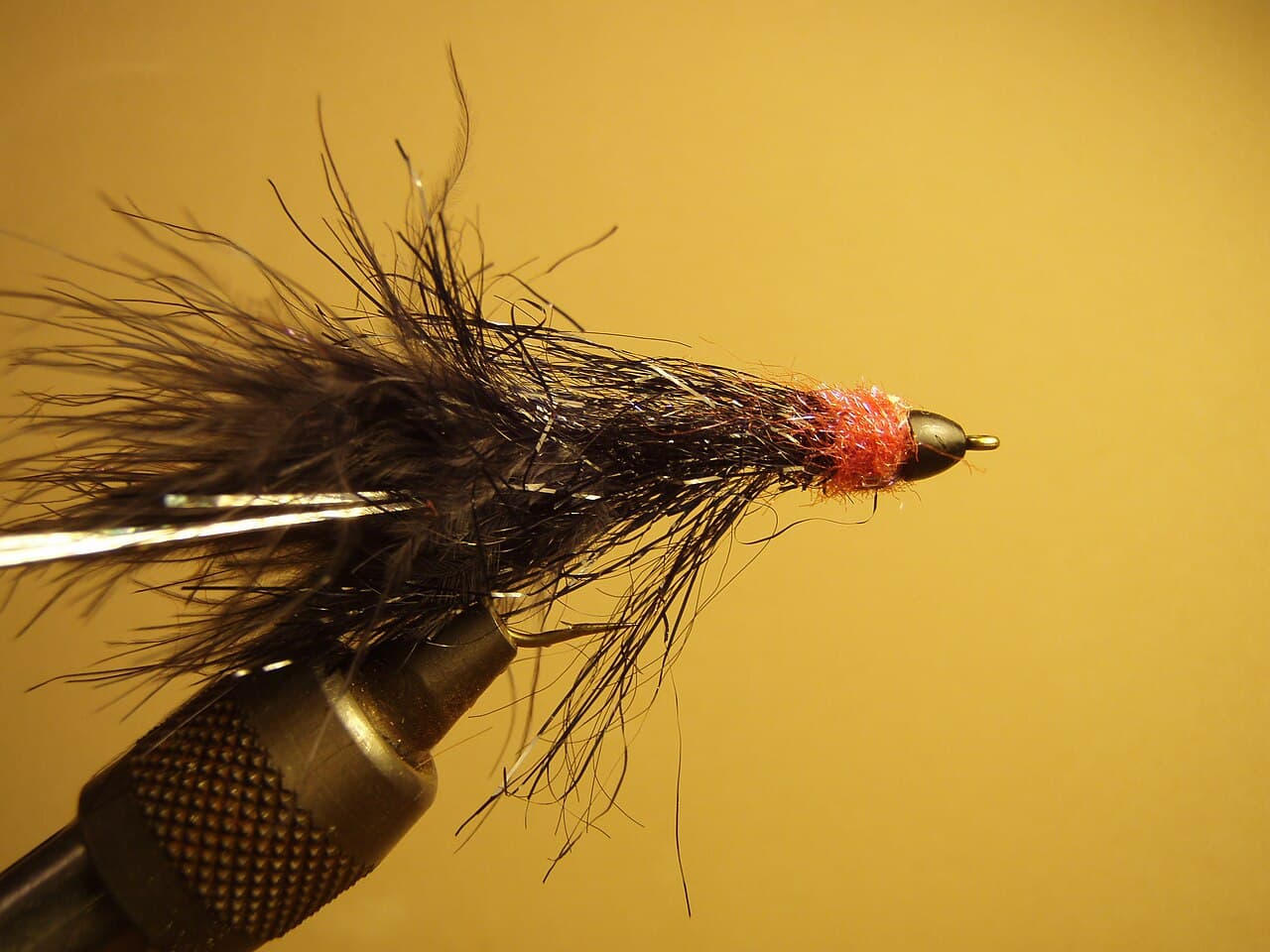
Technical reviewed side profile illustration of Egg-Sucking Leech showing flowing leech tail, dark mobile body, contrasting egg-like head, single reviewed hook formReviewed technical illustration
← Fly Box

Egg Flesh · guide 102

Egg-Sucking Leech

A mobile leech or streamer body finished with a contrasting egg-like head.

Common size
No universal size; match the target species, legal hook rules, tackle, and local forage
Colors reviewed
black and orange, purple and pink, olive and orange
Imitates
leech, egg-and-leech attractor profile
How to recognize it

The reviewed form combines a dark flowing leech body and tail with a distinct hot-orange head. Cone, bead, tube, articulated, rabbit-strip, and woolly-bugger versions must remain labeled rather than treated as one recipe.

Technical reviewed side profile illustration of Egg-Sucking Leech showing flowing leech tail, dark mobile body, contrasting egg-like head, single reviewed hook form
Technical illustration

Egg-Sucking Leech reviewed side profile

A schematic profile emphasizing flowing leech tail and dark mobile body.

View
reviewed side profile
Color shown
black mobile leech body with a hot-orange egg head
Look for
flowing leech tail; dark mobile body; contrasting egg-like head; single reviewed hook form
Open full-size image

On the water

Understand it. Then fish it.

The river, depth, insects, and fish behavior still decide the final presentation. These are reviewed starting points—not a claim about what is happening today.

01

When to use it

  • Only where an egg, flesh, or spawning-food presentation is legal, ethical, and biologically plausible.
  • Use the linked river report as a planning lead, then verify current regulations and local conditions before choosing the fly.
02

How to fish it

  • Use the minimum legal weight and depth adjustment needed for a natural drift; the fly should be taken voluntarily in the mouth.
  • Change depth, angle, speed, or pause length before assuming color alone is the problem.
03

Mistakes to avoid

  • Treating every similarly colored fly as Egg-Sucking Leech.
  • Using a report label as permission to fish through closures, spawning fish, redds, restricted water, or a prohibited rig.

Variant control

Small changes matter.

Three reviewed technical illustrations show one identified form, its construction, and its fishing orientation. Hook style, size, color, weighting, trailer-hook system, and local legal status remain labeled variables.

Reviewed identified form

The reviewed form combines a dark flowing leech body and tail with a distinct hot-orange head. Cone, bead, tube, articulated, rabbit-strip, and woolly-bugger versions must remain labeled rather than treated as one recipe.
Colors shown
black and orange, purple and pink, olive and orange
Weighting
Weight, line density, hook system, and current determine depth; construction alone does not.

Related patterns

Leech PatternsEgg Fly PatternsTube Fly Patterns

Review trail

Sources, rights, and limits.

Pattern facts were reviewed on 2026-07-12. Every image has its own rights record; photographed hand-tied flies may still vary slightly in proportion.

Pattern sources

OrvisAlaska Fly Fishing Gear GuideOrvis NewsFive Flies for Winter Steelhead

Image credits

BlueStreamFly-owned original technical illustration© 2026 BlueStreamFly · Mountain Brook Run LLCBlueStreamFly-owned original technical illustration© 2026 BlueStreamFly · Mountain Brook Run LLCBlueStreamFly-owned original technical illustration© 2026 BlueStreamFly · Mountain Brook Run LLC