Wyoming / West
Snake River
A Jackson Hole and Grand Teton Snake River report built around cutthroat conservation, float logistics, verified RiverReports flow, and official USGS and NPS sources.
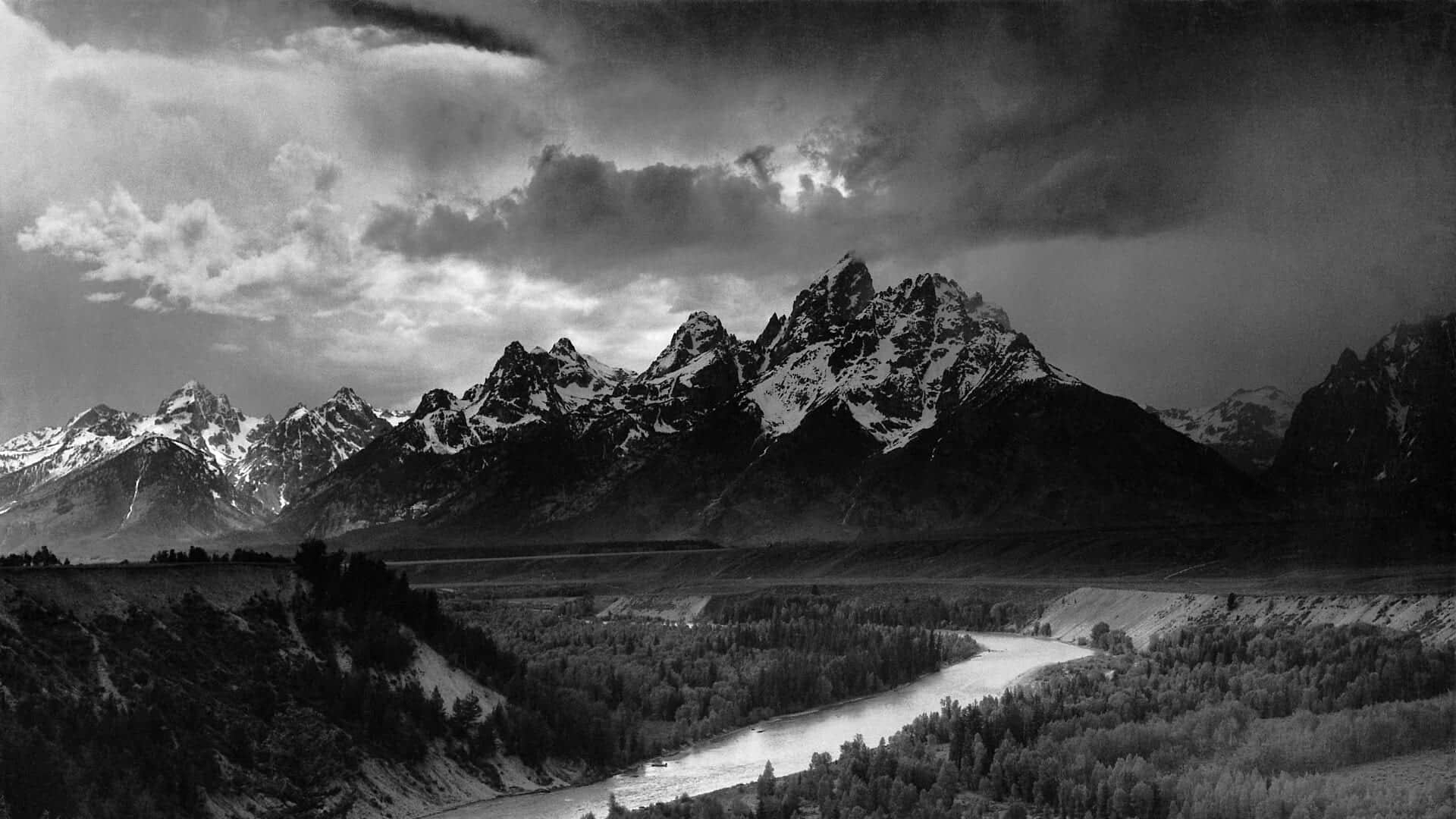
Image: Adams The Tetons and the Snake River / Public domain / Ansel AdamsFishability now: Snake River fishability today
GreatData confidence: High96/100
Fishable now because Moran gauge is stable, weather is mild, and no public alert is active.
Flow observed
5:45 PM UTC
Weather observed
5:00 PM UTC
Score calculated
6:12 PM UTC
Why this rating
Flow
Water temperature
Public alerts
Next 6-12 hours
Hold
Stable live data supports staying with the plan, but recheck the gauge and forecast before leaving.
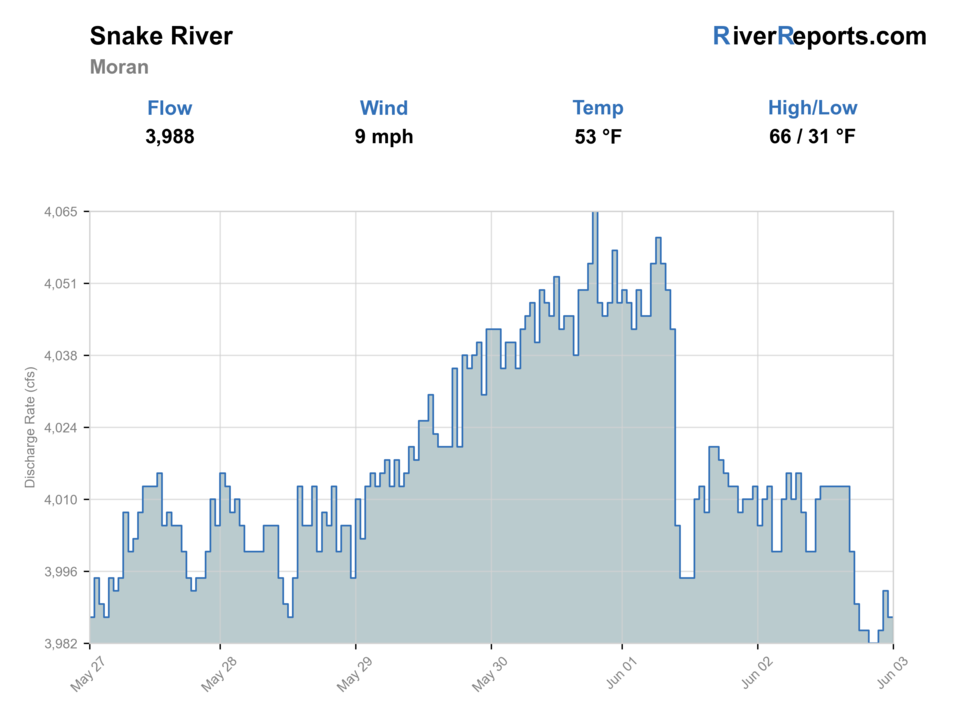
USGS flow
3,980 cfs
Current trend: flow stable, so weather, temperature, and access checks drive the next change.
More planning details: flies, flow bands, and live source checks
Fish it today
Start here
Choose the section before you rig: Moran and Jackson Lake Dam for upper flow context, Grand Teton reaches for park-rule and side-channel planning, and Jackson Hole canyon or downstream reaches only after you confirm boat ramps, takeouts, and non-park rules.
Best flow clue
Use the Moran trend as the trip gate. Stable clear flows with manageable wind are the best dry-fly window; higher releases, muddy tributary color, or sharp wind shifts should push the day toward a safer float, a short scout, or another river.
Skip trigger
Skip the day when the shuttle is uncertain, sweepers or braids are beyond your rowing ability, afternoon wind is building beyond safe boat control, or conservation-minded fish handling is unlikely in warm bright conditions.
Flow decision bands
Stable Moran trend
Stable Moran flow with manageable wind is the best cutthroat and float-planning signal.
Launch before flies
Choose the launch, takeout, braid, or bank plan before picking dries or streamers.
Wind, sweepers, or rising flow
Wind, wood, fast rises, or unfamiliar braids can make a fishable river a poor trip.
Park cutthroat care
Grand Teton rules and native cutthroat handling should drive the plan before harvest or target assumptions.
USGS flow
3,980 cfs
Current trend: flow stable, so weather, temperature, and access checks drive the next change.
Live USGS flow
3,980 cfs / stable
Live NWS forecast
60F / Sunny
Live water temperature
51F from USGS
No NWS alert flag
No active NWS alert was returned for this forecast point.
RiverReports has a verified Snake River at Moran page; USGS 13011000 remains the official backing source.
Grand Teton and downstream rules are not identical, so know which reach you are fishing.
Cutthroat handling and identification matter more than generic trout harvest language.
Braided channels, wind, sweepers, and cold water make float planning serious.
Editorial review
How this report is maintained
This report starts with official regulation, access, flow, weather, and public-river sources, then adds practical planning guidance for anglers.
Byline
BlueStreamFly editorial desk
Reviewed by
BlueStreamFly source review
Maintained by
BlueStreamFly
Last material review
2026-06-01
Report confidence
Good confidence
87/100
Good confidence: Grand Teton fishing rules, Snake River cutthroat context, RiverReports and USGS Moran flow, Rivers.gov background, weather coverage, licensed media, and route-specific float guidance support the page. Confidence is moderated by reach-to-reach access differences, boating logistics, wind, sweepers, and braided-channel hazards.
Regulations
Grand Teton fishing rules provide the clearest official legal anchor for the page's upper Wyoming scope.
Access
Park and route guidance support launch and access planning, but exact takeouts, braids, sweepers, and closures need current confirmation.
Flow and weather
RiverReports, USGS 13011000 near Moran, and the National Weather Service point support live flow and weather decisions.
Fishing usefulness
The page now separates float-versus-wade choices, cutthroat handling, wind timing, channel hazards, launch logistics, and backup-water decisions.
Fishability dashboard and source review
2026-06-01 / material content or source review
Grand Teton fishing rules, Snake River cutthroat conservation context, RiverReports and USGS Moran flow support, Rivers.gov background, National Weather Service data, and route-specific media-credit sources were checked before updating the current-fishability decision layer.
2026-06-01
Updated Snake River to the current fishability-page standard with Moran flow bands, float-and-wade access cards, backup cues, stable fishability SEO, and confidence signals.
2026-05-28
Added a page-specific report-confidence meter after rechecking park-rule coverage, Moran flow support, float-safety planning, and the access cautions that still vary by launch, braid, and reach.
2026-05-25
Initial source-reviewed report published with flows, weather, hatches, flies, tactics, access, regulations, and FAQs.
Angler planning edge
Local details that change the plan
Best for
Cutthroat-focused summer dry-fly days when wind and visibility cooperate, Float trips with a defined shuttle and a conservative big-river safety plan, Trips where Grand Teton and Jackson Hole logistics matter as much as fly choice, Comparing a famous mainstem option against smaller Wyoming or Idaho backups
Wade or float
Treat the Wyoming Snake as a float-first page. Wade only when you are working known side channels, gravel bars, or soft banks at safe flows, because the main current, braids, and cold water punish casual mid-river decisions.
Best flows
Use the Moran trend as the trip gate. Stable clear flows with manageable wind are the best dry-fly window; higher releases, muddy tributary color, or sharp wind shifts should push the day toward a safer float, a short scout, or another river.
When to skip
Skip the day when the shuttle is uncertain, sweepers or braids are beyond your rowing ability, afternoon wind is building beyond safe boat control, or conservation-minded fish handling is unlikely in warm bright conditions.
Local plan
Choose the section before you rig: Moran and Jackson Lake Dam for upper flow context, Grand Teton reaches for park-rule and side-channel planning, and Jackson Hole canyon or downstream reaches only after you confirm boat ramps, takeouts, and non-park rules.
Pressure
Popular boat launches and scenic bank water see the most pressure in summer. Early launches, weekday floats, and fishing overlooked bank structure between famous landmarks usually beat chasing the first obvious seam.
Access nuance
One Snake trip can cross park, state, county, and forest access expectations. Do not assume a map pin, roadside turnout, or gravel bar gives the same legal launch or bank-fishing rights in every reach.
Backup water
If wind, flows, or boat logistics make the Snake a poor call, pivot to the Wind River for a simpler upper-basin wade day or to the Shoshone for a different dam-influenced trout plan.
About the river
Setting, character, and why it fishes the way it does.
The Snake River leaves Jackson Lake and runs through Grand Teton National Park, Jackson Hole, and the canyon country downstream. It is one of the best-known cutthroat rivers in the Rockies.
This page is scoped to Wyoming, not the Idaho South Fork or Henry's Fork. Park, state, forest, and county access rules can all matter on the same trip.
Most anglers should think in float sections and safety checks first, then fish banks, side channels, riffles, and dry-fly water after the route is clear.
Target species
Snake River cutthroat trout
The signature native trout; release and identification rules should be checked carefully.
Mountain whitefish
Native fish that often eat nymphs in riffles and seams.
Rainbow trout
Nonnative or hybrid concerns can affect rules; identify fish carefully.
Brown trout
Possible in parts of the system, especially outside the park context.
Reading the water
Stable clear flow
Best for dries, dry-droppers, and bank-focused cutthroat fishing.
High release
Favor boat fishing from skilled rowers and avoid casual wading.
Cold early season
Nymph soft seams and slower water until fish look up.
Windy afternoons
Use larger dry-dropper rigs, sheltered banks, or shorter floats.
Best seasons
Spring
Cold water and runoff require flow and clarity checks.
Summer
Prime dry-fly and terrestrial season when flows and temperatures cooperate.
Fall
Clearer water, cooler weather, and fewer crowds can improve careful fishing.
Winter
Limited windows; weather, ice, and access narrow the plan.
Preferred flow source
Snake River at Moran
RiverReports is the preferred chart source when coverage exists. When a matching USGS gauge exists, keep it open as the official backstop for station data and current hydrograph context.

USGS data chart
Official USGS trend
Streamflow over the latest USGS reporting window.
Latest
3,980 cfs
Jun 3, 5 PM UTC
Weather
River weather report
Weather can change wading safety, road access, water temperature, hatches, and the best time of day to fish.
Live forecast loads as you reach this section
This keeps the report fast while still using the official National Weather Service forecast point.
Hatches and flies
Hatch chart and fly picks
March to April
Midges, little black stones, early BWOs, and cold-water nymph windows
Zebra midge, black stonefly, BWO emerger, pheasant tail, small perdigon
May to June
Runoff edges, salmonflies where present, caddis, PMDs, and Green Drakes on some water
Stonefly nymph, Pat's rubber legs, PMD emerger, elk hair caddis, green drake
July to September
Caddis, PMDs, terrestrials, small olives, ants, beetles, and hopper banks
Chubby Chernobyl, hopper, ant, beetle, X-caddis, small parachute Adams
October to February
BWOs, midges, October caddis in places, streamers, and slow winter nymphing
BWO emerger, midge pupa, October caddis pupa, sculpin, black woolly bugger
Dry flies
Chubby Chernobyl, parachute Adams, PMD, BWO, elk hair caddis, ant, beetle, hopper
Use when trout are looking up, when a dry-dropper needs a visible point fly, or when summer banks fish well.
Nymphs
Pat's rubber legs, pheasant tail, perdigon, hare's ear, zebra midge, caddis pupa
Use during cold water, runoff edges, bright afternoons, or when trout are holding in deeper seams.
Streamers
Sculpin, sparkle minnow, olive bugger, black leech, small articulated baitfish
Use around banks, undercuts, structure, and safe stained-water windows.
Tactics
How to fish it
Use foam dry-droppers along banks and side-channel seams when cutthroat are looking up.
Nymph slower troughs during cold or high water instead of forcing dries.
Float anglers should plan takeouts, hazards, and wind before worrying about fly changes.
Keep fish wet and handle cutthroat quickly, especially during warm afternoons.
Do not apply South Fork Idaho flow or access assumptions to the Wyoming Snake.
Rigging
Rod, leader, and setup notes
A 5 or 6-weight is the best all-around rod for dries, wind, and dry-dropper rigs.
Carry 3X to 5X tippet, larger foam dries, small nymphs, and a few streamers.
Boat anglers need PFDs, spare layers, dry bags, and a realistic shuttle plan.
Wading anglers should use a staff and avoid braided side channels when flows are rising.
Access
Access and planning notes
Moran gauge
Upper Snake live trendWade / float / trail
RiverReports / USGS gauge / float context
When to pick it
Start here when flow and weather decide whether a float, bank, or wade plan is realistic.
Caution
The gauge does not settle launch closures, sweepers, or braid-specific hazards.
Grand Teton launches
Float logisticsWade / float / trail
Launch / takeout / boat
When to pick it
Use these when shuttle, weather, boat control, and park rules all line up.
Caution
Reach-specific hazards and changing channels need current local checks.
Braided banks and side channels
Selective wade or bank planWade / float / trail
Bank / wade scout
When to pick it
Pick this only when footing, access, and cutthroat handling conditions are favorable.
Caution
Braids can isolate anglers quickly if flow rises or channels shift.
Grand Teton, Wyoming, forest, and county rules can all affect one trip.
Boating permits, AIS requirements, and river hazards are part of the fishing plan.
RiverReports is used for the verified flow display, not for copied report text.
Regulations
Check before fishing
Check Grand Teton National Park rules and current Wyoming Area 1 regulations before fishing the Snake. Cutthroat-release, artificial-fly/lure, and boating rules vary by reach.
Primary base
Moran, Moose, Jackson, and Wilson
Best day style
Float-first big river with park, state, and forest-rule checks
Check first
Grand Teton rules, Wyoming Area 1 rules, boating/AIS requirements, Moran flow, weather, and river hazards
Safety
Cold water, braided channels, sweepers, wind, wildlife, and park/state access changes
Gear
Helpful gear for this water
4 to 6-weight rod
Covers dries, nymphs, small streamers, and most trout-water wind.
Thermometer
Check water temperature before trout handling in summer or thermal water.
Wading staff
Western rivers and tailwaters have pushy seams, slick rocks, and sudden drop-offs.
Rain shell and layers
Mountain weather can change quickly even when the forecast looks mild.
Nearby water
Other water to research
Backup logic
High or rising water
Delay the float or compare Madison in Yellowstone, Yellowstone River in the park, or Wind River.
Wind
Avoid exposed float plans and use protected banks or another route.
Launch or shuttle issue
Do not launch without a confirmed takeout, weather, and boat-control plan.
Heat or handling concern
Fish cool windows and keep native cutthroat releases quick.
Wind River
A Dubois-area trout plan when Jackson Hole wind or flow is poor.
Shoshone River
A Cody-area dam-controlled trout river with different access.
Henry's Fork of the Snake River
A technical Idaho comparison with different flows and hatches.
FAQ
Fast answers
Is Snake River fishable today?
Snake River looks very fishable right now. The live score is 96/100, based on current flow, weather, public alerts, and the report's planning context. Recheck the linked gauge and forecast before leaving because conditions can change quickly after rain, heat, access changes, or flow swings.
What flow is best for Snake River?
Use the Moran trend as the trip gate. Stable clear flows with manageable wind are the best dry-fly window; higher releases, muddy tributary color, or sharp wind shifts should push the day toward a safer float, a short scout, or another river.
When should I skip Snake River?
Skip the day when the shuttle is uncertain, sweepers or braids are beyond your rowing ability, afternoon wind is building beyond safe boat control, or conservation-minded fish handling is unlikely in warm bright conditions.
Is Snake River safe to wade right now?
The fishability score is not a wading guarantee. Wade only where your chosen access has safe edges, clear footing, legal entry, and no forced crossings; high, rising, stained, or storm-affected water should be treated conservatively.
What should I check before fishing Snake River?
Grand Teton rules, Wyoming Area 1 rules, boating/AIS requirements, Moran flow, weather, and river hazards
Which flow should I use for Snake River?
Use the verified RiverReports Snake River at Moran chart for quick display and USGS 13011000 near Moran as the official source of truth.
Where should I start on Snake River?
Start with Moran, Moose, or Grand Teton reach planning, then confirm park, state, boating, AIS, and takeout rules before launching.
Can I wade Snake River?
Some side-channel and edge wading is possible at safe flows, but the Snake is mostly a float-first river with cold water and braided hazards.
Sources
Source set for this report
Reviewed 2026-06-01