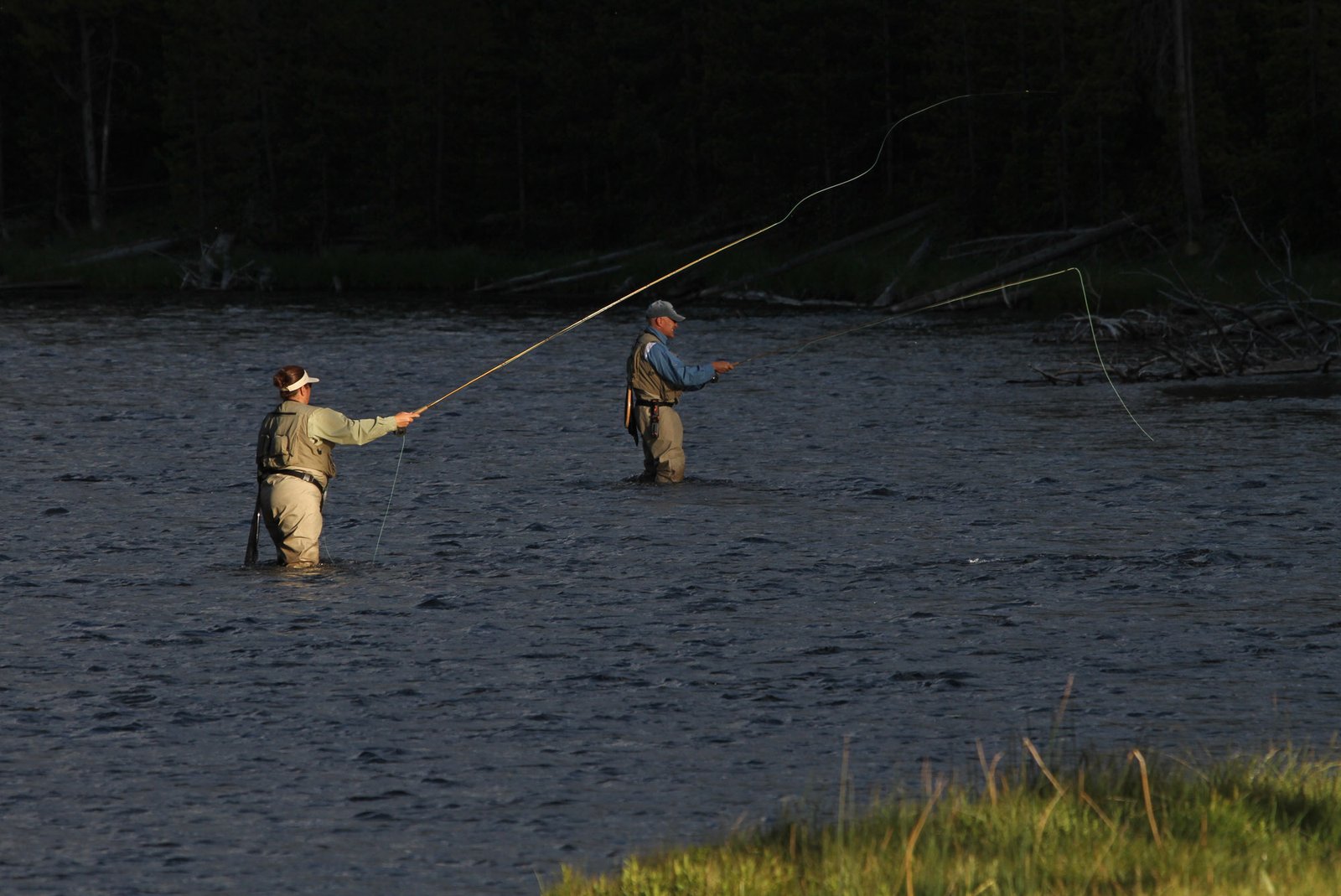
Start with gusts, not just average wind
The average wind number can look fishable while the gusts make casting, rowing, wading, or walking under trees a bad plan. Check the hourly forecast for both wind speed and gusts before you drive.
Use the wind as a trip signal, not a pride test. A calm angler with a short cast and a protected bank will fish better than an angler trying to force long casts across open water.
National Weather Service wind alerts are safety products, not fly-fishing tips. If an advisory or warning is active for your area, treat that as a reason to simplify hard or postpone the trip.
| Wind read | Fly fishing decision | First move |
|---|---|---|
| Light wind or soft breeze | Usually fishable if flow, temperature, and access also look good. | Fish the normal plan, but note which bank gives the cleanest casting angle. |
| Steady 10 to 15 mph | Still fishable for many anglers, but long casts and tiny dries get harder. | Shorten the target distance, turn your body, and choose water with room behind you. |
| Steady 15 to 20 mph with higher gusts | Plan around wind first. This is often a protected-bank, nymph, streamer, or short dry-dropper day. | Pick a sheltered reach and use a rig that turns over without hero casting. |
| Strong gusts, hard crosswind, or wind in your casting shoulder | Fish only if you can keep the hook away from yourself and others. | Change banks, use an off-shoulder or backcast delivery, or stop casting. |
| Wind advisory, high wind warning, falling limbs, rough boat water, or nearby storms | Do not force the fishing plan. | Leave, wait, or choose a safer non-exposed option. |
These are angler planning bands, not official safety limits. Weather warnings and local hazards always win.
Choose water that makes the wind smaller
A windy day can still fish well when the river gives you cover. Canyons, wooded banks, bends, high banks, and smaller side channels can turn an open-valley problem into a short controlled cast.
The best windy-day water is not always the famous run. It is the water where you can stand safely, keep the fly away from your body, and make repeatable casts without fighting every drift.
A sheltered bend can help, but avoid unstable trees, falling limbs and routes with no easy exit. Shelter from wind is not shelter from lightning.
Rig for turnover before casting harder
Wind punishes rigs that are too long, too limp, too light, or too bulky for the cast. The fix is usually a cleaner setup, not more force.
Start by shortening the leader to the job, using the heaviest tippet that still gives a good drift, and choosing a fly that will turn over. If a two-fly rig keeps tangling, simplify before you blame the wind.
Casting harder often opens the loop and makes the problem worse. A compact loop, straight path, clean stop, and shorter target are more useful than trying to punch every cast.
| Problem | Rig change | Why it helps |
|---|---|---|
| Leader collapses before the fly lands | Shorten the leader or step up one tippet size if the fly and water allow it. | A cleaner leader turns over with less slack for the wind to grab. |
| Tiny dry will not reach the target | Move closer, fish a shorter seam, or use a dry-dropper only where the drift stays clean. | Distance is usually the problem before pattern choice is the problem. |
| Indicator rig piles up | Use a smaller indicator, lighter split shot, or a shorter high-stick lane. | Less air resistance gives you a safer and cleaner cast. |
| Streamer blows sideways | Use a compact profile and cast from an angle that lets the wind help the swing. | A sparse fly tracks better than a bulky fly in gusts. |
| Euro or tight-line rig bows | Stay closer, keep tension from the start, and avoid slack during the lead. | A contact rig only works when wind does not put a belly in the system. |
The windy-day rig should be easy to cast safely at short range.
Keep the hook away from you
The most important windy-day casting rule is simple: keep the fly on the downwind side of your body. If the wind is pushing the hook toward you, change something before you cast again.
Changing banks is often the cleanest fix. If that is not possible, use an off-shoulder cast, a backcast delivery, a lower sidearm cast that moves the fly away from you, or a water-loaded cast where the water gives the rod a safer start.
Wear eye protection, pinch barbs where legal, and give other anglers more room. The day is not worth a hook in the face because the reach looked too good to skip.
- Stop false casting over your target when gusts are changing direction.
- Do not cast weighted flies near another person in a hard crosswind.
- Use shorter casts when the wind is at your face or shoulder.
- Move your feet before you make a risky casting stroke.
- If you cannot keep the fly away from your body, stop fishing that setup.
Set a stop trigger before you leave
Wind should not be read alone. A windy day with cool water, stable flow, and safe access may only need a smarter reach. A windy day with rising water, lightning risk, warm trout water, or rough boat conditions should move you to a safer plan.
Leave for falling limbs, unsafe gusts, rough boat water or approaching storms. A better cast does not fix a weather hazard.
Before you drive, write the plan in one sentence: the reach, the protected bank, the rig, the backup, and the stop trigger.