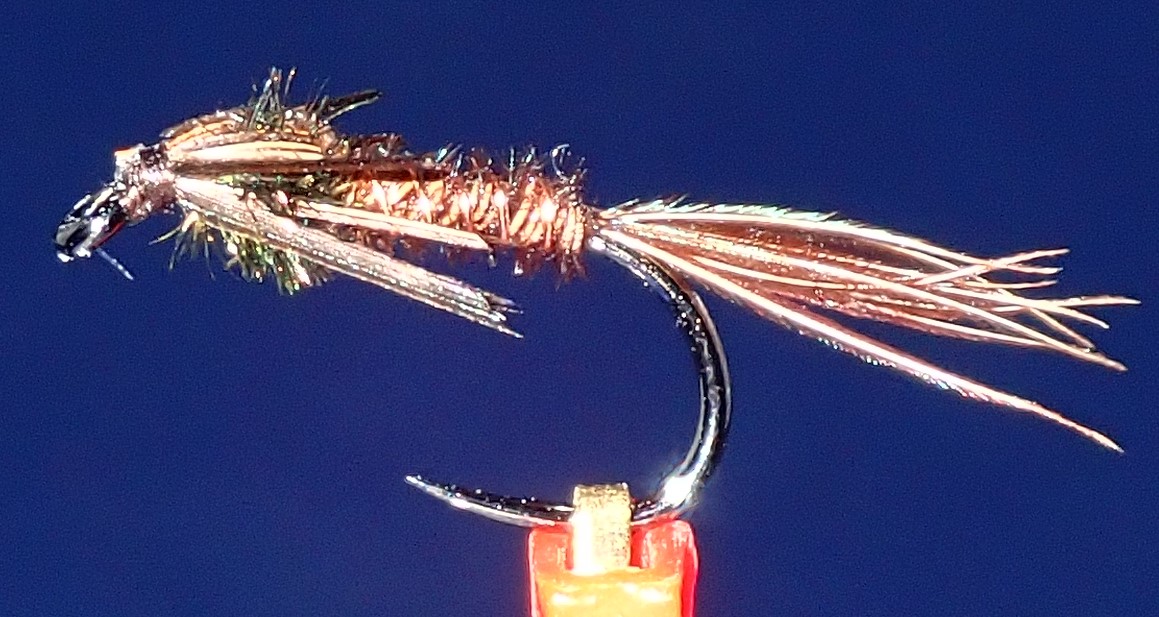
Choose by the release plan
The simple choice is this: barbless for clean release, barbed only when the rule allows it and you accept a slower unhooking step.
That does not mean barbed hooks are always wrong or barbless hooks are magic. Hook location, water temperature, fight time, air exposure, net choice, and your handling matter too.
For normal trout catch and release, the easiest habit is to pinch the barb before the fly gets wet. It is faster than deciding after a fish is already in the net.
| Situation | Best hook choice | Why |
|---|---|---|
| Catch-and-release trout water | Barbless or pinched barb | Quicker hook removal usually means less handling and less air exposure. |
| Water signed single barbless or barbless only | Follow that exact rule | Do not use a barbed fly just because it is the only size in the box. |
| Keeping a legal fish for the table | Barbed may be acceptable if the rule allows | The release-speed reason is weaker, but regulations still control. |
| Teaching a beginner or fishing tight brush | Barbless or pinched barb | It is also easier to remove from a sleeve, landing net, hat, or skin. |
The hook decision starts with rules and release intent, not with the fly pattern.
Know the real tradeoff
Barbless hooks are easier to remove. NOAA Fisheries includes barbless hooks or crimped barbs in catch-and-release gear that can improve survival odds and make hook removal easier. Minnesota DNR gives the same plain trout advice: use barbless hooks because they make releasing trout easier.
The tradeoff is landing efficiency. A California trout study of artificial flies found that anglers landed a lower share of hooked trout on barbless flies than on barbed flies. That does not make barbless a bad choice; it just means you should expect the hook to reward steady pressure.
Do not oversell one variable. Trout survival depends on the whole release: land the fish quickly, keep it wet, remove the hook fast, and cut the line if a deep hook cannot be removed easily.
Pinch before fishing, not in the net
If the fly has a barb, crush it before the first cast. Use smooth forceps, needle-nose pliers, or a vise jaw, and press the barb flat against the hook shank.
Check it with a fingernail or a small piece of fabric. If it still catches, press again. The point should slide without snagging.
Do not overwork tiny hooks until the point bends open. If a hook looks cracked, rolled, or weak after crushing the barb, replace the fly.
- Pinch at home when you organize boxes.
- Recheck streamers and older flies; they are easy to miss.
- Carry forceps where you can reach them one-handed.
- Retire any hook that opens, cracks, or loses its point.
Keep fish pinned without the barb
Most barbless losses happen during slack. Keep a bent rod, use side pressure, and move your feet instead of pulling a trout straight upstream through heavy current.
Use enough tippet to land the fish promptly. Going too light can turn a conservation choice into a long fight, especially when water is warm.
Warm water, spawning fish or unsafe access are reasons to change water or stop. A barbless hook does not make poor conditions suitable for fishing.
| Problem | Fix |
|---|---|
| Fish shakes off during jumps | Lower the rod angle and keep steady pressure instead of high-sticking. |
| Fish comes off near the net | Keep the fish upstream or beside you, then slide it into the net without a long final lift. |
| You keep playing trout too long | Use stronger tippet when fly size and conditions allow, then release quickly. |
| Hook removal still takes too long | Use forceps, keep the fish in water, and cut the line on a deep hook. |
Barbless works best when line control and fish handling are part of the same plan.