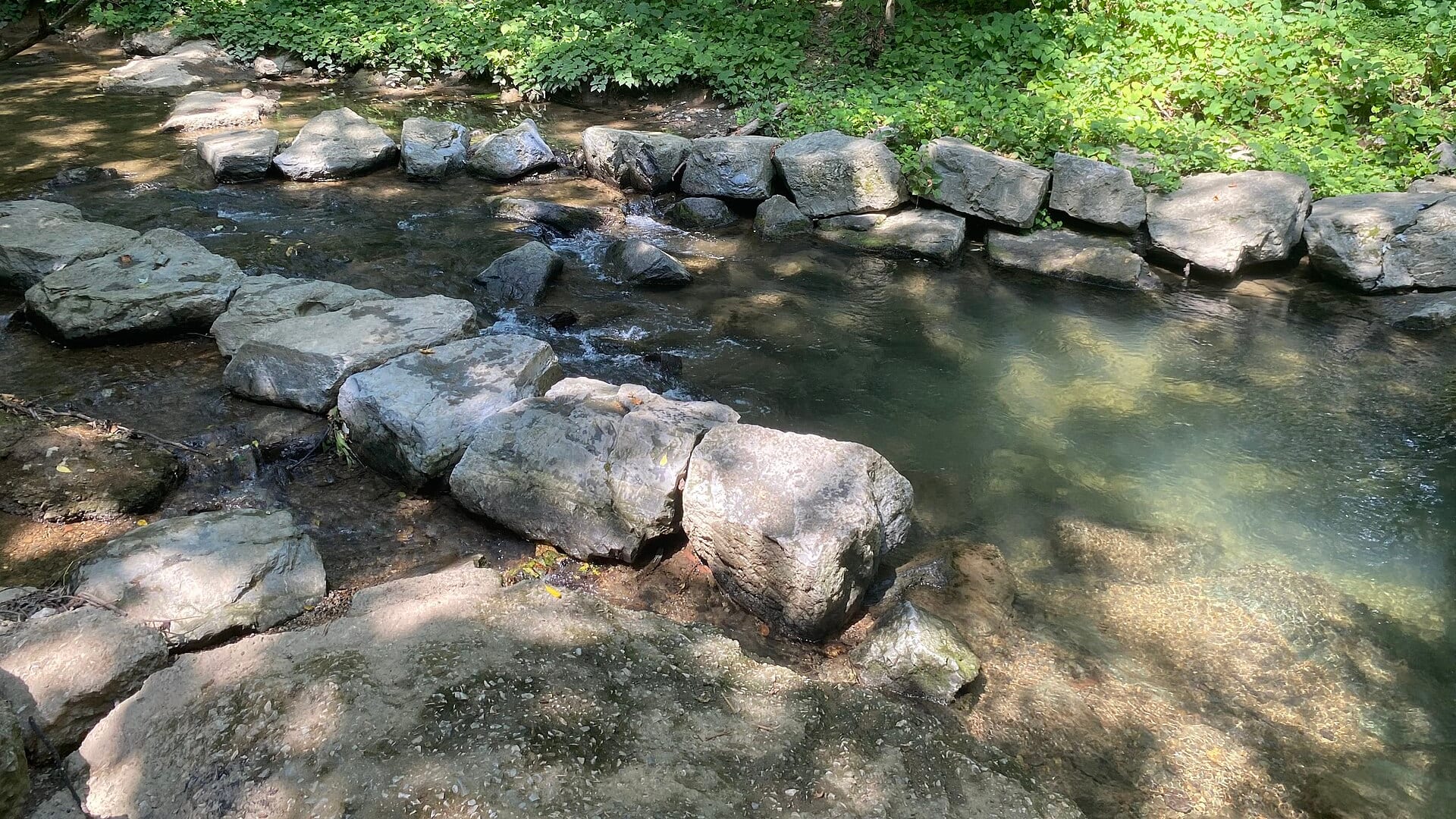
Decide if the low water is worth fishing
Low water is not automatically bad. It can make trout easier to locate because holding water shrinks. It can also make fish spooky, warm, crowded, and easier to stress.
Check current restrictions, measured water temperature, the gauge trend and the weather before fishing. Clear water is not proof that trout can handle being caught.
The best low-clear-water window is usually cool, stable, and lightly pressured. The worst window is low, hot, flat, bright, and crowded.
Stay out of the holding water
In low clear water, your feet are often louder than your cast. Trout may slide away before you ever see them if you step into the lane they need for cover.
Start downstream or off to the side. Watch the water before casting. If you can reach a seam from dry ground, a gravel bar, or a soft edge, do that before wading.
Move slower than feels natural. One careful position and three good casts are better than twenty rushed casts from inside the fish's living room.
- Approach from downstream or quartering downstream when the current lets you.
- Keep your shadow off the lane before you cast.
- Fish the near bank first; do not step through it to reach the far bank.
- Use the bank, brush, boulders, and riffle noise to hide your movement.
- If a fish bolts, pause before moving to the next target so you do not spook the whole run.
Change the rig after you fix the approach
Finer tippet and smaller flies help, but they do not fix a bad approach. If fish see your shadow, wake, or bright fly line first, 6X will not save the presentation.
Start by lengthening the leader enough to keep fly line away from the fish. Then downsize tippet or fly size only when the water and fish behavior call for it.
Use the lightest rig you can control, not the lightest rig in the vest. A clean drift on 5X beats a sloppy drift on 7X.
| Problem | First adjustment | Second adjustment |
|---|---|---|
| Fish move before the fly arrives | Back up, lower your profile, and cast from a different angle. | Lengthen the leader so fly line lands farther from the fish. |
| Fish follow but refuse | Fix drag and reduce false casting over the lane. | Drop one tippet size or choose a slimmer fly. |
| Fly lands too hard | Open the loop less, aim lower, and let the leader unroll softly. | Use a lighter fly, smaller indicator, or no indicator when possible. |
| Nymph rig snags or splashes | Remove extra weight and fish closer lanes first. | Use a dry-dropper or light contact rig in shallow riffles. |
Rig changes should support a quiet presentation, not replace it.
Pick water that gives trout cover
Low clear water shrinks the safe places trout can use. Your best targets usually have at least one kind of cover: depth, shade, broken current, bank structure, or a food lane close to safety.
Skip the prettiest water if it is also the easiest water for trout to inspect. A choppy twelve-inch riffle can fish better than a glassy three-foot pool at noon.
Look for shaded banks, riffles and protected holding lanes rather than automatically fishing the largest access pool.
| Cover type | Why it helps | How to fish it |
|---|---|---|
| Shade | Cuts glare, cools the edge, and hides some movement. | Fish the shade line before the sunlit center of the run. |
| Broken surface | Riffle chop gives trout cover and hides careful casts. | Use short drifts and keep most line off conflicting currents. |
| Depth change | A small drop can be the only safe lane in skinny water. | Cast above the drop and let the fly enter before mending. |
| Bank structure | Grass, roots, logs, and undercuts hold fish close to cover. | Stay back and drift along the edge before stepping into view. |
| Wind texture | Light chop can hide the leader and push terrestrials to banks. | Use the wind to hide the cast, but leave if gusts or storms make the day unsafe. |
The best low-water targets are not always deep. They are the places where trout still feel covered.
Stop when low water turns stressful
Low water often warms faster than normal water. Warm water can hold less oxygen, and trout may recover poorly after a long fight or extra air exposure.
Do not use clear water as proof that fishing is ethical or legal. Check current restrictions, water temperature, and the agency guidance for that river. Some places use time-of-day restrictions or closures during drought and heat.
If you still fish a cool low-water window, shorten the fight, keep the fish wet, remove the hook quickly, and release it in the best available current. If you cannot do that, switch water, switch species, or stop.
- Carry a thermometer when summer low water is possible.
- Fish early or late when the water is cooler and shade is longer.
- Avoid shallow stagnant coves and slow edges that warm first.
- Skip grip-and-grin photos when trout are already stressed.
- Follow local closures and hoot-owl restrictions even if the river still looks clear.