Start with the fly's job
A list of famous trout flies is less useful than a simple question: what job does the fly need to do right now? A dry fly rides on top. A nymph fishes below the surface. A streamer moves like bait. A terrestrial imitates land insects that fall from bankside grass and trees.
When you start with the job, the fly box gets smaller and easier to use. You are not guessing from a hundred patterns. You are matching the river condition in front of you.
A simple trout fly box
You do not need a full shop wall in your vest. A practical trout box covers surface, subsurface, movement, and summer bank food. Carry two or three sizes in each job before adding more patterns.
For most trout anglers, the core box below is more useful than chasing every local favorite. Local shops and guides can refine sizes, colors, and hatch details after the basic jobs are covered.
| Fly | Type | Good sizes | When to use it |
|---|---|---|---|
| Parachute Adams | Dry | 12 to 18 | Mayfly rises, searching, mixed hatches. |
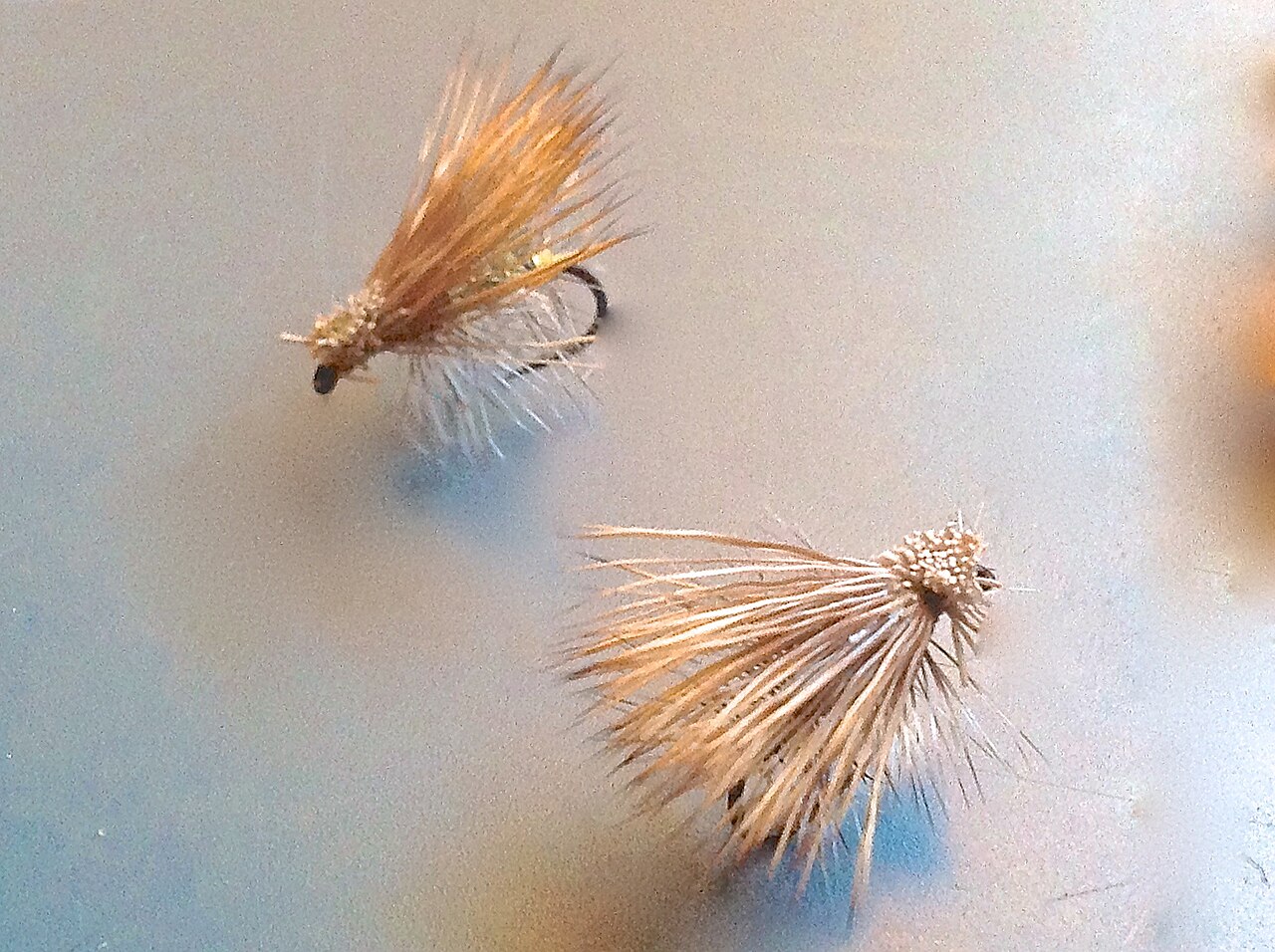
| Elk Hair Caddis | Dry | 12 to 18 | Caddis activity, pocket water, rougher surface. |
| Pheasant Tail | Nymph | 14 to 20 | Slim mayfly nymph look in clear trout water. |
| Hare's Ear | Nymph | 12 to 18 | Buggy searching nymph when you are not sure. |
| Zebra Midge | Nymph | 18 to 22 | Tailwaters, winter, tiny subsurface food. |
| Woolly Bugger | Streamer | 6 to 12 | Stained water, banks, deeper pools, active fish. |
| Ant or beetle | Terrestrial | 12 to 18 | Summer banks, shade lines, grassy edges. |
| Small hopper | Terrestrial | 8 to 12 | Late summer banks and dry-dropper rigs. |
This box covers the main jobs without becoming hard to choose from.
When to fish a dry fly
Use a dry fly when trout are rising, when bugs are visible on the surface, or when the water is shallow enough that fish may look up. A dry can also work as a searching fly in pocket water when fish are willing.
The best dry-fly choice is often simple. Pick a size close to the bugs you see and focus on a drag-free drift. A perfect pattern with bad drag usually loses to a simple fly presented well.
- Use an Adams when you need a general mayfly or searching dry.
- Use a caddis when bugs are skittering, fluttering, or the water is broken.
- Use a small dry when fish rise softly and refuse larger flies.
- Use a dry-dropper when the top fly helps you watch the nymph.
When to fish a nymph
Nymphs are often the best starting point when trout are not rising. Most aquatic insects spend much of their lives below the surface, and trout feed there even when the river looks quiet.
Depth and drift matter more than constantly changing patterns. If you are not touching the right lane, add weight, adjust depth, or change position before replacing a good nymph.
- Use a Pheasant Tail for a slim mayfly-nymph look.
- Use a Hare's Ear when you want a buggier searching pattern.
- Use a Zebra Midge in small sizes on tailwaters and cold clear water.
- Use a heavier point fly when the water is deeper or faster.
When to fish streamers and terrestrials
A streamer is a good choice when trout may chase: stained water, low light, undercut banks, deeper pools, or aggressive fish. Start smaller than you think, and make sure the retrieve fits the water speed.
Terrestrials shine when grass, brush, and warm-season banks matter. Ants, beetles, and small hoppers can be simple and effective when trout are looking up near the bank.
Match flies to current conditions
Choose flies for the water in front of you. Stained water can favor larger silhouettes and slower edge presentations. Low, clear water calls for careful approaches and drag-free drifts.
Warm trout water changes the whole plan. When water temperature is stressful, the best fly is often no trout fly at all. Switch species, fish colder water, or stop targeting trout.
| Report clue | Fly plan | Why |
|---|---|---|
| Stable clear flow | Dry, nymph, or dry-dropper | You can read rises, seams, and depth. |
| Falling after rain | Nymphs or small streamers | Fish may feed as clarity improves. |
| Low and clear | Smaller dries and nymphs | Trout have less cover and more time to inspect. |
| Stained but safe | Streamer or larger nymph | Visibility is lower, so profile and movement help. |
| Too warm for trout | Switch water or species | Fish health matters more than fly choice. |
A fly list gets much better when it starts with fishability and current conditions.
Common fly-selection mistakes
The biggest mistake is changing flies before changing presentation. A good fly in the wrong depth or drag is still wrong. Fix the drift first.
The second mistake is carrying too many patterns and no plan. A smaller box with clear jobs makes faster decisions and better fishing.
- Changing patterns every few casts without changing depth or drift.
- Fishing dries all day when trout are not rising.
- Ignoring water temperature and flow because the fly is a favorite.
- Using flies that are too large in low clear water.
- Forgetting simple bank food like ants and beetles in summer.