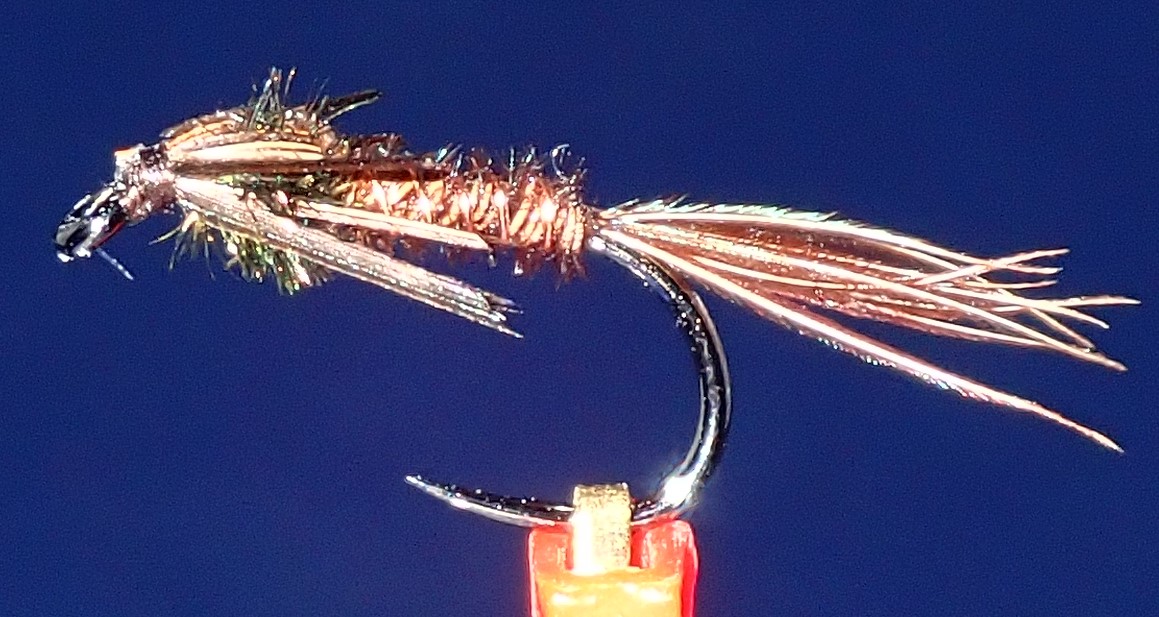
Materials for a clean Pheasant Tail Nymph
The Pheasant Tail works because it is simple. You do not need a crowded hook. You need a slim body, a rib that holds the fibers together, and a small thorax that suggests legs and movement.
Start with sizes 14, 16, and 18. Those sizes cover a lot of trout water without making the fly too hard to tie. After the pattern feels easy, add smaller midges or larger searching nymphs.
| Part | Simple choice | Why it matters |
|---|---|---|
| Hook | Standard nymph hook, sizes 14 to 18 | Covers most trout nymphing without making the fly too bulky. |
| Thread | Brown or olive 8/0 or 70 denier | Small enough for a neat head and slim body. |
| Tail and abdomen | Natural pheasant tail fibers | Creates the mottled mayfly-nymph look. |
| Rib | Fine copper wire | Protects the pheasant fibers and adds a little weight. |
| Thorax | Peacock herl | Adds a darker buggy center without much bulk. |
| Wing case and legs | Pheasant tail fibers | Keeps the pattern simple and natural. |
A beginner-friendly American Pheasant Tail uses thread, copper wire, pheasant tail fibers, and peacock herl.
Step 1: Start the tail and rib
Start the thread behind the hook eye and wrap back to the bend. Tie in a short piece of fine copper wire on the near side of the hook. Keep it out of the way for now; it will become the rib after the abdomen is wrapped.
Choose four to eight pheasant tail fibers, even the tips, and tie them in so the tail is about half a hook shank to one hook shank long. Short is safer than long. A tail that is too long makes the fly look messy and can twist around the hook.
- Keep thread wraps flat and close together.
- Use fewer fibers for smaller hooks.
- Tie the tail on top of the shank so it stays straight.
- Leave the copper wire hanging behind the hook until the abdomen is done.
Step 2: Build the abdomen
Use the butt ends of the same pheasant tail fibers to wrap the abdomen forward. Make touching wraps from the bend toward the middle of the hook. Stop with enough room for a thorax and head.
Now counter-wrap the copper wire through the pheasant tail body. Counter-wrapping means you wrap the wire in the opposite direction from the fibers. This locks the body down and helps the fly survive fish and rocks.
Step 3: Add the thorax, wing case, and legs
Tie in a small bunch of pheasant tail fibers pointing backward over the top of the hook. These will become the wing case and legs. Then tie in one or two strands of peacock herl and wrap a short thorax.
Pull the pheasant tail fibers over the thorax to make the wing case. Tie them down behind the hook eye. Split or sweep the tips back as short legs, then make a small head and whip finish.
- Do not crowd the hook eye.
- Use only enough peacock herl to make a slightly fuller thorax.
- Keep the wing case centered on top.
- Trim the legs short; they should suggest movement, not cover the whole fly.
Common Pheasant Tail tying mistakes
Most first Pheasant Tails fail because the tyer tries to make every part bigger. The fly works best when it stays thin and clean. Trout see the shape, tone, and drift more than perfect detail.
The second common mistake is finishing too close to the eye. Leave room early. A neat head makes the fly easier to tie on and keeps the pattern from looking crowded.
| Mistake | What happens | Better move |
|---|---|---|
| Tail too long | The fly looks unbalanced and can foul. | Shorten the tail before wrapping the abdomen. |
| Too much peacock | The thorax turns into a ball. | Use one or two herls and fewer turns. |
| No rib tension | The body breaks apart after a fish or snag. | Counter-wrap wire with firm, open turns. |
| Crowded eye | The fly is hard to finish and tie on. | Stop the body earlier and keep the head small. |
Durability and slim shape matter more than making the fly look flashy.
When and how to fish it
Fish a Pheasant Tail when trout are feeding below the surface, when mayflies are active, or when you need one simple searching nymph. It is useful in riffles, seams, pocket water, tailouts, and clear runs.
Depth matters more than constant fly changing. If the fly is not getting near fish, adjust weight, leader length, or placement before blaming the pattern.
- Use size 16 or 18 in clear low water.
- Use a bead or extra weight when water is deeper or faster.
- Trail it behind a larger nymph when fish need help seeing the rig.
- Fish it under an indicator, tight line, or as a dropper below a dry fly.