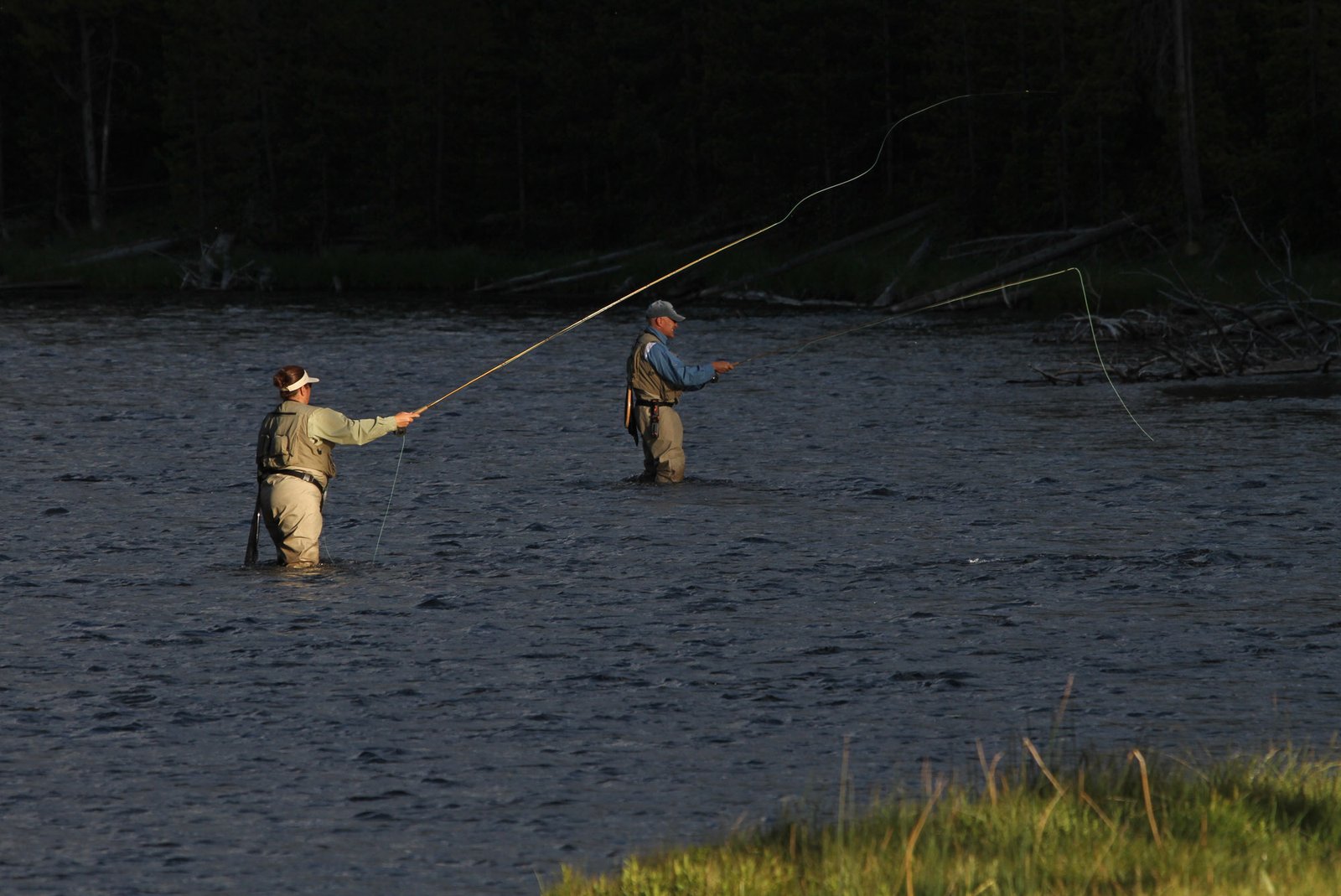
Watch the line before the fly skates
Mending fixes drag. Drag starts when your fly line, leader, and fly ride different current speeds. The fly may skate, stall, swing too soon, or pull the indicator out of its lane.
Do not wait until the fly has already looked wrong. The line belly usually tells you what will happen next.
Move line, not leader and fly
The cleanest mend lifts a section of fly line off the water, flips or places it in a better lane, and stops before the movement reaches the leader. Think line control, not another cast.
Use the rod tip to lift first. Then make a compact upstream or downstream motion and set the line down softly. The bigger the arm swing, the more likely the fly moves.
- Start with the rod tip low enough to lift the belly of line.
- Lift only the line you need to move.
- Mend before the current has pulled the line tight.
- Stop the motion before it reaches the leader.
- After the mend, drop the rod tip enough to follow the drift without pulling back.
Choose upstream, downstream, or no mend
There is no single correct direction. The useful mend is the one that offsets what the current is doing to your line.
If the current between you and the fly is faster than the fly lane, mend upstream. If the fly lane is faster than the water holding your line, mend downstream or feed slack. If every option moves the fly, change the cast or the angle.
| Situation | Better choice | Keep it simple |
|---|---|---|
| Dry fly drifting across faster water near you | Upstream mend | Move the belly above the fly before it pulls the fly sideways. |
| Indicator or dry fly moving away faster than your line | Downstream mend or line feed | Give slack so the line does not hold the rig back. |
| Fish are across several mixed current lanes | Reach cast before the fly lands | Build the mend into the cast instead of fixing everything late. |
| Short pocket, close seam, or brushy bank | No big mend | High-stick, shorten the drift, or move closer. |
| Wind blows loops into the water | Shorter cast and lower line | A long aerial mend may create more slack and tangles. |
Mending is a current-speed choice. Match the fix to the line belly you can actually see.
Know when to move instead
Some drifts are too awkward to save with mending. If you need two or three hard mends before the fly reaches the fish, the angle is probably wrong.
Move a few steps upstream or downstream. Shorten the cast. Choose the closer lane. Use a reach cast. On hard mixed currents, a shorter clean drift is better than a long drift that needs constant repair.
Change position only where footing and access allow it. Do not wade deeper just to rescue an awkward drift.
- Move when the mend pulls the fly every time.
- Move when the drift crosses too many speed lanes.
- Move when wading deeper would be the only way to fix the angle.
- Move when wind makes long line control sloppy or unsafe.