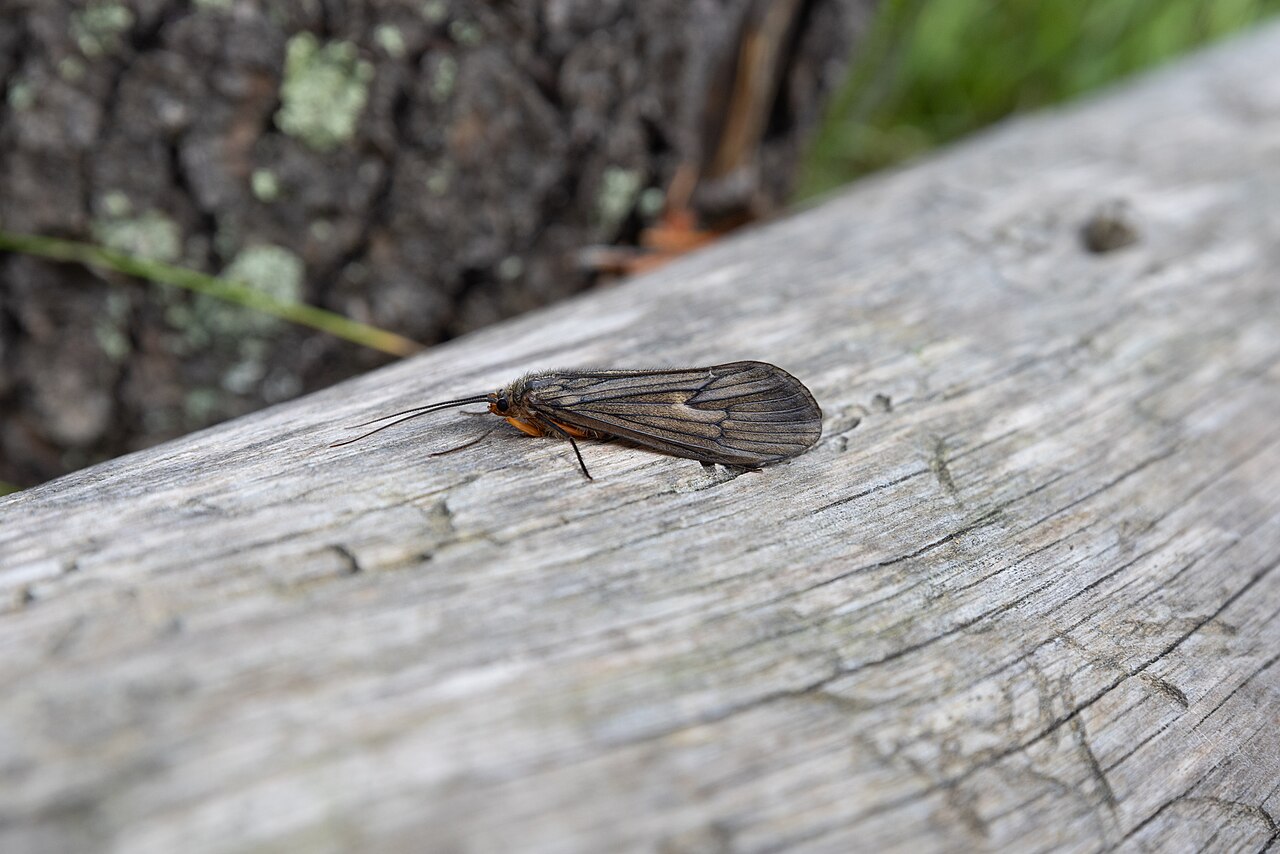
Start below the surface
The best October caddis plan usually starts with the pupa or larva, not the adult dry. A UC Berkeley-led review in Zoosymposia describes Dicosmoecus gilvipes larvae as large rock-cased grazers that attach cases in midsummer and pupate in autumn. Oregon State also identifies October caddisflies as large caddis and important fall prey for salmonids.
That matters because the vulnerable part of the hatch can happen before anything obvious is flying. Fish the lower half of the water column through riffle edges, boulder seams, and the heads of runs where a big pupa could get swept loose.
If you only carry one October caddis idea, make it this: fish a big orange or tan pupa before dusk, then decide whether the dry fly window is real.
| Stage | Where to fish it | Simple choice |
|---|---|---|
| Larva | Fast cobble, riffle edges, and pocket-water bottoms | Cased caddis or chunky orange/tan caddis larva |
| Pupa | Heads of runs, soft edges beside heavy riffles, and boulder lanes | Weighted October caddis pupa or similar large caddis pupa |
| Adult | Banks, tailouts, foam lines, and soft water near dusk | Large orange caddis dry or buoyant skater |
The dry is fun, but the subsurface stages often give you more fishing time.
Do not wait for a blanket hatch
October caddis can feel sparse compared with smaller caddis hatches. Deschutes River Alliance notes that adults may emerge over several weeks and spend much of their time in streamside vegetation. MidCurrent gives similar practical advice: a few adults can still tune fish to the bug because each insect is a large meal.
Treat the dry as a searching fly with evidence, not as a miracle pattern. A few orange adults in the brush, empty shucks on rocks, or splashy low-light misses are enough to try it. If you see nothing and the water is bright, keep the pupa in the game.
- Prospect a dry along shaded banks before you cover mid-river water.
- Let the fly twitch or skate only when that matches the natural commotion.
- If a trout misses, keep the fly moving for a moment before recasting.
- If the dry gets ignored, go back to the pupa rather than changing through five adult patterns.
Match the river, not just the month
October is a clue, not a guarantee. Upstream Fly lists October caddis as a September-to-November hatch tied to cooling water, but that timing shifts by elevation, latitude, and fall weather. Deschutes River Alliance points to late afternoon, evening, and dusk as prime windows on the lower Deschutes, while other rivers can run earlier or later.
Also be honest about geography. Western Dicosmoecus is not every fall caddis everywhere. If you fish outside its range, you may still have a large fall caddis opportunity, but the exact insect and timing can differ.
| What you know | What to do | What not to claim |
|---|---|---|
| Western freestone or tailwater with known October caddis | Carry larva, pupa, and one big adult dry | Do not assume the adult dry is always first choice. |
| Cool nights and fall color, but no bug evidence | Sample riffle edges with a pupa and watch banks at dusk | Do not call it a hatch just because the calendar says October. |
| Eastern or Midwestern stream | Look for local fall caddis or brown sedge information | Do not label every orange fall caddis Dicosmoecus. |
| Warm, low, smoky, stormy, or unsafe conditions | Let fishability and access override the hatch | Do not let a good bug excuse poor trout conditions. |
Local evidence beats a national hatch chart.
Rig one simple fall plan
You do not need a full fly-shop bin. Carry one heavy pupa, one cased or chunky larva, and one buoyant adult dry. Add a smaller caddis or mayfly only if the river shows smaller bugs too.
For most trout water, start with stronger tippet than you would use for tiny autumn dries. A large pupa or dry turns over better with a practical leader, and fall trout do not need a long fight in marginal conditions.
| Window | First rig | Adjustment |
|---|---|---|
| Midday bright water | Weighted pupa near riffle edges | Add depth or change lane before changing patterns. |
| Late afternoon shade | Pupa with a controlled lift near the end of the drift | Let the fly rise slightly before recasting. |
| Dusk with adults showing | Large buoyant orange dry | Fish banks, tailouts, and foam lines first. |
| No hatch signs after a fair test | Return to a normal fall nymph or streamer plan | Do not spend the whole evening forcing one bug. |
A small box works when each fly has a job.
Check conditions before chasing the hatch
A good October caddis window still needs fishable water. Before you drive, check the river trend, recent weather, access, and water temperature context. Big fall bugs do not make high water safe, warm trout water ethical, or a closed access open.
Use BlueStreamFly the same way you would use any conditions read: as a first filter. If the river looks stable and safe, the October caddis plan can help you choose the first rig. If the river is failing for safety or fish stress, pick backup water or skip trout.