Choose by the fly's condition
Treat a clean, dry fly before fishing. After it becomes waterlogged, blot or dry it first. Gel, pure powder floatant and desiccant do different jobs, so check the product label rather than treating every powder as a dryer.
Do not smear gel onto a drowned fly. It can trap water and slime in the materials, which makes the next drift worse.
| Fly condition | Use this | Avoid this |
|---|---|---|
| Fresh dry fly from the box | Tiny amount of gel, paste, or liquid floatant | Soaking the fly until the hackle mats down. |
| Fly rides low after a few drifts | Blot, then use desiccant or a combined drying product | Adding more gel before the fly is dry. |
| Fly is slimed after a fish | Rinse if needed, blot, use desiccant, then test it | Expecting one shake to fix heavy slime. |
| Fly still sinks after drying | Tie on a fresh fly and let the old one dry | Building a sticky lump of product on the fly. |
The product matters less than matching it to the fly's actual condition.
Use gel before the fly gets wet
A small film of gel, paste, or liquid floatant is for a clean dry fly. Work it into the body and hackle with your fingers, then remove any excess. The fly should look like the same fly, not a greased wad.
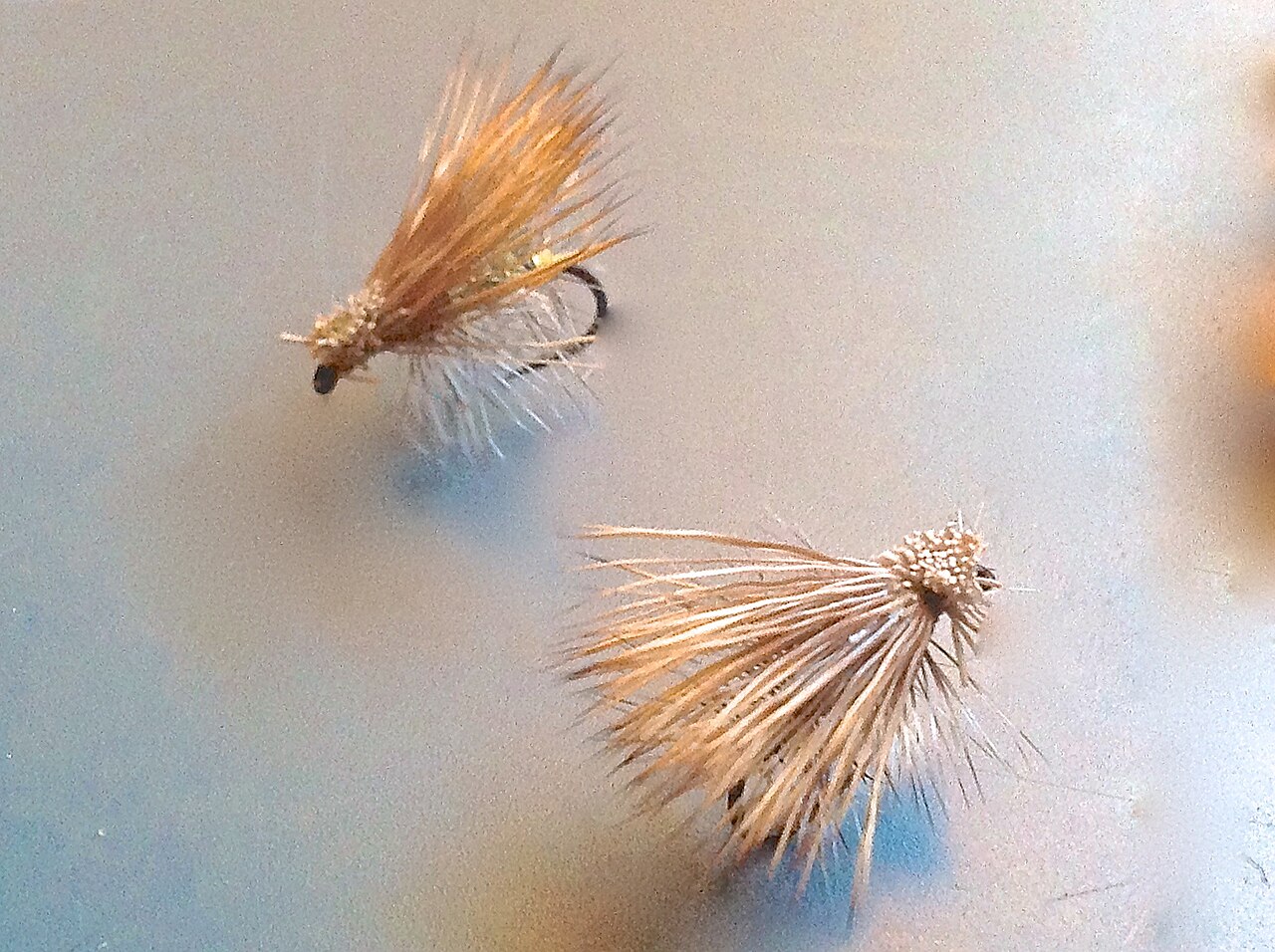
Use less on sparse mayflies and midges. Big foam, elk-hair, or attractor dries can handle more product, but they still need room for the materials to stand up and shed water.
- Apply before the first cast.
- Use a smaller amount than you think you need.
- Keep floatant off the hook eye so tippet knots stay clean.
- If the fly starts riding low, dry it before adding anything else.
Dry a wet fly before dressing it again
Desiccant absorbs moisture. Pure powder floatant adds a water-repellent coating; it is not necessarily a drying agent. Some shake bottles combine both, such as Loon Top Ride, while Blue Ribbon is sold as a pure powder floatant.
Blot a wet fly, use a desiccant or combined drying product as directed, and clear excess powder. If using pure powder floatant, dry the fly first.
| Problem | Fast fix | If it keeps happening |
|---|---|---|
| Dry fly sinks after one fish | Rinse slime, blot, then use desiccant | Rotate to a second copy while the first dries. |
| Hackle looks clumped | Dry first, then gently separate the fibers | Use less gel next time. |
| Small dry sits in the film but you cannot see it | Powder can add a visible dusty profile | Choose a more visible pattern, not more product. |
| Dropper pulls the dry under | Dry the fly, then lighten the dropper or change rigs | Do not ask floatant to hold too much weight. |
If the same fly keeps drowning, solve the rig or change flies instead of adding product every cast.
Treat CDC and foam differently
CDC feathers float because of their fine structure and natural oils. Heavy standard gel can mat those fibers. Use a CDC-safe powder, silicone-based product, or a light dressing made for CDC when the label supports it.
Foam flies are different. Foam already floats, but the hook, dropper, fish slime, and water trapped in legs or dubbing can still sink the pattern. Dry the fly and check the rig before blaming the foam.
Know when to change flies
Floatant is not a permanent repair. Once a fly is chewed up, slimed, twisted by bad casts, or waterlogged through the body, a fresh fly is faster than more product.
This is also a drift clue. If a dry-dropper keeps sinking, the dropper may be too heavy or too deep. If a tiny dry keeps vanishing, the fly may be too small to track in glare. The better fix may be a different rig, a shorter drift, or a more visible pattern.
Wind, glare and surface chop can hide a small dry. Shorten the drift or choose a more visible pattern when you cannot track it.