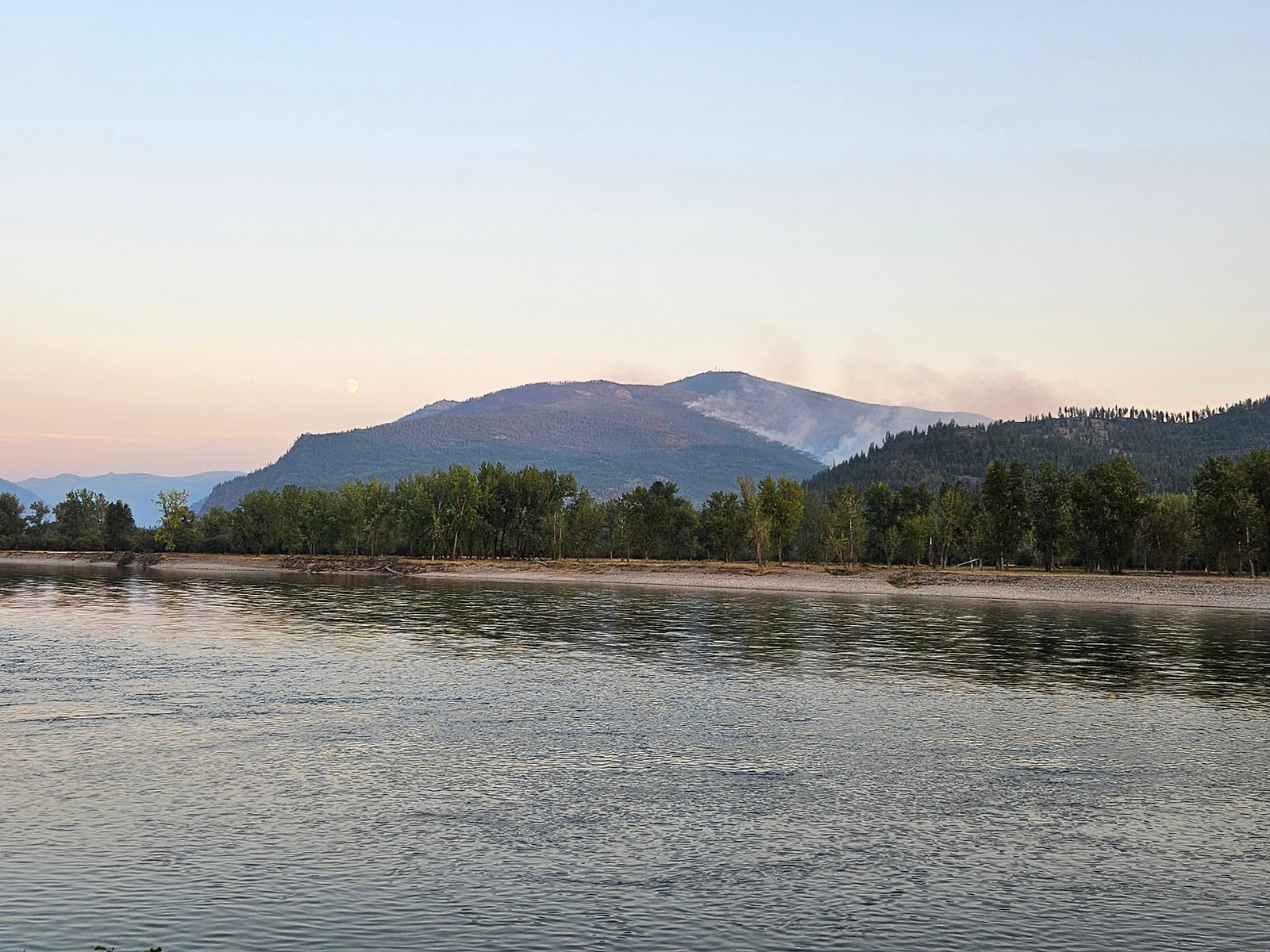
Illustrated trout river valley with wildfire smoke haze and an air quality decision panel
All guides

Safety · 11 min read

When to Skip a Fly Fishing Trip for Wildfire Smoke

Check AQI before the river score, then choose a cleaner time, easier plan, or no-fishing day when smoke removes the margin.

Get the short answer
Published 2026-08-20Updated 2026-08-206 cited sources

The short answer

Check the AQI for home, the drive, and the river before you trust a good fishing report. If AQI is 151 or higher, make it a skip day for a normal trout trip. If AQI is 101 to 150, sensitive anglers should shift or stay inside, and everyone should reduce time and effort. If smoke smells strong, visibility drops, ash falls, a fire closure is nearby, or an evacuation notice is possible, do not fish that plan.

Remember these three things
01

AQI is a health and safety check, so it can override a good fishability score.

02

Smoke can change by hour and valley; check AirNow, local alerts, and the hourly weather window before driving.

03

A backup river only helps if the air, access, road, and exit plan are cleaner than the first choice.

01

Check AQI before the river score

A good BlueStreamFly score can tell you that the river, flow, weather, access, and trout plan look promising. It cannot make smoky air safe. Air quality is a separate health and safety check.

Start with the AQI category for the place you will actually fish, not only the town where you woke up. EPA's AQI uses color-coded categories to explain outdoor air quality and health concern. AirNow says values above 100 become unhealthy first for sensitive groups, then for everyone as the number rises.

Use the table below as a fishing decision rule. It is intentionally conservative because fly fishing can mean hiking, wading, rowing, climbing banks, and breathing hard in a canyon for several hours.

AQI at the riverWhat the public scale meansBlueStreamFly trip decision
0 to 50, GoodAir quality is satisfactory for most people.Keep planning, then check flow, weather, access, water temperature, and visibility.
51 to 100, ModerateAir is acceptable, but unusually sensitive people may need caution.Fish a normal or lighter plan only if the local smoke trend, health needs, and exit plan also pass.
101 to 150, Unhealthy for Sensitive GroupsSensitive groups may experience health effects.Sensitive anglers should shift or skip. Others should shorten the session and avoid hard hiking, rowing, or long hot wades.
151 to 200, UnhealthySome people in the general public may be affected, and sensitive groups face higher risk.Skip a normal trout trip. Pick an indoor task, a cleaner-air window, or a different day.
201 or higher, Very Unhealthy to HazardousRisk increases for everyone, and emergency conditions are possible at the top of the scale.Do not fish. Follow local health, fire, road, and evacuation guidance.

AQI is not a fly-fishing score. It is the first safety filter for smoky days.

02

Smoke changes by hour and valley

Wildfire smoke is not a simple daily forecast. It can settle into a valley overnight, lift with wind, arrive from a fire far away, or worsen while the river itself stays clear and fishable.

Use AirNow's Fire and Smoke Map for current smoke and air-quality context, then check the National Weather Service hourly forecast for wind direction, gusts, thunderstorms, heat, and timing. A smoke model or hazy-looking sky is not enough by itself; the AQI and local alerts tell you how much margin you have.

Check again before you step in. The drive may cross cleaner air, then drop into a smoky canyon. Or the river may clear enough later in the day for a short, easy evening check.

When to checkWhat to look atDecision
The night beforeForecast AQI, Fire and Smoke Map, fire-weather alerts, closures, and road status.Choose the cleanest likely river or decide not to travel.
Before leaving homeCurrent AQI at home, along the drive, and near the river.Leave only if the whole route still has enough air, road, and access margin.
At the accessSmell, visible haze, ash, wind shift, symptoms, and exit time.Step in only if the on-site check agrees with the screen check.
Every hour during smokeAQI trend, wind shift, sky, alerts, and how hard you are breathing.Shorten, move, or leave before the air becomes the problem.
Before moving to backup waterAQI and alerts for the second river, not only the first river.Do not turn a smoky first plan into a smoky road trip.

Treat smoke like changing weather: check it at planning time, drive time, and access time.

03

Choose cleaner backup water only when it really helps

Backup water is useful when the first river fails for flow, heat, access, or clarity. It is less useful when the whole drainage is smoky. Before you chase another report, ask whether the backup has cleaner air, safer roads, legal access, and a simpler exit.

Do not use remote water as an escape from smoke unless the air and fire situation are clearly better there. A remote canyon with one road out, active fire traffic, or weak cell service is a worse plan than a lower-scoring but cleaner and easier reach.

The best smoky-day backup may not be another trout river. It may be tying flies, cleaning gear, scouting maps, visiting a local shop, or choosing a warmwater pond only if air quality is acceptable and access is easy.

Backup optionWhen it helpsWhen to reject it
Nearby lower valley reachAQI is lower, wind is moving smoke away, and access is simple.The valley is trapping smoke or the drive crosses an active fire area.
Higher elevation creekAir is cleaner, roads are open, and storms/fire alerts are quiet.Roads, evacuation routes, or cell service make the exit weak.
Tailwater or canyonFlow and temperature are stable and smoke is not pooled in the canyon.The canyon is hazy, windy, closed, or hard to leave quickly.
Evening windowAQI and smoke trend improve before dark and the access is familiar.Visibility, wind, or alerts worsen as daylight and exit margin fade.
Non-fishing daySmoke is red or worse, or the clean backup is not real.Do not reject this option just because the river score looks tempting.

The backup has to improve the air-quality problem, not only the fishing problem.

04

Do not let a good river score override smoke

Smoke is one of the clearest examples of why a fishability score is the start of the plan, not the final answer. A river can have steady flow, cool water, great hatches, and good access while the air still makes the trip a poor choice.

Use the BlueStreamFly report to rank rivers after the smoke check passes. If AQI is acceptable, then compare gauge trend, water temperature, wind, lightning risk, clarity, and access. If AQI fails, stop there.

When the screen and your body disagree, trust the warning signs. Burning eyes, chest tightness, strong smoke smell, falling ash, and reduced visibility are reasons to leave even if the river itself looks good.

SignalTemptationBetter decision
High fishability score, AQI 151+Drive because the river looks perfect.Skip the trout trip and wait for cleaner air.
AQI 101 to 150 and you are sensitive to smokeFish lightly and hope it stays manageable.Shift to a cleaner window or stay inside.
Smell smoke at the accessStep in because the gauge and hatch window are good.Re-check AQI, shorten hard, or leave before exposure grows.
Fire closure, evacuation notice, or heavy fire traffic nearbyLook for a side road or another pullout.Leave the area and follow official instructions.
Cleaner air but high heat or warm trout waterTreat the smoke check as the only safety issue.Run the full BlueStreamFly check: air, water temperature, flow, weather, and access.

Air quality is a hard filter. The river score comes after it passes.

05

Pack a smoke-aware plan

A smoke-aware plan is not complicated. It is a short session, easy access, lower effort, clean exit, and a firm stop trigger. If the smoke check already failed, no gear list fixes the day.

AirNow advises taking it easier when smoke is in the air and limiting outdoor exercise during smoky periods. It also notes that cloth masks do not protect from wildfire smoke, while N95 respirators can provide protection from smoke particles when used properly.

Use that guidance as a backstop, not as permission to force the trip. If you must be outside for essential reasons, reduce time and effort. For recreation, the better move is usually to reschedule.

Pack or planWhy it mattersDo not use it to justify
N95 respirator that fits youCan reduce particle exposure when smoke is present.Fishing hard in unhealthy air just because you packed a mask.
Water, easy food, and shorter routeSmoke, heat, and hiking add up quickly.A long remote loop with uncertain air and weak exits.
Medication or personal health planSensitive anglers need their normal care plan available.Ignoring symptoms or medical advice.
Known exit and cell planSmoke and fire conditions can change during the session.Entering a canyon or road system that may be hard to leave.
Indoor backup taskMakes it easier to skip without feeling like the day is wasted.Driving from one smoky watershed to another.

The cleanest smoke plan is often a shorter day or no fishing day.

Next step

Open AirNow and your BlueStreamFly report side by side, then write down your go, shift, and skip trigger before loading the car.

Find a river

Questions answered

Keep the plan simple.

What AQI is too high for fly fishing?+

For a normal trout trip, treat AQI 151 or higher as too high and skip. At AQI 101 to 150, sensitive anglers should shift or skip, and everyone should reduce time and effort.

Can I fish if the river score is good but the air is smoky?+

Only if the air-quality check also passes. A good fishability score does not override unhealthy AQI, visible smoke, falling ash, fire closures, road issues, or symptoms.

Should I use AirNow before a fishing trip?+

Yes. Use AirNow and the Fire and Smoke Map for current air-quality and smoke context, then check the BlueStreamFly river report after the smoke check passes.

Is a cloth mask enough for wildfire smoke?+

AirNow says cloth masks do not protect from wildfire smoke. A properly used N95 respirator can reduce smoke-particle exposure, but it should not be used to force a recreational trip in unhealthy air.

Can smoke be worse at the river than in town?+

Yes. Smoke can settle in valleys and can change by hour with wind, topography, and fire behavior. Check the closest AQI information and what you see and smell at the access.

What should I do instead of fishing during wildfire smoke?+

Pick an indoor task, tie flies, clean gear, update maps, call a shop, or wait for a cleaner-air window. Do not drive to backup water unless the air, road, access, and exit plan are clearly better.

References

Sources used.

These references support the decisions and thresholds explained in this guide.

AirNowAir Quality Index (AQI) BasicsAirNowWhen Smoke is in the AirAirNowAirNow Fire and Smoke MapU.S. Environmental Protection AgencyWildland Fires and SmokeCenters for Disease Control and PreventionAbout Air QualityNational Weather ServiceGet your hourly weather forecast from the NWS